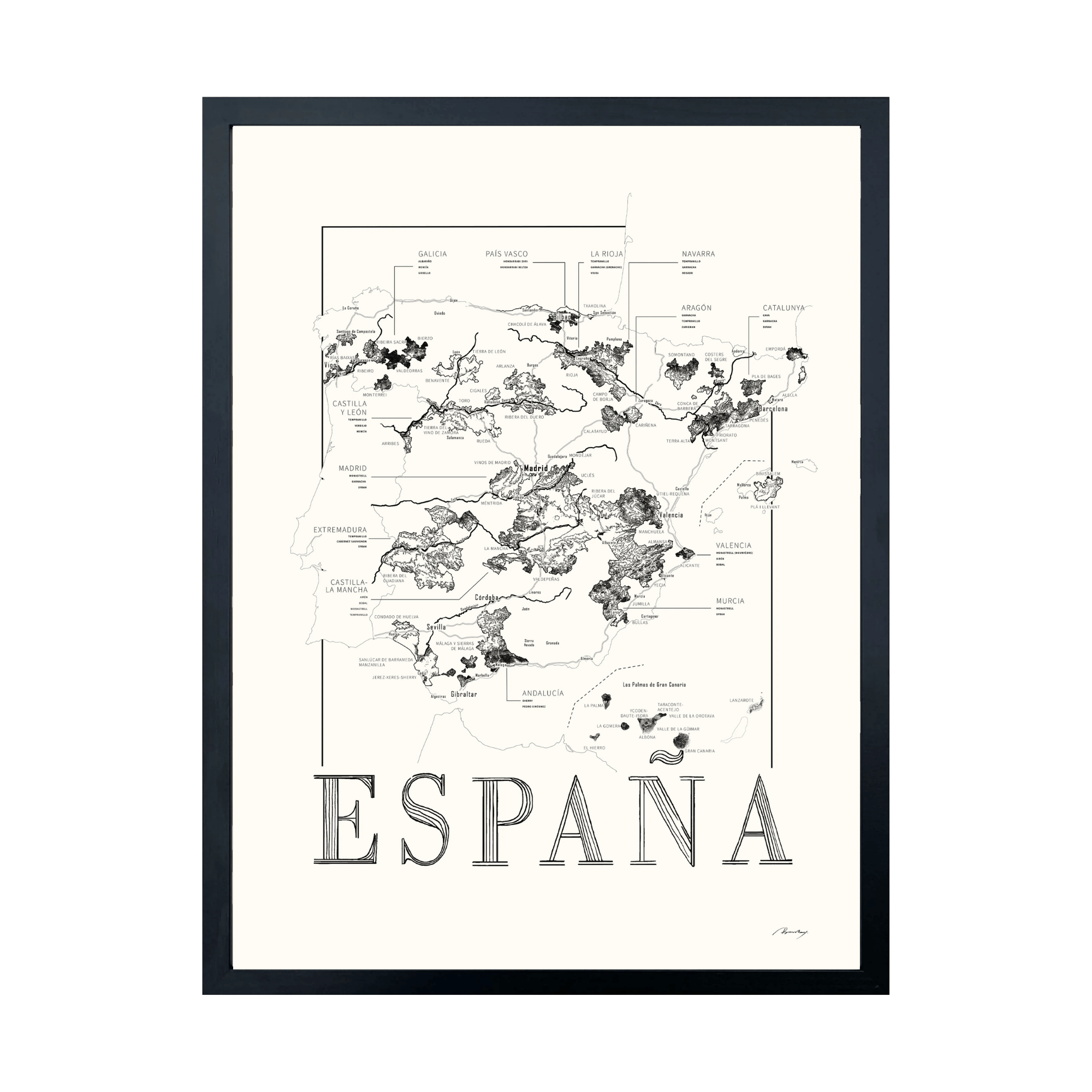
Olé! I recently visited Spain for Le Club. While many people immediately think of iconic regions like Rioja , Galicia, and Andalusia when they think of Spanish wines, there's much more to discover. With approximately 1 million hectares of vineyards, Spain boasts the largest wine growing area in the world and ranks third in terms of production, partly due to lower yields per hectare compared to France and Italy.
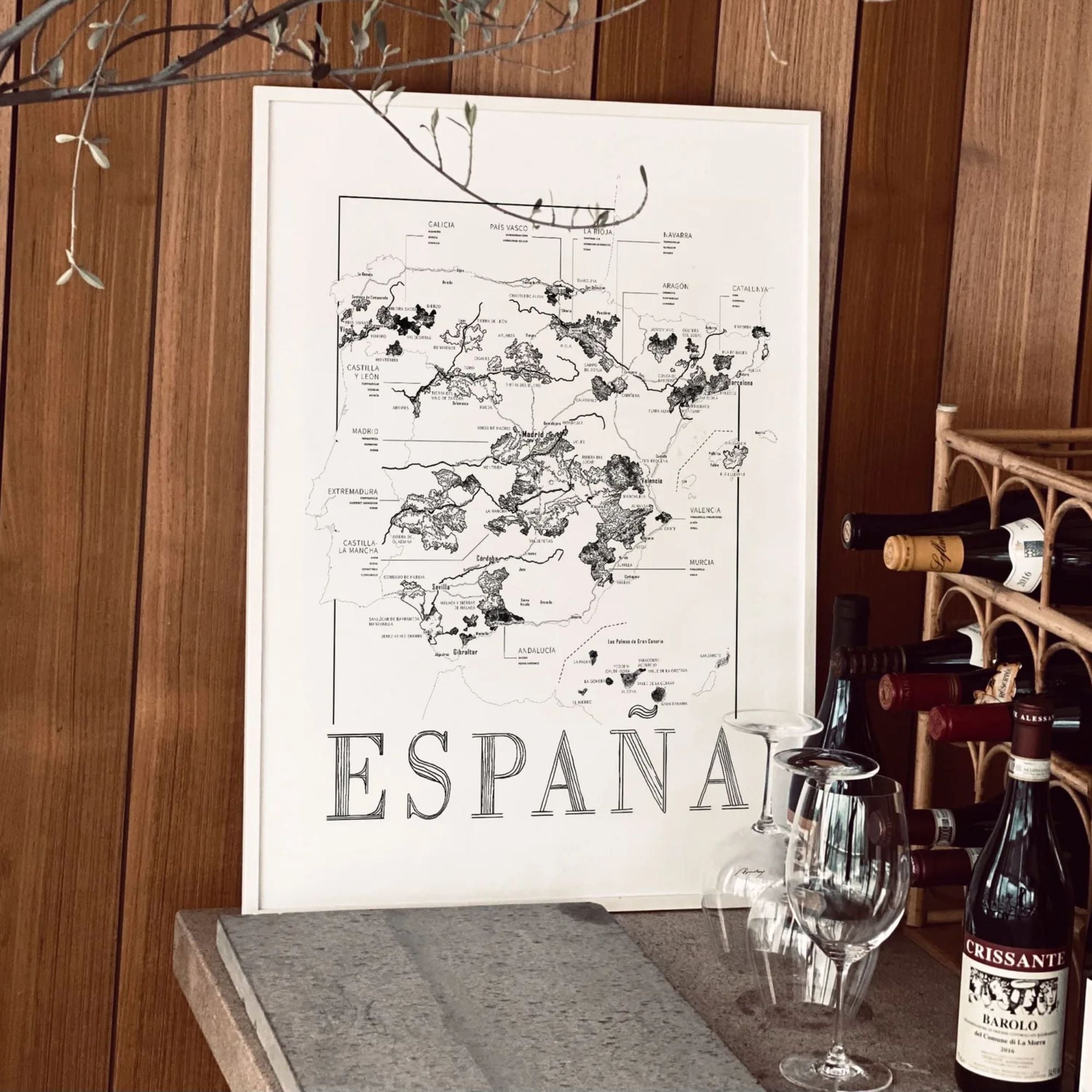
Spain boasts no fewer than 102 official DOs (Denominación de Origen) and 42 VdlTs (Vino de la Tierra). The country is fully committed to giving even lesser-known areas their place in the spotlight. In this blog post, I'll tell you all about the DO Somontano region and the wines it produces. Learn more about Navarra, the neighboring wine region, here .
At the foot of the Pyrenees
We remain at the foot of the Pyrenees, but head further east. Here we find DO Somontano, a wine region with DO status for 40 years and only 27 wineries. A large temperature difference prevails here between winters and summers. The warm summers create ideal conditions for ripening the grapes, while the altitude (350-650 meters) helps preserve freshness in the wines. Fifteen grape varieties are permitted within the DO, with Cabernet Sauvignon, Merlot, and Moristel taking center stage for reds, and Chardonnay and—yes, Gewürztraminer—for whites.
Moristel is an indigenous grape variety and a defining characteristic of the wines within the DO. It stands out everywhere with its intensely fruity and spicy character. Most winemakers use Moristel in their blends, although some dare to make it a single varietal.
Compared to the wines in Navarra, I found the style here noticeably lighter, and perhaps a bit less classic and more funky (yes!). Just like in Navarra, we visited the DO headquarters in the capital of Somontano: Barbastro. There, dozens of bottles of white, rosé, and red wines were waiting for us to taste. Each one was a benchmark wine from the region. I can rightly call it two "coups de coeur" here: "Pasotismo" and "El grillo y la luna."
Pasotismo
The first is a collaboration between the winemakers of Batan de Salas and Paso-Primero. If you look up information about this collaboration online, you'll find the legendary quote on Paso-Primero's website : "I was going to write an introduction discussing our winemaking philosophy, but I think it's best if I let the wines talk for themselves."

And the winemaker has a point, because that's exactly what happened: three wines, each a work of art. Pure, elegant, and powerful, each in its own way. Each label illustrates precisely how the wine was created and the vinification techniques used—hallelujah!

The grill and the moon
El Grillo y la Luna (The Cricket and the Moon) is the second winery I fell head over heels for. The night before, we had already been introduced to the Hop Hop (Grenache/Syrah) over dinner, and during the tasting at DO Somontano, we had the chance to sample many of their other wines. Admittedly, I was drawn by the minimalist painted bottles, but the contents made me even happier.
And also: Enate
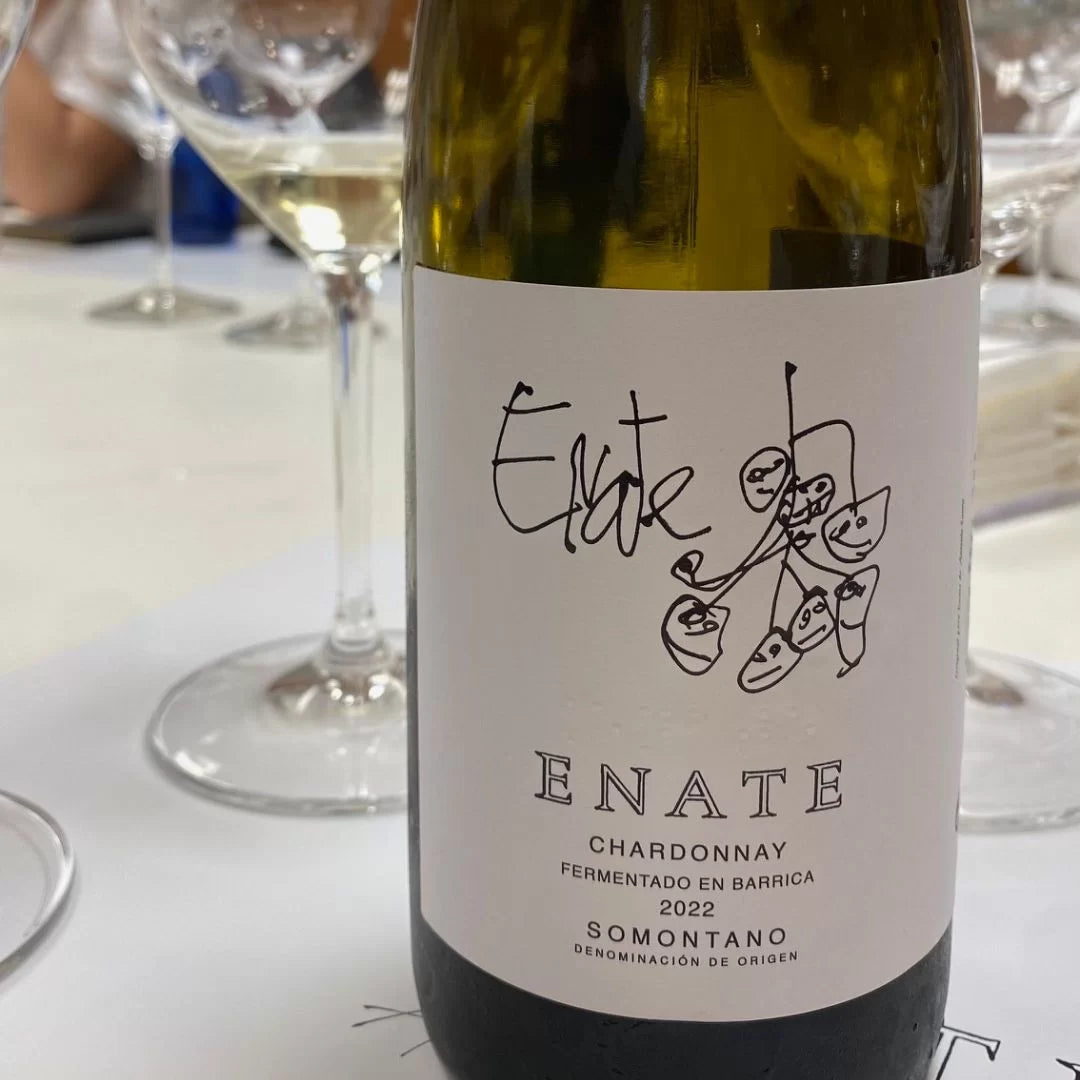
Last but not least, when you say Somontano, you naturally say Enate! One of the leading references for high-quality wines from the DO. The total planting comprises 450 hectares of vineyards, with Tempranillo, Cabernet Sauvignon, Merlot, and Syrah for reds, and Chardonnay and Gewürztraminer for whites.
Since 2017, wine has also been produced under the Laus label, Enate's little brother. Art is also a common thread within this bodega. Each label, for example, is a collaboration with an artist and features Braille.
Enate's benchmark wine is undoubtedly '234 Chardonnay'. And let's be honest, everyone should always have a few bottles of it at home. It's a very pure style of Chardonnay, harvested at night to preserve optimal freshness. No oak is used, but thanks to several hours of skin contact before pressing, this wine has a robust character and admirable complexity.

Some Enate wines bear double names, such as "Merlot-Merlot," "Cabernet-Cabernet," and a "Syrah-Shiraz." This is because these varietals were originally blended for wines like Crianza and Reserva. In recent years, winemaker Jésus Artajona has also decided to create separate cuvées from these grapes to better emphasize the expression of each grape variety and terroir.

To leave no doubt about which part of the grapes would be used for the blend and which for the single-varietal cuvée, he came up with the working name "Merlot-Merlot." It was a clear statement. And it didn't stop there; all the single-varietal cuvées now bear this dual name, with "Syrah-Shiraz" being the only odd one out, as it consists of part French and part Australian clones.
To top it all off, we concluded our visit to Enate with Enate 1 (2016) and Enate Uno Blanco (2013). The philosophy behind Enate 1 is to create a high-quality cuvée from red grapes. Only grapes from the best plots are used, meaning the blend varies each year. A complex, aromatic, and concentrated wine with excellent aging potential is the result of meticulous and attentive work. For Enate Uno Blanco, only Chardonnay grapes from a single plot planted in 1982 are used. The deep golden color reveals everything: honey, nougat, almonds. You don't often find Chardonnay like this; a true celebration in the glass. It's a pricey affair, but it's worth it!
The visit was part of the EU campaign “A Shared Passion”.
Guest blogger: Jette van Bergen
I'm Jette van Bergen (@kleinmaarwijn), a huge Francophile and a true wine lover. In 2022, I decided to work at a wine estate in Burgundy for a few months. Purely for the experience and to satisfy my hunger for France. The opposite happened, and I soon decided to pack my bags and emigrate to Burgundy to further immerse myself in the world of winemaking. I'm currently studying Viticulture and Oenology at Viti in Beaune. Next step? Making more wine, tasting more wine, and above all: sharing more wine with other wine lovers.

Share:
Do you already know these three winemakers from Andalusia?
Bubbles during the holidays