The time has come again for champagne corks to fly. We've compiled a list of our favorite bubbly drinks. And no, it's not just champagne.
Domaine Vincey Champagne BdB Extra Brut Oger, 2020
A mini-Selosse, or is that going too far? We've written before about champagne maker Jacques Selosse, whom we met during a weekend in Champagne. Well, not the man himself, at least, but his champagnes. "Puligny with bubbles," Jan Jaap called it. Sometimes we even talked about Jim Beam in the soda stream. No one ever said that, of course. It wasn't meant in a bad way; I found these wines magical. A revelation, so different from any champagne I'd ever tasted. Oxidative, generous, yet bone-dry, incredibly umami and exciting.
But enough about Jacques, because now it's about Domaine Vincey. Quentin Vincey comes from a wine-growing family, now in its eighth generation, and took over the family estate ten years ago with his partner, Marina. Previously, the fruit, as was customary in Oger, was sold to a local cooperative. Organic farming was unheard of in the village, but that didn't stop them from persevering. In 2019, they obtained their organic certification, and since then, they've been gradually working towards biodynamics, receiving support from local producers Jean-Philippe Waris of Waris-Larmandier and Laurent Vauversin. Guillaume Selosse, their son, encouraged them to age the wines in oak for a little longer.
This Blanc de Blancs comes from various vineyards, from old vines (around 60 years old) in Oger. It's fermented in oak, with light bâtonnage and no malo. A glass you'll want to keep smelling: a parade of apples (yellow, red, green), hazelnuts, freshly baked brioche, umami, and orange cake.
Available through Janselijn
Colet Navazos Equipo Navazos Colet Reserva Extra Brut 2018
Not cava, not corpinnat, but Classic Penedès. Colet already set itself apart from cava and the major players in that region in 2014. Together with Equipo Navazos, they create two sparkling wines with an addition that makes my sherry heart beat faster. They use sherry as the liqueur de dosage. For the Reserva Extra Brut, made from Chardonnay, they use both manzanilla and manzanilla pasada. The sparkling wine is then aged on lie for 41 months. Baked apples, apricot tart, a hint of flor, brioche, a touch of salt. Delicious!
Curious about the other one? It's a Brut Nature made with 100% Xarel.lo, Palo Cortado, and Amontillado as dosage liqueur. Layered, rich, and toasty.
Available at Karakter / Wijnkoperij Europa
Olivier Horiot Champagne Metisse Brut Nature
Metisse is and remains a winner. A few years ago, we tasted it for the first time in the great champagne test, and it finished in second place. "Not everyone's friend, but ours," we wrote then. Recently, the Métisse was back in front of me, and once again, it was a hit.
Olivier Horiot is based in southern Champagne, a stone's throw from Burgundy. He doesn't take the easy route: biodynamic viticulture, the use of all seven permitted grape varieties, and long ripening periods.
Pinot Blanc, the most popular of the four unknown grapes, is used for Cuvée Metisse. The blend consists of 80% Pinot Noir (fullness and structure) and 20% Pinot Blanc (freshness). The wine gains even more roundness from the addition of 20% perpetual reserve (a kind of solera system) and a few months of aging on the lees in neutral wooden barrels. In short, plenty of fullness, yet still tight, and with that fine oxidative edge. The best part? This champagne costs 'only' €42.50. The most affordable of this list (after Colet Navazos).
Available at Wilde Wijnen

Charles Heidsieck Champagne Brut Millésime 2013
Say Charles, and you say broad, generous, rich. Certainly not bone dry, but with a tip-top balance between acidity and dosage. Last year around this time, I was wandering through the dizzying crayères beneath the city of Reims. Some of the champagnes are maturing here. It remains impressive. Just like these bubbles. Over 10 years old, but still just as vibrant.
It's a blend of 57% Pinot Noir and 43% Chardonnay, to be precise. In 2023, the Champagne (at least the one I recently tasted) was disgorged. That means nine years on the lees. And you can taste it. Here too, the freshly baked brioche flies around your ears. With pear jam and citrus. More yeasty than Vincey, which actually shows more oak. Serve with oysters au gratin with Parmesan cheese, and the party can begin.
Available through Genereux, for example at Platenburg or Vindict.
Schramsberg Blanc de Blancs Brut 2020
One of California's first sparkling wines and a regular fixture at The Bubble Battle, as it's guaranteed to surprise. California is more associated with full-bodied Chardonnays than refined bubbles. Not quite right, but okay. During the tasting, most people thought this was Champagne, so points to Schramsberg.
The winery is located in Northern California, but the grapes come from a total of 78 plots in Napa, Mendocino, Sonoma, and Marin counties. Each year, the grapes are processed into 250 base wines, which in turn result in 12 to 14 sparkling wines. This is the Blanc de Blancs, made from 100% Chardonnay. Thirst-quenching, fresh, brioche with lemon zest, and a long finish.
Available via Artevino.be
André et Mireille Tissot Indigène Crémant de Jura
There are many Tissots in the Jura, but André & Mireille is the one to remember. They hark back to old winemaking traditions, such as long skin maceration and amphora aging, but also embrace new wine trends (single vineyard wines, low/no sulfites, etc.). For example, Indigène isn't made in the simplest way. That would involve buying yeast in Champagne to initiate the secondary fermentation. Instead, the Tissots use fermenting grape juice from the Vin de Paille.
The base wine is made from Chardonnay, Pinot Noir, Poulsard, and Trousseau and is partially aged in oak. After the addition of the liqueur de tirage (from Vin de Paille), the wine is aged for three years sur lattes and is not dosed. Pure, delicate, deep, and vibrant.
Available at De Geluksdruif
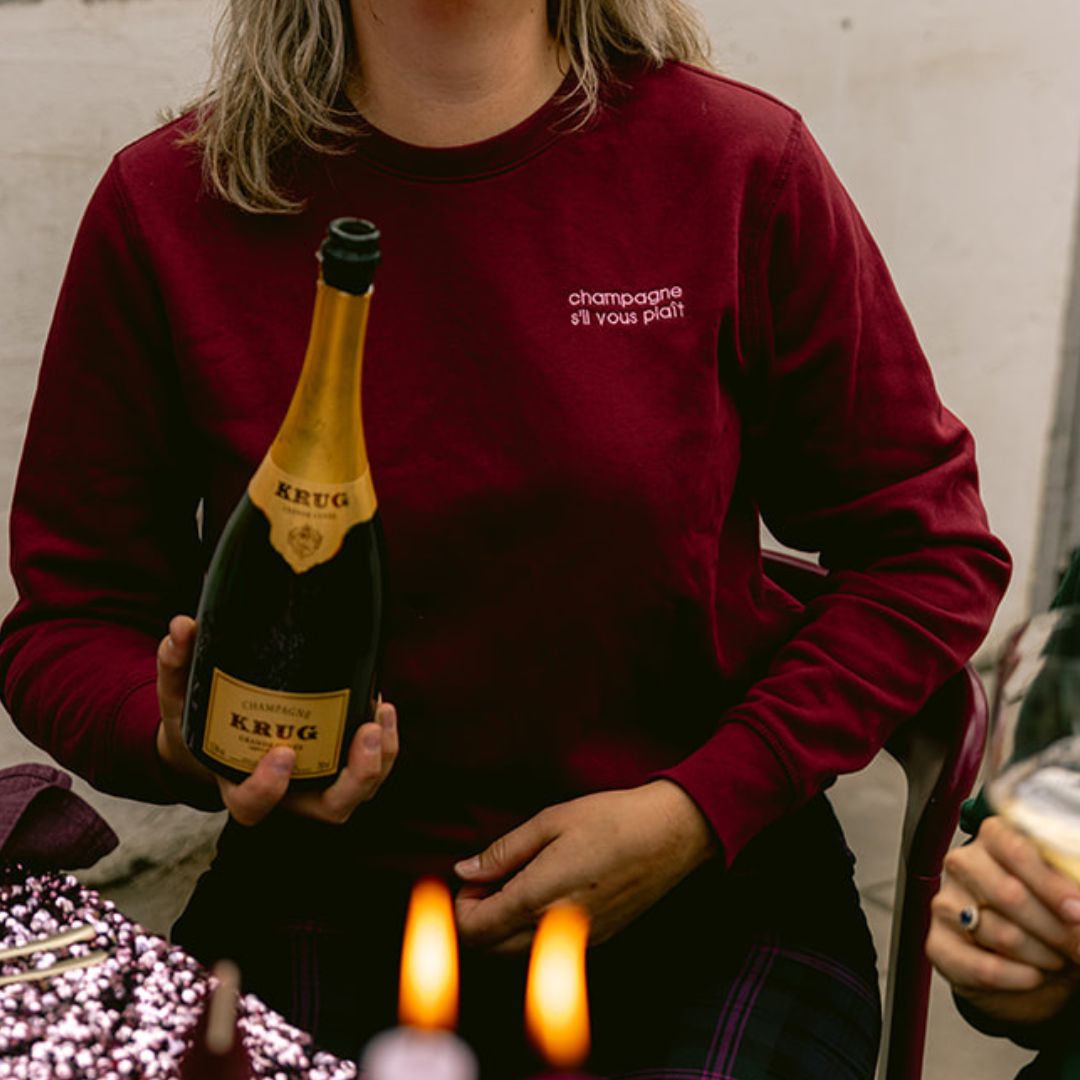
Krug Champagne Grande Cuvée 167ème Edition
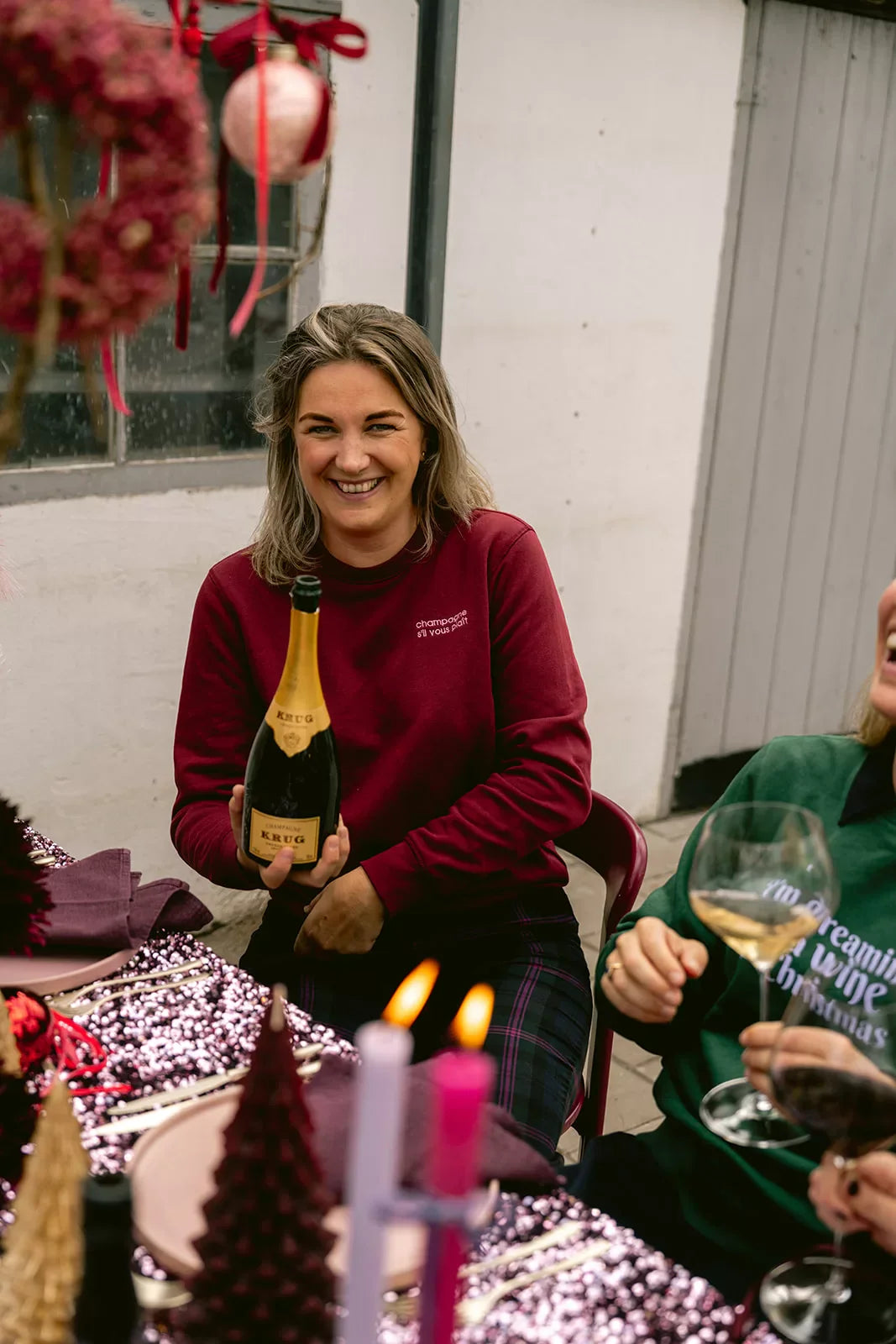
If money isn't an issue, a bottle of Krug is the ultimate holiday gift. With a little (or a lot of) luck, you can even snag an older edition. The 167th edition is based on the 2011 vintage, supplemented with 42% reserve wines, the oldest of which is from 1995. This champagne is aged on its lees for approximately seven years and has a dosage of 6 grams per liter. The result? Liquid gold in your glass. Literally and figuratively.

The wine is incredibly complex, with layers of caramelized peach, nuts, lemon curd, and mandarin. I'm starting to see a pattern here: I love generous, rich champagnes. There, I said it.
Available at L'Atelier du Champagne
Share:
Jette in Somontano: a journey to the north of the south
Golden combination: Manchego ice cream with cream sherry