
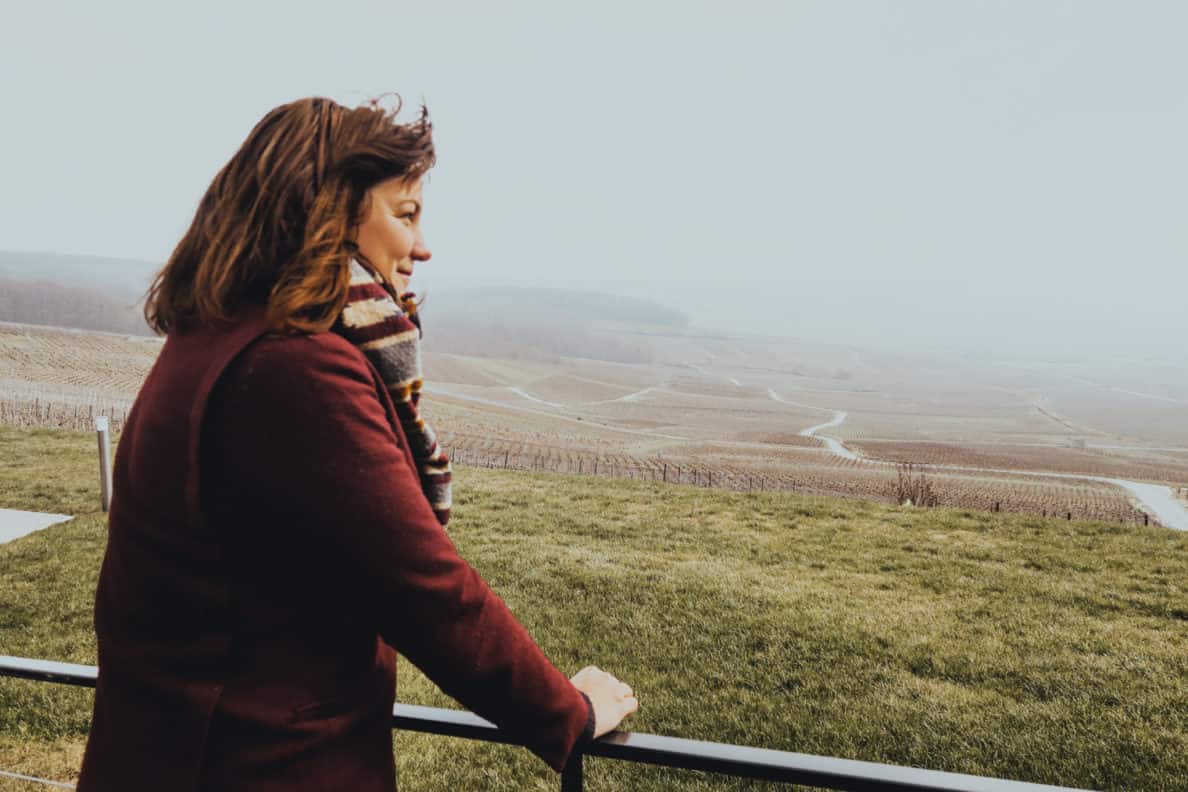
In early March, I hopped in my speedy Fiesta en route de Champagne. It's a mere five-hour drive from Rotterdam, but with the right podcasts blaring, it feels like fifteen minutes. It truly is the perfect weekend getaway for wine lovers.
We took a look at the cellars of small champagne producers, but also of the big names such as Billecart-Salmon and Bollinger.
Here's a video of this epic wine journey:
The beauty of this journey is that each house has its own philosophy on making Champagne, meaning my previous blog post about the Méthode Traditionelle is actually completely irrelevant.
#1 Heucq Champagne
When Cees van Casteren gives MW a tip, you naturally have to follow it. And so it was that we kicked off our trip at André Heucq, owner (third generation) of Heucq Champagne in Cuisles. The winery is small, especially compared to the other big names we'll be visiting this weekend.
André owns six hectares of vineyards and produces six different champagnes, in which, surprisingly, Pinot Meunier plays a major role. Pinot Meunier is usually dismissed as a "blending grape," one for mixing, but in recent years, 100% Meuniers have increasingly appeared on the market. The underdog is going to shine, and that pleases me.
Although I'm usually not averse to a sweet treat, I'm thrilled with Heucq Champagne Extra Brut, with only 1 gram of sugar per liter. It's highly acidic, but also has a salty undertone that makes you crave—here it comes: oysters with Parmesan gratin.
Fun fact #1 : André Heucq interned at Leclerc-Briant, see next visit. If I understood correctly, he also aspires to that.
Fun fact #2 : Heucq isn't averse to a bit of experimentation. And guess what? He's aging a few bottles in the sea. Somewhere near Brittany, at a depth of 70 meters. Say what? Inspired by the shipwreck discovered in the Baltic Sea in 2010, where they found 168 bottles of Veuve Clicquot that were still perfectly drinkable. There was even a little bit of bubbly left in them.
Normally, I'm not a fan of Brut Nature, but this one was something different. Deliciously salty.

#2 Leclerc-Briant Champagne
Leclerc-Briant (Épernay) is the only Champagne house that operates 100% biodynamically and is Demeter-certified. Many houses operate biodynamically—and this number has been increasing in recent years—but none have been awarded the certification. Admittedly, biodynamics is a bit vague. The position of the sun and the moon are factors. No chemical pesticides are permitted, but "plant-based teas" are used to prevent diseases.
Leclerc-Briant is a unique player among all the Champagne power. The cellar work also differs from that of most Champagne producers. For example, very little, or sometimes no, reserve wine is added.
Fun fact #1: Colombian rum is also matured in the Leclerc-Briant cellars.
Fun fact #2 : There's a lot of experimentation going on. The latest addition is an egg-shaped tank with a gold interior. It's supposed to give the wine new energy.

#3 Charles Heidsieck Champagne
In the afternoon, Charles Heidsieck (Reims) will open its doors – not to be confused with the Piper Heidsieck party venue. Both, however, are part of the same parent company. Charles Heidsieck is the more upscale champagne of the group and is located in Reims.

This demonstrates once again how important chalk is to Champagne. It began two thousand years ago when the Romans dug chalk from the ground to build houses. These chalk cellars have since been transformed into Champagne cellars. The temperature (10 degrees Celsius) and humidity (90%) are ideal for preserving these gems. The Charles Heidsieck chalk cellars are eight kilometers long and, along with the other cellars (Moet & Chandon, Pomery, Veuve Clicquot, Taittinger, Ruinart), are on the UNESCO World Heritage List.
That these aren't Piper's celebratory champagnes is evident from the period sur lie (the "sur lie" period). Non-vintage champagnes are aged on the lees for at least five years, while vintages generally take nine. After disgorging, the champagnes are allowed to rest for a while before being released.

Fun fact #1: They want to preserve the tradition of manual "remuage." Therefore, the bottles are still turned by hand in the cellars. Two young men are being trained.
Fun fact #2: Hundreds of thousands of bottles are stored in the cellars. At one point, we stand before an impressive, thick row of bottles called "La Mer de Champagne." Isn't it beautiful?
#4 Billecart-Salmon Champagne
The next house we knock on is Billecart-Salmon (Mareuil-sur-Ay). Loyal fans know Billecart-Salmon from their striking Champagne Rosé, which incidentally contains a surprisingly high percentage (50%) of Chardonnay. Others may know Billecart-Salmon from The Millennium Tasting in Stockholm. In 1999, the 1959 Nicolas François Billecart Champagne won the prestigious title of "Champagne of the Millennium," while the 1961 came in second, beating the likes of Dom Pérignon, Taittinger, and Krug.
After this visit, I learned a lot about champagne. We were given an explanation of all the processes, from vineyard to cellar. Of course, we also got to taste, and in my opinion, Nicolas François Billecart 2002 stole the show. But then again, I'm a sucker for vintages and their accompanying notes of brioche and croissants.
Fun fact #1: Billecart-Salmon has built a separate space in their cellar for making liqueur de tirage. Here they select from 72 reserve wines.
Fun fact #2: The way they make their champagne is derived from beer fermentation. Read more in A look inside Billecart-Salmon .
#5 Bollinger Champagne
Bollinger (Ay) holds a special place in my wine heart, as I once had the Old French Vineyards Tasted. Loyal readers of Le Club des Vins couldn't have missed it, but let me reiterate just how special this champagne is. Vieilles Vignes Francaises is made from—yes, indeed—old French vines. This is remarkable because most European vineyards no longer have original vines, but are grafted onto American ones. The cause of this is phylloxera, a vine louse that damages the roots of Vitis Vinifera.
Champagne Bollinger boasts two tiny, walled vineyards that barely survived the devastating blow of this phylloxera. Since 1969, Bollinger has been making champagne exclusively from these vineyards—in good years. I don't use the term often, but in this case, it's fitting: This champagne is unparalleled. Unfortunately, so is the price.
Fun fact #1: Bollinger has a stock of no less than 700,000 magnums of reserve wines in their cellars.
Fun fact #2: The lady who showed us around Bollinger told us you could lie down in a press without getting ripped. That's how gently the Champagne is pressed!

#6 Henri Giraud Champagne
Just when you think you've finally grasped how champagne is made, you can knock on Henri Giraud's door (Ay) and start over. While many champagne houses are full of stainless steel tanks, Henri Giraud has no tanks at all.
While you generally hear that stainless steel tanks guarantee the purity of the wine, Henri Giraud teaches you that it primarily makes the wine mature. This led him to replace his tanks with terracotta. The base wines are aged in terracotta, ceramic, and/or oak. The wood is sourced from the Argonne Forest, seventy kilometers south of Épernay, where the wood for the barrels used to be gathered. Henri Giraud has revived this tradition.
Fun fact #1: Henri Giraud uses oak from the Argonne Forest, but also plants new trees. Three types of forests provide three types of oak barrels, ranging from smoky to fruity.
Fun fact #2: The winemaker is present with the cutter (the maker of the barrels). The toasting is important and should be light. The winemaker stops the toasting by smelling.
#7 Roger Manceaux Champagne
We conclude our trip at Roger Manceaux Champagne (Rilly-la-Montagne). A family business, truly. The two sons (and in-laws) of the current director are waiting for us. A little later, Grandma ("the big boss") also pops in to check on everything. They own 12 hectares of Premier Cru and Grand Cru vineyards and make their own Champagne.
Roger Manceaux is giving us a wake-up call with the current price for one kilo of Premier Cru grapes: €6.50. On average, you need 1.5 kilos of grapes for one bottle, so yes, Champagne is expensive. It's attractive for small growers to sell their grapes to the big names. They're paying a lot of money for them. But what happens when those big names control 40% or more? Things can be very different then. I really enjoyed the Rosé and the Blancs des Noirs, and they're now in my fridge.
Fun fact #1: Roger Manceaux is a small player in Champagne. Small is relative, as they produce 100,000 bottles a year. Sounds like a lot, but it's not much. Moet & Chandon produces over 30 million.
Fun fact #2: Roger Manceaux is a Récoltant Manipulant, Also called Grower Champagne (like Heucq – our first visit). All others are so-called Négociant Manipulants, houses that purchase grapes from contracted growers in addition to grapes from their own vineyards.
More travel?
Le Club has even more great wine tours in store for you. You can also easily combine the Champagne region with a trip to Paris .
- A road trip to the Ahr: wines from the Ahr region
- A wine lover in Burgundy
- A wine lover in Beaujolais
- We've also made a lot of podcasts about champagne.
- A look inside Henri Giraud's home
- A wine fan in Champagne


Share:
Inside Billecart-Salmon - the traditional method up close
Which wine with sushi?