
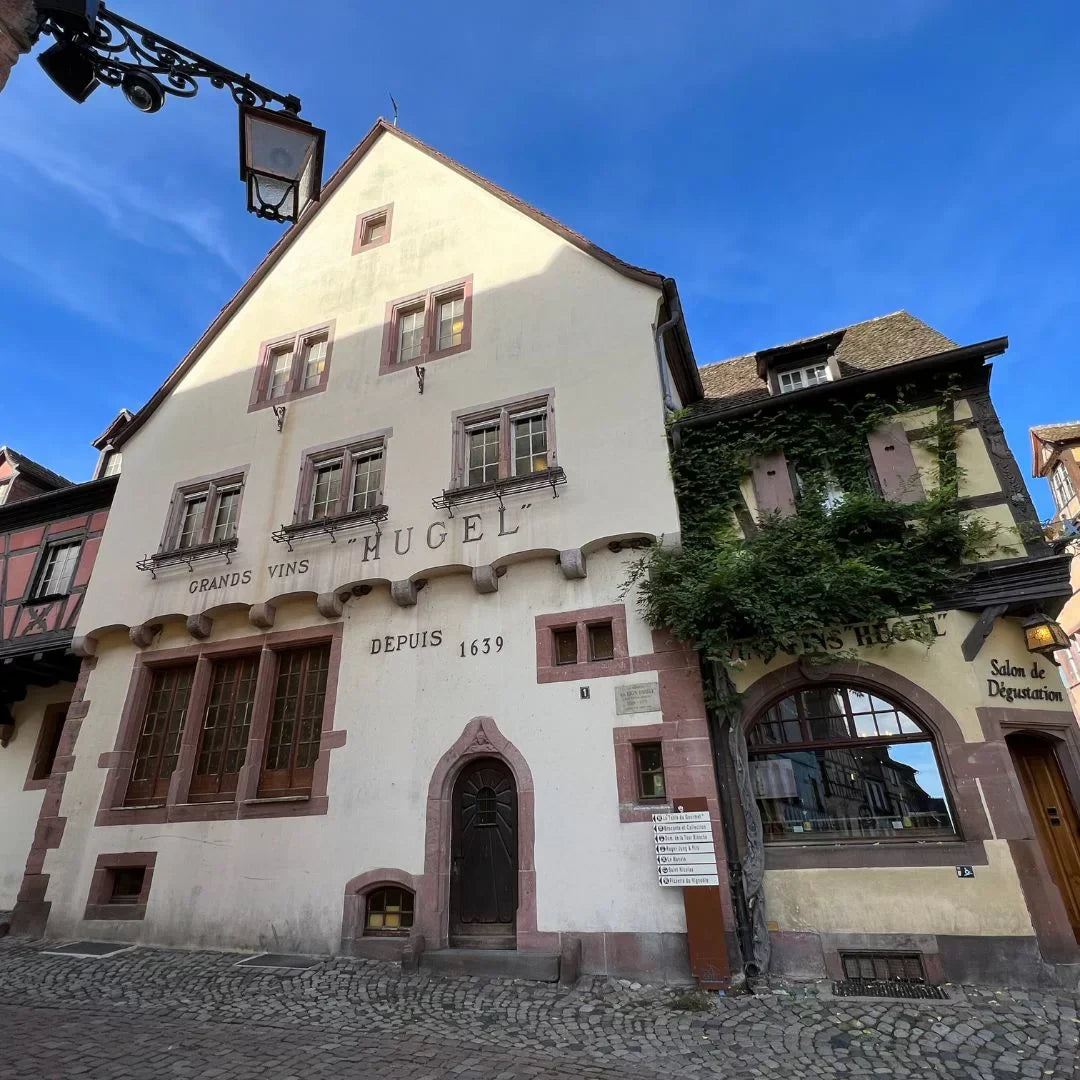
Driving through Alsace, you're driving in France, but you feel like you're in Germany. Place names are almost always German, and the many half-timbered houses create a distinctly un-French atmosphere. When I was in Alsace with my tasting group from the vinology program, we quickly started discussing how to pronounce Hugel. Is it huuzjel, is it ughèl or just the Dutch Hugel ? When we visited, it turned out that huuzjel and uughèl are used interchangeably at the winery. First misunderstanding cleared up.
Gourmet
Anyway, the winery and a nice boutique for tasting and buying are located next to each other in the picturesque and touristy village of Riquewihr. Traditionally, Hugel was also a gourmet . A gourmet is a winemaker who used to sell wines from other houses. A kind of broker in wines, so. After all, not every winery had the resources to travel around and transport wines far. Were you a Gourmet , that was a real sign of trust. After all, you were selling your own wine, but also that of others. You were expected to give all wines a fair shake. Interesting.
Expand
Hugel is a fairly large winemaker in itself, by Alsatian standards: they own 30 hectares and have been around since 1639 (now the 12th generation at the helm). They grow only the grape varieties that are called noble varieties in Alsace: Gewürztraminer, Riesling, Pinot Gris, and Muscat. They once wrote the wine legislation that now applies generally to Vendange Tardive and Sélection de Grains Nobles .
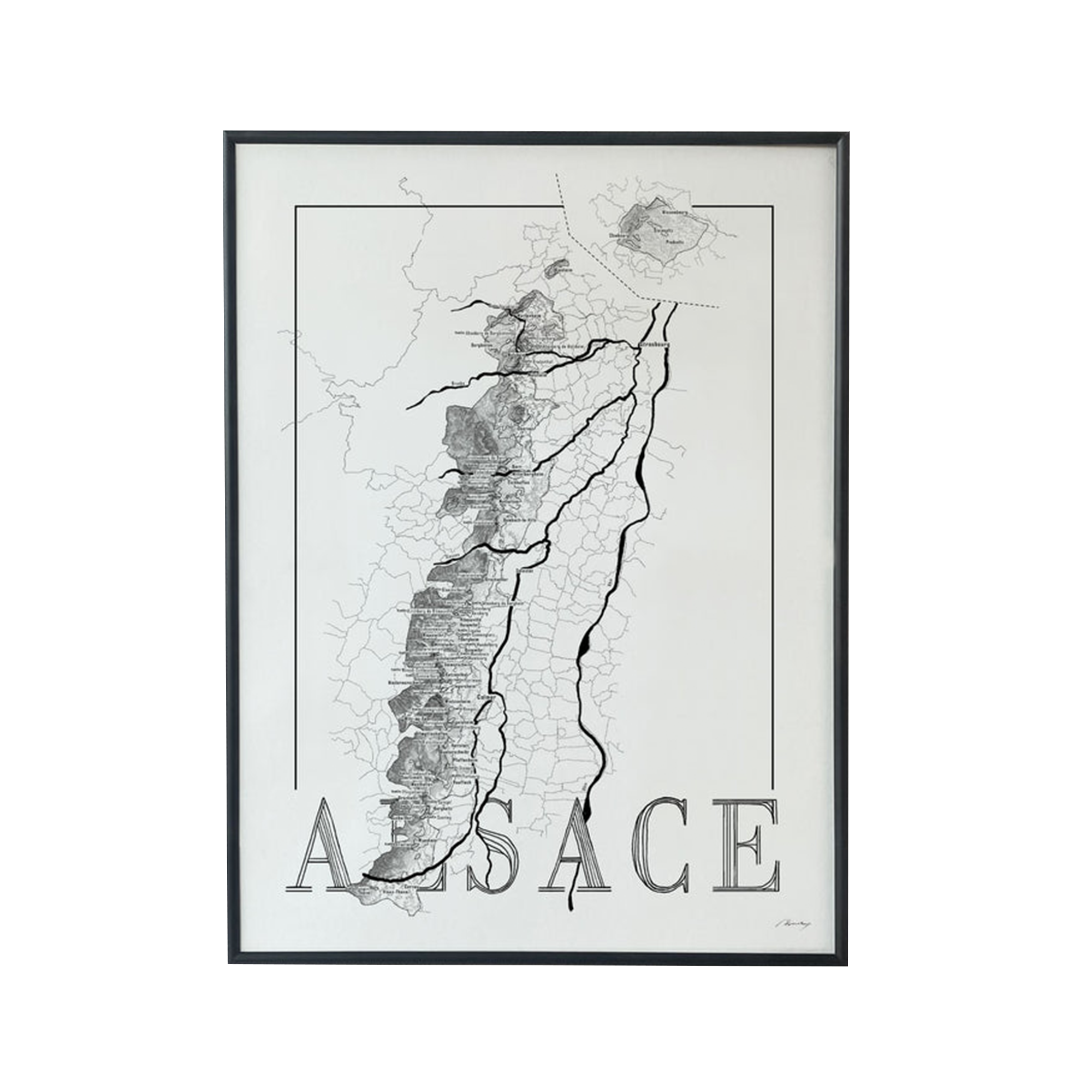
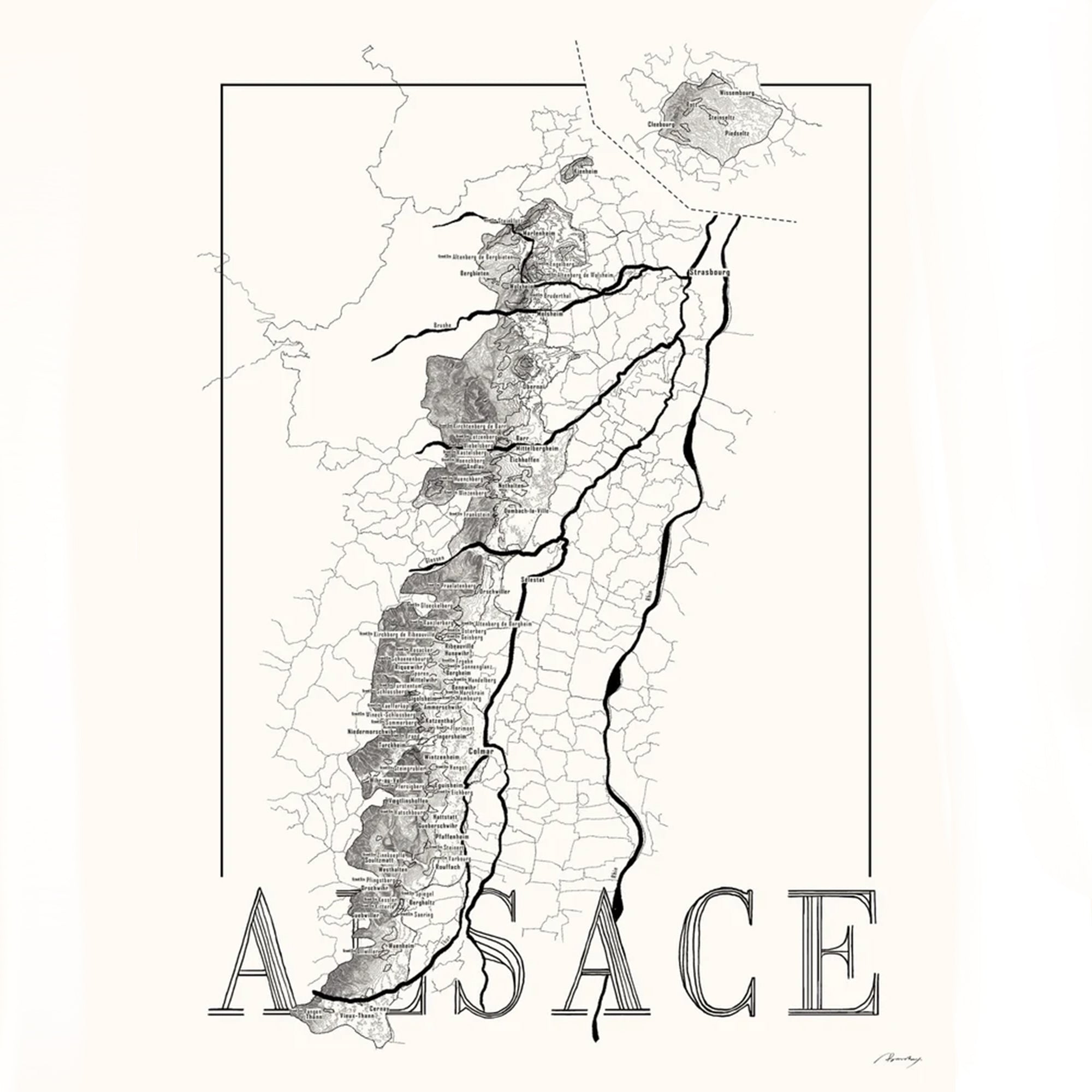
Expanding in Alsace in the right places, however, isn't easy. The Grands Crus are found on the slopes of the Vosges foothills. This is clearly visible in the red areas (dots) in the photo I took of this 3D map.

Red denotes the grand crus, yellow the remaining vineyards. If you want to buy additional vineyards in Alsace, you're dependent on a regional authority to which sellers are obligated to sell their vineyards. This authority then offers these vineyards for sale, but primarily awards them to new winemakers. Not easy if you're an established winery looking to expand. The only way to expand your bottle volume is by buying grapes from other growers. Hugel also does this with contracted growers, who own an additional 110 hectares.
The oldest foeder in the world
I previously wrote about this in an article Domaine Moritz about the difference between foeders and barriques. The officially oldest foeder in the world is located at Hugel and dates back to 1715 and is called S. Caterine . They even have a Guinness Book of Records certificate. Incidentally, that oldest barrel is also beautifully decorated with all sorts of carvings and is still in use. I find such carvings more appealing in a wine cellar than in, say, an old church or something. The story goes that a group of Chinese people were recently given a tour and simply refused to believe that the entire wine cellar is actually in operation and that hard work is being done. They saw the cellar as a kind of museum: made for display.

Matured Riesling
Fortunately, that's not the case, and Hugel makes fantastic wines. They do this without any fuss, as they say: nothing is sweetened, nothing is aged in barriques. They are all about the purest expression of the grape and/or the terroir. Hugel only releases its wines when they believe they are perfectly ready to drink. This is how their Riesling Grossi Laüe (Alsatian dialect for Grands Terroirs ) from 2013 is now sold out and they just released the 2012. The 2013 was simply ready to drink earlier and was therefore released before the 2012. Hugel considers a wine ready to drink when the fruit aromas begin to diminish slightly and the aging aromas (tertiary aromas) begin to increase. At that point, they consider a wine to have enough complexity to drink. Their Rieslings, in particular, can age perfectly, meaning that further aging can certainly occur at that specific point. For every wine they release, they also recommend a drinking window . Or: how long the wine can still be kept.
We tasted a whole range of wines, and I absolutely loved that 2012 Riesling Grossi Laüe. Such an old Riesling has so many wonderful aromas, so much complexity. You really have to taste it. Luckily, you can. I took home three boxes (one of which I gave away to a helpful Frenchman when I had a flat tire), and the wine is now on tap at Walsjérôt . It has a drinking window of at least another eight years. But we're not going to wait for that!
More about Alsace?
Guest blogger: Jelle Stelpstra
Jelle Stelpstra started his career as a tax advisor but after 12 years switched to something even more interesting than taxes: wine. Jelle owns the Walsjérôt wine bar in Rotterdam and is a vinologist. At Walsjérôt, you can pour your own wine from over 70 wines.
Share:
A look inside Domaine Moritz
Tasted: Burlotto Monvigliero 2018