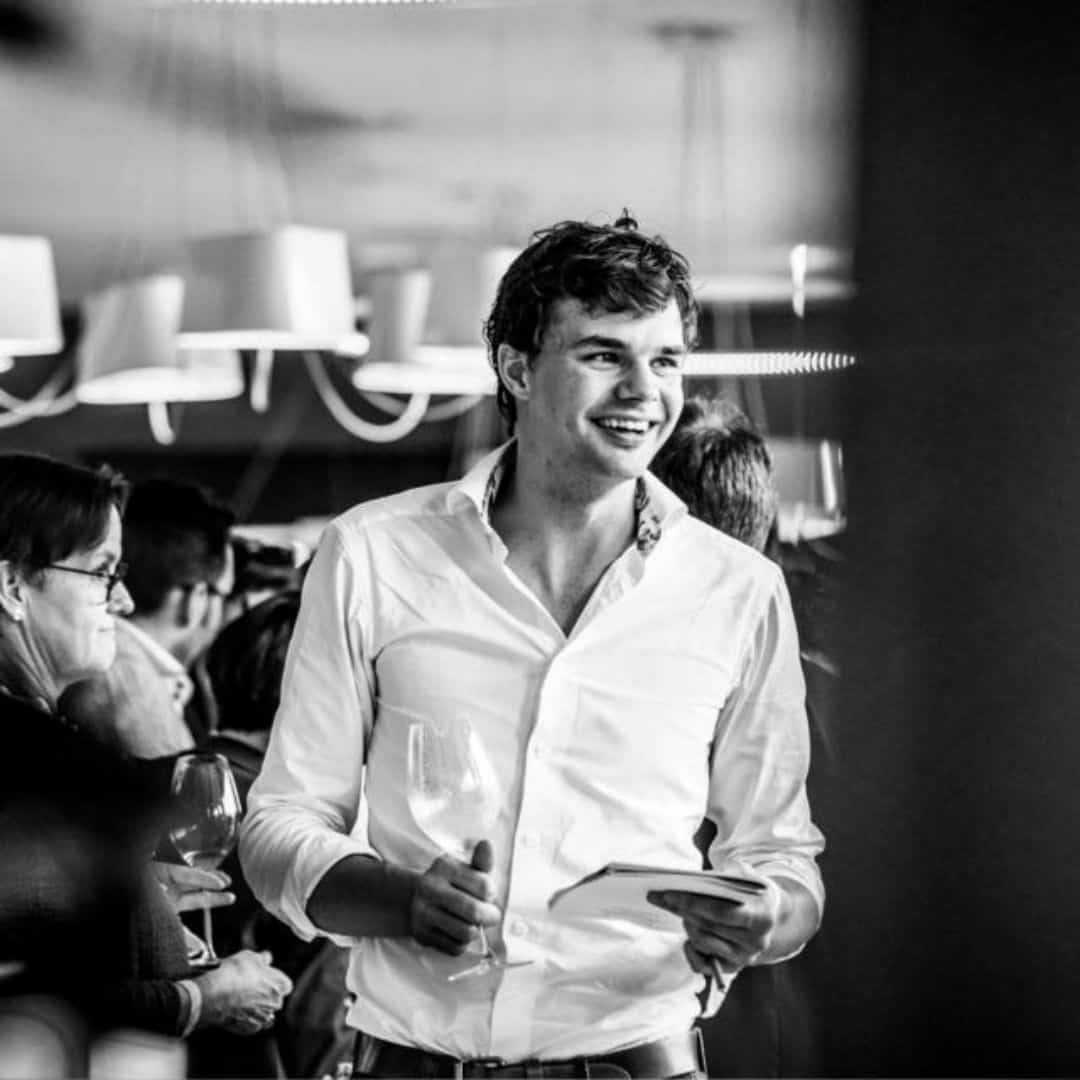
I'm a sociologist, and after graduating in the Netherlands, I immediately moved to Switzerland to work successively at a winery, a Michelin-starred restaurant, and now a wine importer. Since September, I've embarked on the biggest challenge of my life: becoming a Master of Wine. In this series, I'll share my experiences. Last time , I talked about my expectations; this time, I'll talk about what's expected of me.
Examples, examples, examples . That's pretty much my mantra these days. You have to absorb all the information like a sponge so you can excel during the exam. Excel, because the theory section consists of five sets of three essays on grape growing, winemaking, wine treatment (filtering/stoppers, etc.), the wine market, and current affairs in wine. There's also a practical exam. For this, you have to blind taste twelve wines. The following applies: use evidence from the glass .
I will explain to you what both exams look like in detail.
Theory
The Master of Wine program encourages critical and analytical thinking, thanks to the way the questions are designed. A possible question is:
How can a viticulturist best ensure water sustainability when establishing and managing vineyards in drought-prone regions?
A broad question that actually encompasses several questions. The candidate must answer how a winegrower should manage vineyards with limited water. But that alone isn't enough, because the connection must be made with sustainability and how to manage water as sustainably as possible.
I find this way of asking questions very interesting, because it encourages a Master of Wine student to think. It's not just about dry knowledge; you have to be able to apply that knowledge analytically. This, of course, makes it much more challenging.
For every argument you must real life example have wineries. You are expected to have examples of at least three different continents and various types of wine . Simply knowing Europe inside and out isn't enough; the whole world is covered. A challenging task. It's not necessarily difficult, but it's definitely a lot of work. Fortunately, there's a syllabus that provides a framework for what we can and can't expect.
Practice
There's no syllabus for the practical part, so you can ask for any wine in the world. Good luck with the competition!
There are three papers: P1 is white wine, P2 is red wine, and P3 can be anything from sparkling wines and fortified wines to regular white or red wines. Each paper consists of twelve wines.
The wines are often divided into flights. An example is: Wines 1 & 2 are mainly made from the same grape varieties, but come from two different countries .
These tips are crucial for getting a sense of what kind of wines you might be looking at. The questions are divided into seven categories: origin, grapes, winemaking method, quality, style, commerciality, and maturity .
At the institute they like to combine these questions, for example:
- Identify the origin as closely as possible, with reference to grape variety/varieties used
- Regarding to style and quality of the wines, which winemaking methods are used to produce these styles
When answering these questions, always keep the "why" in mind. The goal isn't just to be able to describe how the wine tastes, but also to be able to describe how these flavors are created, for example: “moderate spicy sensation and moderate palate weight with slight toast aromas suggested 3 months read contact” or “ absence of tertiary aromas suggest protective handling of the grapes ”.
The examiners want to see facts. If the wine has a woody aroma, your brain should already be buzzing. How long? What kind of wood? Is the wood toasted? Is it new or used? What effect does it have on the wine?
Even though it's officially the practical part, there's a lot of theoretical knowledge involved. For example, if you taste new American oak (coconut, vanilla, etc.), but the wine also has a dry finish, you're quickly leaning towards Rioja. A mistake you absolutely cannot and shouldn't make is tasting something in your glass that theoretically isn't possible. Saying there's a Tokaj 6 Puttonyos in your glass, but setting the sugar content at 125 grams. Impossible . A Tokaj 6 Puttonyos can only bear this name if it contains more than 150 grams of sugar per liter.
And now?
In both parts, theory and practice, the questions are in-depth and I am encouraged to think (hard). In terms of studying, it works a little differently than in the WSET Diploma . Here, I picked up a book and could study for ten hours straight. That's impossible for a Master of Wine. For this course, I have to analyze, reason, and importantly, put my own spin on it. Because of the nature of the questions, you're expected to truly understand the theory and the wine in front of you. With a Master of Wine, you have to go the extra mile, and this is the challenge for me, but also the fun part, and the reason I study like crazy—because I want to be able to do this!
How the training actually works, how many hours I put in, and what it actually costs to get it all done, you can read in part 3. Stay tuned!
Want to know more about Mats? Follow him on Instagram >
Find out more about WSET and Master of Wine here .
Guest blogger: Mats van de Steenhoven
I am a sociologist, and after my studies in the Netherlands I immediately left for Switzerland to work successively at a winery, in Michelin-starred gastronomy and now at a wine importer.
Since September 2020, I have started the biggest challenge of my life: becoming a Master of Wine.




Share:
Mats wants to become a Master of Wine (part 1)
Back to the Beaujolais