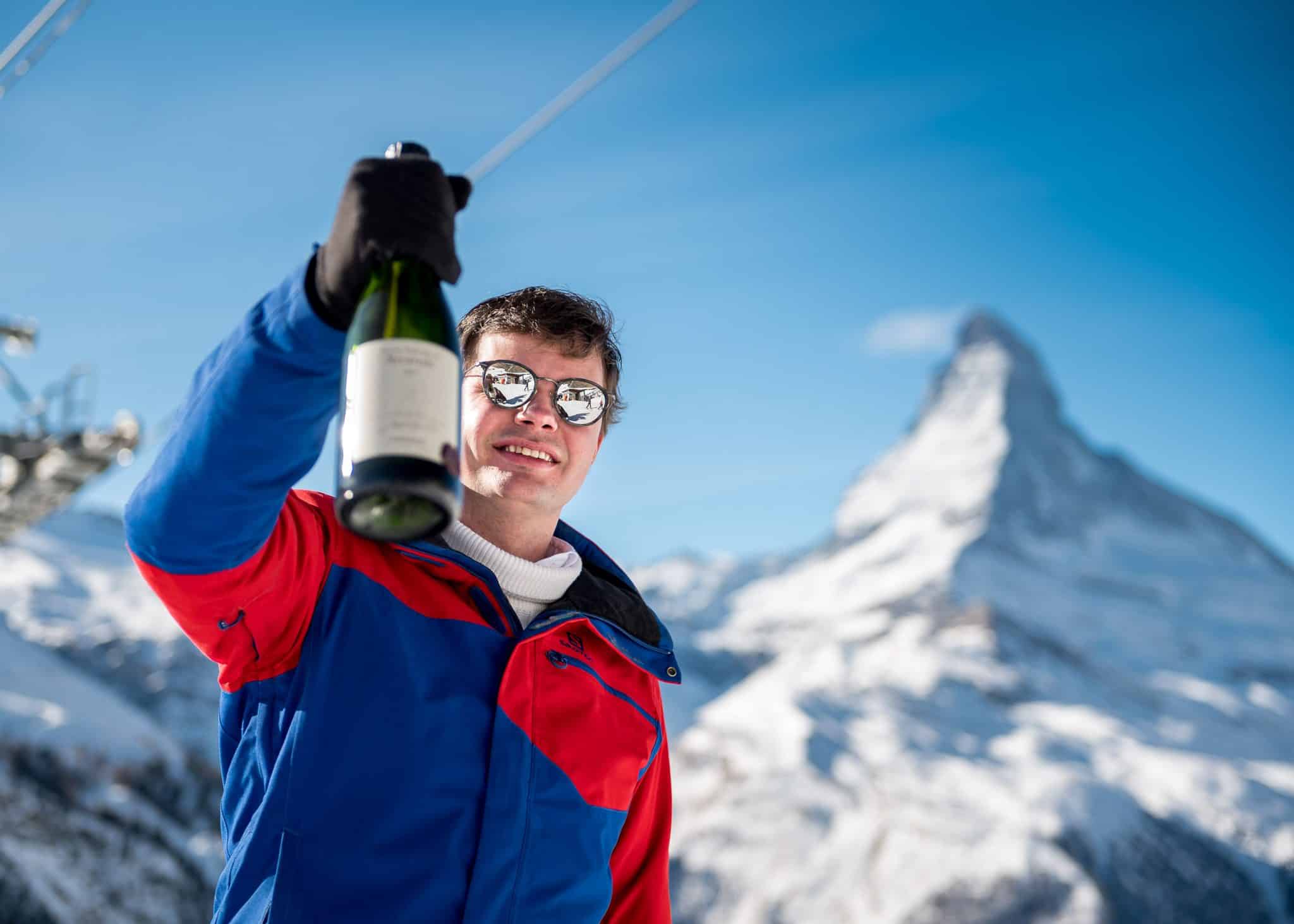
I'm a sociologist, and after graduating in the Netherlands, I immediately moved to Switzerland to work successively at a winery, a Michelin-starred restaurant, and now a wine importer. Since September, I've embarked on the biggest challenge of my life: becoming a Master of Wine. In this series, I'll share my experiences. This first installment, I'll share my expectations.
I can still remember the moment I heard I'd been accepted like it was yesterday. While enjoying pizza on a terrace in Naples, I received an email from the institute. We immediately accompanied the pizza with a bottle of champagne.
First things first, when I received that email, it was September. Over the past five months, I've learned that becoming a Master of Wine demands a tremendous amount of effort, and it's even harder than I thought. I've gained even more respect for the 483 people who can call themselves Masters of Wine. And even though I'm far from there yet, and however challenging it may be, it's doable with good planning and plenty of motivation. And I especially have the latter.
Can I do it?
I rushed through my WSET diploma because I wanted to start the Master of Wine and Spirits program, but I wasn't entirely sure if I should start yet. This was mainly because I'm relatively young and have little experience in the wine world.
To be accepted you must taste two wines blind and write an essay, but the most important thing is a recommendation from a Master of Wine. Caro Maurer , a seasoned medical doctor with an excellent reputation, convinced me that I wasn't too young and that I could gain experience during the program. She also wrote my recommendation, and I still believe she was the reason I was accepted.
How does it work?
To become a Master of Wine, you have to spend at least three and a maximum of seven years. Stage 1, which I'm currently doing, is like a second round of applications. The Stage 1 exam is in early June and consists of two parts.
For the practical you have to taste 12 wines blind (in 135 minutes) and for the theory, Write two one-hour essays of 1000-1200 words. After this exam, there are three options. The best you'll hear is that you'll be able to proceed to Stage 2, but it's also possible you'll have to repeat the first year, or you might simply be dropped from the program.
In Stage 2 the real work begins, this exam also consists of the practical and the theory , but more extensive. In 4 days you have to taste 36 wines blind and write 13 essays. In stage 2 it is possible to practical to get and to the theory You have to do both again. The same applies the other way around, of course, but you might also have to do both again. The next attempt is a year later, and you have a total of five years to complete it. The final phase is Stage 3, where you must write a thesis on a topic of your own choosing, naturally related to wine. This is similar to a Master's thesis.
Essay example
It's not just the depth that surprised me, but also the breadth of what you need to know.
An example I wrote a practice essay on yesterday is the use of enzymes in wine. For this topic, you're expected to know which enzymes are used in wine—for white, red, rosé, sparkling, and fortified wines—and how a winemaker in New Zealand handles them differently than a winemaker in Chile or Tokaj.
In addition, for the practical Literally every wine in the world will appear on your exam. This means a top-quality Napa can be alternated with a Hondurrabi Zuri, which is what I had in my glass last week during a practice exam.
Let's go!
Even though I find the required material extremely in-depth and broad, it also motivates me immensely. When I complete this program in about five years and can call myself a Master of Wine, I will truly be a Master of Wine.
Do you also want to become a Master of Wine? You can find more information on the website of
Guest blogger: Mats van de Steenhoven
I am a sociologist, and after my studies in the Netherlands I immediately left for Switzerland to work successively at a winery, in Michelin-starred gastronomy and now at a wine importer.
Since September 2020, I have started the biggest challenge of my life: becoming a Master of Wine.


Share:
The Road to Weinakademiker - Part 10 (Passed?)
Mats wants to become a Master of Wine (part 2)