
Madeira is a Portuguese island in the Atlantic Ocean, about 700 kilometers off the coast of Morocco. But Madeira also makes a fantastic port-like fortified wine of world renown. Walsjérôt was closed in January due to COVID-19 restrictions. It was a great opportunity for me to explore the island and its wine!
Dead wine
How do you ruin wine? Oxygen and heat. Leaving a bottle open too long? And maybe even next to a heater? No way that wine is still good. Except Madeira! Halfway through the 18th century. In the 18th century, the Portuguese fortified their Madeira wines to preserve them for long-distance voyages. Those barrels of wine on such a ship had to endure a lot: it became scorching hot in that hold, and the 18th century was truly airtight. Of course, century wooden barrels didn't work either. When not all the wine was consumed during the voyage and some more barrels returned, the Portuguese discovered that the wine had certainly not deteriorated. There were enthusiasts for this wine, and when it became clear that there was money to be made, they even took extra barrels on the voyage and brought them back oxidized and heated. Madeira wine was born!
A visit to Blandy's
Peeters Winery, owned by Moritz Peeters, the Netherlands' foremost Madeira expert, arranged for me to visit the Blandy's winery. It was wonderful to learn about the island's rich history and the wine, and, of course, to hear how Madeira is made today. As you can imagine, the barrels are no longer transported by boat these days. There are now two production methods. The estufagem method is used for the more affordable Madeiras. The wine is heated by heating elements to around 50 degrees Celsius for three to five months. The better Madeiras are treated using the canteiro method: here, the barrels of Madeira are stored in a heated space (for example, a warehouse with a glass roof) where they can age for six months or even decades.


Smelling for hours
Then the big question: what does it actually taste like? If you're completely unfamiliar with Madeira, I'd compare it to tawny port, but with significantly higher acidity. And that's an advantage, because it makes Madeira more appealing to me than port. It becomes less cloying quickly.
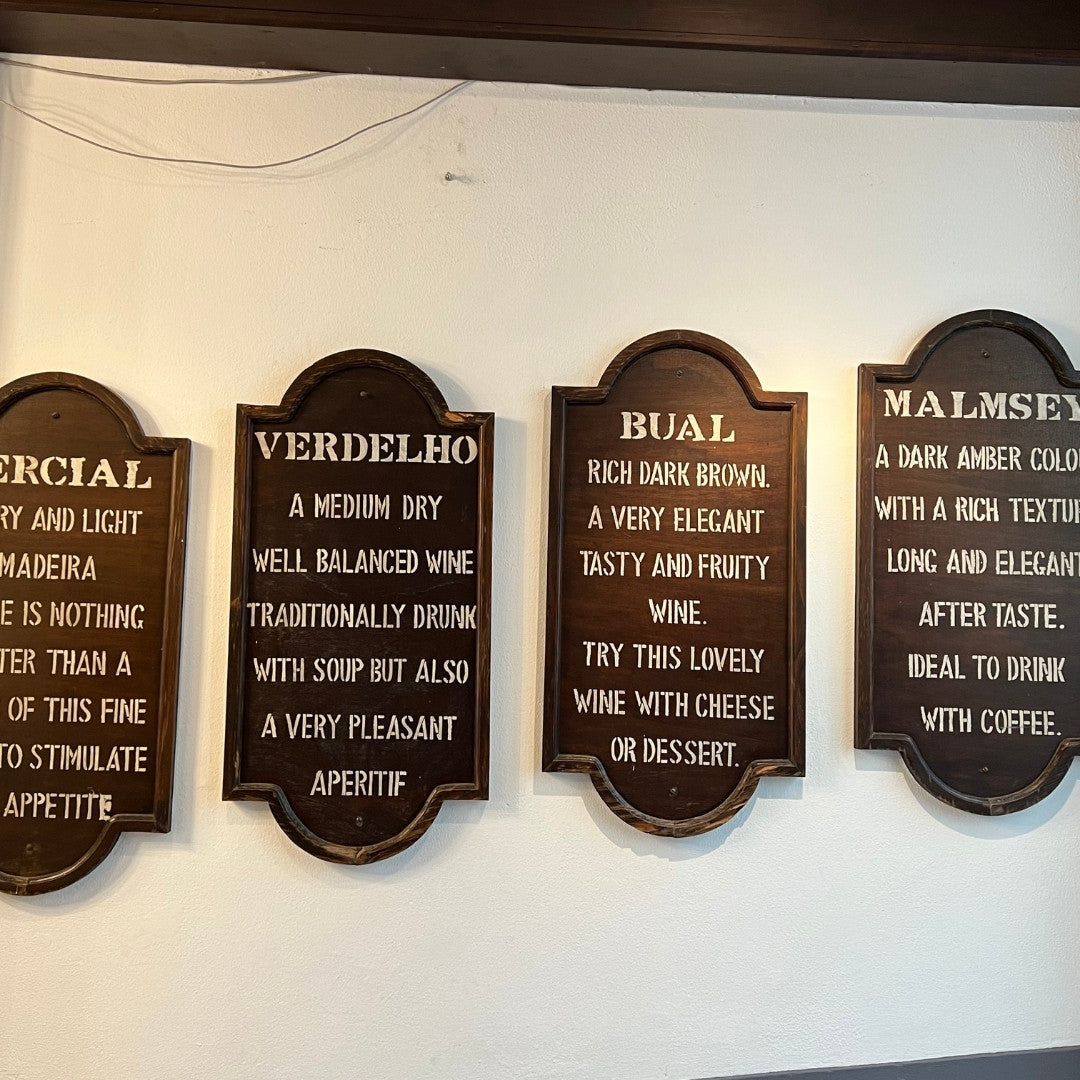
At Blandy's, I tasted ten-year-old varieties of the four major Madeira grapes: Sercial (for the driest style of Madeira), Verdelho (slightly less dry), Bual (the second sweetest), and Malmsey (the sweetest style, also known as Malvasia). I also tasted a 2004 Colheita. You might also recognize that term from Port: wine from a single vintage aged in oak for at least five years. With all styles, the nose is filled with notes of dried fruit, orange peel, figs, plums, toffee, and vanilla. You could sniff it for hours.
Later, I also did a tasting at the HM Borges winery to better understand the precise effect of each grape and the specific style of each producer. I opted for the four single-vine, 15-year-old Madeira grapes and the four cheaper varieties: the four styles all made from the Tinta Negra Mole grape, using the estufagem method, and only three years old. Starting with the latter: not worth it. You really should avoid those cheaper varieties. They lacked complexity and had a somewhat unpleasant oxidative note. So, just throw them in a tasty Madeira sauce with a nice piece of meat and drink the slightly older styles. Much more interesting. The aromas of the HM Borges Madeiras differed in nuances from those of Blandy's. For example, I found the Borges wines smelled a bit more like Hansaplast bandages. Not unpleasant!


Tips
Going to Madeira? Then Blandy's is definitely worth a visit. Book a tour and a tasting, and you'll have a solid foundation of Madeira knowledge. I have a few more tips for wine and food lovers!
Barbusano Winery
It's wonderful to drive around Madeira. The landscape is beautifully green and often truly spectacular. I drove along the coast from the capital, Funchal, to the town of São Vicente to visit the Barbusano winery. I walked through the vineyards in the strong wind and slipped twice: it was incredibly steep. Then I tasted six wines. And they were so acidic. I realized that my image of Madeira as a warm island with probably also full-bodied, sultry wines was completely wrong. Many vineyards are located by the sea and at altitude. This creates a considerable cooling effect and leads to grapes with considerable acidity. You notice this in Madeira, and it's a pleasant contrast to the sweetness. But you also notice it in the table wines, and then it becomes less enjoyable. Later, I also tasted wines from the Atlantis winery, and I didn't really like them either due to the excessive acidity. Still, it was a nice visit!
Fish with banana and meat skewers on bay leaves
Madeira's signature fish dish is black swordfish (espada in Portuguese) with banana. It's a truly ugly fish with enormous eyes, paired with a combination that might seem counterintuitive at first glance: banana and/or passion fruit. Anyway, it wasn't too bad. Quite tasty, though not a huge highlight. Madeira's signature meat dish is espetada. Take a sprig of bay laurel (plenty of bay laurel in Madeira) and thread pieces of beautiful beef onto it, alternating with bay leaves. It's cooked over an open flame and served hanging. The best on the island can be found at Santo António restaurant in Câmara de Lobos. A taxi from Funchal will take you there for about 20 euros. Well worth it. I ate it with a delicious Trincadeira 2016 from Cortes de Cima in Alentejo. Highly recommended!


Two nice wine bars
To conclude this blog, two more tips for great wine bars. Both in the capital, Funchal. I liked Habemus Vinium the best. Quite a few wines by the glass, all Portuguese, and with a lovely, young owner who was initially a bit reserved, but opened up if you gave him a bit of space. We did, and that's how we got to talking about his favorite wine: Quinta do Perdigão. We agreed with him that he would open the bar a bit earlier for us the next day and that we'd love to share that bottle with him. No sooner said than done, and the next day we enjoyed two wonderful wines (a Reserva from 2006 and an Alfracheiro from 2013). Very tasty, and it was great to chat with him about life in Madeira!
Another great wine bar is Terroir. It's run by a slightly older man who doesn't speak English very well. This made it a bit harder to express our wishes, and not everything on the menu was available. Nevertheless, we enjoyed some delicious wines, there's plenty to taste, and they even gave us a board with truly fantastic Portuguese cheeses and charcuterie. Go for it!
Want to taste Madeira?
At Walsjérôt we now have a very nice Madeira from Blandy's On tap : the Cossart & Gordon Bual 5 Years Old. Come try it: it's the perfect introduction to Madeira!
The CO2 emissions from our travels are offset.
Guest blogger: Jelle Stelpstra
Jelle Stelpstra started his career as a tax advisor but after 12 years switched to something even more interesting than taxes: wine. Jelle owns the Walsjérôt wine bar in Rotterdam and is a vinologist. At Walsjérôt, you can pour your own wine from over 70 wines.
Share:
Bordeaux to love
On the tasting table: 8 vintages of Chateau d'Yquem