
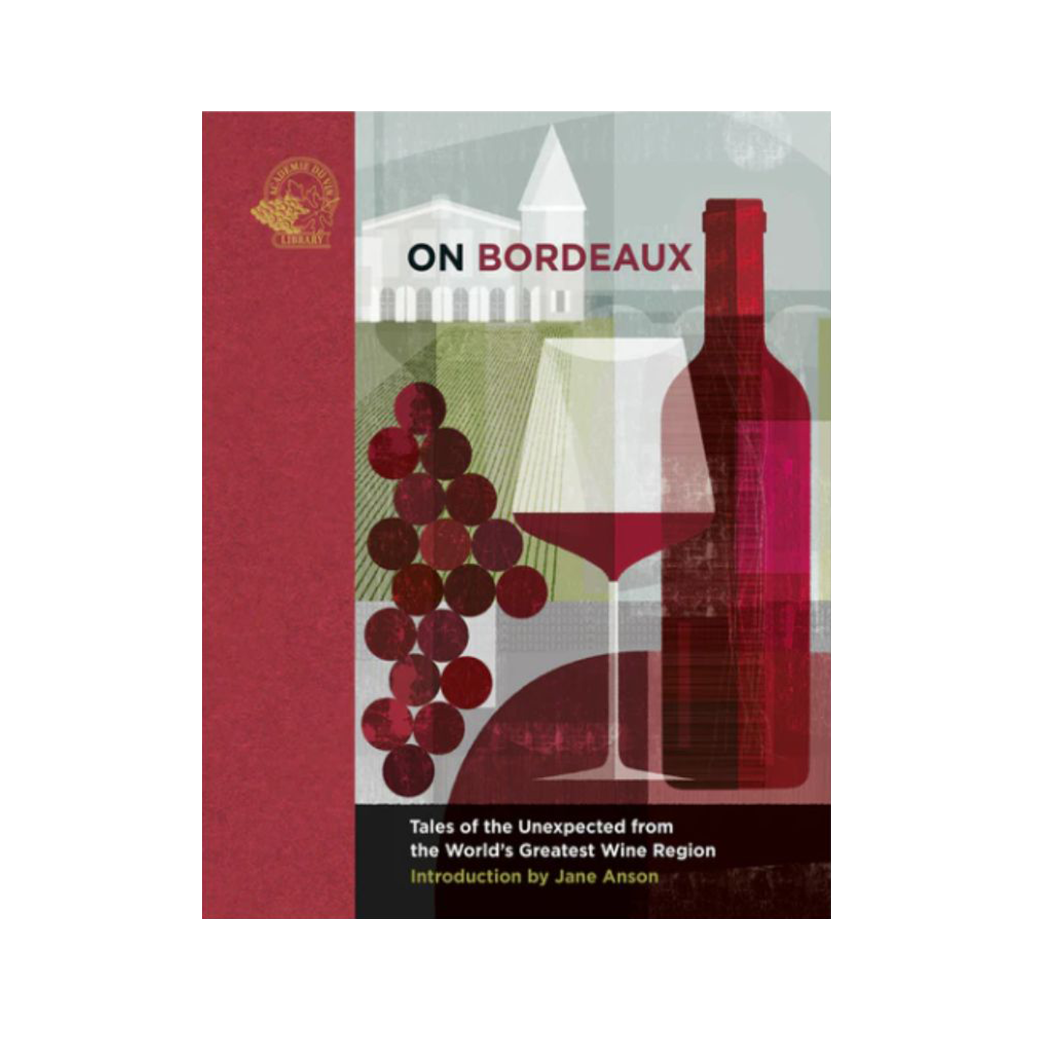
“Bordeaux is so familiar to so many of us that we almost stop seeing it.” Thus wrote Jane Anson in Inside Bordeaux – the great book on Bordeaux, published in mid-2020.
I get that. For a while, Bordeaux was a trendy place to hate. It was simply there. Difficult to understand, and perhaps even harder to find an accessible wine. At the same time, exciting stories emerged from other regions like Beaujolais and the Loire. Yet, Bordeaux never really disappeared from the scene. What do you expect? The region has more vineyards than all of Germany combined. That's perhaps also one of the reasons why finding a good bottle takes a bit of research.
A few weeks ago, I participated in a Bordeaux tasting organized by restaurant Zoldering, called "Bordeaux Rediscovered." That inspired me to continue this article, which I started sometime after my visit to the region in 2019. If you'd like to know more, listen to the podcast about Bordeaux .
The most beautiful Bordeaux I've ever tasted was Château Haut-Brion 1999 in January 2020. It was astonishing how vibrant this wine still was after 21 years in the bottle. If I'd tasted this blind, I wouldn't have given it twenty years. Everything was in perfect harmony and framed by silky tannins. Wonderful, but extremely expensive .
Below you'll find a few tips. These are chateaux I've tasted before, or ones that are on my list to try someday. Besides my own experiences, I also read the book Inside Bordeaux Just looked it up again. A must-have for every Bordeaux fan.
Chateau Gloria (Saint-Julien)
The owner of Château Gloria, Henri Martin, has only one goal in mind: to be among the best estates in the region. In fact, he wants to be included in the 1855 Médoc Classification—you know, the one where hardly anything has changed. Good luck.
He does have a point, though. Château Gloria only has vineyards that were once classified as Grands Crus Classés. Over the years, Henri Martin acquired these and expanded them to approximately 50 hectares. Unfortunately for Martin, the Médoc classification applies to wineries, not vineyards. Interestingly, in 1966, the château was designated a Cru Bourgeois Supérieur, but Martin declined the honor and made it clear that the 1855 Classification was his only goal.
There is a silver lining for the man. In Inside Bordeaux, Jane Anson has re-ranked the great chateaux of Bordeaux. In her classification is Chateau Gloria a Fifth Cru. Not bad.
Chateau Gloria 2017 is proudly displayed in my climate-controlled wine cellar. Just a little more patience!
For sale at Gall & Gall .
Domaine Uchida (Haut-Médoc)
Made by a Japanese winemaker who makes a Cabernet Sauvignon Vin Nature in the classic Pauillac region. It couldn't be more bizarre. Everyone thought he was crazy, but Osamu Uchida persevered. He makes his wine in a garage in Pauillac, a stone's throw from the Mouton Rothschild vineyards. Their approaches couldn't be more different.

Uchida operates biodynamically and handles everything themselves (harvesting, destemming, and foot crushing). Alcoholic fermentation occurs spontaneously, and the wine is then aged for a year in oak barrels before being bottled—unfined and unfiltered. The result? A super accessible, juicy Cabernet Sauvignon. However, the vines of Domaine Uchida are not located in Pauillac, but in Cissac, a few minutes away. Hence the AOC Haut-Médoc on the label.
For sale at Bolomey .
Domaine du Jaugaret (Saint-Julien)
A few times a year, this wine crosses my mind. I've never tasted it, but I'm so curious. Jean Francois Fillastre – owner, winegrower, and winemaker – has a large fan base. Me included.

Domaine du Jaugaret is located in Saint-Julien, but the AOC rarely appears on the label. Fillastre doesn't always follow all the rules; he makes his own plans. He doesn't use chemicals and works organically, but whether that's entirely due to ideology... Inside Bordeaux states that he's not interested in the training courses required these days for using chemical pesticides. In the cellar, things aren't Bordeaux-style either. The wines are aged for at least two years in barrels aged between 5 and 10 years. The wines are fined with egg whites from their own chickens.
According to Inside Bordeaux, the glory days of Domaine du Jaugaret are over – unfortunately. Too much bottle variation. Now it's time to look for an older vintage (the 1980s through 2010s were better).
For sale at Terrovin.be
Château Sociando Mallet (Saint-Seurin-de-Cadourne)
While researching an external assignment on Bordeaux wines, I came across this château: Château Sociando Mallet. Never heard of it before, but definitely a name to remember. It's located in a village whose name you'll definitely forget: Saint-Seurin-de-Cadourne. It's not even the size of a pinhead and is situated in the north of the Haut-Médoc, near Saint-Estèphe.
The vineyards of Château Sociando Mallet are located near the Gironde estuary, and that's precisely one of their unique selling points. It's said that the best wines of the Médoc are produced from vines overlooking the Gironde. “Château Sociando-Mallet has the best view of the Gironde of any Médoc château I have visited”, according to Jancis Robinson. The vineyard also has a pebbled soil, a favorite of the Médoc. Calculate your profit.
You'll want to try this, right? Preferably an older vintage, say, 2000.
Imported by Poot Agencies
For sale at Okhuyzen .
Clos du Jaugueyron (Margaux)
Michel Theron is originally from Minervois (Languedoc-Roussillon) and moved to Bordeaux to learn the trade. He could have applied this knowledge later in the family business, but that didn't happen. He fell in love with Bordeaux and stuck around. Luckily for us, I can say. Clos du Jaugueyron now owns seven hectares in Arsac, Cantenac, and Margaux. He makes four different wines, three under AOC Margaux and one under AOC Haut-Médoc. I tasted the latter at restaurant Terroir in Utrecht and was immediately sold. Super juicy Bordeaux, not too heavy, with blackcurrant and blackberry notes, and subtle oak.
For sale at Bolomey (and in Antwerp at wine bar and shop Title ).
Château Gombaude-Guillot (Pomerol)
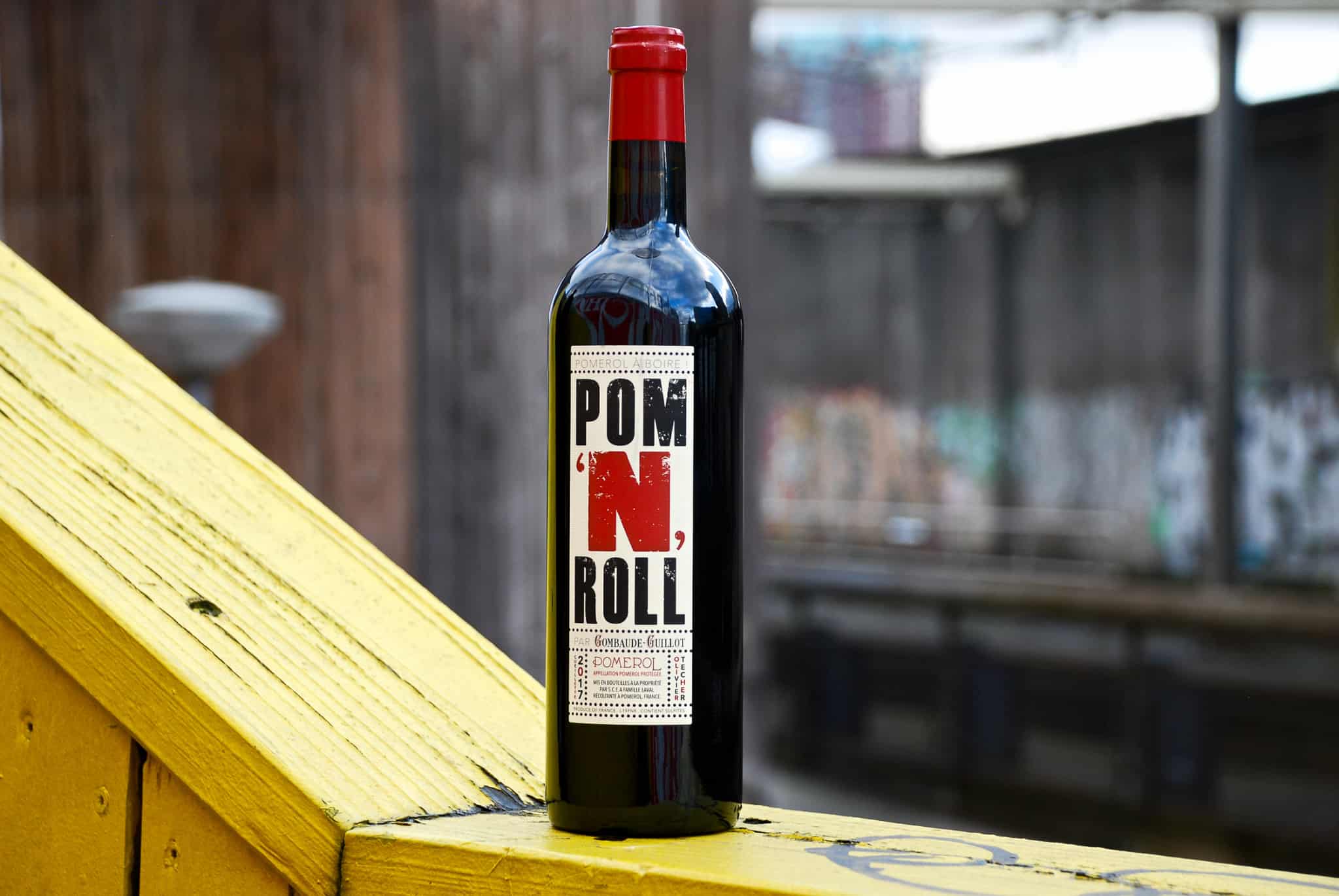
You had me at Pom 'n Roll. Of course. Anyone who dares to make a (good) pun here is definitely 5-0 up.
The Techer-Laval family has been active in Pomerol since 1960, but I'd never heard of them until a few years ago. After lunch at Chez René in Libourne (highly recommended), we wandered around town and came across a nice little wine shop. The owner had just started and focused primarily on lesser-known and alternative wines, including Pom 'n Roll from Château Gombaude-Guillot. They have been organically farmed for almost thirty years and have been certified since 2000.

In a region where commerce reigns supreme, it's wonderful that there are still winemakers who work "by instinct." They follow their hearts. This doesn't mean following a technical recipe to achieve the perfect wine, or trying to achieve it at all costs. sulfite Avoid, no, it means: use your common sense and follow nature. That's what they do here. For example, no wine was produced in 2013 because the weather was too bad. Another funny detail is that the Pom 'n Roll The blend consists of 50% Merlot and 50%—wait for it—Malbec. The Malbec comes from 80-year-old vines.
For sale in Libourne, but also at Wine farm Heeze and Sundara .
Want to know more about Bordeaux?
The easiest way to prove that Bordeaux is great? Buy something vintage from a prominent chateau. The proof is in the pudding. More Bordeaux can be found here .

Share:
How is Amarone della Valpolicella made?
A wine fan in Madeira