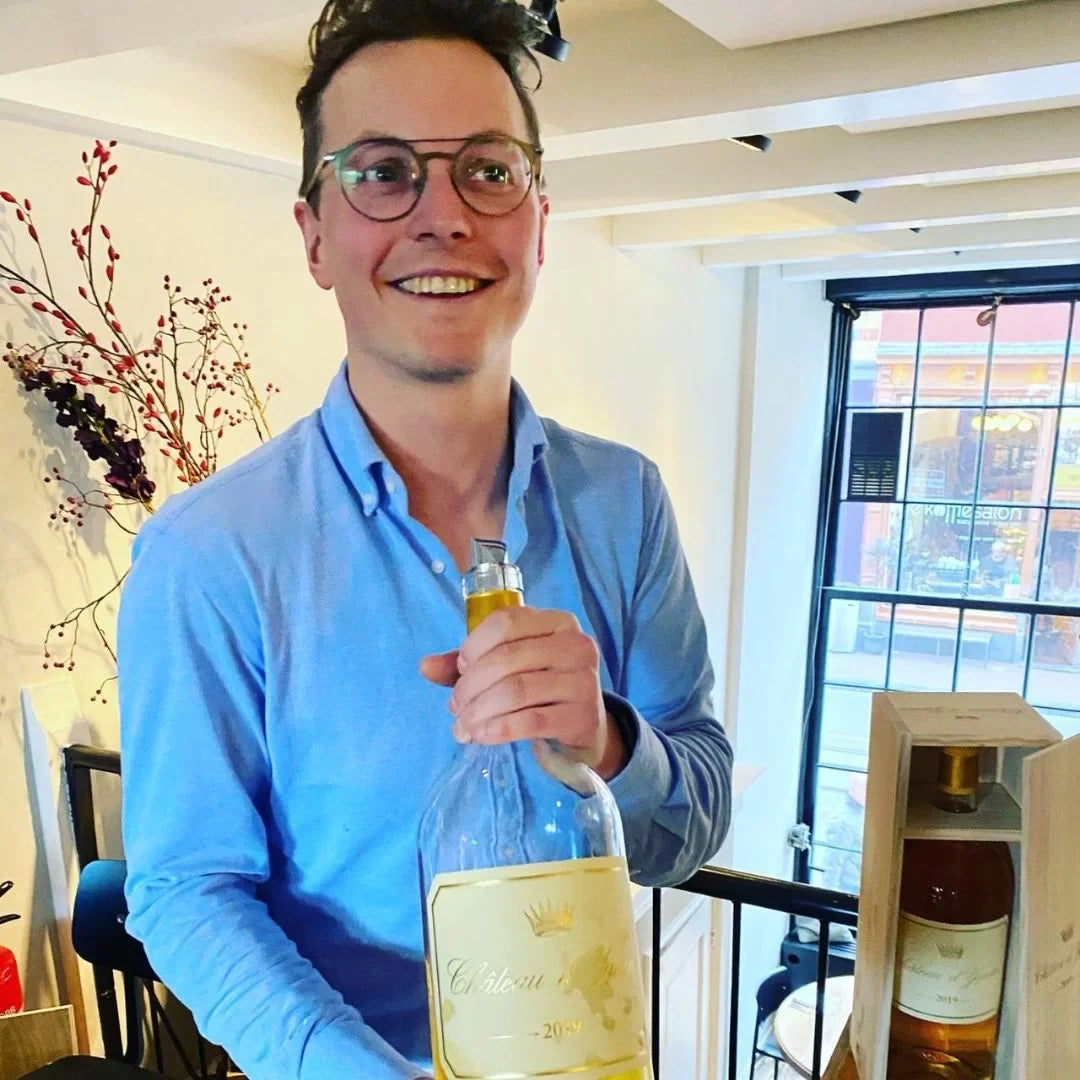
Sometimes you have days when you drop everything to be there. This was exactly the case when I received a message from Job Seuren of Attic . Would I be interested in attending the Chateau d'Yquem tasting organized by Bolomey Wijnimport? I didn't have to think long about the answer. And like a true wine nerd, I did my best to document this epic tasting as best as I could.
Not so fond of sweet wines
Let's get straight to the point: those who know me, listen to the podcast, or have dined at Maeve's know I constantly say I'm not a fan of sweet wines. So if you really want to be convinced, why not try d'Yquem?
Okay, thirst things first.
Where does d'Yquem come from?
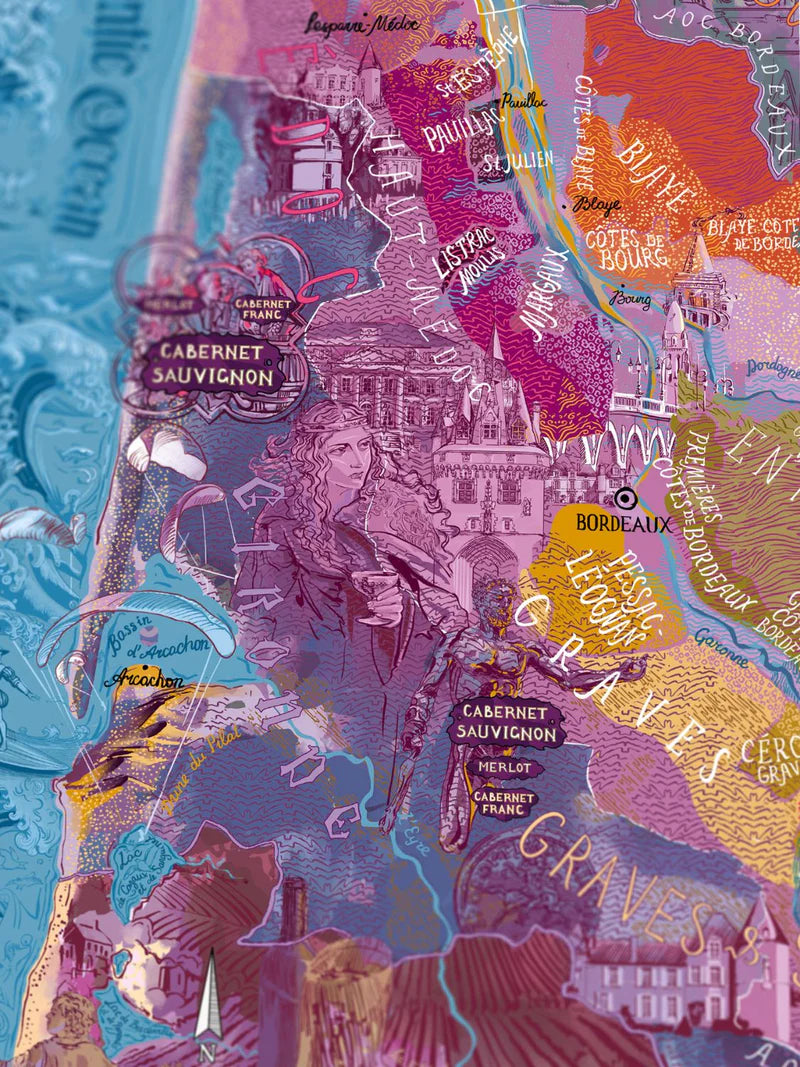
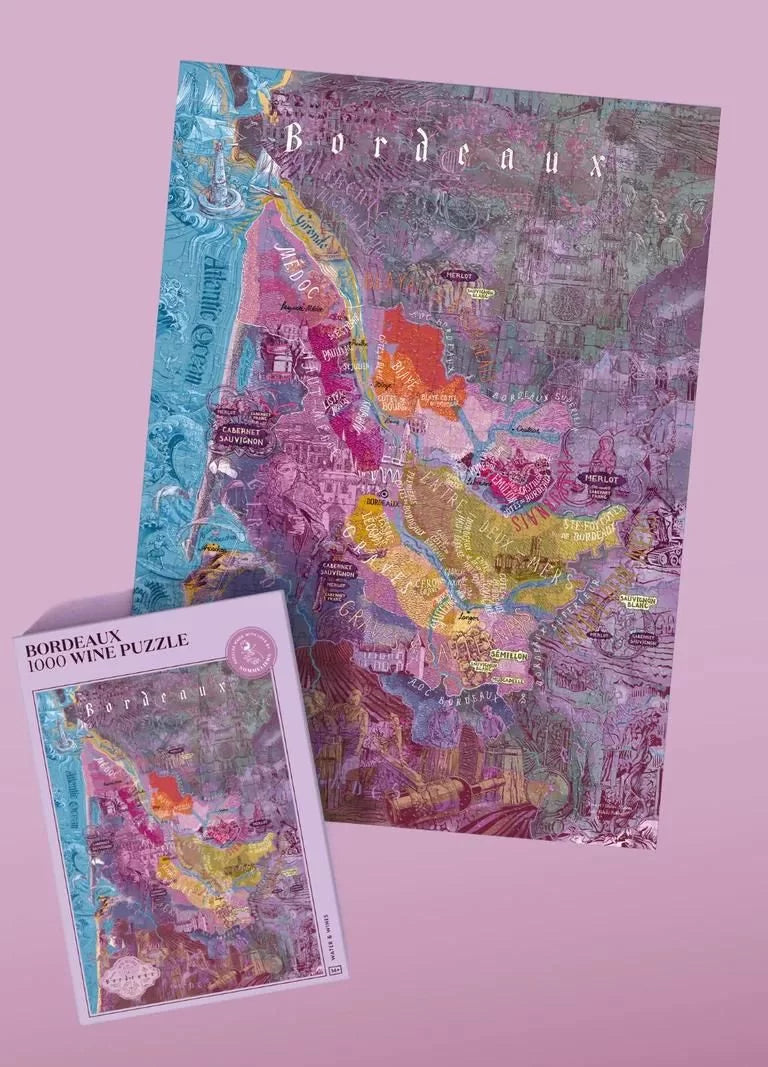
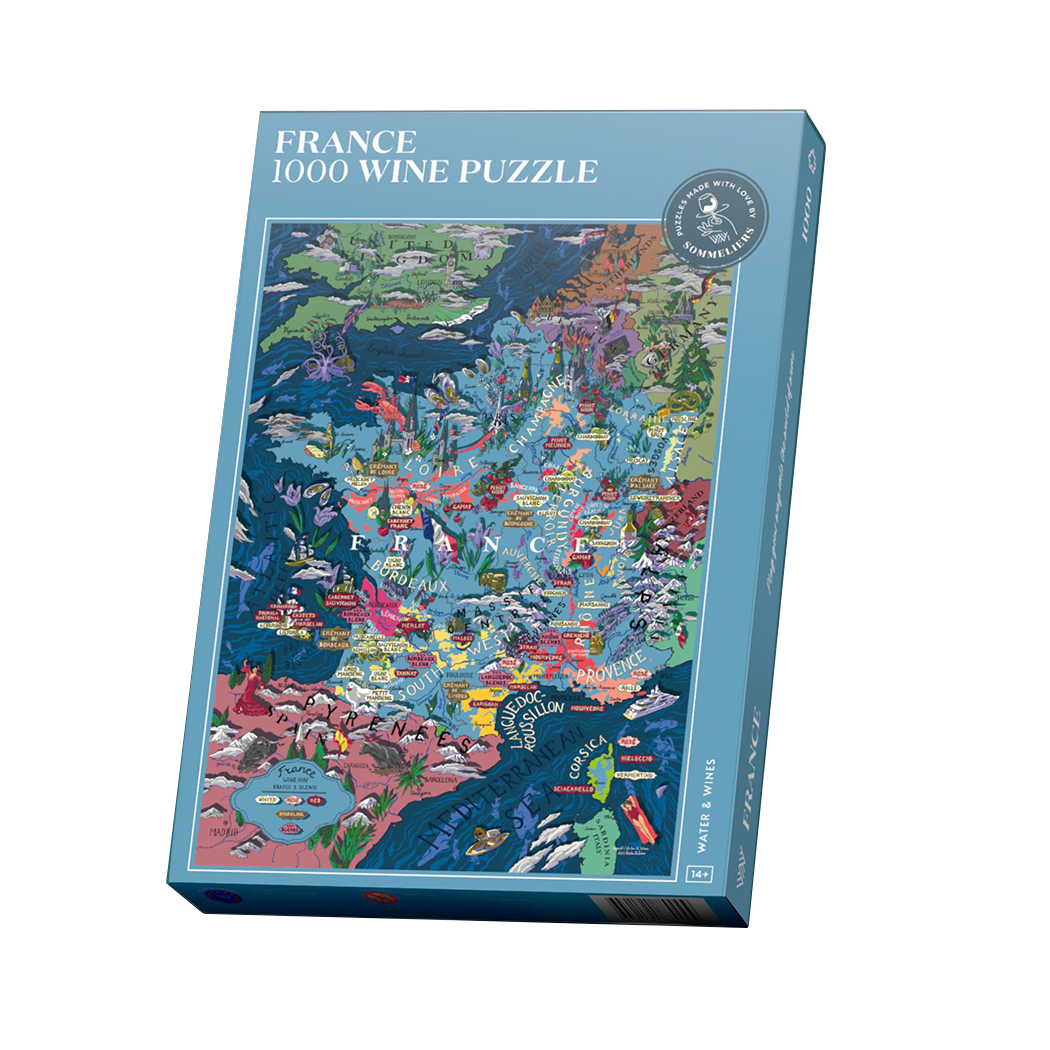
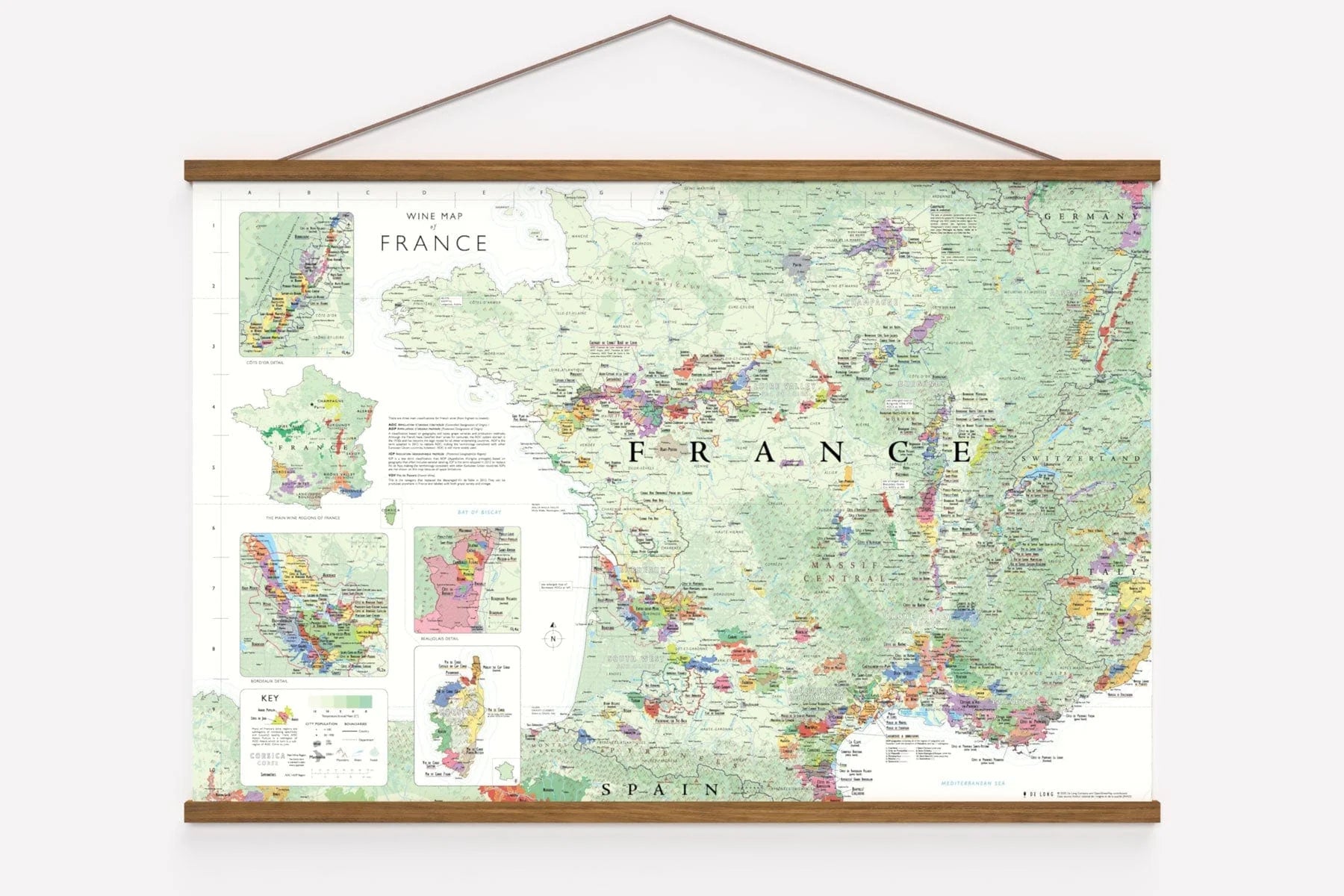
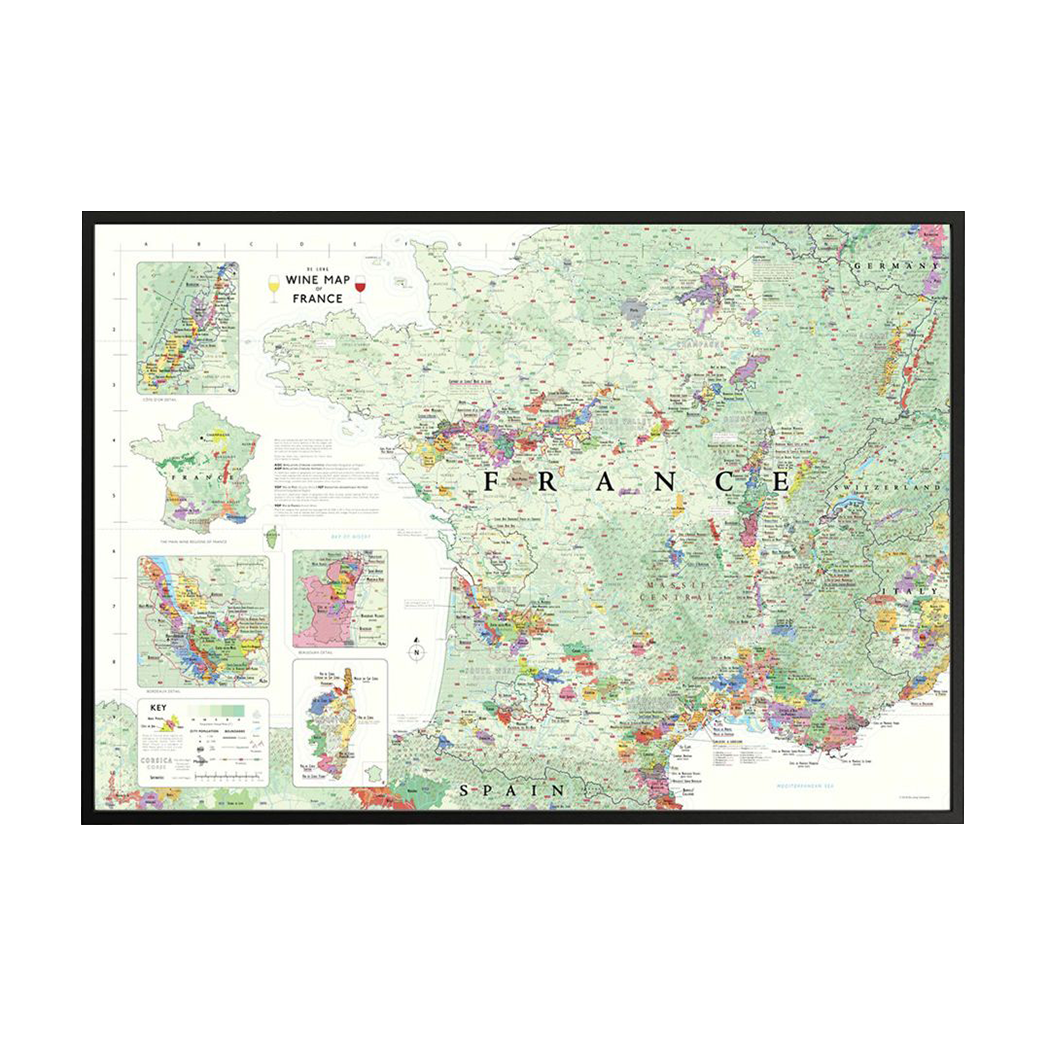
Château d'Yquem comes from Sauternes, a wine region south of Bordeaux. With its 1,500 hectares, Sauternes accounts for only 1.5% of the total Bordeaux plantings. This equates to around six million bottles per year. Not a large production, especially for Château d'Yquem. “Our returns are low,” says winemaker Sandrine Garbay during the tasting. “An average of about 10 hectoliters per hectare” .
For comparison, the average yield for Bordeaux is 45 hl/ha, while in the Mosel region, it can even be 80 hl/ha. In short, yields are low in Sauternes. And that, of course, explains why these wines are so expensive. In some vintages, it's said, they had to go through the vineyards up to ten times to pick the right grapes. Only the best (read: those affected by noble rot) grapes advance to the next round. A costly and time-consuming process that not every château can afford.

History and ownership
Château d'Yquem has been passed down through generations in the Lur Aaluces family since 1785, but is now largely owned by LVMH. This transition from family estate to part of LVMH hasn't affected the process by which d'Yquem is made, Sandrine assures us. This even means that in some vintages—if all goes well—no wine is made. That was the case in 2012 (and in 1910, '30, '51, '52, '64, '72, '74, '92—but that was before LVMH). I was born in 1992, aka the worst year ever 😉
In the 17th and the 18th In the 18th century, it was the Dutch, with their maritime trading spirit, who enthusiastically shipped and sold the sweet wines from Sauternes. This gave the wines a tremendous boost during this period. In the case of d'Yquem, the success was recognized in the 1855 classification with its promotion to Premier Cru Supérieur, the highest status for a sweet wine in Bordeaux. Another reason why this wine is historically considered great is the evidence that great historical figures such as Thomas Jefferson and George Washington enjoyed a glass.
In the vineyard
The vineyards are planted with 80% Semillon and 20% Sauvignon Blanc. The vineyards' location creates a unique microclimate, surprisingly one of the driest in Bordeaux. The vineyards are planted at an altitude of 40 to 75 meters above sea level, which may not sound high, but is considerable for Bordeaux. The location, wind, warm temperatures, and dryness contribute to the wine's unique character. I asked Sandrine how Château d'Yquem weathered the terrible frost of 2021. While many Bordeaux regions sometimes lost between 40 and 60%, Château d'Yquem suffered "only" 20%. Relatively speaking, it wasn't too bad, especially with a total planting of approximately 105 hectares of vineyards.
A question I, and probably the rest of the wine world, am always incredibly curious about: how do you deal with global warming and what effect does it have on your wines? Sandrine answers: Global warming isn't a problem for Sauternes yet; the grapes are ripening better, resulting in higher quality. In the long run, it could also mean the climate becomes too dry and warm, resulting in lower acidity and preventing botrytis.
You had me at botrytis
Botrytis, the magic behind Sauternes. It's a fungus that causes a biochemical reaction in the grapes. How does that work exactly? To find out, we'll look at Jane Anson's interview (author of Inside Bordeaux) with Professor Denis Dubourdieu, in which Professor Dubourdieu explains how noble rot makes the grapes so rich and aromatic. His explanation is that the grapes are "attacked" by the rot and want to protect themselves to survive. The biochemical reaction the grapes then undergo creates aroma precursors, which then, during fermentation, produce the desired effects. This is common and occurs with all wines, but with botrytized wines, this effect is magnified and multiplied. This ultimately leads to hundreds of additional aroma compounds in a botrytized glass compared to a normal glass of wine.

Sandrine's touch
Since Sandrine started at d'Yquem in 1998, gradual changes have been implemented, including phasing out the use of oak to allow the wine to develop more fully. They are also exploring other yeasts that perform better with wines with higher sugar levels. They are even experimentally planting Petit Manseng to see how it will perform in the future. And last but not least: the transition to organic viticulture. Currently, approximately 50% of the vineyards are certified organic.
Dry white wine – Y
Besides sweet wines, Château d'Yquem also produces a dry wine called Y. Its style has evolved over the years. The wine originated in 1959, when the grapes weren't affected by botrytis, and they decided to make something. That "something" turned out well and is now considered one of the best dry white Bordeaux blends (because, of course, it can't be called AOC Sauternes).
My mistake, thanks.
I once made the mistake, in my early years as a sommelier, of labeling a bottle of d'Yquem Y as sweet. To be honest, I had no idea they also made a dry wine. Long story short, the wine wasn't sweet, and the guest who ordered it didn't really care. And he left more than half of it in the bottle for us to drink. All's well that ends well.
Wine and food
Finally, I'd like to touch on the food pairing. With d'Yquem wines, you can easily create a full menu of food pairings, from appetizer to dessert. And if you ask me (or the winemaker), definitely skip dessert. How about a 2019 Yquem with au gratin oysters? The acidity, the youthfulness of the wine paired with the briny oyster—you won't believe your eyes. Or perhaps an older one—let's say 89'—with a grilled fish dish with beurre noisette? The food pairing possibilities are endless, just like the wine itself.
I am converted
Château d'Yquem is truly one of the world's greatest sweet wines. Complex, opulent, and with ageing potential that's truly exceptional. Sorry, but not sorry, I'm convinced once and for all.
Want to buy such an experience yourself? You can check the link for more information.
Tasting notes
D'Yquem double magnum 2019
55% Semillion – 45% Sauvignon Blanc | 138 grams of residual sugar
For the first time in d'Yquem's history, this wine contains 45% Sauvignon Blanc. Unprecedented and unique. This wine was rich, creamy, intense, with wonderful youthful acidity. Subtle caramelization with dried fruits like apricot and peach. A touch of mango, and perhaps the acidity made this wine one of my favorites.
Wine and food pairing tip: Moules à l'escargot by Sergio Herman
D'Yquem Y 2017
95% Sauvignon Blanc – 5% Semillion | 20% new oak barrels | Aged for 20 months | 5-7 grams of residual sugar
Grass, citrus, asparagus, old wood, beeswax, white peach, flowers, elderflower, chamomile. It develops more fully the longer it sits in the glass. This is white Bordeaux at its finest.
D'Yquem 2017
Early ripe | 145 grams of sugar
Slightly more developed than 2019 and a bit closed. Compact, not overpowering. Ripe, developed fruit, again with dried fruit, but more developed. Slightly riper, with notes of peach and raisin, banana and currants. With unmistakable candied orange peel on the finish and nose.
D'Yquem 2007
Good year for Sauternes, bad year for normal Bordeaux | 137 grams of sugar
We're leaning more towards butterscotch, dried fruit, and saffron. This is also beautifully reflected in the flavor. Raisins. Marmalade bitterness with orange peel and a hint of salted lemon and lemon curd.
D'Yquem 1999
Warm year and difficult for botrytis
Gingerbread, almonds, candied orange peel. Raisins, butterscotch. Velvety. The wine has a certain finesse and lightness thanks to the still-present high acidity. It's truly breathtaking.
'1989 is a very powerful wine that has a rare profile in keeping with such memorable vintages as 1929, 1947, and 1949'
D'Yquem 1989
The apotheosis
Okay, you can die here—this is everything you want. Caramelized sugar, but also a pleasant bitterness, and less sweetness. Spicy food is fine with it. This is overripe apples, caramel, brown sugar, and fresh banana cake. Like you're making caramel in your glass.
Share:
A wine fan in Madeira
Wine FAQ: How much does a vineyard cost?