Valladolid, the city you've never heard of, yet it really should be on your bucket list. It's just a stone's throw from the vineyards of Rueda, Toro, and Ribera del Duero (and two lesser-known regions) and is a champion of tapas. Doesn't that sound like music to your ears?
The history is also quite impressive. Here are a few facts:
- Did you know that for a brief period in Spanish history, Valladolid was once the capital of Spain?
- The city is home to one of the oldest universities in the world, founded in 1241.
- The remains of explorer Columbus can be found in the city.
- People from Valladolid seem to have the purest pronunciation of Spanish. I understand that. Try Valladolid ( Bajadoliet) but to pronounce it once.
Well. Now you know that too.
There's wine everywhere!
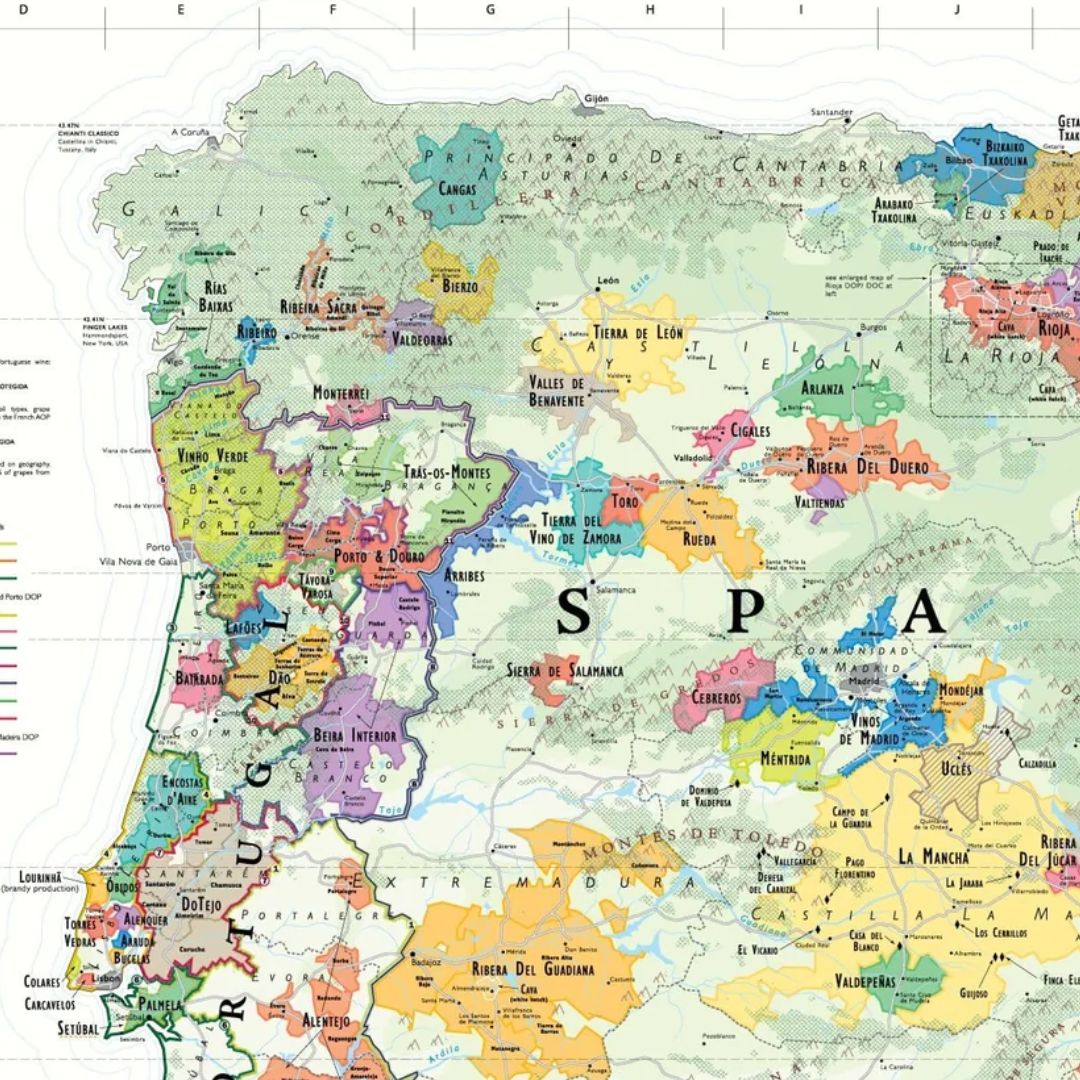
Valladolid is a wine paradise. A wine lover will be in their element here. Valladolid boasts no fewer than five wine regions: Rueda, Ribera del Duero, Toro, Tierra de León, and Cigales. We're focusing primarily on Rueda for this trip, but we can't resist popping into Ribera del Duero as well.
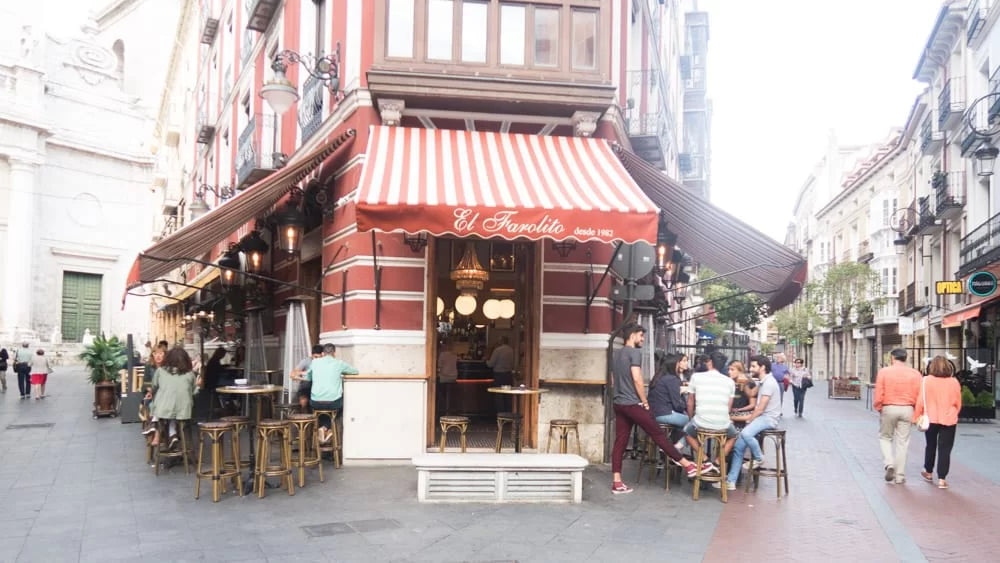
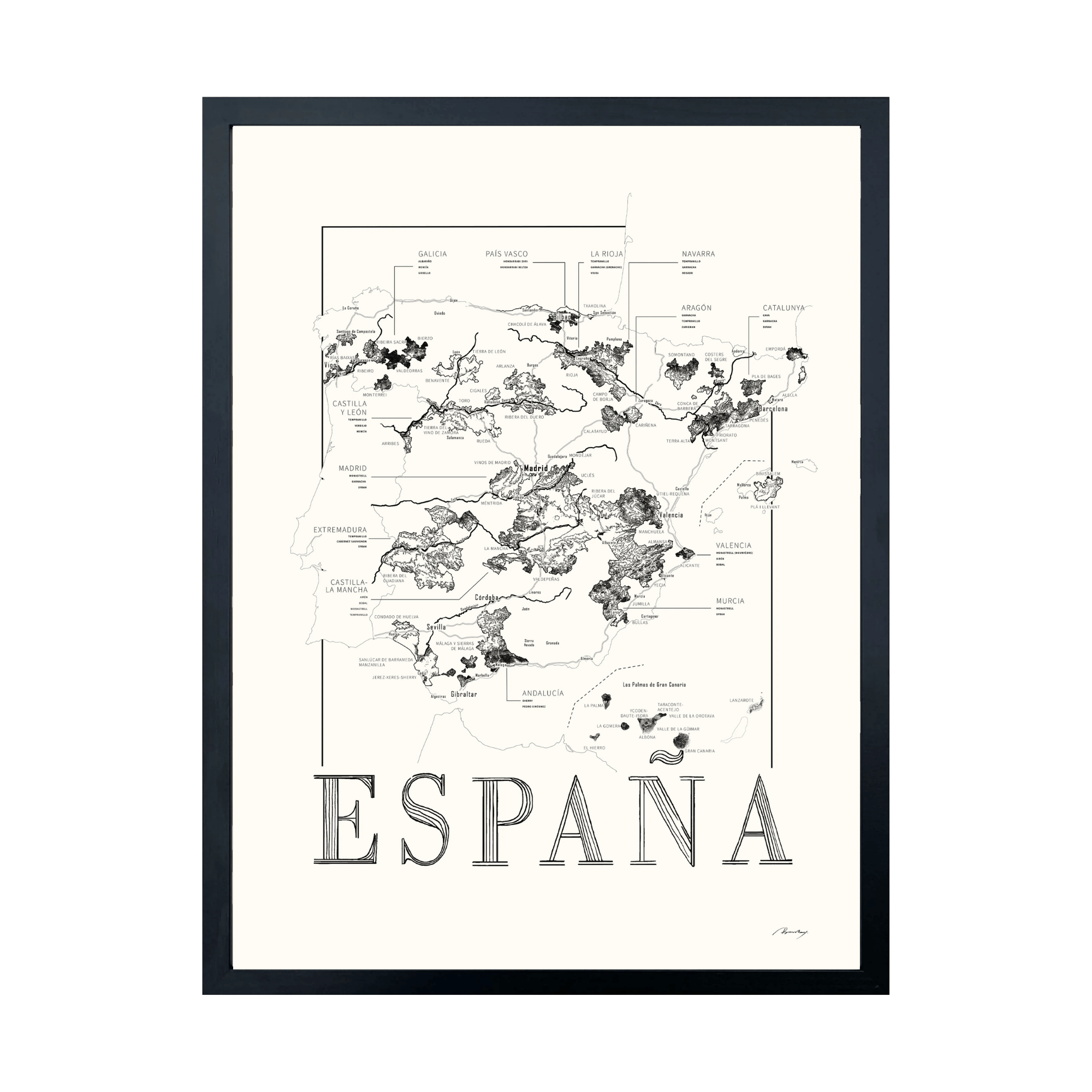
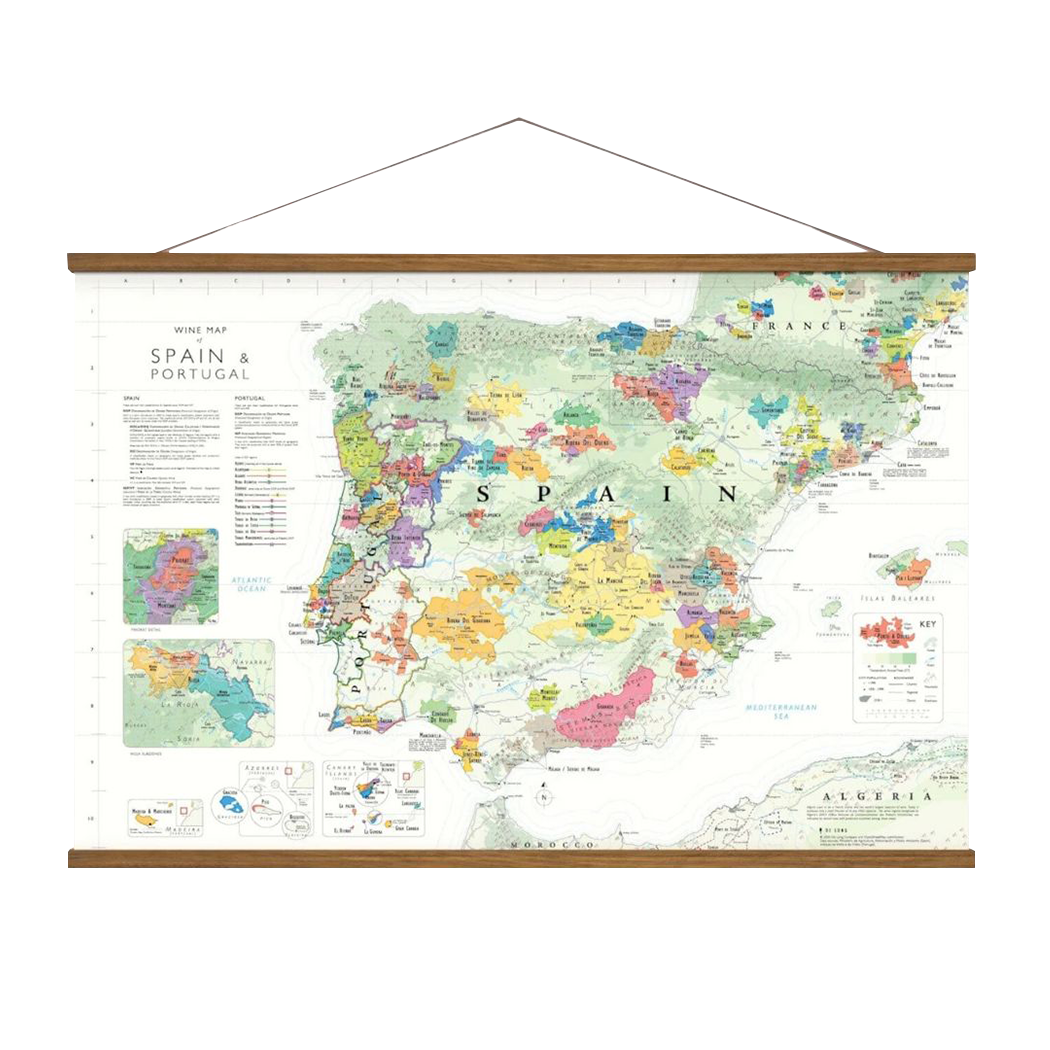
For the optimal experience you can go all out at wine bar El Farolito In the center of Valladolid. All wine regions are listed on the map. Don't forget to ask for the special booklet.

Rueda
DO Rueda pulls out all the stops. We get an introduction to the region, visit several producers, and taste over 40 Verdejos. You can't fool me anymore. I can now separate the wheat from the chaff. In case you didn't know: Verdejo is the ultimate easy-drinking wine, perfect for warm summer evenings. Fruity (peach, pear, and apple), a touch of green (fennel), and crisp acidity.
If DO Rueda-Verdejo is labeled on the bottle, it must contain 85% Verdejo, but it's usually 100%. The other appellation, DO Rueda, was actually created for blends that don't meet the requirements. It must contain 50% Verdejo and can be supplemented with the productive Viura or the aromatic Sauvignon Blanc. In practice, this doesn't seem to be much of an issue. Many producers use DO Rueda to designate their entry-level wines, even if they can be labeled DO Rueda Verdejo. Surprisingly (or not?), the Netherlands is the largest export country. They've managed to market it well.
What I didn't know yet is that Rueda also makes red and rosé from Tempranillo. Production is small, and competition is fierce with nearby Ribera del Duero and Toro. Another regional specialty is Dorada, a fortified wine I'd never heard of. Here, the Verdejo shines again and can be complemented with Viura and/or Palomino Fino. Dorada must be aged in oak for at least two years and is then placed in demi-johns in the hot sun. Every now and then we'd hear a popping sound, then another cork would sink into the bottle. Try to figure out which one it is – there are hundreds of bottles outside! Then it goes into the solera. I've tasted it, and I think it's a kind of cross between Madeira and Amontillado, with aromas of roasted nuts, honey, and caramel. It's popular in Germany and Japan.


Ribera del Duero
We have a few hours to kill and decide to head to Ribera del Duero's "Golden Mile." It's about an hour's drive from Vallodolid. The Golden Mile is home to all the region's iconic wineries: Dominio de Pingus, Vega Sicilia, Abadía Retuerta, Emilio Moro, and so on. The imposing buildings remind me of Bordeaux. Unfortunately, the price is too: the wines are exorbitantly expensive. Vega Sicilia Unico easily costs 360 euros, and Pingus four times that. Well, that's definitely blowing my monthly wine budget 😉 Luckily, they also produce some great wines with a more affordable price tag.
I drank PSI, the "entry-level wine" from Dominio de Pingus at the El Farolito wine bar. The bartender called it "pingus por las mortales," or "pingus for the mortals." A great glass, but with strong tannins, so be patient and order a large one. Another discovery was at Mauro, a winery located seven kilometers outside Ribera del Duero and therefore required to label its wine as Vino de la Tierra de Castilla y Léon. Mariano Garcia makes the wines there. He previously worked as an oenologist at Vega Sicilia. A bottle for 30 euros. Do the math.


Best tapas ever
The competitive spirit is well and truly ingrained in Valladolid. One "best tapas" award after another is being scooped up by one of the city's many restaurants. And I don't mean the meatballs in tomato sauce or patatas bravas. No, this is the real deal. We put it to the test at two winning tapas bars: Villa Paramesa – the local favorite – and Los Zagales – tapas like you've never seen before.
Don't expect a fancy atmosphere or high society at either tapas bar. See and be seen? Absolutely not; everyone has eyes only for their tapas plate. They're true works of art emerging from the kitchen, each more beautiful and delicious than the last. My favorite at Los Zagales was "The White House," a tapas dish of egg, mushrooms, and truffle. An explosion of flavors. At Villa Paramesa, I lost count; it was all delicious. Also nice: they serve as many magnums as possible, which are attractively displayed on the bar. We'll go for Mauro.
A picture is worth a thousand words, so here's a short impression of the atmosphere...


Valladolid, the tastiest city you've never heard of
Forget everything you know about tapas and start over in Valladolid. It might no longer be the capital of Spain, and it might not even be the first Spanish city you think of, but it is the capital of tapas, and I'd love to hop on a plane tomorrow and go back. We flew there on Bilbao and back from Madrid .
Centrally located on one of the squares close to the university, Hotel Zenit El Coloquio , a great hotel to use as a base during your trip to Castilla y Leon. The best tapas can be found at Villa Paramesa and Los Zagales .

Share:
Tell me more about Chablis
The gift of Soave