"Hey guys, I don't need a Chardonnay. I don't like it."
Oh please, spare me. I don't want to hear it anymore. There are so many different Chardonnays. From clean and pure to creamy and oak-aged. It's a grape that lends itself perfectly to all sorts of tricks in the cellar, but is equally capable of letting the terroir speak. To speak in GoT language: Chardonnay is like the many-faced god. It comes in all shapes and sizes.
Today I'm going to tell you more about Chablis, the purest form of Chardonnay.
🎧 Don't feel like reading? Listen to the podcast !
What is Chablis?
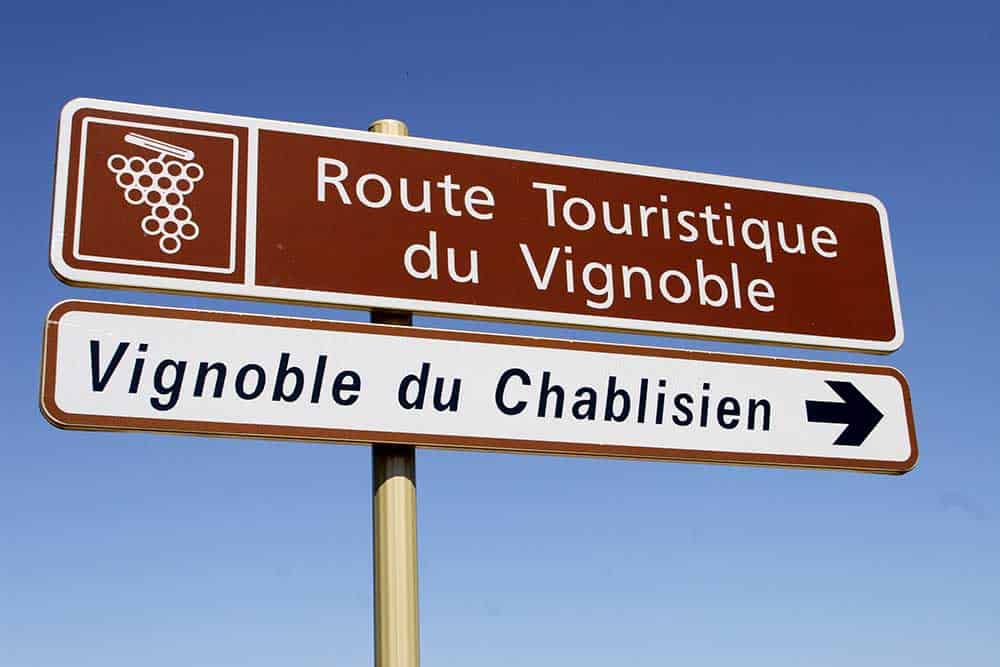
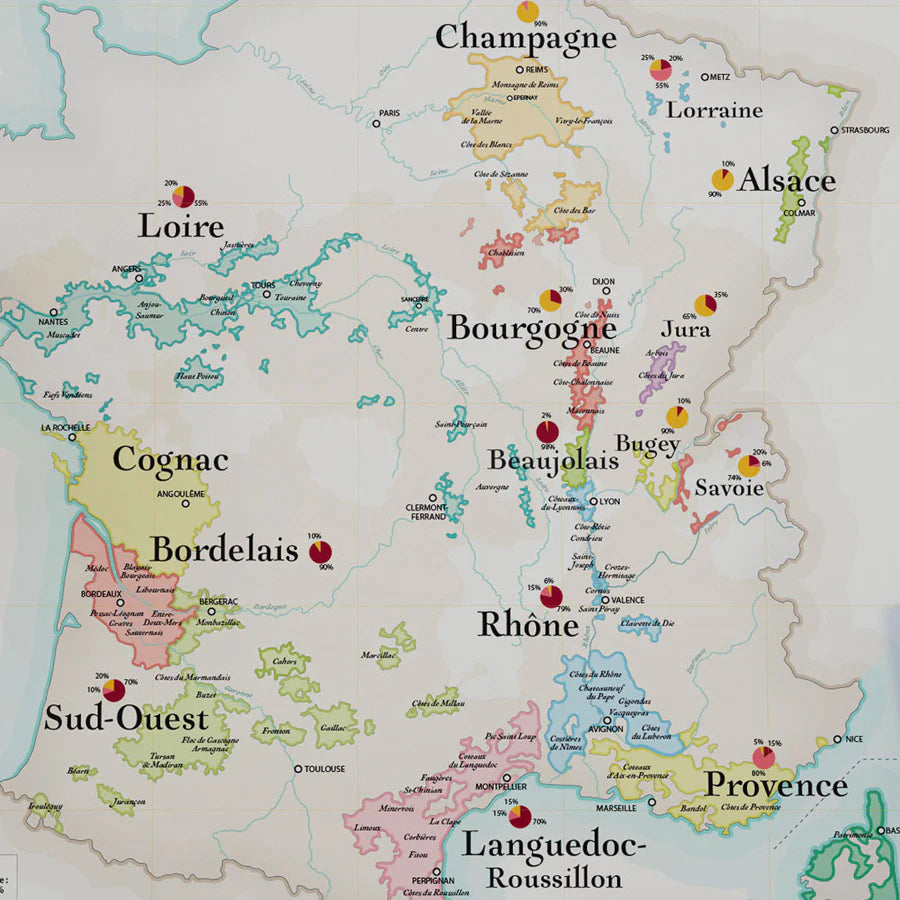
Chablis is the name of a village and appellation in the northernmost part of Burgundy. There's only one grape variety that matters: Chardonnay, also known locally as Beaunois. While Chardonnay emerges from cellars elsewhere in the world with all sorts of tricks, Chablis remains true to itself. It's Chardonnay in its purest form, with fresh aromas of green apple and citrus, high acidity, and, yes, minerality.
That freshness is thanks to the cool climate. In that respect, Chablis has more in common with Champagne than with the rest of Burgundy. Everything revolves around the sun and the vineyard's orientation. The best vineyards – the Grands Crus – are located where the sun shines most. Just look at Les Clos, a famous Grand Cru slope with a southwesterly exposure. Driving past it, you understand exactly why that particular vineyard deserves to be called Grand Cru. Sun. Maximum. You might wonder how much longer that will remain a USP with climate change breathing down our necks, but oh well…
Speaking of USPs, it's not just the climate that makes Chablis special, the soil also plays a significant role. Here, the word terroir invented. Everything—climate, soil, slope, grape—comes together here, making the wine unequaled anywhere else in the world. The soil, composed of a mixture of limestone, clay, and fossilized shells, is named "Kimmeridge" after the English village of the same name. It's a relic of the time when Northern France was still a sea, better known as the "Paris Basin ." This vast inland sea left behind a thick layer of oyster shells along the basin's edges, which we find in places like Chablis, Sancerre, and southern England. The region's best vineyards possess such soil.
A "not so unique, but very sad point" is the extreme weather conditions winegrowers have to deal with. Some years, I wonder if the winegrowers even care about making wine anymore. In 2016 and 2017, the region suffered spring frosts. If not spring frost, then a hailstorm disrupting the peace in the vineyards. In any case, both have disastrous consequences for the harvest and thus the winegrower's income. How this is being addressed is the subject of a future article. Until then, you can... this article by James Goode consult.

Protecting the vineyard with fire against frost
The legislation
Chablis's legislation, like the rest of Burgundy, distinguishes between terroirs. It would be too simplistic to use the same system. Unlike the grands crus of the Côte d'Or, AOC Chablis Grand Cru is a single appellation with seven official geographical indications, also known as climates This doesn't apply to AOC Chablis Premier Cru, which is subdivided into 17 premiers crus. It's almost astonishing how complicated wine regulations can be. Don't worry, I'll explain it to you.
There are four levels in total:
- AOC Chablis Grand Cru
- AOC Chablis Premier Cru
- AOC Chablis
- AOC Petit Chablis

Copyright chablis-wines.com
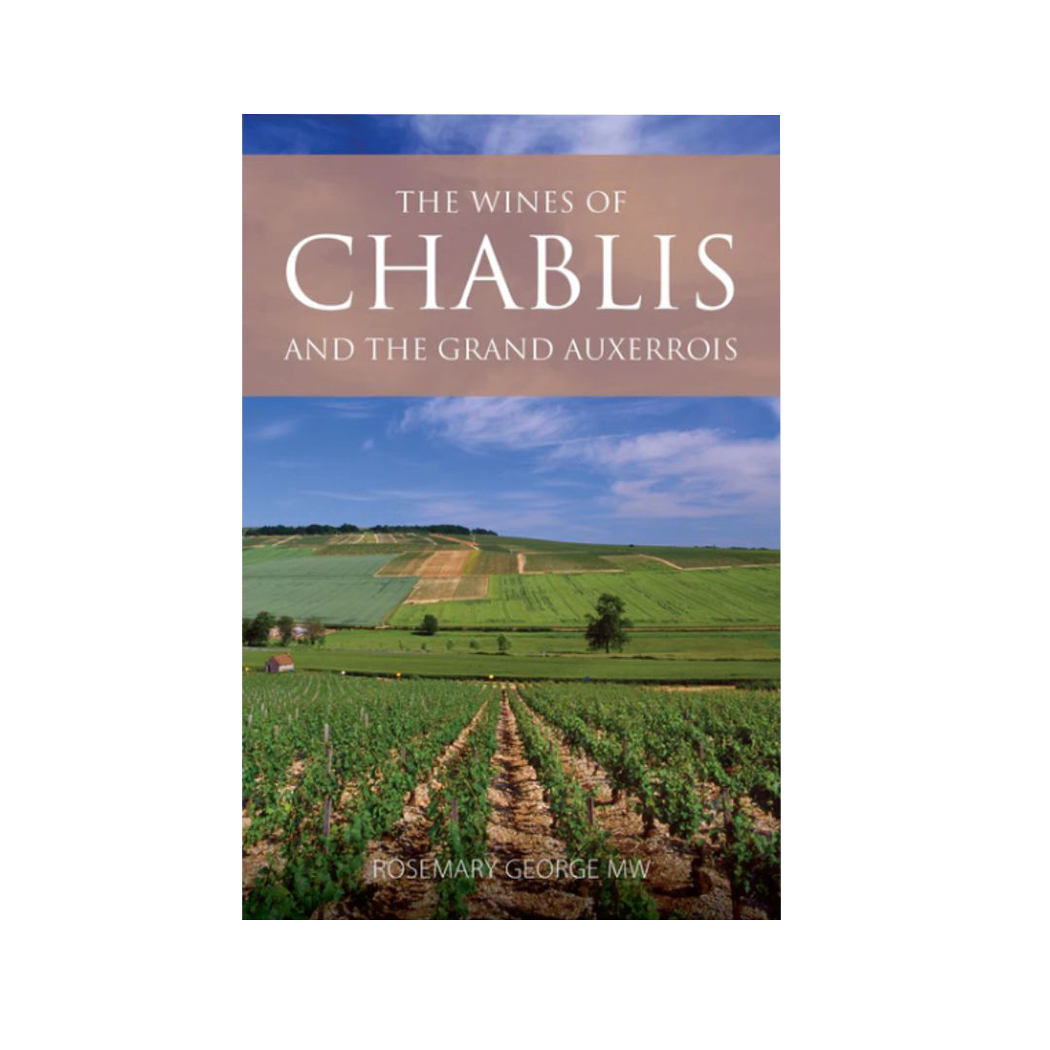
In total, the region has 5,500 hectares of vineyards, which is three times the size of the entire Jura region (according to The Sommelier's Atlas to Taste , a top book). Of these, 64% are classified as AOC Chablis, 16% as Premier Cru, and only 2% as Grand Cru. The rest is Petit Chablis.
The Grand Cru slope
Chablis Grand Cru is nothing more than a slope of about two kilometers on the right bank of the Serein River. The Kimmeridge soil and southwest-facing exposure make the Grand Cru slopes among the warmest in the region, bathed in afternoon sun and protected from the cold northerly winds.
There are seven climates within AOC Chablis Grand Cru:
- Blanchot
- The Clos
- Valmur
- The Grenouilles
- Vaudesir
- Preuses
- Bougros
- And technically there is one more: La Moutonne – a monopole of Domaine Long-Depaquit.
Premier Cru: the left and right banks
Chablis Premier Cru is divided into 40 Climats , which are further subdivided into 17 premiers crus. The producer can choose which one to list on the label. If they have a nondescript Climat, they're better off putting the name of the premier cru on the bottle. Cup, cup.
Did you know that Chablis, like Bordeaux, has a left and right bank? This isn't the Gironde, but the Serein River. climates on the right bank lie alongside the Grands Crus, of which Montée de Tonnerre is one of the most acclaimed Premier Crus (and in the right hands perhaps even better than A crappy Grand Cru ). On the left bank, the premiers crus face southeast and are a little further from the river than those on the right bank. Generally, these wines are a bit tighter, a bit more restrained than those on the right bank. I don't want to repeat myself, but here too, the question remains whether that still holds true today.
Most Premiers Crus are fermented and matured in used oak barrels. They undergo a malolactic transformation to soften the sharp acidity. But hey, don't tar them all with the same brush. Louis Michel uses only stainless steel, while William Fèvre and Raveneau favor wood and even use a small portion of new wood. Quality is no longer a question; it's about what makes you happy.
The source should actually be mentioned at the bottom, but I am so happy with Guildsomm ( the article about Chablis ) and The Sommelier's Atlas to Taste I just mentioned it here. Must-reads!
Chablis & Petit Chablis
The bulk of the production falls under the Chablis and Petit Chablis labels. The Petit Chablis vineyards are located on the outskirts – furthest from the village. These are the plains, the cooler, wind-exposed areas with limestone soils, where you occasionally strike lucky, but are usually disappointed. You'll have better luck in AOC Chablis. Here and there, you'll also find kimmeridge in the soils.
“One of the best Petit Chablis I have ever tasted” – this said Jancis Robinson about the Petit Chablis of Patrick Piuze . So if you try one, this one seems nice to me 😉
I recently tasted Domaine d'Henri's Chablis Saint Pierre 2015, and it has everything you'd want in a Chablis: crisp acidity and aromas of apple, pear, and nectarine. The Petit Chablis isn't bad either, but it lacks the intensity of the Chablis.
Favorite wineries in Chablis
Being a fan of the region, I also have my favourite wineries.
Domaine Olivier & Alice de Moor
Hailed by many as the region's hero. Flawless wines, made as naturally as possible. Truly amazing. Making wine here is challenging due to the unpredictable weather (frost and hail). That's why they sometimes enlist the help of their wine friends in the south of the country and create an alternative wine, such as The Masked Vendor . A picture.
Domaine Olivier & Alice de Moor | available at Best of Wine .
Domaine Pattes Loup
Oh, I'm stuck in the world of minimal intervention for a moment. What do you expect? Thomas Pico – owner and winemaker of Domaine Pattes Loup – is Olivier & Alice de Moor's neighbor. Then you're in the right place, of course. He's also called on his friends in the south and a nice Vin de France made from chardonnay, gros manseng, chenin blanc and clairette.
Domaine Pattes Loup | available at Emerald Wines.
Domaine d'Henri
Domaine d'Henri is run by the Laroche family, a famous family with a history dating back to 1695. In 2010, Michel Laroche decided to sell his shares in Domaine Laroche to establish a new, smaller, quality-focused estate: Domaine d'Henri – named after his father.
Domaine d'Henri | available at Colaris .
Domaine Raveneau Premier Cru Butteaux 2010
I think it's the most expensive wine I've ever ordered in a restaurant. But also one of the most beautiful. Luckily, we could share it four ways. What a blessing it is to drink a wine like this from Raveneau. It's always difficult to pick a favorite, but there's little better than a good (read: excellent) Chablis. It's always possible, and every sip makes me happy. This 2010—still young in itself, very lively, and with good acidity as a good Chablis should—had everything, but not too much of anything. A hint of creaminess, immediately balanced by its freshness and aromas of lemon peel, candied lemon, some hazelnuts, and toast. So pure, so complete, so wonderful.
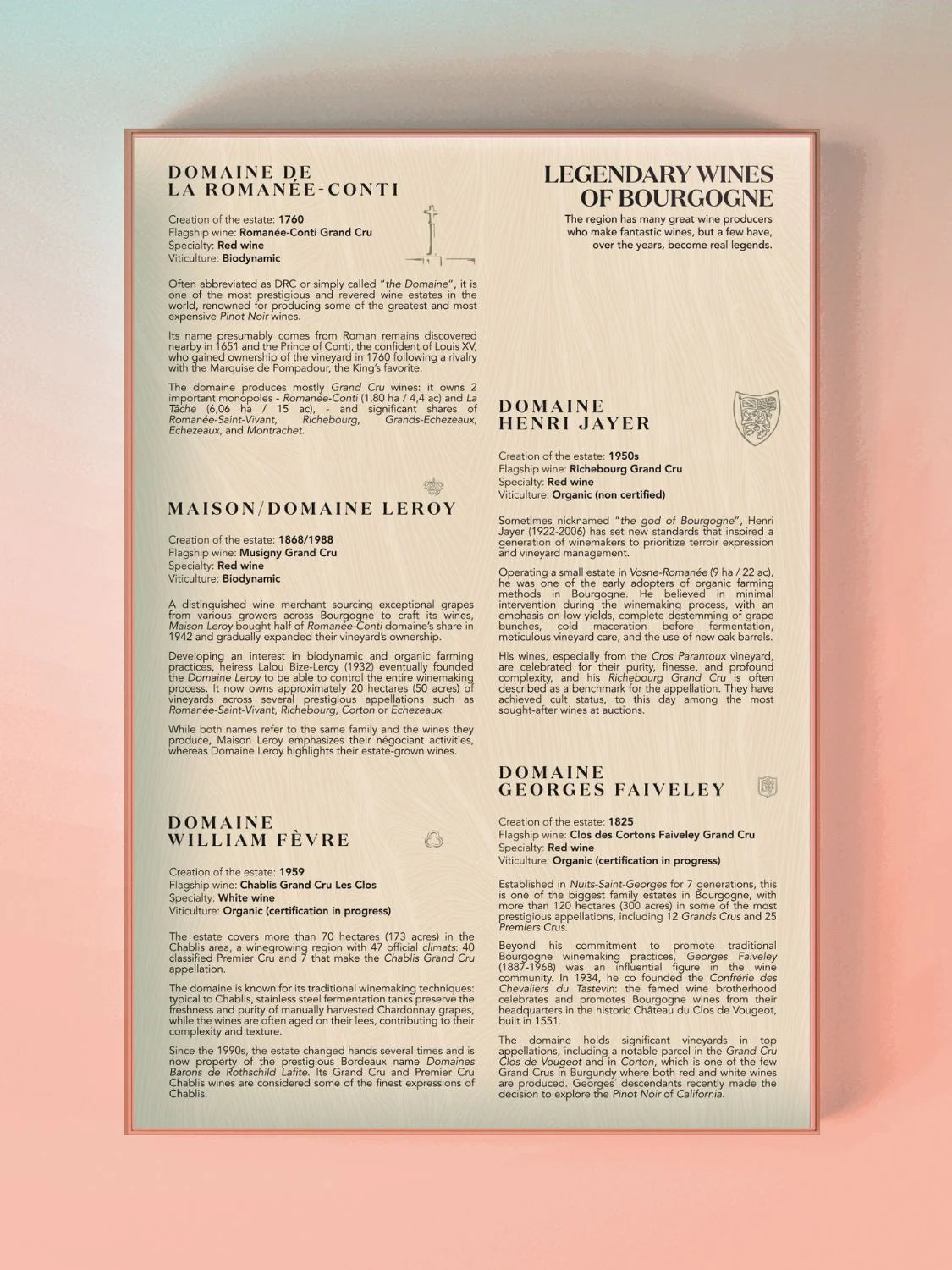
William Fèvre Grand Cru Les Clos 2011
Keep your friends close, but your grands crus closer. That tension of wood, MLF, and the salty notes of Chablis (grand cru) is amazing. It was 2011, but still young. Very creamy and generous. That makes it very different from the Raveneau (Butteaux 2010) we drank a few weeks ago. Life is good.
In my climate cabinet there are still bottles of Vincent Dauvissat and Patrick Piuze.
Share:
Do I have a favorite wine after all?
A wine lover in Valladolid