
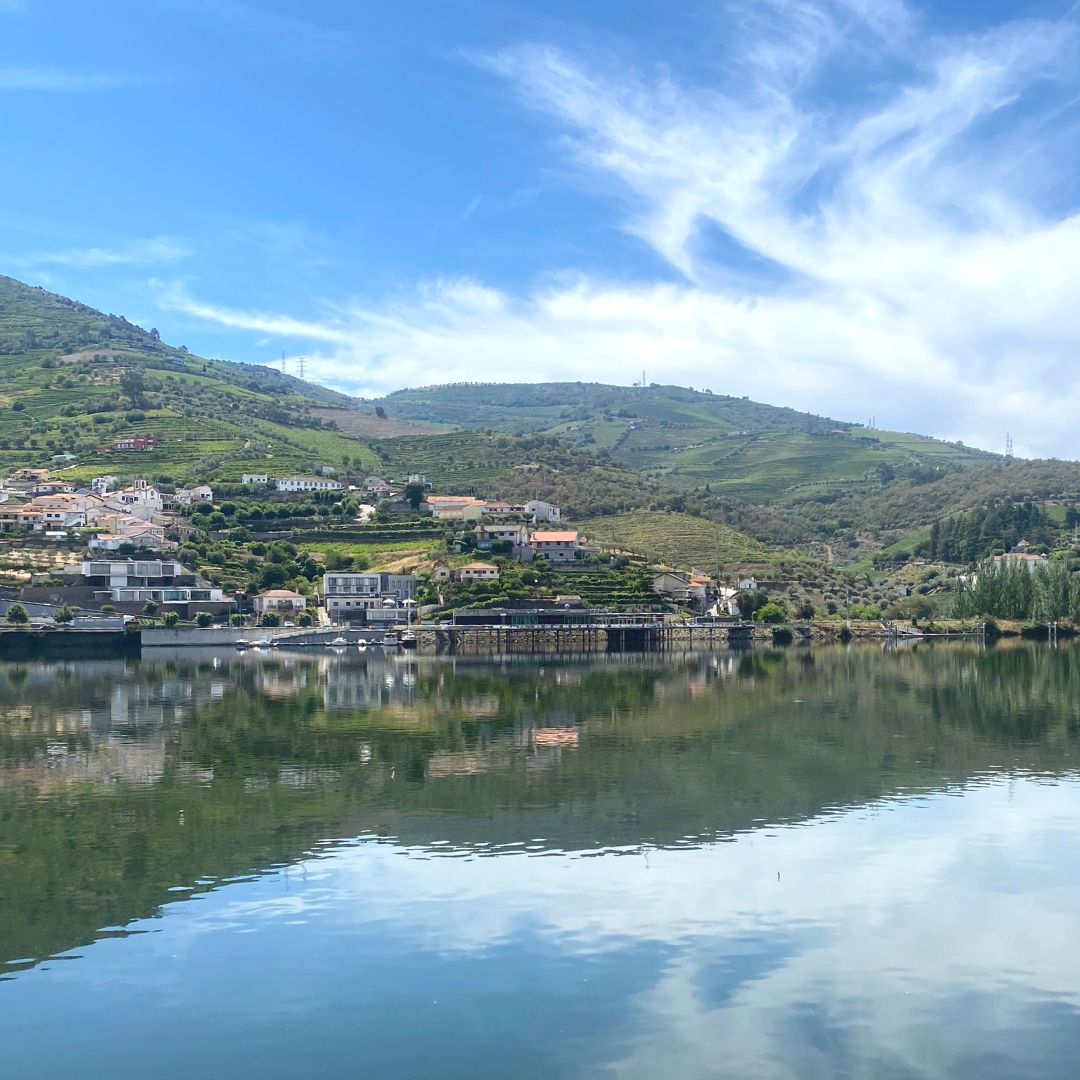
It's perhaps the most beautiful wine region in the world: the Douro Valley. The vines are arranged in neat rows on the incredibly steep slopes along the banks of the Douro River. A sight you can't get enough of.
Anyone following the river from Porto will inevitably arrive at the vineyards. In the past, wines were transported in barrels by ship. The Douro River served as a highway. Most wineries were even located right on the river. There were hardly any roads, and the summers were sweltering. The grapes had to be fermented as quickly as possible so the wine could be shipped to the cool cellars of Vila Nova de Gaia, the city across the Douro from Porto.
Vila Nova de Gaia
Vila Nova de Gaia lies on the Atlantic Ocean. It's generally much cooler here than in the Douro Valley, making it a better place to age ports. These days, that's no longer necessary. Most wineries have built state-of-the-art cellars in the Douro Valley that keep the heat out. However, you can still visit Vila Nova de Gaia for a tasting and tour of one of the many cellars still located there.
The dizzying Douro Valley
The Douro Valley comprises approximately 45,000 hectares of vineyards and is divided into three sub-regions, each with its own distinct climate. Baixo Corgo is closest to Porto and is the coolest and wettest of the three. Slightly further inland, and therefore warmer and drier, lies Cima Corgo, home to renowned port houses like Graham's and Dow's. The further inland you go, the warmer it gets. Between Cima Corgo and the Spanish border lies Douro Superior, the warmest region.

More than just port
We're familiar with Port, but more is coming from the Douro. Exciting things are happening, especially in the Douro Superior and parts of Cima Corgo. Since Portugal joined the EU, there's been increased investment, and both new and established winemakers have flocked to this part of the valley. Not to make Port, but dry, unfortified wines in both red and white. We've seen more and more of this in recent years.
Take Luis Seabra , for example, who made wines for Niepoort for many years. He started making his own wines in 2013, sourcing his grapes from top-quality, old vineyards in the Douro Superior. Seabra follows his own path, prominently displaying the soil type on the label instead of the grape variety, as in Xisto Cru Branco, a minerally white wine from schist soils in the Douro Superior. The wine is crafted in a minimalist way to best express the terroir. His red wines are also terroir-driven and fit the descriptions "pure," "elegant," and "unconventional." Making such wines in such a warm climate seems almost impossible, but the Douro has many tributaries, providing a cooling effect. So does the altitude, and they gratefully capitalize on it.
Listening tip
The "I'll Drink to That" podcast with Luis Seabra , where he explains the tricks of the trade of winemaking. Super interesting, get your notebook ready.
For powerhouses, in the truest sense of the word, head to Quinta dos Murças in the heart of Cima Corgo. A special wine from their portfolio is the Quinta dos Murças VV47, sourced from the oldest vertical vineyard in the Douro, planted in 1947. A wine with enormous concentration and aromas that perfectly reflect the Douro: blackcurrant, plum, tobacco, and vanilla.
Also worth mentioning is Quinta de Romaneira in Alijó, about a fifteen-minute drive from Pinhão. I'm a big fan of their Ruby Reserve Port, concentrated yet surprisingly drinkable. Their unfortified 100% Touriga Nacional wine is also wonderful, perfect as the centerpiece of a dinner. Full-bodied, rich, with plenty of black fruit (blackberries, plums) and that delicate, wild spice of Touriga Nacional.

Take the train
A local train departs from Porto several times a day to Pinhão , the heart of the Douro. Sit on the right side of the train for the most beautiful view of the river and the vineyards, which appear after an hour's drive. It's a lovely sight, by the way: as soon as the vineyards come into view, everyone stands up and starts freaking out with their phones. And who can blame them? The view is truly phenomenal.
Share:
Tasting Cotat at Utregs Wijnhuis
2022: Nadien de Visser's top 5