What's so fun about Mondays? That's how I normally feel about it too, but when I received an email from Utrecht Wine House The fact that a masterclass about winemaker François Cotat would take place on Monday, October 31st, I registered immediately.
Who?
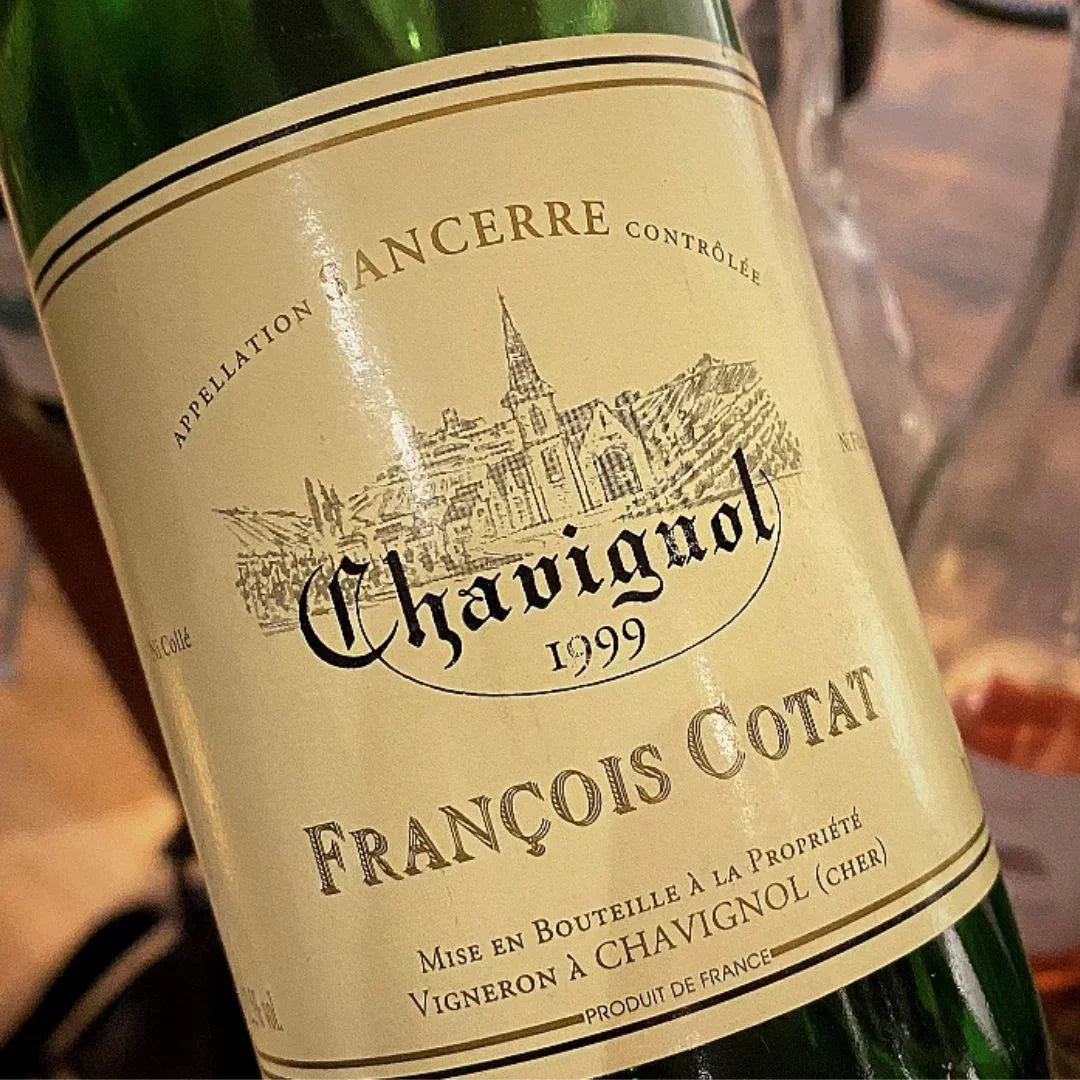
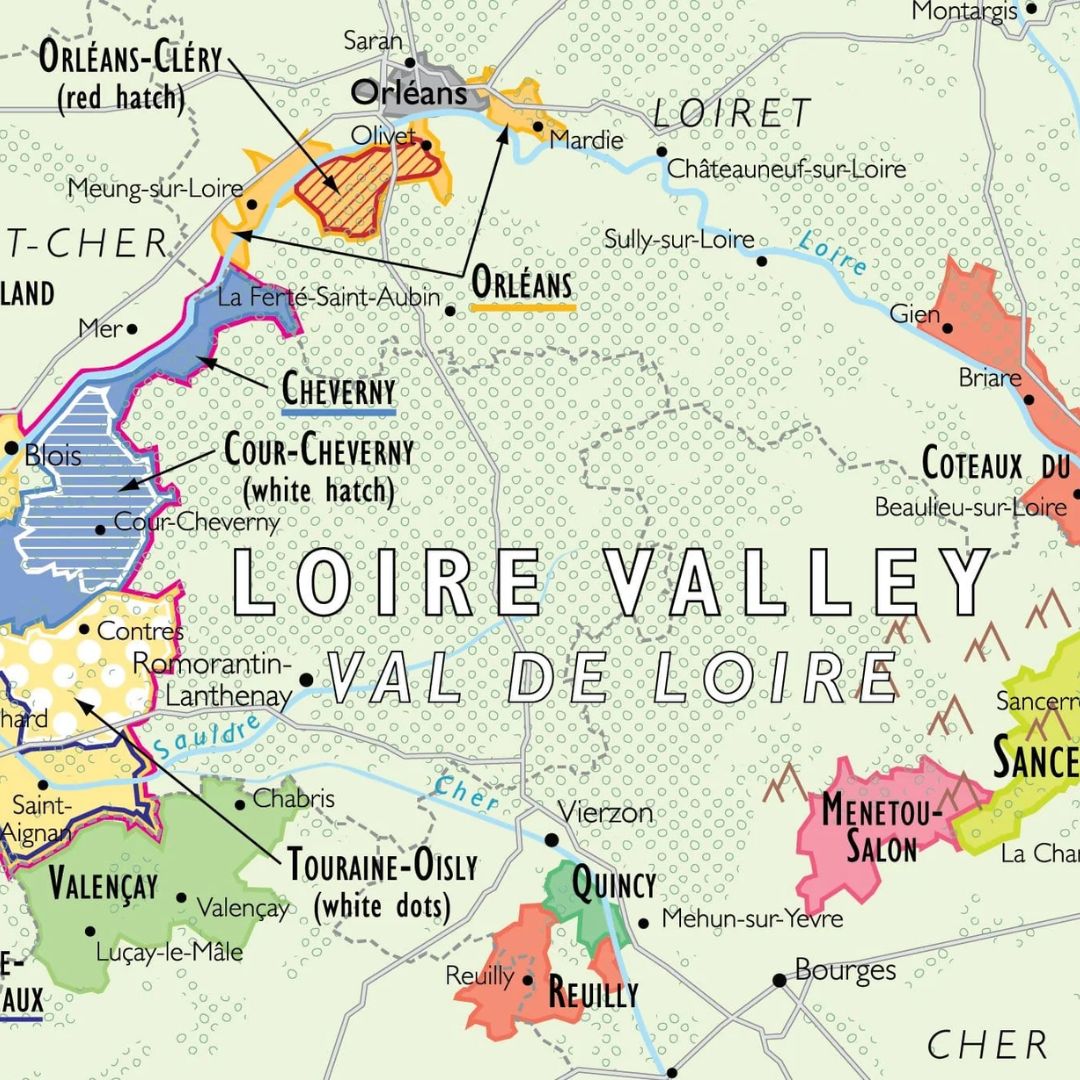
François Cotat is one of the finest winemakers of AOC Sancerre in the Loire Valley, France. His Sauvignon Blanc, Pinot Noir, and rosé wines are simply unparalleled, can age for decades, and have achieved cult status.
The Cotat family estate has existed since the end of World War II and was founded by Ferdinand Cotat. In 1947, brothers Paul and Francis joined their stepfather Ferdinand at the estate. The brothers ran the estate until 1997. Paul from the small house on the estate in the village of Chavignol, and Francis from his home in Sancerre. Since then, the winemaking process has changed little, and this is partly why the estate has gained its cult status. Moreover, the Cotats don't always follow the rules and only do what they believe is best for the wines. For example, in the 1990s, there were three different labels available (Paul Cotat, Francis Cotat, and François Cotat), even though the wines all came from the same cellar. This was a source of considerable concern to the tax authorities.
It also happens that wines are not awarded the AOC Sancerre (as in '98 and '02), because François still applied chaptalization despite the high potential alcohol content of the very ripe grapes.
In 1998, the estate's assets were divided among Paul and Francis's sons. Pascal (Francis's son) received the cellar in Sancerre and 2.5 hectares of vineyards in Les Monts Damnés and La Grande Côte. The other son, François, acquired the estate in Chavignol, with a total of over 4 hectares of vineyards. As a result, François now owns 1.3 hectares of Les Monts Damnés, 0.9 hectares of Culs de Beaujeu, 0.9 hectares of La Grande Côte, 0.6 hectares of Les Caillottes, and a small 0.5 hectare plot planted with Pinot Noir.
Whether the two cousins still have such a close relationship remains to be seen. Rajat Parr, Master Sommelier and author of " The Sommelier's Atlas of Taste ," writes in his book that he once made the mistake of asking François if his cousin still makes the wines the same way. François's simple answer was: “I have no idea” .
How does he do that?
He's a man of few words, as you might expect from a man who works his vineyards 24/7. He uses pesticides only when absolutely necessary and employs certain biodynamic practices. His vineyard has a high planting density, low yields, and François harvests by hand (partly forced by the very steep slopes). The harvest takes place very late in several stages, and only the very ripest grapes are harvested. Botrytis-affected grapes are not shunned. Aromatic ripeness is sacred.
Whole bunches are pressed in an old wooden mechanical press dating back to his father and uncle's time. The juice is collected and fermented directly—without additives—in old 500- and 600-liter barrels, with only a brief bâttonage at the end of fermentation. In January after the harvest, under the full moon, the wines are transferred to 225-liter barrels for further aging. Before bottling, the wines are transferred to larger barrels in May, again under the full moon, for further aging. Bottling is still done by hand, without fining or filtering, and without the addition of sulfites.
It results in a style that François himself describes as "Very natural." See the tasting notes at the bottom of this article.
Terroir
François therefore has four vineyards for Sauvignon Blanc within the AOC Sancerre.
Les Monts Damnés 0,9 ha
A south-facing vineyard northwest of Chavignol, with terre blanche soil consisting of Kimmeridge and Portlandian limestone and clay, and vines with an average age of 35 years. The soil here is similar to Chablis and produces powerful wines with a smoky character.
Les Culs de Beaujeu 0,9 ha
Located slightly southwest of Les Monts Damnés, it also features terre blanche soil, but with a slightly more southeasterly exposure and a very steep slope (up to 45%). These wines take a long time to mature.
The Grande Côte 1.3 ha
Southern exposure, again terre blanche with deep Kimmeridge limestone soil, 30-year-old vines and powerful wines with the greatest aging potential.
Les Cailottes 0.6 ha
A flatter vineyard east of Les Monts Damnés and Les Culs de Beaujeu. This vineyard is named after its soil type: Cailottes.
The soil here contains a thinner layer of calcareous clay with a top layer of loose limestone in two sizes: Cailottes (larger stones) and Griottes (very small stones). The wines from this vineyard are aromatic, elegant, and drinkable a little faster.
East of Chavignol lies a small vineyard (0.5 hectares) of Pinot Noir. This is where the rosé comes from, and occasionally a red wine as well. In the far east of the appellation, towards the Loire River, you'll find another soil type called Silex (flint). This is a famous soil type, but François doesn't have any vineyards there.
Tasting notes
During the masterclass, given by Dylan de Vries, we tasted 11 wines in 7 flights.
FLIGHT 1: LES CAILLOTTES 2018 VS. LES CULS DE BEAUJEU 2018
The Les Caillots 2018 is a fresh, aromatic wine with hints of lime, grapefruit, peach, and beeswax. It has nice acidity (medium+), is soft and creamy (medium body), and has an alcohol content of 13%.
Les Culs de Beaujeu 2018 is significantly less aromatic, but riper in character. Aromas of pineapple, mango, citrus, and boxwood, medium acidity, a touch of residual sweetness, and 13.5% alcohol.

FLIGHT 2: LA GRANDE CÔTE 2018 USA LES MONTS DAMNÉS 2018
La Grande Côte is taut and minerally with a medium body, 13% alcohol, and a remarkably long finish. The wine smells of orange peel, lemon, mace, biscuit, and almond, yet it is restrained and has a very bright future ahead.
Les Monts Damnés 2018 is much thicker in structure (medium+ body, 13% alcohol), closed on the nose, and aromas of lime, jasmine, and fresh stone fruit. This wine clearly needs many years to mature.

FLIGHT 3: CHAVIGNOL ROSÉ 2020 VS. CHAVIGNOL ROSE 2018
Both wines have a high alcohol content: the 2020 wine has 14.5% alcohol and the 2018 wine has a 15% alcohol content. The color of the wines is a beautiful candy pink. The 2020 wine is still somewhat closed on the nose, with hints of wild strawberry, red berries, and sweet spices. It has a medium body, a touch of residual sweetness, and a full and long finish. The 2018 wine is more aromatic, slightly earthy in character, with very ripe red fruit on the nose. It has noticeable tannins, making it somewhat more bitter as a result, and less residual sweetness than the 2020 wine.
These are not your everyday rosés, but wines you should sit down to enjoy, preferably with a large glass, a nice piece of fried fish, roast poultry or an earthy vegetarian dish.
FLIGHT 4: LES MONTS DAMNÉS 2010
Wow! The Les Mont Damnés 2010 is open, aromatic, and energetic. Aromas of lemon, lime, pineapple, peach, biscuit, roasted hazelnuts, honey, and a hint of acidity and smoky notes for an extra touch of excitement. The palate is exciting and full (medium+ body, 13.5% alcohol), grand and long.
FLIGHT 5: LES CULS DE BEAUJEU 2008 VS. LES CULS DE BEAUJEU 2003
Les Clus de Beaujeu 2008 has a beautiful lemon-yellow color and aromas of beeswax, honey, citrus fruit, smoke, jasmine, and green pepper. Mild acidity (medium), 13.5% alcohol, fine thirst-quenching bitters, and a long finish. There was no trace of fatigue in this wine and it can still age for years, but it was already magnificent.
The 2003 was at its peak for me. Golden yellow color, still a bit of reduction on the nose, very ripe passion fruit and pineapple, dried apricot, honey, nuts, and smoky notes. The mouthfeel was creamy (medium+ body, 12.5% alcohol) and the finish seemed to last forever.
FLIGHT 6: LA GRANDE CÔTE 2003
Patience proves to be a virtue. François Cotat's wines simply need time to reveal their true essence.
The 2003 La Grande Côte had a beautiful golden yellow color and aromas of nuts, tropical fruit, ripe apple, oxidative sherry notes, almond, and apricot. A full-bodied and rich wine with high extraction (medium-bodied), grand and long, and with only 12.5% alcohol. Easily the best wine of the evening.
FLIGHT 7: CHAVIGNOL ROUGE 1999
François actually makes this red wine exclusively for his own use, but occasionally some is released. Because François lets nature take its course in his cool cellar, this wine has not undergone malolactic fermentation, and thanks to its beautiful acidity, it has remained beautiful for the past 23 years.
The color is light garnet red, and the nose is aromatic with hints of wild strawberry, red cherry, sweet spices, rose petals, cedar, licorice, and forest floor. Hardly any tannin and high, yet soft acidity, and it was far from tired.
Thanks Sjors and Dylan for organizing this wonderful tasting, and Tom, my table companion, for the pleasant evening!

Share:
Tasted: Burlotto Monvigliero 2018
Douro, the most beautiful wine region in the world?