Natural wine is a controversial topic. One of extremes, I've noticed. Some people think it's fantastic, others can't stand it. The fact that there's no official definition or quality mark for natural wine doesn't help matters, of course. In The Oxford Companion to Wine by Queen Jancis stands “Natural wine is wine made from organically or biodynamically grown grapes and no additives other than minimal sulfite additions” .
Surely such a definition should appeal to every wine lover? It's wine in its purest form, yet it stands in stark contrast to the reality of many commercial wines. The average supermarket wine is often the result of a series of interventions: grapes from overworked vineyards treated with pesticides, fermentation initiated by added yeasts, and further manipulation by enzymes, bacteria, and nutrients. The final product can still be acidified or sweetened, fined, filtered, and (excessively) sulfited. This process ensures that the wine ultimately remains stable on the shelves. At least for a year. Cheers!
No, I'd rather have natural wine.
Natural wine strives for the opposite: minimal intervention to achieve maximum purity. But the path to purity is complex. Mark Angeli, a biodynamic pioneer from the Loire, emphasizes in Aaron Ayscough's substack Not Drinking Poison : “There is a whole protocol to follow to make wines without sulfur. But in no case can we do it with all wines, every year.”
In short: you only have a chance if you have healthy, ripe grapes. That chance vanishes like snow in the sun if you don't work super cleanly in your cellar, or if the alcoholic fermentation suddenly stops or goes too slowly, etc. It's not surprising that such a natural wine sometimes stinks like cooked vegetables in a stable. Contamination is constantly lurking. That's why Frank Cornelissen After 20 years of making wine, they have decided to add a minimal amount of sulphites.
“Frank Cornelissen was long famous for his refusal to add sulphites to his Sicilian wines at any stage. By his own admission, the results were mixed. 'Vintages like 2011 and 2014, when the fruit was perfect and all elements of the maturation fell together, are still delicious. Others, like 2005, are like Russian roulette: some bottles are great, others not.' After 20 years, Cornelissen has concluded that the advantages of adding small doses of SO2 outweigh the disadvantages .
Only in the best years with the finest fruit can you get away with it. In other years, the chance of the wine lasting (longer) is much smaller.
No idea what sulfite is and why it's used? Then read this article >
Now back to those cooked vegetables in a horse stable. Because who would have ever expected there to be a market for that? Natural wine has become a fad, and its popularity has led to a certain romanticization among consumers. Cloudy wines or aromas that would be considered faults in conventional wines are sometimes uncritically embraced as signs of authenticity. A wine that smells of cider (oxidation) or a horse stable (brett)? Come up with a good story, and many a hipster will be hanging on your every word. And that's a twist no one saw coming.
Jules Chauvet, for example, wasn't in the running when he began experimenting with a minimalist approach in the 1950s. His winemaking methods—organic grapes, no sulfites or other additives—were adopted by others in the region, including Marcel Lapierre, Jean Foillard, Jean-Paul Thévenet, and Guy Breton. These pioneers laid the foundation for today's natural wine movement. It's no wonder, then, that Beaujolais dominates the list below.
The sommelier's favorite natural wines


Marnix Rombaut:
Dassemus, Ceci n'est pas un orange, Chaam
Les Gruches, Saumur , Loire
Well, my favorite is of course the orange Ceci n'est pas un orange from Chaam because I more or less invented it myself, designed the label and have been picking, tasting, following, etc., the grapes myself for years. It is also very difficult to choose in France. But Les Gruches 2019 Chenin Blanc Calvez-Bobinet, made from very old vines in Saumur, is truly heavenly, with a long ripening future ahead of it. The grapes are also grown in a clos, a walled vineyard, with a strong Harry Potter feel. The magic of that place lives on in the bottle.
Marnix Rombaut is the founder of Daxivin in Amsterdam.

Taco the Fox:
Carsten Saalwächter Weisser Burgunder, Rheinhessen
Natural wine... I find it a difficult concept. I prefer to talk about a conscious winemaking method. For me, that could be a wine from Koehler-Ruprecht, which has a long history of honest practices and avoids chemicals. It could also be a wine from Yann Durieux, a household name in the world of natural wines. If I had to choose, I'd go for the Weisser Burgunder from Carsten Saalwächter from Ingelheim. The wine is aged for at least a year in used Burgundy barrels, then for about six months in stainless steel, and finally for another six months in bottle. Because of the long barrel aging, the wine undergoes natural filtration (think of a bottle of orange juice left upright in the refrigerator for a long time). The result is impressive: a flawless wine that shows a different side of Rheinhessen and Weissburgunder. In my opinion, this is a wine that should appeal to everyone, both proponents and opponents of natural wine.
Taco de Vos is a sommelier and co-owner of The Sailor & The Girl in Rotterdam.

Coen van der Burgt:
Jean Foillard, Morgon, Beaujolais
Perhaps an obvious choice, Jean Foillard, a member of "the gang of four," is considered one of the founders of Vin Nature. Hailing from Morgon, Beaujolais, he makes his wines more in a Burgundy style than the fruit-packed Beaujolais can sometimes be. Hard work in the vineyards for the highest quality fruit and ultimately harvesting healthy grapes is what it's all about. Only then can you get away with using little to no sulphites at bottling. Not long ago, I tasted the 2015. Flavorful, soft, with fine acidity, and still wonderfully fresh and lively fruit alongside some development. For me, this is a wonderful confirmation: it can indeed age!
Foillard also produces a single vineyard in Morgon: Cote du Py, the most beautiful vineyard in Morgon, entirely south-facing. A true cult wine in Beaujolais.
Coen van der Burgt is the founder of Coenologist and gives wine courses for Le Club des Vins.

Zappa Spruit:
Yann Bertrand 'Cuvée du Chaos' Fleurie, Beaujolais
Natural wine, unavoidable these days, but often still reason enough to avoid it. Beaujolais, in the modern natural wine landscape, is a natural source of vibrant, serious wines. In fact, you often see in this region that an overly conventional approach can dampen the Gamay. In other words, don't put your dog on a leash. Yann Bertrand's top cuvée is truly an absolute favorite. Gamay in form, like Messi in his heyday. Precision over power, elegance over muscle, where every molecule is filled with flavor. In a natural world full of chaos, he has this storm of flavors superbly under control. Enchantingly complex yet always uncomplicatedly delicious.
Zappa Spruit is a sommelier at Bistro Dubac in Rotterdam.


Aukje Wouters:
Yvon Métras, Fleurie, Beaujolais
Milan Nestarec Podfuck, Moravia, Czech Republic
First, an obvious one, because it's Beaujolais: Fleurie by Yvon Métras. A gorgeous, layered Gamay with depth and class. Very juicy and frivolous, but definitely also spicy and mineral. I like it!
Another favorite is Milan Nestarec's Podfuck from Moravia, Czech Republic. A funny story: I once showed up at their door without an appointment. And ended up buying some wine. Not exactly recommended, by the way, because there was nothing there: no tasting room, no reception area, just the vineyards and an old barn. But the wines are definitely worth a visit! My favorite is 'Podfuck,' a red blend made of Pinot Noir, Blaufränkisch, and a bit of Pinot Gris. Elegant, floral, lots of cherry fruit, and that energetic minerality that often stands out in well-made vin naturel. Yes please!
Aukje Wouters gives wine courses and is a sommelier at The Clapper in Amsterdam.

Vera Krijnen:
Alice and Olivier De Moor, Chablis
"Do you have a favorite natural wine?" That's essentially like asking "What's your favorite wine?" A difficult question to answer, then. But if I have to name one, it's the wines of Alice and Olivier De Moor. Legends in Chablis, they cultivate approximately 6 hectares of Aligoté, Chardonnay, and Sauvignon Blanc (Saint-Bris). Old vines, minimal intervention. Perhaps it's because the wines evoke personal memories. Like a time when Nadien, Rianne, and I were on a a terrace in Paris We were sitting there. September sun on our faces and De Moor's Chablis in our glasses. A wine with energy and life. Stoney and ripe. Pure and clean. Just how I like to drink a Chablis. Just like their neighbor's, by the way: Thomas Pico .
Vera Krijnen is a sommelier at Ceiling in Amsterdam

Wendy Persoon:
Weingut Werlitsch – Ex Vero iii 2019
This wine is made from Chardonnay and Sauvignon Blanc from Southern Styria, Austria. The grapes come from the estate's highest vineyards. This wine – Ex Vero III – has stuck with me because it has exciting acidity that kicks up a storm and surprises with every sip. Super pure and vibrant, in a way you can only experience with natural wine, with aromas of basil. Southern Styria is a region with many excellent winemakers, so it's definitely worth exploring the surrounding estates as well.
Wendy Persoon works at Bron Wines.

Rutger van de Pol:
Beluard Eponyme 2020
This is currently one of my favorites. Made by Beluard in Savoie, from the Gringet grape. Its last vintage, as 2021 is the year the wine guardian sadly committed suicide. Eponyme 2020 was vinified and bottled by Ganevat (a winemaker in the Jura). Conventional or natural, it doesn't get much cleaner than this.
Rutger van de Pol is the owner of Bar Cult


Afterwards the Fisherman:
Raul Moreno Femme d'Argent, Jerez
Francois Chidaine Baudoin, Loire
It's actually impossible to pick a favorite. What did I actually ask the sommeliers? How do you choose? I can't, so I'll take two. I choose Raul Moreno, the discovery at Liquid Vins in Barcelona. “I have always been guided by what life brought me. Fate made me a winemaker,” is what he himself says about his life path. A sommelier-turned-winemaker, who also taught Sensory Analysis for a while at the University of Melbourne. There was a time when he harvested six wines a year, combining early and late harvests in Australia, New Zealand, South Africa, Burgundy (Domaine Dujac), Portugal, Austria, Georgia, and Spain. And now he's settled in Andalusia and makes wine in Jerez and Alentejo (Portugal).
Femme d'Argent is a blend of Palomino Fino and Syrah, originating from Pago Carrascal—one of Jerez's most famous vineyards where nothing but Palomino is ever planted. The wine is aged under flor in French oak barrels and old sherry casks. A unique blend that— wait for it – tastes like a salty Pinot Noir. Insane!
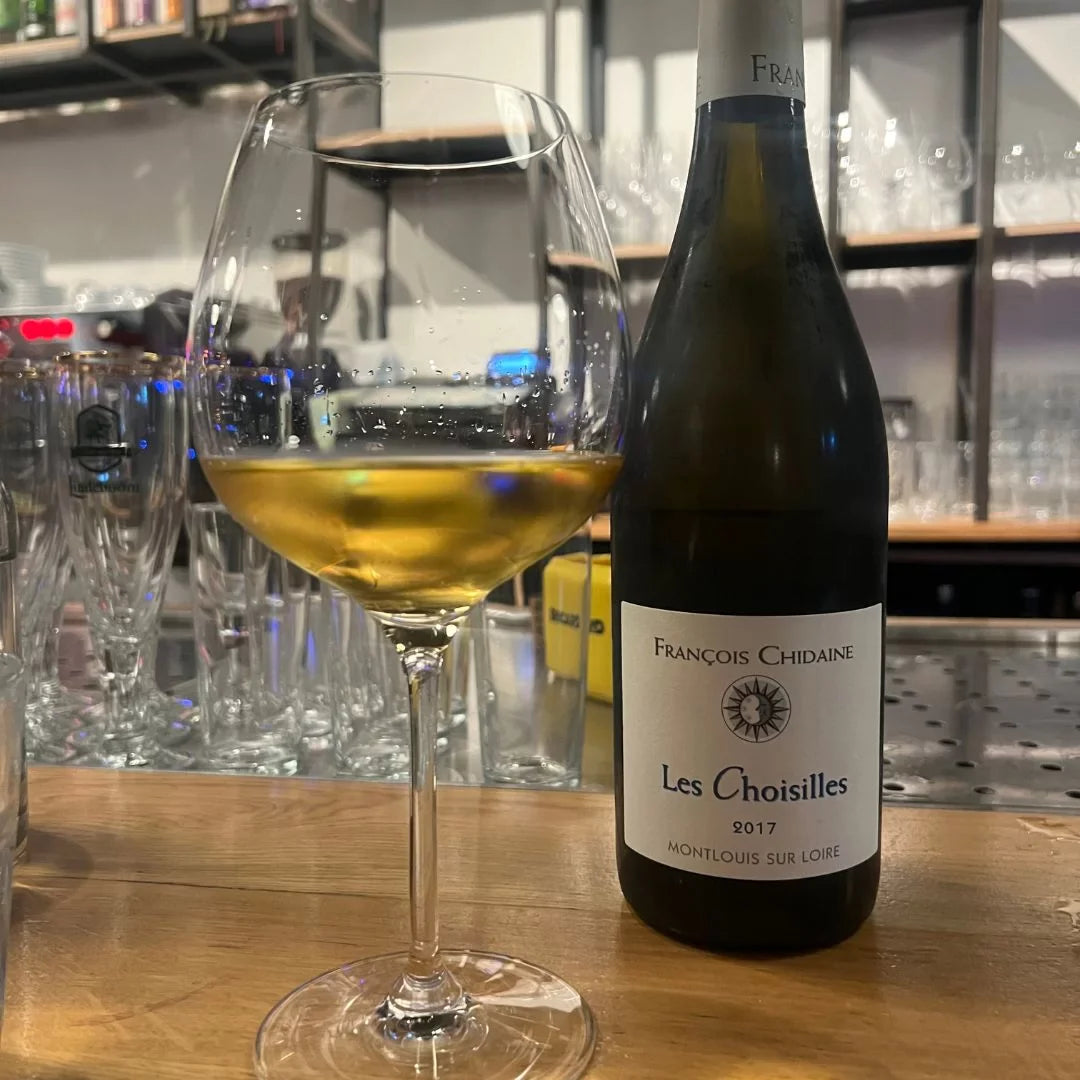
And then there's Francois Chidaine, the hero from Montlouis-sur-Loire. It's a good story, because the vineyards for this cuvée, Baudoin, are located in Vouvray, but due to bureaucratic wrangling between the two communes, he's not allowed to bottle that AOC. Why? The wine also has to be bottled in the commune, and the winery is in Montlouis, so tough luck for Chidaine. What a hassle, and a reason for some winemakers to abandon such an AOC. Anyway, if Chidaine is on the menu, I always say yes. It's wonderfully layered and full-bodied without being heavy.
Do you have a favorite? Let us hear from you on instagram .
You might also like these blogs
In 2021 we recorded a podcast with Esmee Langereis about natural wine.
You can find our favorites from 2021 here .
- Crazy natural wines from Foradori
- Tasted: Adrien Berlioz from Savoie
- The sommelier's favorite sherry
- The ten favorites from the Bojo

Share:
Three days of Burgundy in seven wines
13x Dauvissat at Utregs Wijnhuis