
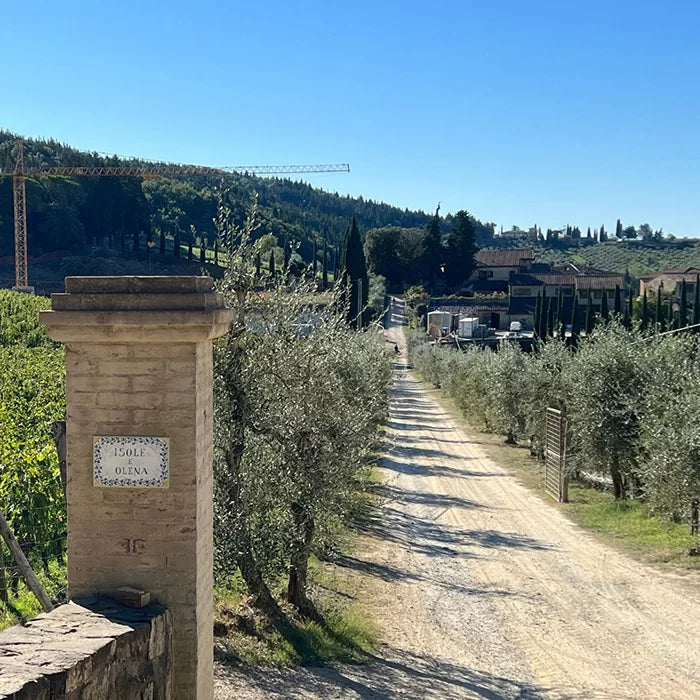
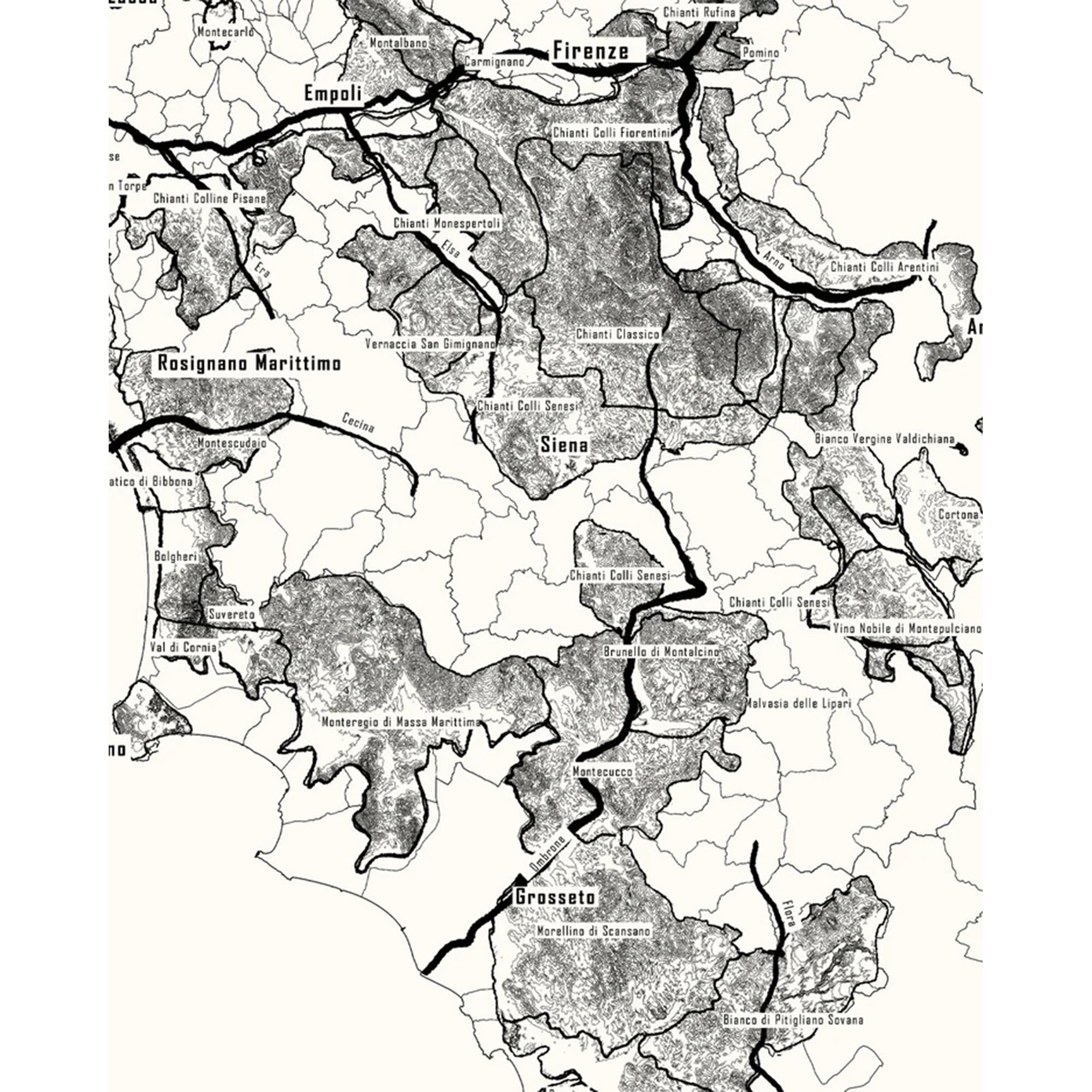
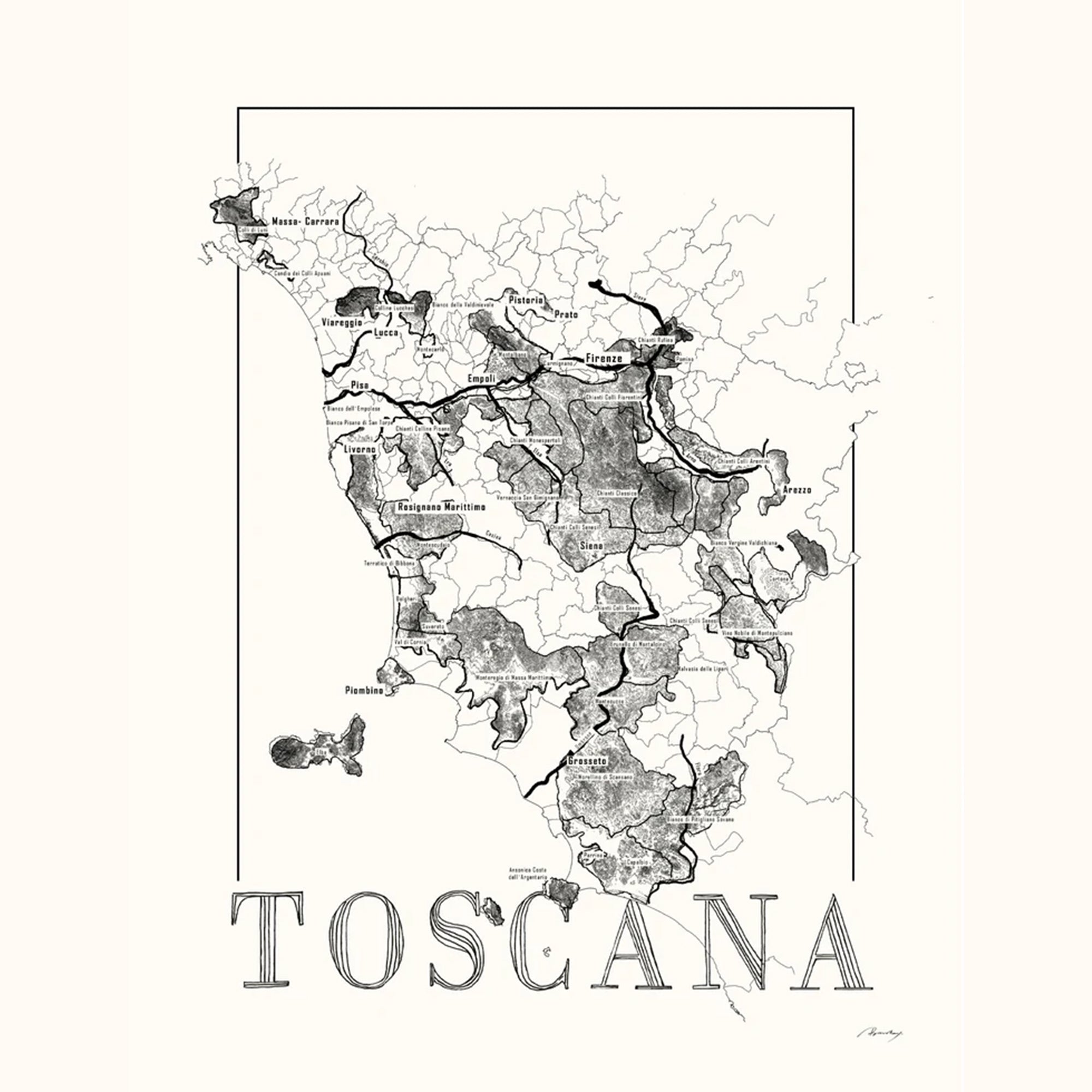
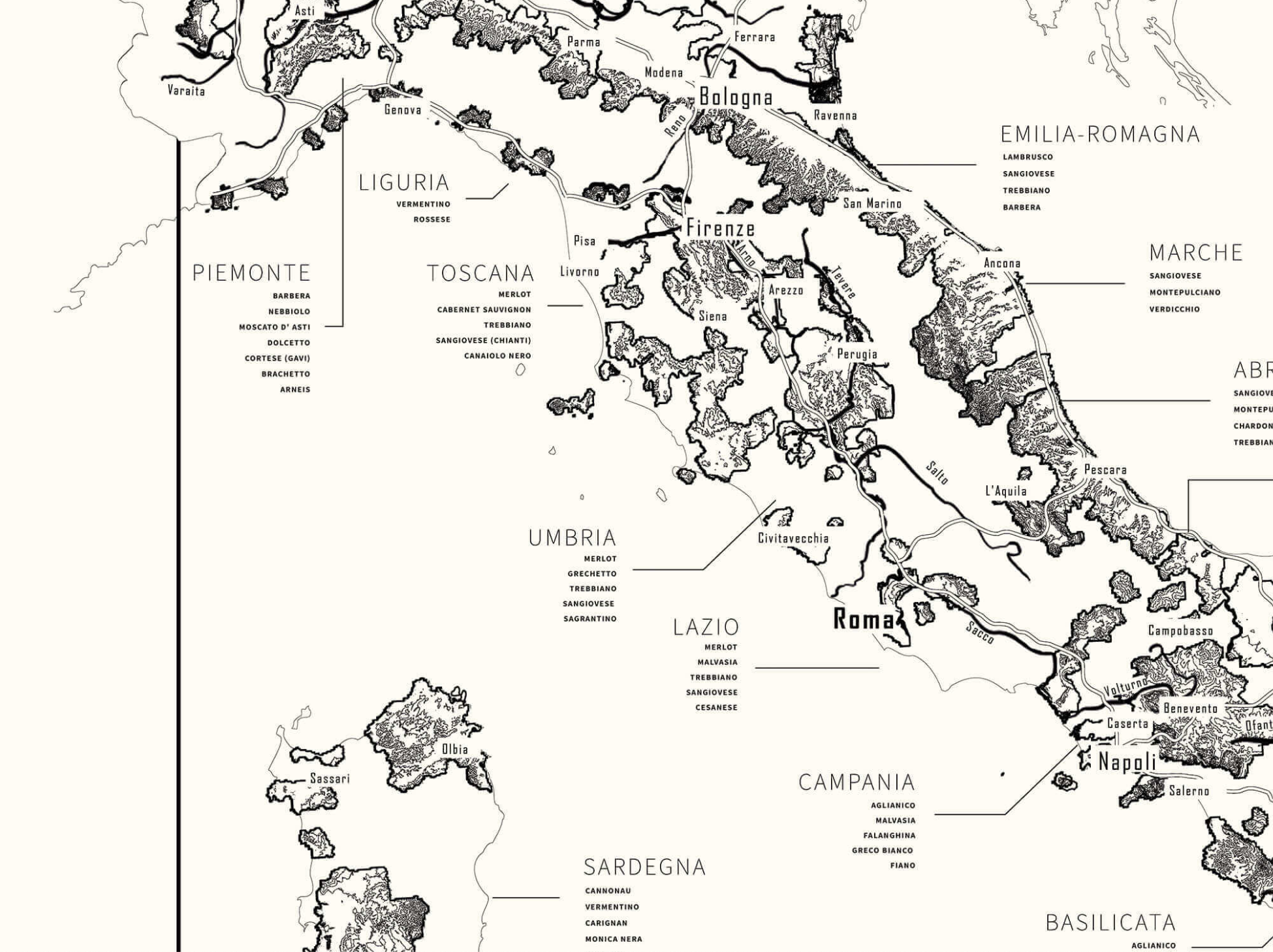
Isole e Olena is located in the Chianti Classico region, more or less the westernmost winery in that appellation. You could consider Isole e Olena a boutique winery: while Chianti is also home to a lot of mass production, not always of the highest quality, here they're truly striving to make something of it. And they're succeeding! Without a doubt!
Warm year
I was there at the end of September, and the harvest was already in full swing. 2022 was a warm year, after all. Lots of sun and very little rain. The grapes are said to be beautifully ripe, and it's a good year in itself, albeit with a limited harvest. Combined with a significant shortage of virtually everything (from bottles to capsules), this will undoubtedly lead to rising prices. You've been warned.
All harvesting is done by hand. While Isole e Olena isn't so traditional in their approach that they claim it's always better than machinery (the technology can do a lot), they do value tradition. "If I have a fight with my girlfriend, I might pick a few more unripe grapes out of aggression, but that's okay. That gives the wine character. Wine is also a cultural product." Anyway, I think the wines I tasted in 2018 and 2019 had little to do with it: perfectly ripe grapes!

Chianti Classico DOCG
You can recognize Chianti Classico DOCG, the oldest wine appellation in the world, by the black rooster ( il gallo nero ) on the label. And behind that rooster lies a fascinating story. There used to be a lot of fighting (we could even call it war) between the people of Siena and Florence. The exact location of the villages between the two cities was always a source of disagreement. This, of course, led to many deaths. Too many, Siena thought. The eternal battle over the border had to be settled. It was decided that as soon as the rooster crowed, a rider would be allowed to depart from each city. Where the two riders met, the border would be established. A nice idea, but the Florentine people weren't convinced they could win with their horses. After all, they were focused on trade, and the horses were true draft horses, not so much racehorses. So they devised a ruse. The rooster, forced to crow in Florence, was locked in a dark box, given little food, and kept away from the chickens for a considerable time. In the very early morning of the fateful day, the coffin was opened before sunrise, and the rooster was left near some friendly hens. The rooster – hungry and lustful – crowed, and the rider was able to depart. The rider from Siena, to his horror, soon saw the rider from Florence approaching. The one from Siena had barely left; his rooster didn't crow until sunrise. And so, Chianti reached the Florentine region.
The wines of Isole e Olena
Great story. But how about the wines? Well, they're truly top-notch. I first drank their Chardonnay. Quite unique in Chianti, but absolutely delicious. The fact that Isole e Olena is situated quite far west in Chianti means there's still a fresh breeze blowing from the sea, which in turn ensures that the wine doesn't become overly woody, but preserves good acidity. The fact that the malolactic fermentation is stopped halfway through also helps, of course. This way, more – and sharper – malic acid remains in the wine, which is definitely a plus.
The Chianti Classico consists of 80% Sangiovese, 15% Canaiolo, and a little Syrah. Canaiolo is interesting because it's genetically one of the oldest grapes in the area. It's also a grape that feels very much at home in the region. While many winemakers blend Merlot with Sangiovese for its "international flavor," it also requires a lot of water, which isn't readily available. Canaiolo handles dry conditions much better. Incidentally, Canaiolo isn't interesting as a single varietal; it lacks tannins, which would give the wine too little body. In this blend, however, it's fantastic. It makes this Chianti Classico incredibly juicy and fruity. Very drinkable, but not lacking in body. Pleasant.
This Chianti Classico is a world of difference from the 2019 Cepparello I drank. It's made from 100% Sangiovese, but from 11 different clones, all vinified separately in a variety of different barrels: from Slavonian, French, and American oak, each with varying toastings from the barrels. Blending all of these is a monumental task. And they do it well. You're drinking a fantastic wine that can age for years, with beautiful tannins, deep, dark fruit, and a delicate spiciness. A truly beautiful version of Sangiovese and now available to taste at Walsjérôt!
Then there's the Gran Selezione. According to regulations, you use your very best grapes for such a wine. But what if you were already using those grapes for your "regular" Chianti Classico? Well... that's the dilemma Isole e Olena faced. They decided to make a slightly different blend with about 80% Sangiovese and the rest Petit Verdot, Syrah, Cabernet Franc, and Cabernet Sauvignon. This makes the wine very interesting and layered. There's a lot to discover, and despite the fact that I tasted a 2015, this wine will definitely age well for years to come. They make this wine in small quantities: only 2,000 bottles, and they don't sell them lightly. Thanks to the pleasant conversation we had (and, of course, also thanks to the fact that I'm from Walsjérôt), I was able to join a list of about a hundred friends of the vineyard, among whom they sometimes sell these kinds of special releases. Who knows...
The Syrah and Cabernet Sauvignon are also being released in limited quantities. These wines are difficult to obtain, so I'll limit myself to mentioning that they are absolutely top-notch wines. The Syrah has a lovely peppery note and wonderfully ripe tannins. The Cabernet has sublime depth but is also drinkable. Much smoother than a typical 2018 Bordeaux.
Finally, the 2010 Vinsanto. Malvasia and Trebbiano grapes (50/50) are dried until about 70% of their moisture is lost. The remaining moisture in the grapes therefore contains even more sugar, resulting in a sweet wine. About 210 grams of sugar per liter in this case. This wine is then aged in barriques for 12 years, resulting in aromas of syrup, orange marmalade, nuts, and tutti frutti. A delicious wine with only 13.5% alcohol and good acidity. This ensures the wine doesn't become too syrupy and is also very suitable for gastronomy.
I really enjoyed (and found it interesting) visiting Isole e Olena. They maintain a relatively exclusive atmosphere, with no website or social media. All their attention is focused on the winemaking. That doesn't mean you're not welcome to give them a call. And that's a tip!
More Italy?
Guest blogger: Jelle Stelpstra
Jelle Stelpstra started his career as a tax advisor but after 12 years switched to something even more interesting than taxes: wine. Jelle owns the Walsjérôt wine bar in Rotterdam and is a vinologist. At Walsjérôt, you can pour your own wine from over 70 wines.
Share:
Wine FAQ: What is kosher wine?
A look inside Domaine Moritz