
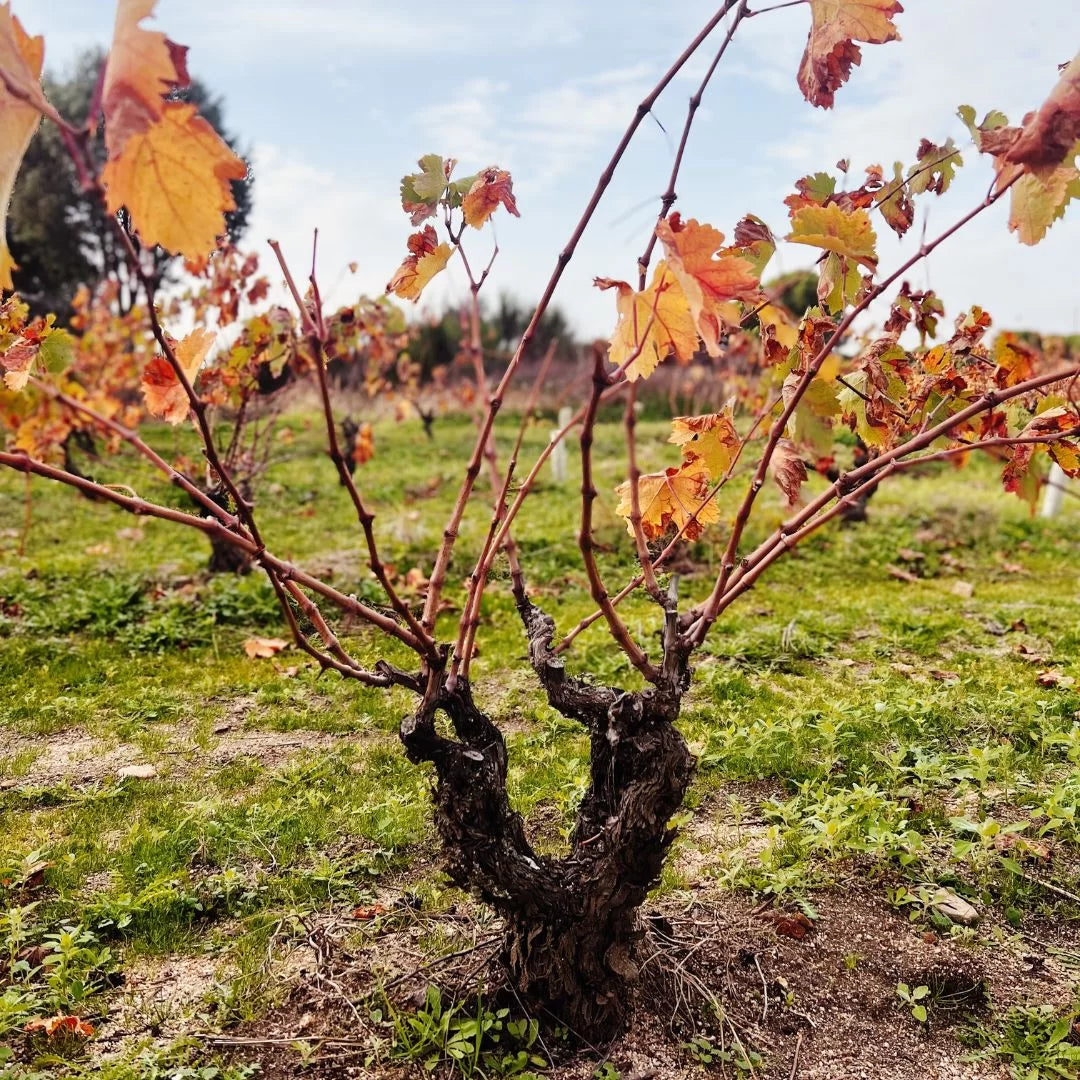
Wine101: What is phylloxera?
What is phylloxera? Every now and then it comes up in a conversation with a winemaker or wine seller: phylloxera. "Yes, that was then and there, and all the vines died, and it was a huge disaster, but these vines were spared." You sense something is special, but deep down, you don't understand a thing about it. Hence the burning question in wine: what is phylloxera?
Phylloxera, the grape louse
Phylloxera is a vine aphid. A small bug with disastrous consequences. This happened around 1900. A plague broke out in Europe, destroying more than 70% of vineyards and, with it, the income and livelihood of many households. The name phylloxera may be a bit confusing, because the aphid doesn't live on the grapes themselves, but in the roots. It bites small wounds into the vine, causing the vine to lose sap and prevent it from absorbing water and minerals. These wounds also make the vine more susceptible to fungi and other diseases, ultimately killing the plant.
International wine shortage
An international wine shortage soon broke out. In the midst of the panic, the French Minister of Agriculture and Commerce offered 20,000 francs—the equivalent of 1 million euros today—to anyone who could find a remedy.
We have a winner
A great deal of research was conducted, but it ultimately took about twenty years before a solution was found. A Frenchman and an American discovered together that grafting a European vine, Vitis vinifera , onto an American rootstock stopped root-eating aphids. The American rootstock proved resistant to disease. Unfortunately for them, the French government considered this a preventative measure rather than a cure and therefore withheld the money. Thanks anyway.
Vineyards that have been spared
An incredible amount of devastation has been caused in Europe by phylloxera. America wasn't spared either. It seems that sooner or later, phylloxera will strike everywhere.
In Champagne, three small plots of vineyard were miraculously spared. They were, because now part of them has also been affected. The remaining part, owned by the Bollinger winery, is still used to produce a very special champagne: Bollinger Vieilles Vignes Françaises . This is remarkable, because the rest of the Champagne region was affected at the time.
Even in parts of the Mosel, original vines still stand. This is because the Mosel's slate soil is far too poor for phylloxera to thrive. Tasmania, Western Australia, Santorini, and Chile are also not (yet) infected.
Samples?
Whether you can taste the difference between a pre-phylloxera vineyard and a post-phylloxera one, I have no idea. It is a fact, however, that older vines often produce more concentrated wines. There's no need to be too concerned about that. As a vine ages, it produces fewer grapes, and the flavors therefore become more concentrated. But what does "old" mean in a vine? In Bordeaux, vines are replaced when they are 35 years old.
So, whether you taste it, I don't know. Although the Bollinger Vieilles Vignes Francaises was, of course, a-ma-zing.




Share:
Methode traditionelle: how is champagne made?
Wine101: wine words that come up during tasting