
Sometimes I really can't figure out how to translate an English term into Dutch. Whole bunch fermentation sounds good, whole cluster fermentation a little less so, right? It's certainly a popular technique among winemakers and wine enthusiasts. "Decanter even had the headline Whole Bunch Fermentation is the new wine fashion in 2016, so it's time for Le Club to talk about this technique .
If you look up how red wine is made, you'll usually hear the standard refrain: destem – crush – ferment – press. After harvest, the grapes are destemmed (stems contain "hard" tannins), then the grapes are crushed or not before being put in the tank. Only after fermentation is red wine pressed.
Some winemakers choose to bottle the grapes not To destem before fermentation. In this article, I explain why.
More tannin?
Contrary to what you might expect, fermenting whole bunches or using stems doesn't necessarily increase tannin. This contradicts what you learned in lesson 1 of your wine course: aren't those stems actually packed with tannin? So what's the deal?
One of the prerequisites for whole-bunch fermentation is ripe stems. You don't want unripe stems in your wine: they taste green and are bitter. When perfectly ripe, they contribute to the wine's structure and impart spicy and floral aromas. These days, that's rarely a challenge #climatechange. Furthermore, stems absorb pigment, so the wine loses some color. The winemaker from 4monos in Sierra de Gredos also told me that the stems absorb some alcohol—not a surprising feat in these times of climate change.
'I'll lose some color to gain freshness and purity.'
Eden Sabie (SA), WineAnorak
Why then?
Enhances the fruit character of the wine
I've read quite a few articles ( Decanter , WineAnorak and WineSpectator ), and the general idea is that fermenting on whole bunches or adding stems to the must contributes to the wine's fruit character. The primary fruit becomes more prominent, the wine gains freshness, and the tannins soften. Again, this only works if the stems are also ripe. There's no set recipe for fermenting on whole bunches. One winemaker uses 20% whole bunches, another 50%. It depends on the year, the vineyard, and the style the winemaker has in mind.
Lower alcohol percentage
Stems contain water, not sugar. This means that whole bunch fermentation is usually slower than crushed grapes. In the age of climate change, this seems to be winning , but also realize that we are still looking for ripe tannins and that goes hand in hand with ripe grapes (hence higher alcohol percentage).
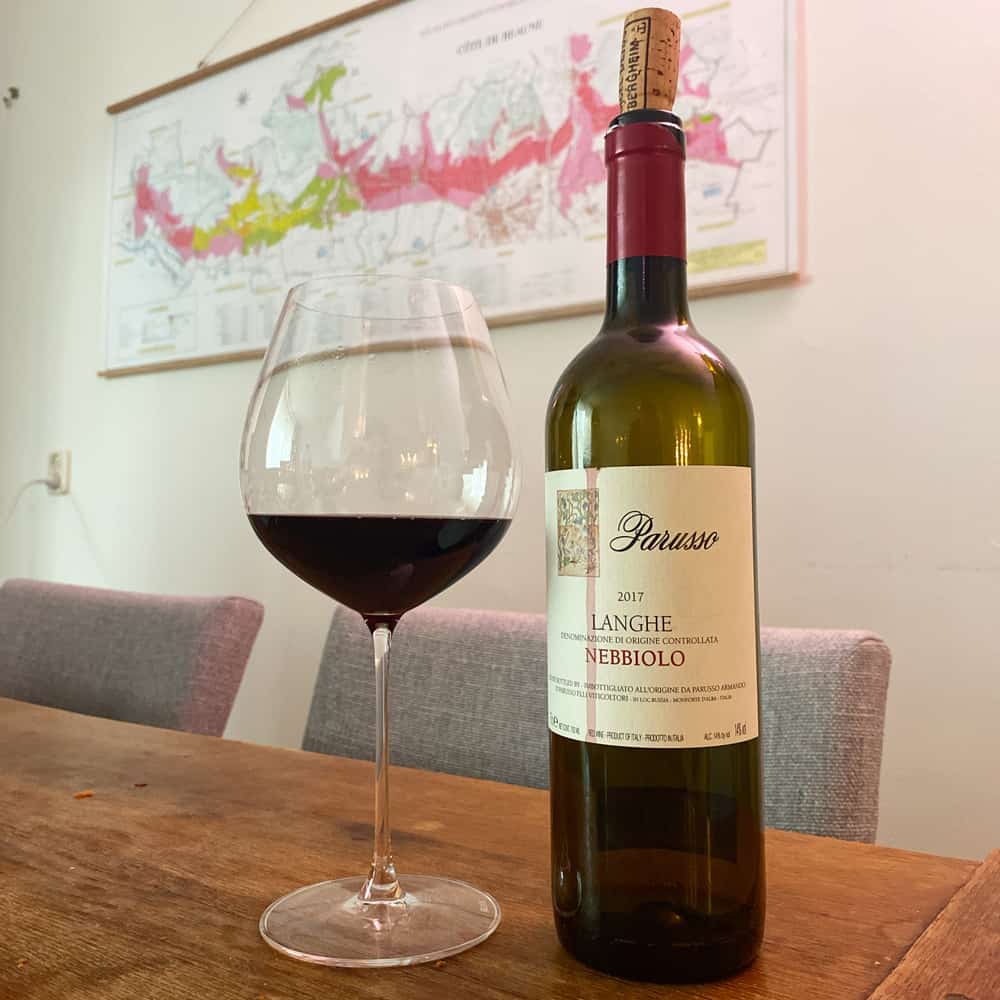
Take Marco Parusso, a Piedmont winemaker who even ferments Nebbiolo with whole bunches. I didn't see this coming. But it's possible. The 2017 Parusso Langhe is fantastic. It was a warm year, so that helps. Ripe tannins, check. Moreover, Marco Parusso lets the bunches "rest" for a few days after harvest. Not long enough to dry out the grapes, but long enough for the stems to ripen. Then, the grapes, bunch and all, go into the barrel.
What vinification techniques are there?
There are three techniques for whole bunch fermentation: carbonic maceration, semi-carbonic maceration, and whole bunch/bruised bunch blending.
#1 Carbonic maceration
Carbonic maceration (skin maceration under carbon dioxide) is the most well-known, made famous in Beaujolais, but now used worldwide to produce smooth and fruity wines. Carbonic maceration and semi-carbonic maceration are often discussed, but according to Mathieu Lapierre, the hero of Beaujolais, these are invented terms. journalists . According to him, it's always semi-semi ... Jancis Robinson , the queen of the wine world, does make a distinction between the two.
In carbonic maceration, the bunches are placed in a tank that is then filled with CO2 to remove all oxygen. This initiates fermentation within the grapes themselves (intracellular fermentation). At approximately 2% alcohol, the grapes burst and release the juice. This is drained off as "run-off wine." The remaining portion is pressed, the "press wine." The two are blended, and the fermentation is completed.
It's a way to extract (much) less tannin. The juice is actually only in contact with the skins (and stems) for a short time. Moreover, the juice has an alcohol content of only 2%, and tannins are easier to extract in the presence of alcohol. It is, however, an ideal way to extract color, as in Beaujolais Nouveau. Furthermore, the resulting wine often has aromas of cherries, banana, and sometimes a touch of cinnamon.
A while ago I drank the Artuke From Rioja, made using carbonic maceration. Fruity, smooth, and delicious. Serve chilled!
#2 Semi-carbonic maceration
Almost the same as before, but without the addition of carbon dioxide. The tank is filled with whole bunches of grapes. The bottom layer of grapes collapses under the weight of the top layer, bursts open, and begins to ferment. This can be done by the grapes' natural yeasts or by adding commercial yeasts.
Meanwhile, the barrel fills with CO 2 (natural by-product of fermentation) which causes the top carbonic maceration takes place. The winemaker then has two options for completing alcoholic fermentation: with or without the skins. Using the skins increases the wine's concentration, structure, and tannin (and thus its aging potential). Of course, there are other techniques available for this, such as remontage and pigeage.
In short, it depends on the winemaker's choices, but… in short, semi-carbonic maceration produces a softer wine with more fruity aromas (compared to traditional winemaking). This technique is also often used in Beaujolais, but it's also a good option for fruity styles like Pinot Noir, Malbec, or Tempranillo.
Remontage, pigeage, say what?
Reading tip: Wine101: The wine words that come up in the wine cellar, deciphered .
#3 A mix of whole bunches and crushed grapes
Another option is to add whole bunches to crushed grapes. There's no set recipe for this; it's up to the winemaker how many whole bunches they use.
Although the clusters are not covered by CO 2 They are largely submerged in the must and kept away from oxygen. Intracellular fermentation thus occurs again in the (whole) grapes. However, the whole bunches gradually break open because the cap is regularly mixed with the juice during fermentation. The winemaker can adjust this. The more bunches that break open, the more active the yeast is, so the faster it goes.
Of course, the winemaker has a wide range of options (including skin maceration and oak aging), but here too, the prevailing idea is that this technique produces a fresher wine with more primary aromas. Not all grape varieties lend themselves well to this technique. The often green stems of Cabernet Sauvignon are not a good match, but Syrah, Pinot Noir, Grenache, and Gamay are more commonly used (even Nebbiolo!).
Can't get enough?
Then you can read (or listen) more about whole bunch fermentation here:
- Decanter – Jefford On Monday: Not tannin, but texture
- Guildsomm – Interview: Perspectives on Whole-Cluster Fermentation
- Jancis Robinson – Whole Bunch Fermentation
- SevenFifty Daily – The Science of Whole-Cluster Fermentation

Share:
The ten wines that stuck with me from 2019
Time for German wines