
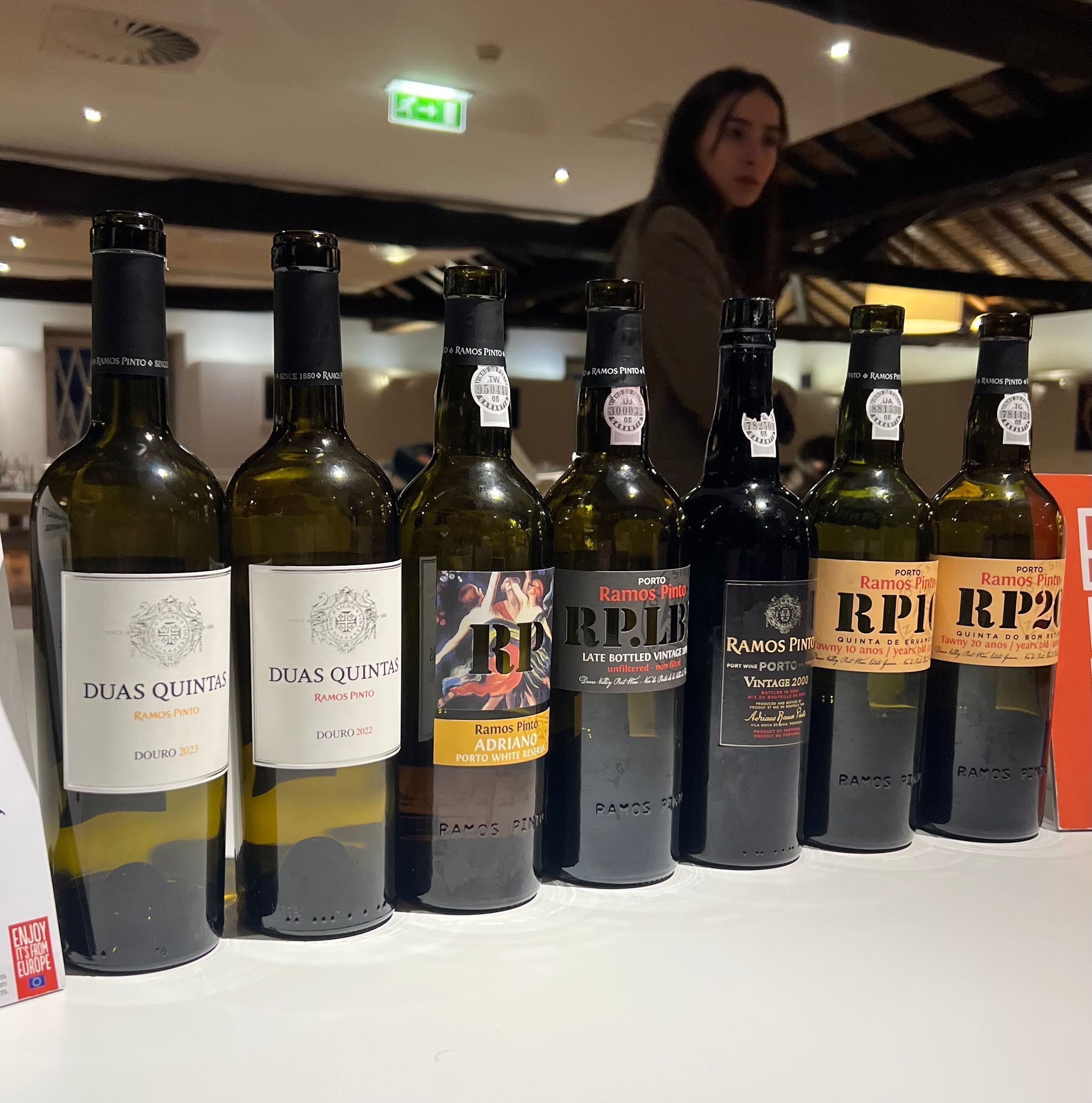
The port story goes back many years. Back to the time when airplanes didn't exist, communication was still by telegram, and flaxseed was consumed exclusively by birds. The English had a problem. They fancied a glass of red, but were in a dispute with the French. They had to look for an alternative, and found it in Portugal.
But how do you get the wine from Portugal to England? It spoiled before it even reached the coast. They discovered that wine with higher alcohol kept longer. And whoosh, that's how port was born. That's why you find so many English port houses, like Graham's and Warre's.
What is port and what types of port are there?
What is port and what makes it different from wine? Port is a sweet, full-bodied, fortified wine. It has an alcohol content of between 18% and 22%. Because it's rich and sweet, it's often enjoyed as a dessert wine, but it also makes a great afternoon snack. It doesn't always work with cheese, although we all often assume it does. Port is heavy, so you need a cheese that can handle that, like Blue Stilton. Find more surprising port & cheese combinations here >
There are several styles of Port, the best known of which are Ruby and Tawny Port.
Ruby & Tawny port
Ruby is ruby red in color, while Tawny tends toward a rustier brown. What's in a name? There are also differences in taste, and a tawny is often more exciting, in my opinion. Ruby is fruity, while tawny combines those fruity aromas with notes of nuts and caramel. There are exceptions, of course. ruby port from Quinta da Romaneira I love it!
Port starts as Ruby . A fortified wine that hasn't spent (long) time in oak barrels. It's tasty, but its complexity won't blow you away. It has aromas of blackberries, plums, some red fruit, and violets.
A Tawny Port is actually a wood-aged ruby. This must last at least 3.5 years, but most wineries use a maturation period of 6 to 7 years for Tawny Port . The best ones are aged longer. The color then gradually changes to orange. These tawnies are often a blend of several ports, with the average age of the different wines indicated on the bottle: 10 years, 20 years, 30 years old. The older the wine, the less fruit and the more notes of caramel and nuts. Personally, a 10 years Tawny My favorite. A beautiful balance of dried and candied fruit and caramel notes.
A nice and typical tawny port is for example Graham's 10 Years . Here you'll find everything from fine red fruit to caramel and tobacco.
More ruby port: Vintage Port & Late Bottled Vintage
If you really want to go all out, go for a vintage. This is a ruby port from a particularly good harvest year. Exceptionally good, because this is determined by a genuine port institute and occurs on average three times every ten years. A port for keeping. Last year, there was even a vintage port (Dow's 2011 – more from Dow's, see here ) at number one in the ranking of the best wines in the world (source: Wine Spectator ).
Want to get started right away, or are you a bit short on cash flow? Here's an alternative: Late Bottled Vintage (LBV). This is also a port from a single harvest year (not a vintage port year, but a fine one nonetheless), which is bottled ready to drink after aging in oak barrels for four to six years. Ready to drink, in other words. Try Graham's Late Bottled Vintage 2017, for example. from Gall & Gall. Delicious with a piece of blue cheese or, as we happen to be doing today, with dark chocolate brownie !
Want to know more about storing port? Check this article .
Colheita: the vintage of Tawny
Colheita literally means harvest year. A Colheita Port must be aged in oak for at least seven years (the same as a Tawny Port up to that point) and the grapes must come from a single harvest year. A good benchmark is the Warre's Otima Single Year Tawny 2013 from Albert Heijn. Definitely recommended and very affordable.
Share:
Overnight stay in Bordeaux
A wine fan in Porto