
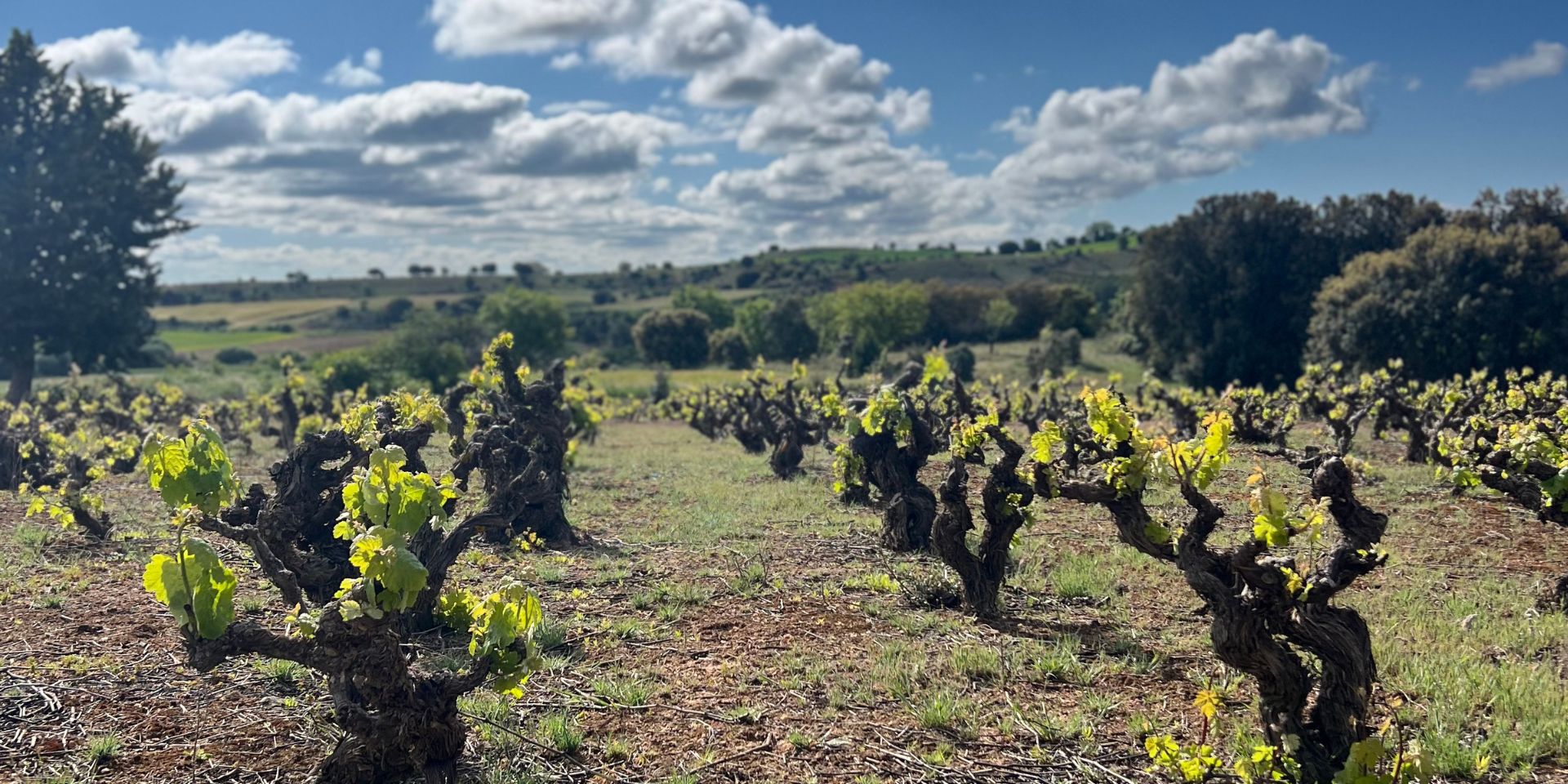
Winemaking in Ribera del Duero dates back to the Middle Ages. Rules for wine production were established as early as 1295. The modern era, however, began in 1859, when Eloy Lecanda founded the estate in Valbuena del Duero that would later become known as Vega Sicilia. He planted French grape varieties such as Cabernet Sauvignon, Merlot, and Petit Verdot, which was unprecedented at the time. His first wine wasn't released until 1915, but it would become an icon.
From phylloxera to the founding of the DO
In 1909, phylloxera reached the region, but eastern areas like Soria were largely spared thanks to their sandy soils. As a result, old vines can still be found there today. Nevertheless, the region suffered: during the Spanish Civil War and the ensuing poverty, many farmers switched to crops like wheat or beets. Only a few tenacious wine families maintained their mini-vineyards.
In 1927, the first cooperative was founded in Peñafiel, later known as Protos. This organization was the first to use the name "Ribera del Duero" and later ceded it to the region when the DO was established. From the 1950s onward, cooperatives largely took over production. Family wineries disappeared, and grapes were processed communally. Much of the wine at that time was clarete , a local blend of red and white grapes, fermented together to create a light, robust wine that is now slowly making a comeback.

By the 1970s, the bottom had been reached: from 38,000 hectares, only 6,000 remained. Low grape prices, competition, and economic pressure led to the massive uprooting of old vines. The turning point came in 1982 with the creation of the Denominación de Origen Ribera del Duero, a group of ten ambitious wineries.
In the 1990s, the region again attracted international attention. The arrival of Pingus in 1995 , What was sold en prieur in Bordeaux put Ribera on the map worldwide. Today, Ribera del Duero has over 300 producers and some 26,000 hectares of vineyards.
Ribera del Duero vs. Rioja: What's the Difference?
Both regions are famous for Tempranillo wines, often complemented by other grape varieties. In Rioja (such as Graciano , Mazuelo , or Garnacha ) and in Ribera del Duero (such as Cabernet Sauvignon or Merlot ). Both regions use French and American oak, with American oak traditionally being more popular due to its lower cost.
Yet, there are clear differences. Ribera is situated higher (a plateau from around 800 meters), which results in extreme temperature fluctuations between day and night. Summers are short and harsh, with frequent risks of frost – even during harvest. These conditions result in thicker skins, smaller berries, and more intense flavors in the grapes. Consequently, the wine often features dark fruit (think blackberries and black cherries), more structure, and stronger tannins.

Rioja, on the other hand, often produces wines with more red fruit, softer acidity, and more elegant tannins. The style is generally somewhat lighter, friendlier, and more subtle.
Nowadays, a shift is also visible in Ribera: winemakers are seeking more freshness, vineyards are planted higher, and the use of wood is often more subtle. The region thus proves that it possesses not only power but also finesse.
Is Ribera del Duero just powerful and heavy?
Ribera del Duero is known for its full-bodied, powerful red wines (particularly from the 2000s ) with high alcohol levels, deep color, and concentrated flavors. But the idea that Ribera is made up solely of heavy, high-alcohol "wrecking balls" is now outdated.
The climate certainly plays a role: the region lies on a high plateau, averaging around 800 meters above sea level. Especially along the Duero River and on the so-called páramos, the higher areas of land, it used to be too cool for wine growing, but today grapes are grown there to produce fresher, more elegant wines.

Winemaking styles are also shifting. Some winemakers are consciously working with old vines in cool plots that naturally produce less sugar and therefore less alcohol.
Furthermore, experiments are underway with grape varieties. For example, Albillo Mayor, a white grape, has recently been officially permitted in red blends up to 25% of the total volume within the DO. This offers winemakers additional opportunities to add structure and freshness to their wines.
Albillo mayor: a white future for Ribera del Duero?
Since 2019, albillo mayor has been officially permitted within the DO Ribera del Duero – up to 25% in blends. While it was previously only permitted at 5% (and wines with more albillo were marketed as "Vino de la Tierra"), it can now also be labeled as white Ribera.
Yet, very little is planted: around 355 hectares out of a total of approximately 26,000 hectares of vineyards. There's no established style yet – producers are experimenting with oak, oakless, skin contact, or even orange wine. The grape itself is quite neutral, but can retain freshness and structure, even when aged in oak. This makes it a good base for serious white wines.
Nadien's favorites
My favorite producers of Albillo Mayor are Dominio de Cair with a Chablis-like purity and Dominio del Águila , which you could put right next to a Meursault.
Clarete makes a comeback
Clarete is a traditional wine style from Ribera del Duero that has been produced for centuries. Unlike modern rosé, Clarete is vinified from both red and white grapes, planted together and fermented together (co-fermentation). The result is a wine that is often deeper in color than rosé, but lighter than red .

Until the 1970s, clarete was the dominant style in the region. After that, many wines disappeared under the influence of international trends toward heavy, oak-aged reds. But now, clarete is making a remarkable comeback, in line with the contemporary demand for lighter (red) wines.
According to the DO, clarete must contain at least 50% authorized red grapes. There's considerable flexibility: blends with albillo mayor (white), tempranillo, garnacha, and more are permitted. Style-wise, there's also a variety of wines, from fresh, acid-focused wines to more spicy claretes aged in oak.
Visit to Bodegas Vega Sicilia
Vega Sicilia is the most famous winery in Spain. Perhaps even in Europe. And you can feel it immediately. No cluttered storage here, but a futuristic winery full of technology, customization, and precision. More than 100 separate tanks allow each vineyard plot to be fermented separately. There's plenty of room to make choices, experiment, and blend.


What was particularly impressive was their own barrel factory , where some of their wooden barrels are made. They source French wood but build their own barrels from it – to have even greater control over flavor, aging, and style. Different wood types are tailored to the vintage: dry, wet, cool. Each vintage requires a different approach.
The wines of Vega Sicilia
- Alión 2021 – The entry-level Vega Sicilia. Ripe, intense, and still very Ribera, but with noticeably less oak dominance than in the past.
- Valbuena 5º 2020 – A blend with some Merlot. Spicy, layered, and balanced. The "COVID year," as they call it there, with the winemaker in quarantine among the vines.
- Unico 2015 – The showpiece. Made from multiple vintages (15% blend including 2013, 2014, and even 2018). Deep complexity, graphite, spices, and velvety tannins.

What you'll notice: Vega Sicilia is slowly evolving in style. Less wood and power, more grape and terroir. Completely contemporary.
Visit to Dominio de Es
While Vega Sicilia overflows with resources and techniques, a completely different wind blows at Dominio de Es. Here, deep in the eastern part of Ribera, in the province of Soria, lie abandoned villages, ancient vineyards, and tranquil hills. It feels like a forgotten wine world, a kind of hobbit village. Bertrand Sourdais, former winemaker at Atauta and now owner of Dominio de Es, fell in love with the region.

Bertrand arrived in Soria as a young Frenchman and was ridiculed by the local cooperative. They didn't take him seriously: such a young guy, and from France at that—what are you even doing here? He believed in the region's potential, persevered, and decided to pay six times the price per kilo for the grapes. They eventually relented.
What makes Soria unique?
- Very old vines, often pre-phylloxera .
- High altitude (up to 1,000 metres).
- Calcareous soils.
- A mountain of micro-plots, some of which are only a few rows in size – often divided among multiple owners.
At Dominio de Es, you can taste the magic of this place. Fine, delicate wines, almost Burgundian in structure. Everything is done by hand, from pruning to harvesting. The crus from mini-plots are incredibly elegant.
👉 Want to read more about Soria? Then read this blog.
Guest blogger: Luc Willems
Luc is 21, a graduate of Hotelschool The Hague, and works as an F&B Management Trainee at Park Hyatt in Bangkok. Starting in June 2025, he'll be writing the show notes for Le Club & SommelJJ the Podcast . We're already thinking he's gamayzing .



Share:
Afterwards he completed the Ribera del Duero Educator Course
Cheesecake with pecans and caramel and Moscatel de Setúbal