
At the end of May, I was invited by DO Ribera del Duero to get to know the area better. Not a general press trip, but the Ribera del Duero Educator Course . It was fun, but I can't deny that at some point I wondered: what else can I learn about Ribera del Duero? Nothing could be further from the truth.
"Ribera del Duero is often oversimplified," was how the days were introduced by Elisa Errea and Nygil Murrell of The Wine Studios in Madrid. Before I get into that, I want to give a shout-out to Elisa and Nygil, because I happened to know this duo from the Spanish Educator Course I took a few years ago. I wrote a report about it for Perswijn at the time. It was fantastic then, and it was fantastic again now.
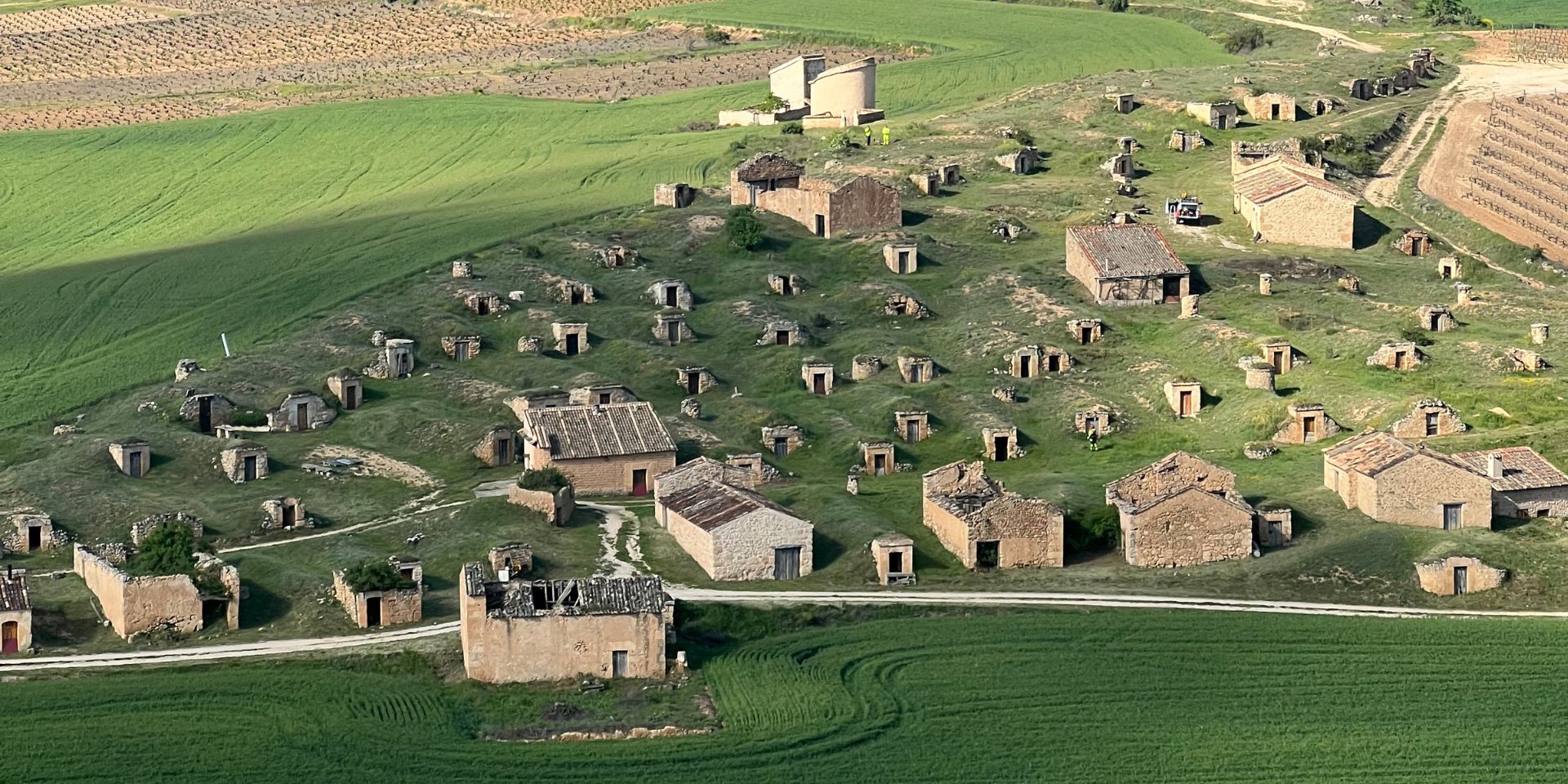
The Wine Studios continues where other wine courses stop. As providers of WSET1 through WSET4 in Madrid, they know exactly what's included in these programs. They assume participants are familiar with this, so we don't have to hear for the tenth time that a Crianza ages for a shorter time than a Reserva. Instead, we hear and see the stories that aren't told, but that add color to the region. For example, we visited Vega Sicilia, the most famous winery in the region, and indeed in the entire country, and we also traveled to the abandoned but now-resurgent town of Soria.
Soria: the other side of Ribera del Duero
In Soria, we see a completely different side of Ribera del Duero. No large-scale wine production, but small plots with centuries-old vines. Bertrand Sourdais, the Frenchman behind Antídoto and Dominio de Es, He explains that he doesn't know the exact age of the vines in the "La Mata" plot, but that the vineyard was already considered old in 1904. Dominio de Es bottles 600 to 900 bottles of La Mata annually. We were fortunate enough to taste Dominio de Es La Mata 2020 right next to the vineyard.

Dominio de Atauta
Then we drive on to a higher-lying plot of Dominio de Atauta. We're traveling with technical director Jaime Suárez. From the bus, he points to a large meadow where just one small plot of vines remains. "There used to be nothing but vines here," he says.
It's emblematic of the history of this region. As in many parts of Spain, at some point, viticulture simply became unprofitable. A kilo of grapes cost 12 cents here. That's hard work for little money. Especially with old vines growing low to the ground, everything done by hand, everything done hunched over. People were getting older, and the younger generation had little appetite for that physical labor. Some quit, others replaced vines with wheat. But there were also those who stayed. Those who persevered, despite losses, despite being the only ones left. Purely out of love for the place. And you see that love in Jaime as he tells this story. Or when he takes us to the vineyard, at an altitude of 1,000 meters.

We're standing in La Roza, a tiny 0.24-hectare plot, once divided among nine owners, now largely in the hands of Dominio de Atauta. The vines were on the verge of death after years of neglect, but are being "saved" bit by bit by Jaime Suárez and Ismael Sanz, responsible for viticulture at Dominio de Atauta. "You can't take out a tree, but letting a 170-year-old vine die is okay," says Jaime. We're all a little taken aback.
Then we taste Dominio de Atauta 2021 , a blend of 25 different terroirs with old vines (at least 130 years old). According to Jaime, it's "the most complex wine to make." It certainly turned out well. One of the tasters says it's Gevrey-Chambertin, and I'm reminded of Barolo. This just goes to show that tinto fino (= tempranillo) has many more facets than we initially realize.

Almudena Alberca & tinto fino
The versatility of tinto fino was beautifully demonstrated in Almudena Alberca MW's masterclass: a winemaker's guide to tinto fino . Almudena previously worked at Dominio de Atauta and later moved to Entrecanales Domecq e Hijos, where she was technical director responsible for 400 hectares of vineyards and five wineries across northern Spain. Recently, she's taken it a bit easier: "I also like to skip a harvest sometimes," she says. This has given her more time for education and consulting. We're thrilled; she's fantastic.
We taste 17 wines divided into different flights, including:
- Expression based on climate and soil type
- Alcoholic fermentation: cool vs. warm
- Maturation: stainless steel, wood, concrete
- Maturation: affinity with wood and maturation time
- Tempranillo with other grapes
The surprises of the afternoon were the wines of Magna Vides and Félix Callejo . I'd confidently categorize both as new wave Ribera del Duero. This means wines with more freshness and less oak, made from old vines often planted in field blends.
Magna Vides is available at Okhuysen .
Félix Callejo is available at Bosman Wijninkopers .
Incidentally, we also tasted the opposite: Viña Sastre Pesus 2018, with Jesús Sastre himself in the middle of the vineyards. Just as impressive. They don't shy away from using wood, with 200% new wood. Yes, 200%. First, alcoholic fermentation in new wood, then malolactic fermentation in November, and in April, the wine goes back into brand-new barrels. You expect a smack in the face, but that's not so bad.

Pesus demonstrates just how well tinto fino can handle oak. Another contributing factor is that the grapes come from old vines planted on clay soil, which creates enormous concentration. It's as if they simply absorb the oak. As if they're sucking it in. The result? A wine that's simultaneously powerful and polished. Blackcurrant, blackberry, graphite, coffee, a touch of earth. Rich, yet smooth. Complex, yet drinkable, even now.
Viña Sastre is available at Spanjewijn . Don't be alarmed, Pesus costs 550 euros.
Finally, claretes are coming back
Ribera del Duero may be known for its red wines, but you've also come to the right place for rosé. Although they call it rosado or clarete here. On paper, those terms mean the same thing: a wine made from at least 50% authorized red grape varieties. This is usually tinto fino, but garnacha, for example, is also allowed.

In practice, however, there is a difference between rosado and clarete. Clarete is often used for blends of red and white grapes, as a kind of homage to the past. About fifty years ago, clarete was the dominant style of Ribera. Made from field blends, often about half tinto fino, half albillo mayor. Until the cooperatives arrived, and that style slowly disappeared. But now, clarete is making a comeback. And rightly so. The style is perfectly suited to our times: juicy, well-structured, and drinkable.

My favorites were those from Félix Callejo , Finca Torremilanos, Antítodo and Dominio de Es , and Territorio Luthier . We even tasted a barrel sample of Luthier's first Gran Reserva. For fans of Viña Tondonia Rosado, this is a must-try.
Finca Torremilanos is available at D-vine
Luthier is available at BESvinos .
Share:
A wine lover in Armenia
What you didn't know about Ribera del Duero