
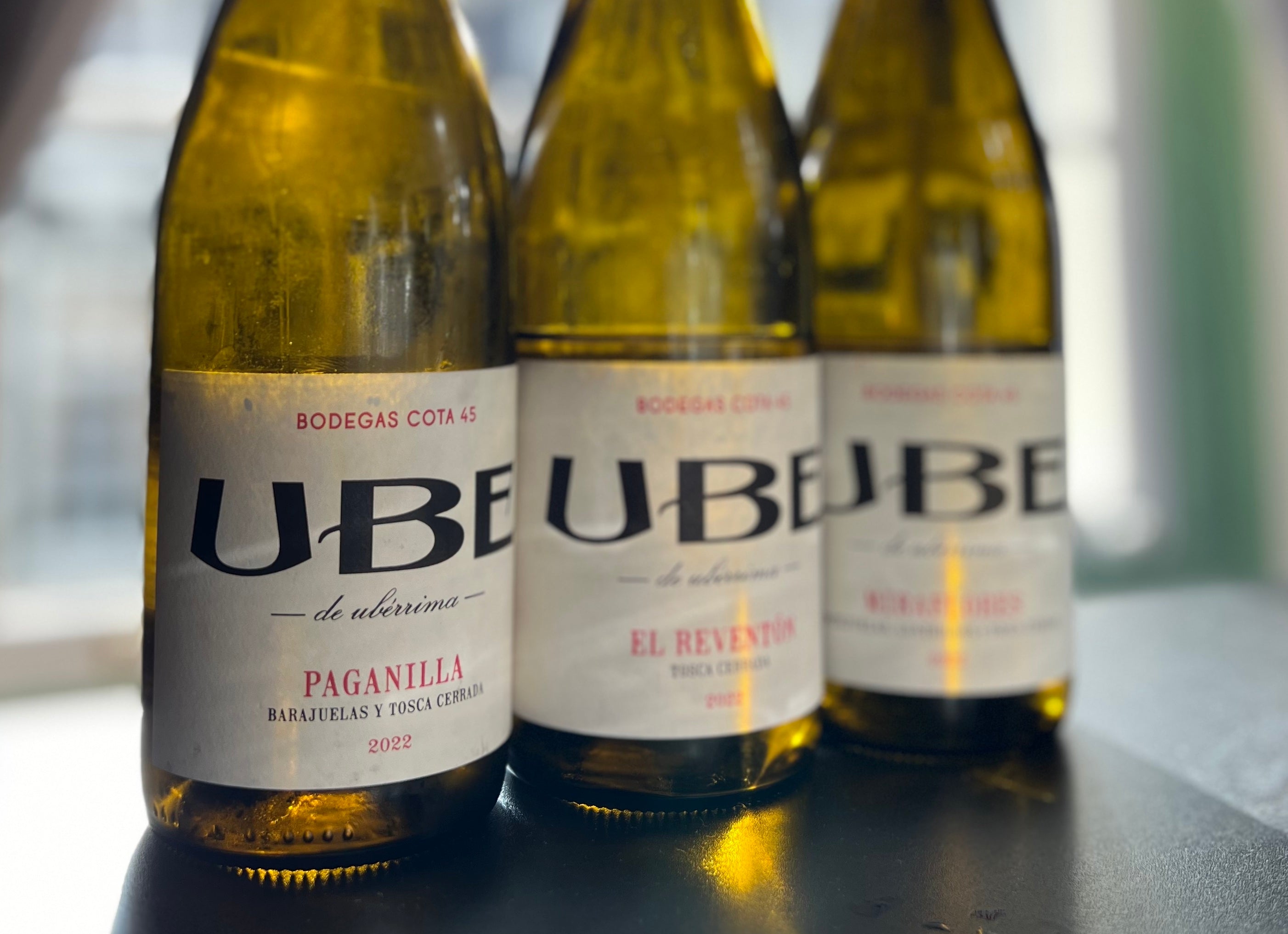
It's December and I'm back in Jerez. All sorts of things are happening right now. New legislation is being drafted, bodegas are being taken over by other bodegas, and unfortified fino and manzanilla wines have finally been approved .
This isn't news to Ramiro Ibañez; in fact, he's right on top of it. Along with Willy Perez of Bodegas Luis Perez, he's at the forefront of "the new Jerez." Although that term isn't quite accurate, because what he's doing is returning to the way things used to be, to sherry before industrialization, before the era when volume dictated price. Fortification wasn't standard practice back then; sometimes it was, especially for export, because alcohol improved shelf life. And palomino certainly wasn't the only grape that played a role. Ramiro has been researching the forgotten grape varieties of Jerez for years. Many of the Andalusian varieties mentioned in Wine Grapes are his work.
So, you get it: Ramiro Ibañez is a sherry hero. That's why we're highlighting some of his wines below.
Cota 45 – Ube Miraflores
100% palomino, 3 months flor, 7 months maturation in wood
Ube Miraflores comes from various plots in Miraflores Alta and Baja, both with albariza soils, located 5 kilometers from the ocean. The wine is briefly aged under flor and then barrel-aged for several months, resulting in a combination of freshness, saltiness, and subtle reductive notes. I would say this is the most accessible UBE. Delicious with anything from the sea.
Cota 45 – Ube Paganilla
Palomino on barajuela and tosca cerrada, 3 months flor
Paganilla is located about 7 kilometers from the ocean and has harder soils, which means the vines are subjected to more stress and produce smaller, more concentrated grapes. The result is an energetic wine with more structure and higher acidity than Miraflores. The flor is more pronounced here, adding depth and tension. Paganilla is chalky, salty, and slightly earthy. Love it.
Cota 45 – Ube El Reventón
Palomino from an inland pago, 2 months flor
El Reventón is located 10 to 12 kilometers from the sea, in an area with steeper slopes and poorer Tosca soils. This results in a slightly fuller and more powerful style than Paganilla, without sacrificing precision. Less typical of "coastal Sanlúcar," more breadth and texture.
Cota 45 – Ube Maina 2016
Palomino on pure barajuela, wood fermented, towards fino-amontillado
Maina is the most powerful pago in Sanlúcar, made entirely from Barajuela soil. This older vintage demonstrates how Ramiro's style has evolved: fermented in wood, with a more powerful flavor profile and notes that lean towards fino-amontillado.
Cota 45 – Agostado Cortado 2020
Unfortified, partly under flor, then oxidatively matured
Agostado 2020 is a fresh, light interpretation of a cortado style, but without fortification. For this wine, Ramiro uses heritage varieties like Uva Rey and Perruno, supplemented with a small amount of Palomino. Perruno used to be a major player in the sherry triangle, accounting for almost half of all vineyards. After phylloxera, the focus shifted to the productive Palomino. When the DO was established, the use of other grape varieties was completely restricted. This has recently changed. Indigenous grape varieties like Perruno are permitted again . Agostado has more nuttiness and a bit more power than Ube wines, but remains sleek and clear. A kind of Palo Cortado light . A soft, oxidative note, beautifully interwoven with the fresh character of the grape. Very special.
Come to the pop-up shop
Throughout December, Le Club des Vins can be found at Zwaanshals, offering the best wine gifts and a sherry corner. Curious about a sherry but don't have time to visit the pop-up? Feel free to send an email . Or visit the website of importer André Kerstens .
Hot tip: we also have a selection of wines from Equipo Navazos, the treasure hunters of Jerez. Read more about them here .
We share the shop with our friend from Puike Wijnen , so you can also go there for delicious wines in the category: juicy, pure and honestly made.
Share:
Equipo Navazos: the treasure hunters of Jerez
Oh wat een wijnjaar (2025)