
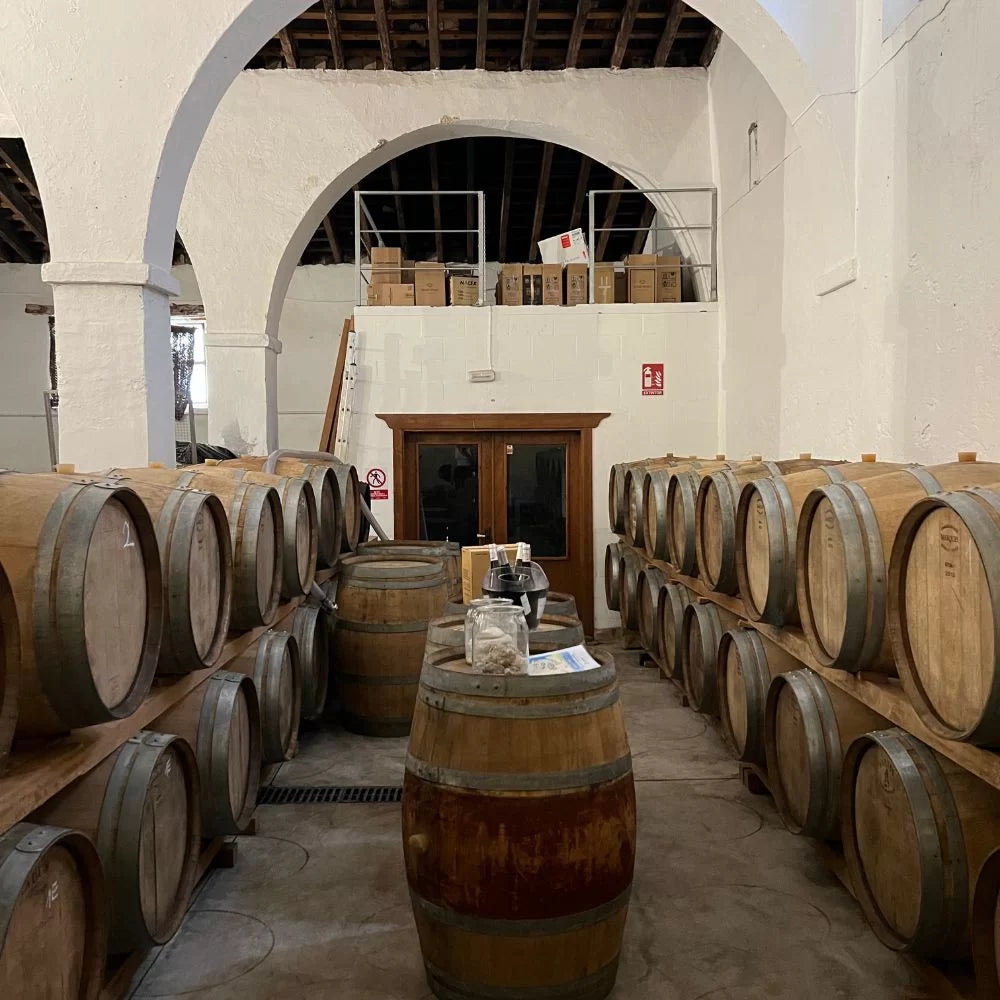
Before the Sherry Educator Course I made a quick pit stop in Sanlúcar de Barrameda . Sanlúcar is the closest to the Atlantic Ocean, so the sherries here undergo a different aging process. No fino here, but manzanilla, often slightly lighter and saltier than the fino from Jerez and the surrounding area. Perfect with a tortillitas de camarones from Casa Balbino.
I'm not here just for the manzanillas, but also for two exceptional producers: Raul Moreno and Muchada-Léclapart. You could call them "new wave" producers. I'm combining it with a trip southeast to Bodegas Vinificate near Cádiz.
Raul Moreno
Raul Moreno has traveled the world, working everywhere from Burgundy and Portugal to Australia. Now settled in Sanlúcar, he combines tradition with new insights gained during his travels. For example, he has planted baga and arinto, Portuguese grape varieties with high acidity that could prove beneficial as the weather warms up. As we walk through Pago Miraflores, he also tells us about the indigenous grapes of the sherry region: albillo, perruno, and palomino. We don't hear much about albillo anymore, but perruno seems to be making a small comeback. This grape was lost after phylloxera, because palomino is much more productive and ripens earlier. Palomino had already finished fermenting while perruno was still on the vines—inefficient, they thought at the time. Raul makes a 100% perruno, called El Retahíla, which develops a light orange color after three weeks of skin maceration. A light-hearted (and accessible) orange wine of 11.5%, with aromas of orange zest, apricot and a subtle saltiness.
Femme d'Argent, an unusual blend of Palomino and Syrah, is my current favorite. It's his answer to the Jura, and that was the first thing I noticed: is this a trousseau? During my visit, I tasted just about everything from the barrel, including a stunning Pinot Noir. I can't wait for this vintage to be released.
Raul Moreno is available at Character Wine Import .
Muchada-Léclapart
Next up was Muchada-Léclapart. During my first visit to Sanlúcar in 2018, I tasted his wine at restaurant Espajo, and I haven't forgotten it since. Recently, I had the Étoile 2019 in my glass, flawless with a fine reduction, notes of almond, and a subtle saltiness.
Alejandro Muchada took us to his vineyards and gave a detailed and very enthusiastic explanation of his biodynamic approach. They cultivate four hectares with three people, while a conventional vineyard can be tended mechanically by one person per ten hectares.
The contrast with the conventional vineyard, a few meters away, is striking, or rather, startling. The vines there are arranged in such a way that they block the wind, which normally provides cooling and humidity. The rows are wider to allow space for machinery, and the vines are smaller with thinner stems, tightly trained into neat lines.

Alejandro Muchada's story is truly one worthy of a book. He had graduated from architecture and was planning a study trip to Morocco. However, his plans coincided with Ramadan, so the trip was canceled. Instead, he decided to go to WOOFFEN (Worldwide Opportunities on Organic Farms) in France. There, through friends, he quickly connected with David Léclapart, a renowned winemaker in Champagne known for his biodynamic approach. Muchada had no idea what biodynamics entailed, let alone who this man was. But that quickly changed—he became fascinated by wine and the world of biodynamics. Long story short: they became friends, David traveled to Sanlúcar, and fell head over heels for the wines from the Albariza soils, the same chalky terroir he knew from Champagne. Soon after, they decided to make wine together there.
Muchada-Léclapart is available at De Bruijn Wine Buyers .
Bodegas Vinificate
Whenever I'm in Jerez, I usually pop into La Estrella, a local wine shop, and they recommended the Mahara from Bodegas Vinificate. What a wine! It's 100% palomino with a slight floral note – it's a bit like manzanilla, but much lower in alcohol. Really, really good.
With a free afternoon planned, I headed to Cádiz, where brothers Miguel and José of Bodegas Vinificate make their wines. They source their grapes from the sherry triangle and craft a variety of wines in San Fernando (near Cádiz): exciting pet-nats, whites (like Mahara), oranges, and reds.
Tintilla de Rota, a red grape variety identical to Graciano from Rioja, has recently returned to the Sherry Triangle. While Graciano in Rioja provides color and structure, especially in blended wines like Reserva and Gran Reserva, Tintilla in southern Spain reveals a completely different side.
To be honest, I am usually not a fan of tintilla, but with the red wines from Bodegas Vinificate I have Beaujolais vibes . These wines are super energetic, juicy, and cheerful.
Not yet available in the Netherlands.



Share:
Chenin at its best: Savennières and Vouvray
Jette in Somontano: a journey to the north of the south