

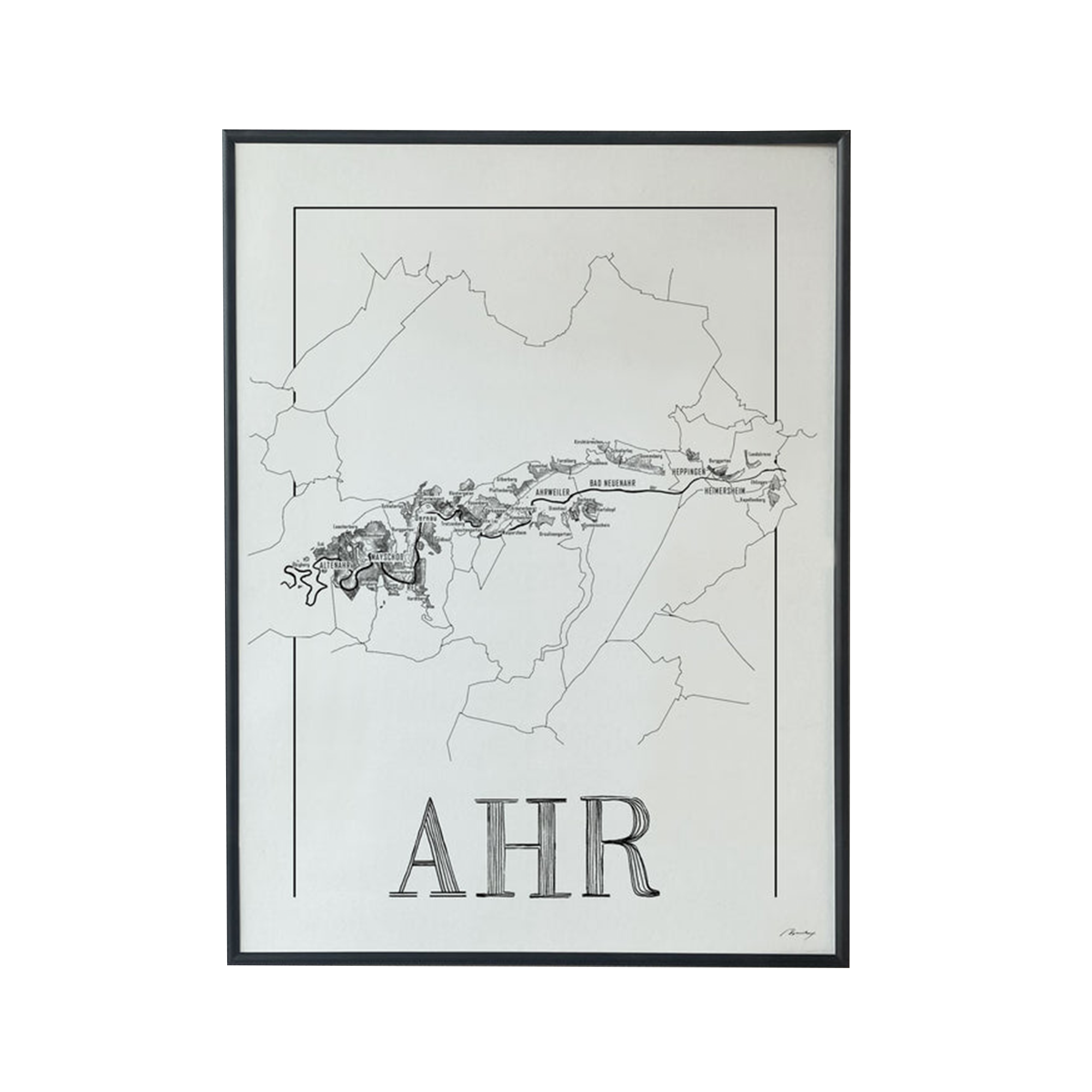
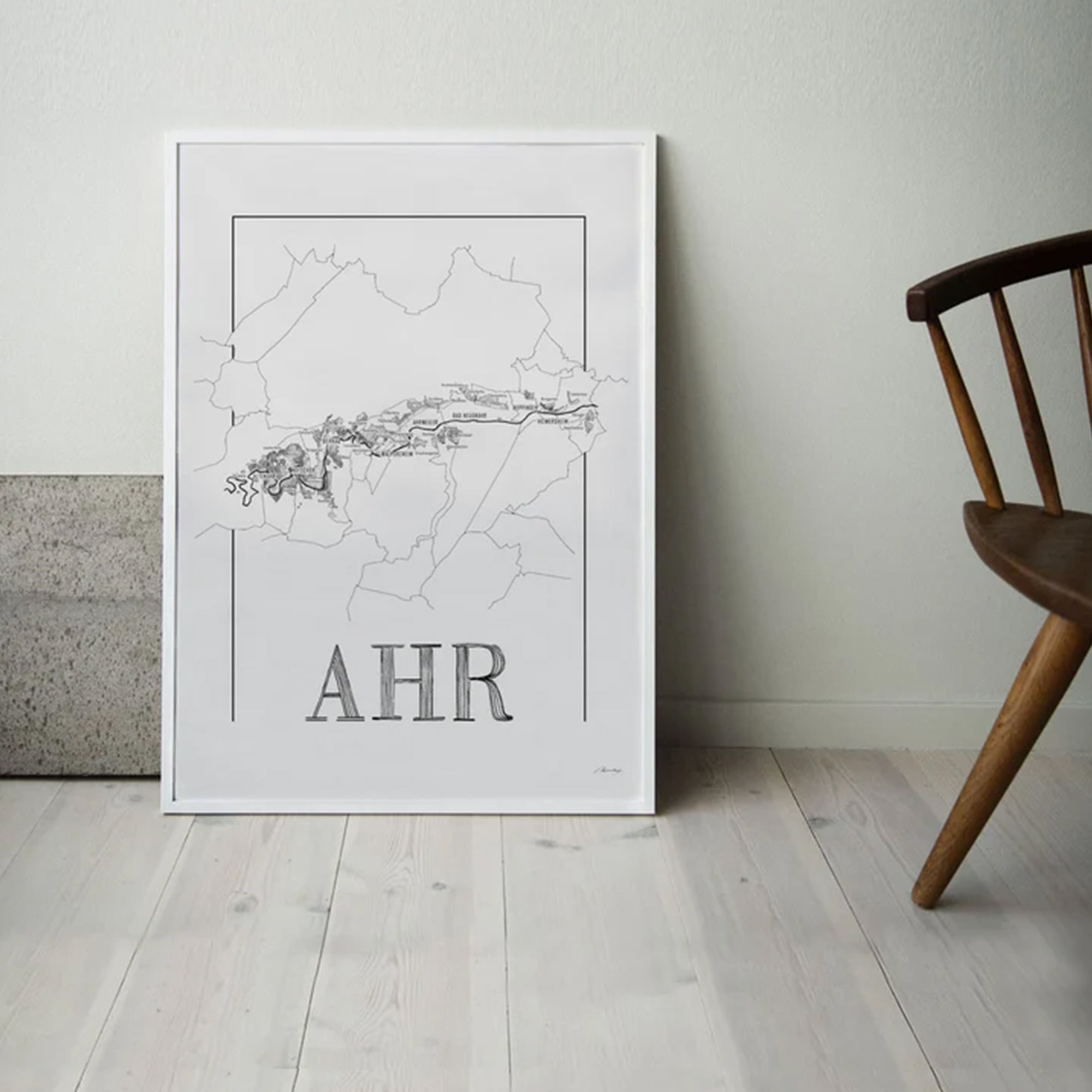
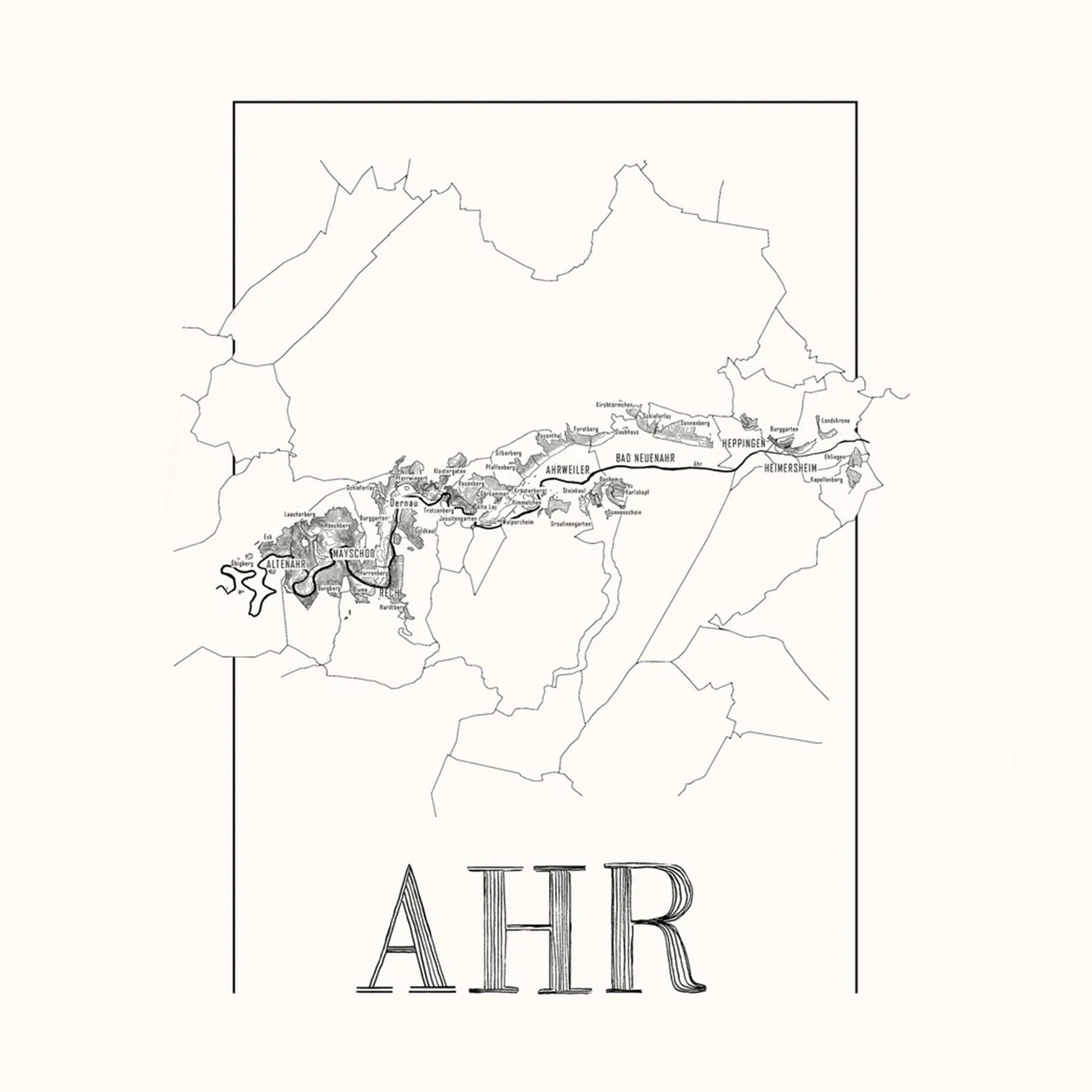
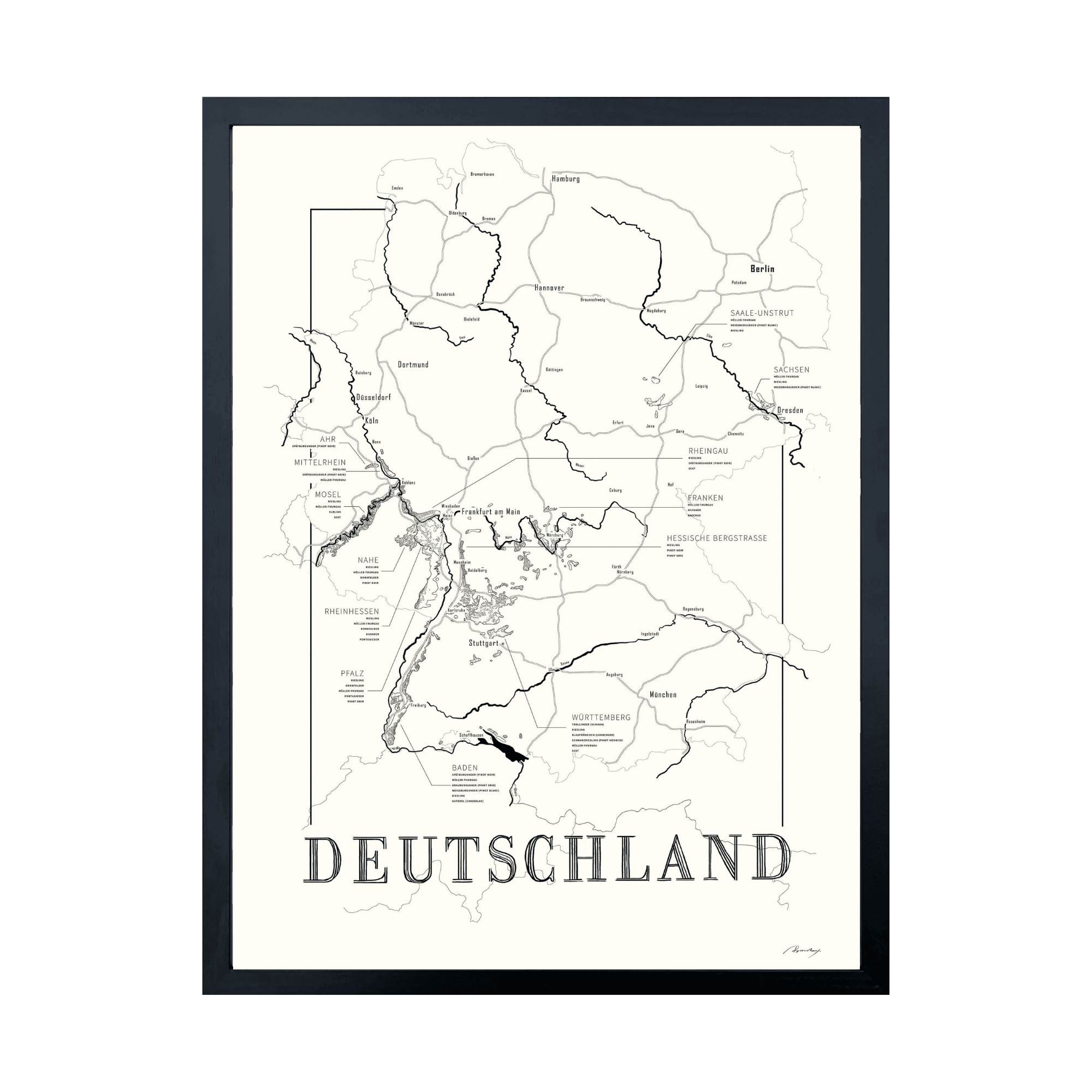
The term "microclimate" couldn't be better explained than in the Ahr Valley. Who would expect this small wine region, Germany's northernmost, to specialize in red wines? A few things become clear as we enter the Ahrental Valley.
Ahr in a nutshell
Suddenly, we find ourselves among mountains, forests, and steep slopes with vineyards, the best of which enjoy a southerly exposure to maximize sunlight. The stony soil also contributes to the microclimate and consists primarily of slate and greywacke. Both are capable of retaining heat, preventing excessive nighttime cooling. In the lower section, near Walporzheim, you see more loess and loam. That's the Ahr in a nutshell, but every meter that changes—where the slope might be slightly less steep, the exposure shifts more southwestward, or the soil has a different composition—changes the wine. And then consider that the area only has 560 hectares of vineyards.

Be warned: sparkling water costs €7.95 a bottle, and the menu prices aren't exactly cheap either. However, you do save on wine (Karthauserhof 2014 for €37 or Zind Humbrecht Riesling 2009 for €42, to name just a few).
Another place to stay is Hotel Ruland in Altenahr. The advantage is that you also have a fantastic wine list, the disadvantage is that Altenahr is located at the foot of the Ahr river, so you'll need a car (or a fast bike) to truly explore the region. Dernau and Ahrweiler are just half an hour away.
Taste the sum
The nuances are clearly visible in the Rosenthal GG 2017 from Adeneuer. It has a sandy-clay soil. “I schmeke das terroir”. The first thing that strikes you is the aroma of cassis. While I always note cherries in other Spatburgunders, this one has cassis and plums. Man, that's beautiful. Adeneuer N1 2016 It comes from a slate soil with volcanic influences. This is reflected in the wine, which displays more minerality (whatever that may be). It's clearly more savory than fruity. Smoky, earthy, and cherry.
And then we haven't even mentioned the differences in vintage and the weather throughout the year. Let's take a look at the past three years (source: germanwines.de ):
- 2016 : Heavy rain and cold in the spring, causing a delayed flowering start. The warm summer months compensated for this. Autumn was also ideal, with the grapes being picked at peak ripeness. However, there were considerably fewer than usual due to powdery mildew. Total yield: 39,000 hectoliters.
- 2017 : Spring frost in April, followed by heavy rain showers in summer. Selective harvest. Fortunately, it cleared up a bit at the end of the season, resulting in good-quality Spatburgunder. Total yield: 38,000 hectoliters.
- 2018 : Everything went smoothly: dry, warm, and little to no disease. The grapes were harvested three (or more) weeks earlier than usual. Total yield: 55,000 hectoliters.
The prevailing opinion is that 2018 was a wonderful year – everything went smoothly – but it lacks excitement. You can find that in 2016 and 2017. But even between the latter two, there's a difference, which probably has to do with the warmer summer of 2016. I tasted Jean Stodden's Recher Spatburgunder 2016 and 2017. More red fruit in 2016, supplemented with cedar and vanilla, while in 2017 the spiciness and minerality are very prominent.
Grape varieties
There are two grape varieties that are prominent in the Ahr region. The number one grape is Spätburgunder, the German version of Pinot Noir. Next comes Frühburgunder, which seems to be gaining a growing fan base. Moi inclus. The difference between the two isn't that difficult. Frühburgunder is a mutation of Spatburgunder with slightly smaller grapes and usually ripens a week or two earlier than its older sibling. However, this isn't always the case. Ludwig from Weingut Kreuzberg explained that it also depends heavily on the soil. For example, he has Frühburgunder on loess/clay soil. Normally, this is one of the warmest vineyards and is harvested first. In a wet year, such a soil retains more water and therefore stays much cooler. In that case, the harvest is later. This just goes to show that as a winemaker, you have to constantly adapt.
Best wineries in the region
Do you have time? There are plenty. The area isn't large—less than 600 hectares—but the motto "if you do it, do it right" seems to apply here. Not surprising, because why else would you work on those steep slopes? We visit Adeneuer, Jean Stodden, and Kreuzberg.
Update 2024: We're back in the Ahr and visited Adeneur and Kreuzberg again. We're also taking in Meyer-Näkel this time.
Weingut Adeneuer, Bad Neuenahr-Ahrweiler
In Burgundy, you don't have to try it: showing up unannounced at a winery's doorstep. In the Ahr, you're welcomed with open arms. Marc Adeneuer, a cheerful presence, lets us taste the entire series and talks at length about the Ahr and Germany. What I won't soon forget is the story of the Gärkammer, a Grosse Lage (grand cru vineyard). This clone, called Kästenholz, comes from Dijon and was brought to the Ahr about 150 years ago. After twenty years of research, this clone was successfully planted in the Gärkammer. The original Pinot. We get Gärkammer 2017 presented and are in love The aroma: earthy, cherry, rose petals, and spice. The tannins are still a bit strong, but man, oh man: give this a few years and you'll go crazy.

Weingut Jean Stodden, Rech
" Would you like to try everything? It's not too bad. Some bottles are already sold out." Okay, good! Final result: 12 wines.
We're not complaining; the wines are magnificent. Especially if you imagine yourself in the future. Some wines are still a bit closed, not yet revealing their full potential. That's nothing new; it's Stodden's style. Their top cuvées are aged for 18 months after fermentation in oak barrels from François Frères in the Côte d'Or, to be precise. So, we tasted 12 wines, from entry-level to GG, and I was amazed by the nuances between them. It's a small region, but the terroir plays a significant role.


In the wine cellar, I see a bottle of Eiswein and ask if they still make it. No, the last time was 1995. Hello, climate change. It's impossible anymore. To make Eiswein—especially in this region—you need an outside temperature of -11 degrees Celsius. The grapes have to be pressed at -7 or -8 degrees Celsius. This has to take place in November, otherwise the risk of rot is too high. No more Eiswein, but there is: sekt! I didn't see this coming, but Jean Stodden makes a fantastic sekt. A Blanc de Noir (Spatburgunder) extra brut aged for 40 months on the lees.
Thanks to Past support for this visit!
Weingut Kreuzberg, Dernau
After Jean Stodden, we pop into a random hotel bar in Rech. Since we don't know anything about Fruhburgunder yet, we decide Kreuzberg Fruhburgunder Reserve 2014 to order. It's not in the books as the best year, but whatever, we're going for it. It remains a Winning wine . We fell in love with Fruhburgunder. This wine brings out the tertiary notes more: earthy, leafy, laurel, cedar, and some coffee notes from the oak aging. So good that we decided to stop by the next day.
After the major flooding in 2021, Kreuzberg had to relocate to a warehouse just outside the wine region. They're temporarily located in Meckenheim because the winery was completely submerged. It's about a 15-minute drive from Ahrweiler, and the wines and the super friendly owner, Ludwig, make the visit more than worth it.

Fruhburgunder is harvested in mid-September. Where Spatburgunder has a southern or southwestern exposure, it's usually too warm for Fruhburgunder. A slightly more westerly or eastern exposure provides less sunlight and therefore a lower alcohol content. A fun Fruh to try is Fruhburgunder C 2017 .
Not visited, but on the bucket list
Other houses worth visiting, but which we didn't have time for or were closed at the time we were there: Bertram-Baltus (if you like reduction in wine), Max Schnell, Deutzerhof, Paul Schumacher, Weingut Sermann, Meyer Nakel (visited in 2024, great wines).
Any more tips? Leave them in the comments below. I'll definitely be back. It's so close!
Also check out this article: ' Great wine trips less than 4 hours away '.

Share:
A wine fan in Dijon (Burgundy)
Gredos, granite and garnacha