
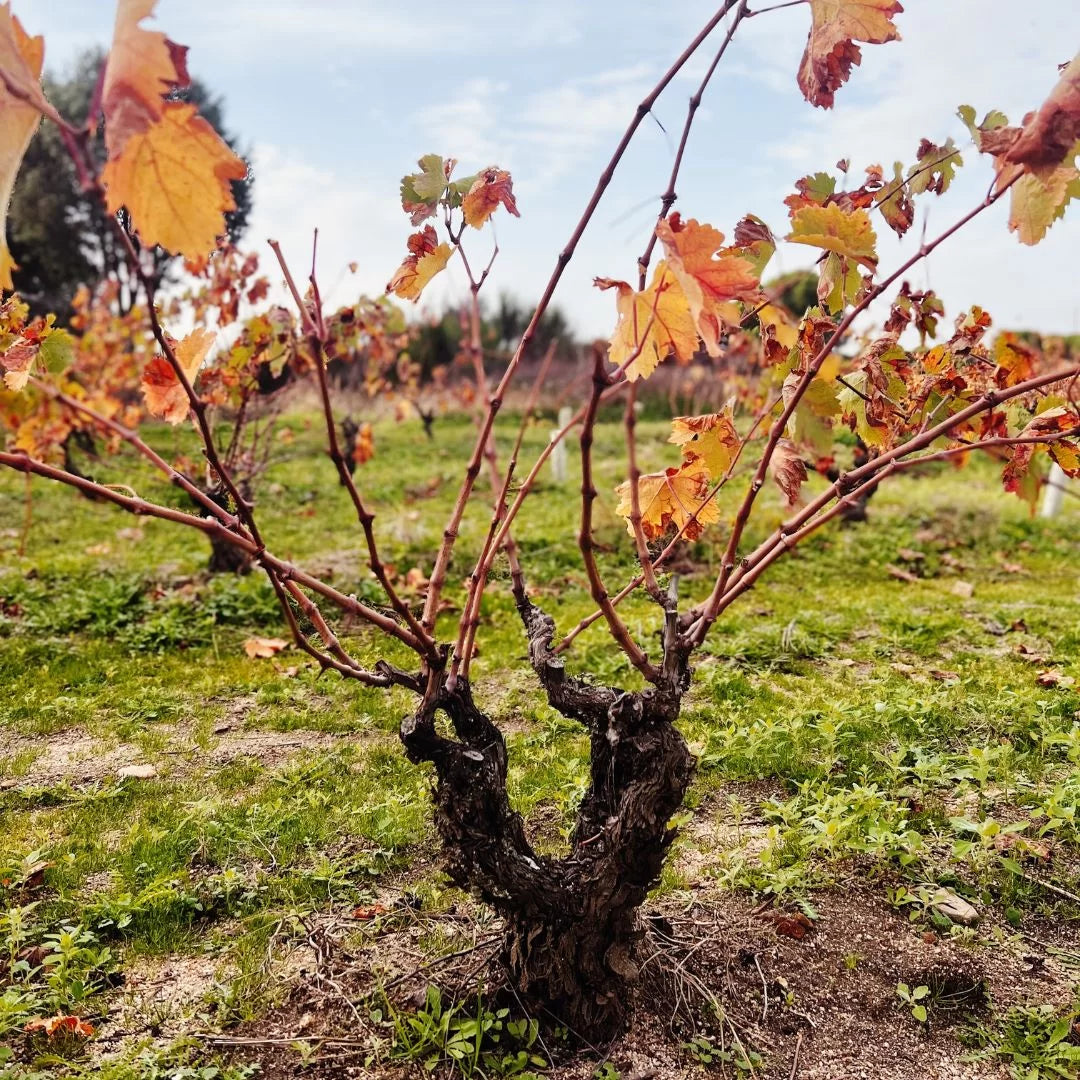
West of Madrid, off the beaten track and away from the well-known DOs, lies Sierra de Gredos. Despite lacking its own DO status, this region is slowly but surely conquering the wine world with its original wines. The rugged, inhospitable terrain makes working there quite challenging, but that seems to be the key to the unique character of the wines from this region.
Sierra de Gredos makes a name for itself with Garnacha , which Ferran Centelles describes on Jancis Robinson as a " Pinot-style Garnacha ." Those who know this grape only as an alcoholic wrecking ball with aromas of strawberry jam and dried fruit will be in for a surprise. These are Burgundian wines: more subtle, refined, and lighter than the typical Spanish Garnacha.
From bulk to Burgundian
In the 1960s and 1970s, Sierra de Gredos flourished. Each village had its own cooperative, which produced like crazy. The article " The Rising Star of Spain " states that the co-op in San Martín de Valdeiglesias processed 14 million kilos of grapes per year. Roughly speaking, that equates to 18.6 million bottles—quite a lot. Most of it was in bulk and went straight to Madrid, which served as a major market.
Now they only produce 300,000 kilos per year. The reason? There are far fewer vineyards in production. After the construction of a railway line between Valdepeñas and Madrid, wines from the Sierra de Gredos faced competition from the cheaper wines of La Mancha. It was hard work in this rugged landscape, and the yield per kilo of grapes steadily decreased. Production plummeted, and the region fell into disrepair.
As time went by, winemakers from different regions began to notice Sierra de Gredos. Telmo Rodríguez, a celebrity In the Spanish wine world, he was one of the first to recognize the value of old vines and granite soils in 1999. His pioneering work attracted attention, and other winemakers soon followed suit, including Daniel Landi and Fernando García.
There's a common thread in the working methods of the new generation of producers: almost all of them work organically or biodynamically, use gentle extraction methods (including good old-fashioned foot-tamping), spontaneous fermentation, and use a variety of barrels (concrete, wood, plastic). The goal? To create terroir-driven wines that excel in purity, with soft tannins and energy.

Three DOs
Sierra de Gredos is often used on labels as an umbrella name, but it is not an official appellation. This proves too complex to achieve, as the mountain range, and thus the wine region, spans three provinces. In total, this involves some 2,000 hectares of vineyards scattered throughout the mountain range, ranging in altitude from 600 to 1,200 meters.
DO Cebreros Located in the province of Ávila, the area was only granted a Designated Area (DO) status in 2019. Situated northwest of Madrid, the area is slightly warmer than the rest of the country and receives less rainfall. Besides granite, you'll also find some areas with slate soil. The area experienced a dramatic shift when Telmo Rodríguez settled here. It covers 445 hectares.
DO Méntrida Located in the northwest of the province of Toleda, south of Madrid, the immense Gredos Mountains overlook the appellation. It was (and still is) a major supplier of bulk wine to Madrid . With 8,100 hectares, Méntrida is considerably larger than Cebreros, but only a small portion falls within the Sierra de Gredos.
DO Wines of Madrid Located south of Madrid, it is quite large: 8,800 hectares. However, only the San Martín de Valdeiglesas subzone falls within Gredos. Producers such as Comando G, Bodegas Marañones, and 4 Monos are located here.
Also white
Besides Garnacha, they also go well with white wine made from Albillo Real – not to be confused with Albillo Mayor from Ribera del Duero. You can read more about this in the next blog post.
Off-topic, but not really: Campo de Borja
After Barcelona Wine Week, I was invited to visit Campo de Borja, a small wine region in Aragon, near Zaragoza. They call themselves "the empire of Garnacha" because it's teeming with Garnacha, including many old vines, which they're trying to map with the Garnachas Históricas project. In Campo de Borja, however, time seems to move at a different pace, especially when it comes to wine styles. Dominated by three cooperatives, the region is known for its concentrated, fruit-driven Garnachas, often reaching 15% alcohol. These wines, while impressive in their intensity, sometimes lack the finesse found elsewhere.
I wonder how long this will last? It's a classic chicken-and-egg dilemma, with cooperatives often choosing volume over refinement, catering to a market that apparently still craves this robust style. When will this change?





Share:
A wine fan in the Ahr: wines from the Ahr!
Update 2024: Spanish favorites