
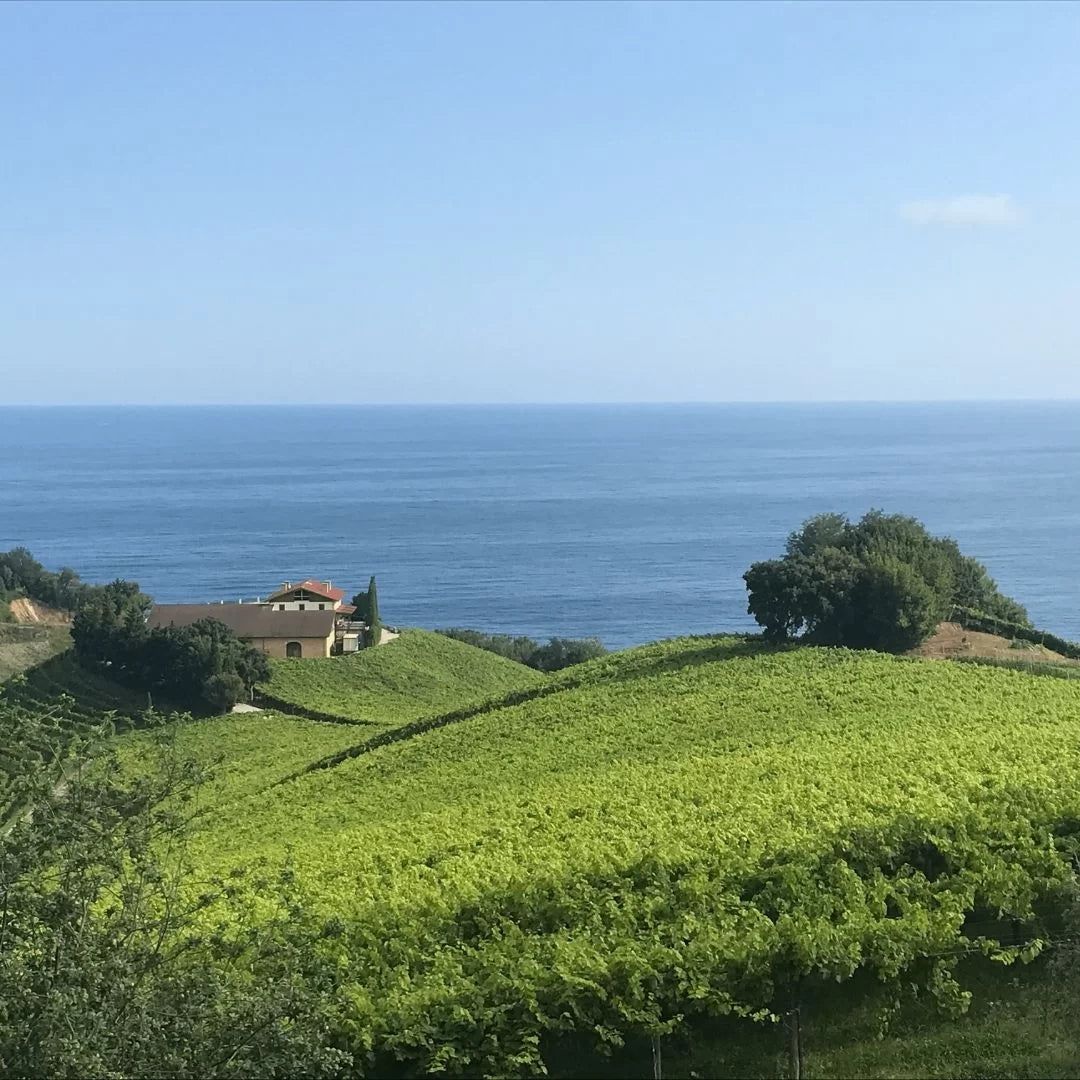
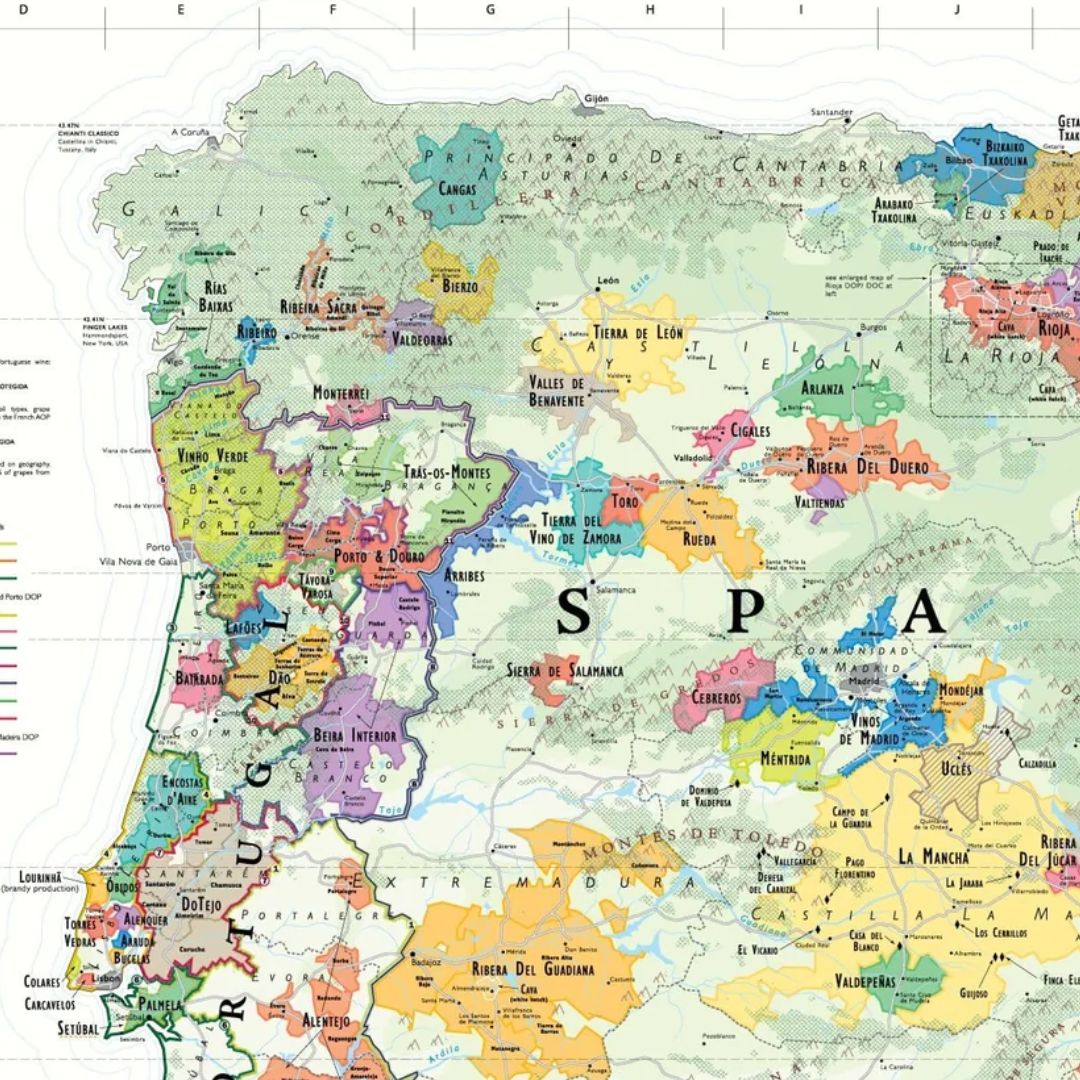
The txakoli production area is located on the Basque coast, roughly between Bilbao and San Sebastián. At Walsjérôt, we have the txakoli of Zudugarai on tap. I was in Bilbao for a few days, so I wanted to take a look.
Txa-what? Txakoli!
Txakoli is a white wine with a low alcohol content (around 9% to 12%) and plenty of fresh acidity. This makes it a truly delightful aperitif wine. And what's more: it's often slightly sparkling. I'll explain that in a moment. First, the story of my trip.
I contacted Zudugarai I asked if I could come visit. Unfortunately, they were also on vacation when I was supposed to be there. Of course, I should have thought about it: the busy harvest season starts in mid-September, and it's nice for hardworking winegrowers to relax a bit at the end of August. I decided to go anyway. Their vineyards are an hour's drive from Bilbao, and I could probably give them a tour myself.
Road trip to the coast
The closer I got to the coast, the more enjoyable the drive became. Txakoli has three DOs. Zudugarai is located in the Denominación de Origen Getaria: the oldest of the three, named after the fishing village of the same name. A very charming village, with a bustling harbor and a small historic and touristy center full of bars that looked particularly inviting. I should have booked an overnight stay here; then I would have been able to sample many txakoli side by side. Wrong choice: my suitcase was still at the hotel in Bilbao, and I was driving... I decided to skip the alcohol and drive straight on.
A few kilometers further lies Zarautz: a small town that forms the border of the DO. This town is also really worth a visit: a beautiful, wide beach, great surfers, and a boulevard full of terraces. I gave in, found a last spot somewhere, and was given a txakoli in a dirty lemonade glass and the worst paella I've ever had. My inadequate preparation got the better of me again. However, that doesn't change the fact that it's a really great place to go. If you go to the beach in San Sebastián, you have to strain to hear anyone speak Spanish; in Zarautz, I only saw Spaniards enjoying their own beach.


Visiting Txomin Etxaniz
I drove on to the Zudugarai vineyard in my rented convertible. The salty sea air was constantly in the air. That must have an effect on the wine. The vineyards are situated just behind a hill, somewhat sheltered from the Atlantic winds. What immediately struck me was that the vines are pruned according to a pergola system. The grapes hang about two meters high, and you can walk under the canopy. I still wanted to know more about how txakoli is made, so I called Txomin Etxaniz . On their website, I saw that they offered tours of the vineyard, and by coincidence, I was able to join an already scheduled tour in an hour and a half.

Pergolas
That was perfect, because I learned that the pergola method had two benefits: the canopy acts more or less as a roof for the grapes, protecting them from excessive sunlight. And because the grapes are higher up, they're less susceptible to moisture from the soil (it rains quite often here), which fungi find attractive.
In the basement
In the cellar, I learned where the mousse in txakoli comes from. During fermentation, the sugars in the grapes are converted into alcohol and carbon dioxide. Normally, winemakers allow this carbon dioxide to escape. With txakoli, however, the "chimney" on the barrel is kept closed, so that some mousse remains in the wine. The wine is then cooled back down to minus 2 degrees Celsius until bottling. Thanks to the alcohol, the wine remains liquid at that temperature, but the carbon dioxide is retained better. Or rather: it can be retained better. Much still disappears during bottling, for example, and according to the winemaker of Txomin Etxaniz, a txakoli can contain a little mousse, but it doesn't have to. Both are fine, according to him. That strikes me as odd: if this is your winemaking style, you want that mousse to always be there, don't you? I only received some evasive answers.


Samples
We were given two Txakoli to taste: a white (85% Ondarabbi Zuri and about 15% Ondarabbi Beltza) and a rosé (50-50). I didn't like the rosé. Unripe red fruit with a nasty acidity on the finish. The rosé was only for the American market. Locals don't drink it. Rightly so, in my opinion. The white was much better. Wonderfully fresh and clean.
By the way, did you know that this wine is traditionally poured from a height of about 30-40 centimeters? This creates a small layer of foam on the wine. If you pour it at Walsjérôt If you're tapping, feel free to place your glass on the rack and 'catch' the wine from a slightly higher height.
Great tips
All in all, this was a fun trip. Are you heading that way? Here are my tips:
- Then book a hotel in Getaria
- Take a tour of a wine estate and especially through the cellar to experience the differences in viticulture and winemaking compared to many other wines
- Relax during the day on the beach of Zarautz
- Beware of bad restaurants on the boulevard
- In the evening, head back to Getaria to sample various txakoli with delicious pintxos at the bars. And let me know what you think, because I'm sorry I missed that last part!
- Going to Bilbao for a day? Don't forget to visit Wine bar Cork
Guest blogger: Jelle Stelpstra
Jelle Stelpstra started his career as a tax advisor but after 12 years switched to something even more interesting than taxes: wine. Jelle owns the Walsjérôt wine bar in Rotterdam and is a vinologist. At Walsjérôt, you can pour your own wine from over 70 wines.


Share:
A look inside Domaine Tempier in Bandol
Which books and websites do I use for the WSET Diploma?