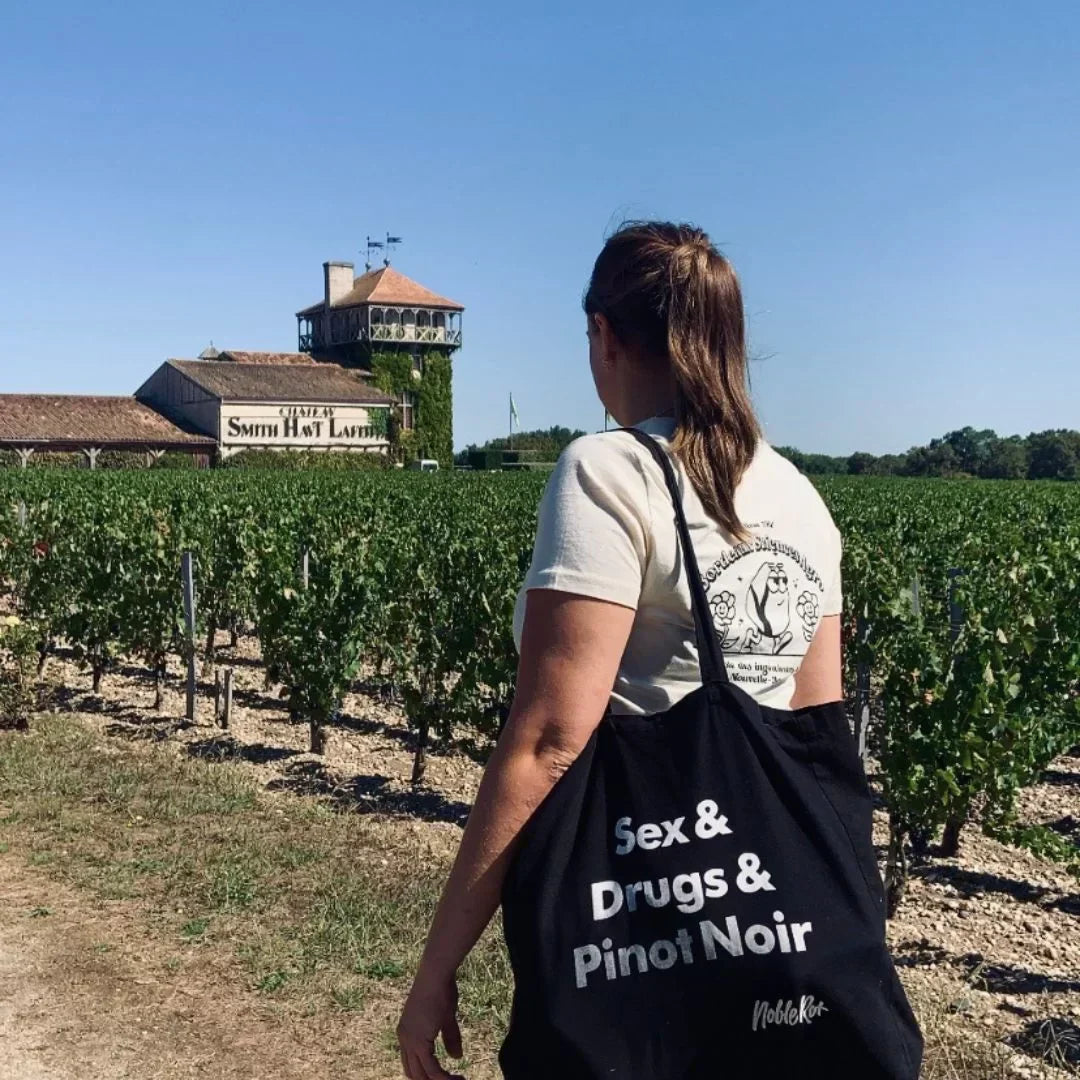
As we speak, I, Rianne Ogink, am interning at the Smith Haut Lafitte winery. And this isn't just any winery; it's one of the famous 14 Grands Crus Classés in Graves, the region south of Bordeaux. This harvest season is dominated by activity at the château. It's a great time to take a look around.
Pessac-Léognan
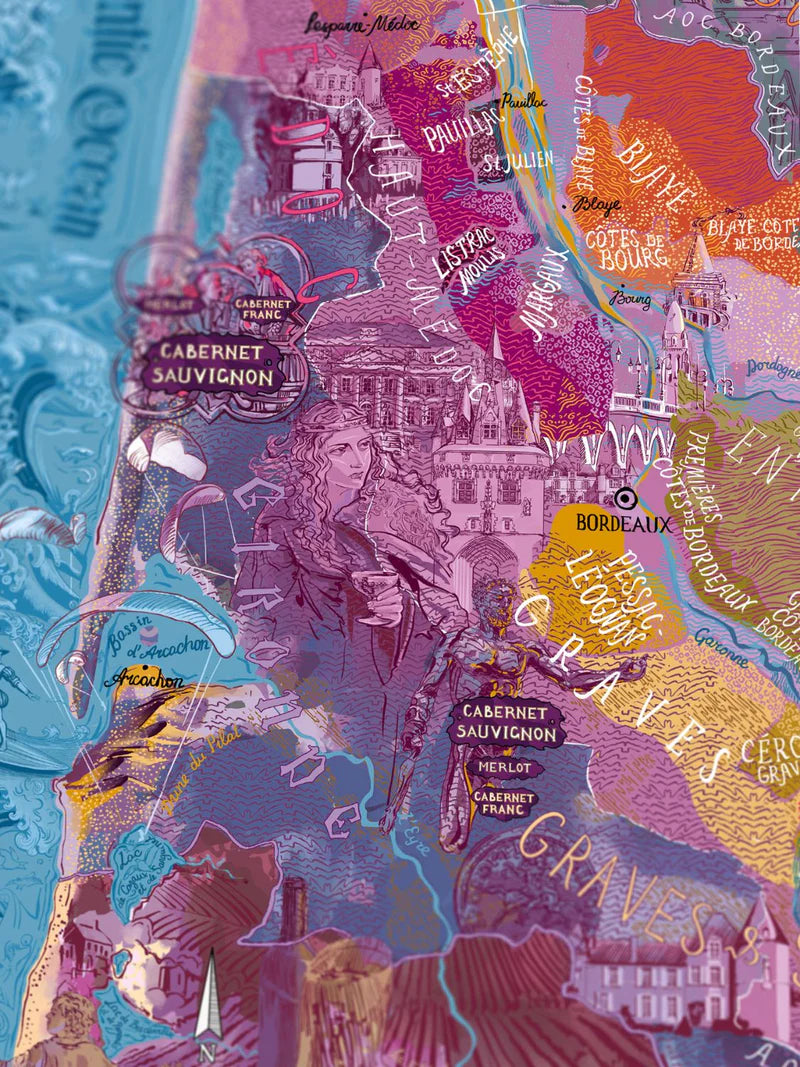
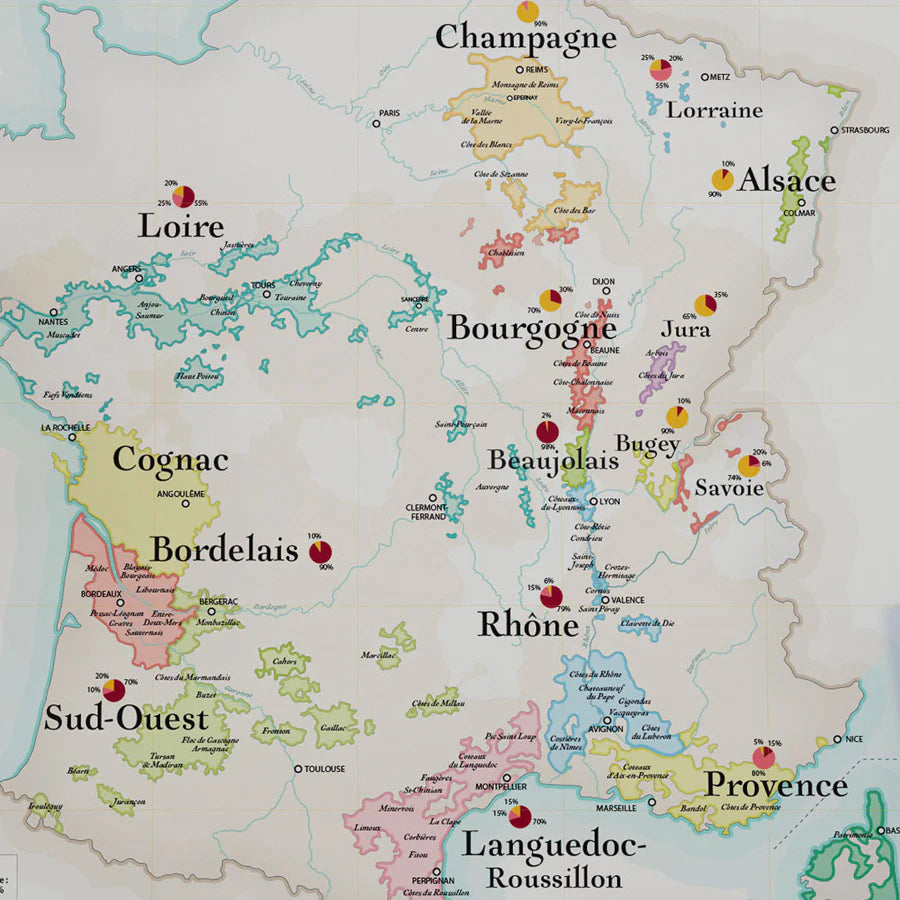
Château Smith Haut Lafitte (pronounced: Smies Oot Lafiet is located in Pessac-Léognan, on Bordeaux's Left Bank. The winery owns a whopping 78 hectares of vineyards, as well as a vast area of woodland. The vineyards are primarily situated on a low hill formed over the centuries by sediments from the Garonne River. It's therefore not surprising that we find a lot of gravel soil combined with stones carried by the river. This soil retains the sun's heat well and also ensures good drainage of rainwater. A perfect spot for Cabernet Sauvignon!
Cathiard family
Daniel and Florence Cathiard own SHL. Florence is said to be a distinguished lady, but I haven't met her yet. Daniel, on the other hand, has remained pleasantly down-to-earth and enjoys spending time in the cellar. Apparently, the Cathiard family is one of the wealthiest families in France. Their wealth is immediately apparent upon entering the driveway. All the flowerbeds are neatly manicured, there's a real art trail, and if you drive a little further, you'll arrive at the hotel and spa. Staff are ready to welcome you everywhere, and service is clearly paramount here. Aside from the chateau's classic elements, everything is state-of-the-art. There's even a boutique shop where you can buy Caudalie beauty products, all made with grapes. The tone is set: visitors are more than welcome, and they're eager to impress.
Wine growing since 1365
Wine has been grown here since 1365. Back then, it was already known as Lafitte, which, incidentally, has nothing to do with Château Lafite Rothschild (also with a 't' missing, for the observant reader). The Cathiard family bought SHL in 1990. By the time they arrived, the winery had fallen into disrepair. The previous owner had used a lot of chemical pesticides, and the soil in the vineyards showed little life left. That was the first thing they addressed. Since 2019, the entire estate has been certified organic. Secretly, they also have a biodynamic approach, but that's not necessarily their goal. They call it "bioprecision," which allows them to make the best choices for their vineyards using state-of-the-art techniques. Nicolas Poumeyrau is the head gardener, and together with his team, they ensure everything runs smoothly.
Down to the last detail
On a small island in the Garonne, they've established their own rootstock nursery. They make their own wine barrels in the barrel shop. And to deliver the perfect grapes, SHL uses its own Oenoview system. This system monitors the status of the plants row by row and provides live data to the vineyard manager. When the grape bunches arrive, a group of women rigorously sorts them before they enter the destemming machine. For many wineries, that's sufficient, but not at SHL. They use a state-of-the-art optical sorter, a machine that sorts out imperfect grapes based on weight and size. You'd think that's it, but no. Even after the optical sorter, a small team of people still checks all the loose grapes to remove any last imperfections. Then, all the grapes are carefully slid into the tanks using gravity, and then the most important work is done. Phew!

Into the basement
The winemaking process takes place in two separate cellars. The top wines are made at the chateau itself, while the second and third vintages are produced in the hidden forest cellar called 'Chai Furtif'. The Chai Furtif is one of the newest projects; it is completely energy-neutral and equipped with the latest gadgets. General manager and oenologist Fabien Teitgen is the ultimate boss and the very picture of calm. We see him frequently in the cellar, and he has a slightly Dumbledore-like air as he peers over his glasses with his blue eyes. Day-to-day management is handled by Yann Laudheo. He jokingly calls himself the 'god' of SHL. He oversees everything, is always up for a joke, and clearly has the respect of all the employees. Like many in Bordeaux, SHL is assisted by renowned consultants Michel Rolland and Stéphane Derenoncourt. Both men are known for a style described as the 'Parker style'. I asked Fabien why, despite all their expertise, they still "need" a consultant. His answer was that the consultants give him an unbiased opinion of the wines and provide information about what's happening elsewhere in the region. Ultimately, they try to make the best possible wine with the vineyards and resources they have. And let's be honest, given their reputation, they've succeeded!

And now: the wines
Smith Haut Lafitte, grand vin, rouge:
- Yield: 22hl/ha (this is super low!!)
- Average age of the vines 48 years
- 63% Cabernet Sauvignon, 33% Merlot, 3% Cabernet Franc, 1% Petit Verdot
- Fermented around 28C (relatively high, allows for more extraction)
- Gentle cap management using Pigeage. This results in softer tannins.
- Matured for 18 months in barriques (225l), of which 60% are new.
Le Petit Haut Lafitte, 2nd label, rouge:
- Yield: 22hl/ha (this is super low!!)
- Average age of the vines 11 years
- 60% Cabernet Sauvignon, 40% Merlot
- Cap management by means of pumping over (reassembly) and immersion (pigeage)
- Matured for 14 months in barriques (225l), of which 20% are new.
Les Hauts de Smith, 3rd label, rouge:
- Yield: 22hl/ha (this is super low!!)
- 60% Merlot, 40% Cabernet Sauvignon
- Cap management by means of pumping over (reassembly) and immersion (pigeage)
- Matured for 14 months in barriques (225l), of which 20% are new.
Smith Haut Lafitte, grand vin, blanc:
- Yield: 24 hl/ha
- Average age of the vines: 38 years
- 90% Sauvignon Blanc, 5% Sauvignon Gris, 5% Sémillon
- No malolactic fermentation, but battonage
- Fermentation and maturation in French barriques, 50% of which are new
Le Petit Smith Haut Lafitte, 2nd label, blanc:
- Yield: 23 hl/ha
- Average age of the vines: 11 years
- 80% Sauvignon Blanc, 20% Semillon
- No malolactic fermentation, but battonage
- Fermentation and maturation in French barriques, 50% of which are new
Les Hauts de Smith, 3rd label, blanc:
- Yield: 29 hl/ha
- Average age of the vines: 11 years
- 100% Sauvignon Blanc
- No malolactic fermentation, but battonage and 10 months on lie
- Fermentation and maturation in French barriques, 50% of which are new
At Zoldering, I've worked extensively with Les Hauts de Smith Blanc. It's a fantastic wine that scores highly in the price-quality category. It can age for at least ten years, and you're left with a truly classic white Bordeaux. Young, I experience it as an exotic fruit bomb wrapped in a deliciously generous vanilla layer. It's ripe, generous, seductive, and offers a comforting aroma. Let's see if I can snag another bottle of this top-notch wine this week...
More 'inside look at…'
Le Club has visited French wineries several times before.
- Take a look inside The Pin
- Take a look inside Chateau d'Angludet
- Take a look inside Chateau de Beaucastel
Guest blogger: Rianne Ogink
I'm Rianne Ogink. From sports manager in Deventer, to sommelier at Zoldering in Amsterdam, to student of viticulture & enology in Bordeaux, France. You could say I've turned my hobby into my job. Spending whole days chatting with people about beautiful wines, regularly popping corks, and spending days learning how wine is made. I'd love to share my adventures on (digital) paper for you! Enjoy!

Share:
A look inside Borgogno
Wine FAQ: What is kosher wine?