Every year I write a retrospective blog. In 2018 was the year that my dream came true And I started my own business. I quit my job and celebrated reaching 1500 followers on Instagram. The following year, I became obsessed with sherry, tasted Chateau d'Yquem for the first time, and was allowed to tour Le Pin in Pomerol .
In 2020 I didn't write a blog, but we looked back Le Club & Sommeljj de Podcast with a glass of Philipponnat Clos de Goisses 2011.
When you recite it like that, it all sounds pretty great. And it was, and still is. I'm still incredibly happy I made the decision to start my own business and launch Le Club des Vins. But don't think it's all roses. The past two years have been quite unpredictable and therefore quite stressful at times. Fortunately—with the necessary adjustments—it all worked out. And for that, I want to thank you, the readers, students, listeners, and customers, so much.
You're gamayzing!
This year I'm showing in 12 wines just like Eric Asimov did for The New York Times . I still make a distinction between bucket list material and the slightly more accessible wines.
First, a few wines I can literally cross off my wine bucket list. I'd love to try these wines a few more times.
#1 Domaine Raveneau, Chablis Premier Cru, Butteaux, 2010
I think it's the most expensive wine I've ever ordered in a restaurant. But also the most beautiful. Luckily, we could split it four ways. I finally have an answer to that dreadful question: what's your favorite wine? You don't ask parents about their favorite child, do you? But okay, I do have a favorite now. It's Chablis, and to be precise, this rarity from Raveneau.
This 2010—still young in itself, very lively, and with good acidity, as befits a good Chablis. This wine has everything, but not too much of anything. A touch of creaminess, immediately balanced by its freshness and aromas of lemon peel, candied lemon, a touch of hazelnut, and toast. So pure, so complete, so wonderful.


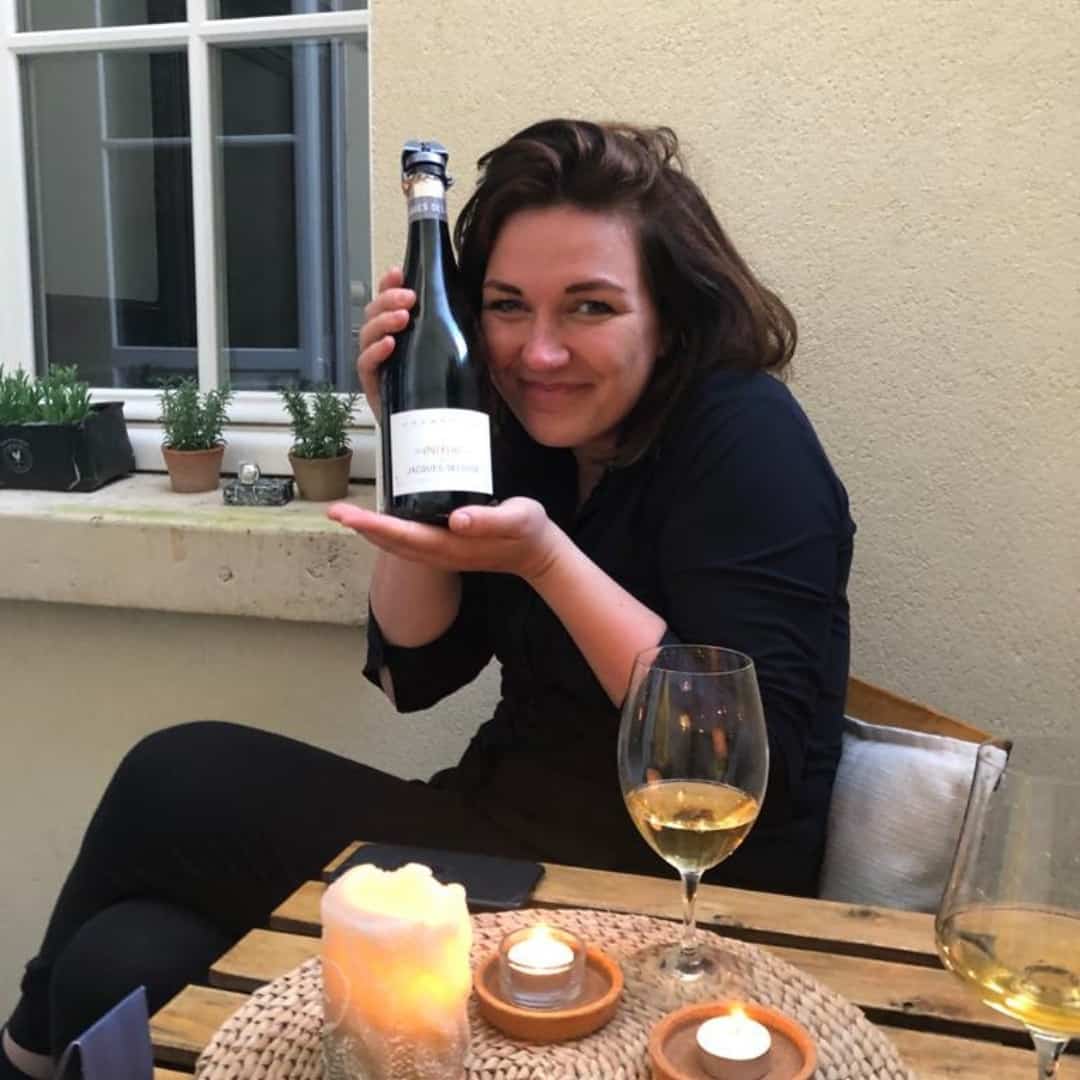
#2 Jacques Selosse, Initial Grand Cru, Blanc de Blancs, Extra Brut Champagne
Until last year, I'd never heard of Jacques Selosse. It happened to me when we were invited to lunch at Domaine Guiberteau in Saumur. The bottles were placed in a sock and served blindfolded. Inside one of those socks was Jacques Selosse rosé champagne. My traveling companion nearly fell off her chair. SELOSSE?! I'd honestly never heard of the whole house, but it's never left my mind since that one lunch. It was unlike any champagne I'd ever tasted. And so it was that a year later, we bought the Initial Grand Cru at a fantastic wine shop in Epernay. Read more about Jacques Selosse here >
#3 Krug, Vintage 2003
The small amount we earn from the podcast is invested in wines we wouldn't normally buy, but are incredibly eager to try. And so, suddenly, Krug 2003 appeared on the scene. Jancis Robinson—our rock—wrote it with glowing praise, and we were blown away too. Enormous length, richness, and filling. Hazelnuts galore, brioche, baked apples—yum.
#4 Chateau Haut-Brion, Pessac-Léognan, 2003
The second time I've tasted Haut Brion. The first time was Haut Brion 1999 with the Platenburg family at De Harmonie restaurant in Rotterdam. That was perhaps the most beautiful red wine paired with DRC La Tâche 1999 of my life. I realize this sounds incredibly decadent, and I had to laugh when I reread my own blog post from 2016: 7 things you should know about DRC as a wine lover , which makes me wonder if I'll ever drink DRC in my life. And it did. But I never would have imagined drinking such wines five years ago.
#5 Vincent Girardin, Corton Charlemagne, 2011
I stumbled upon this bottle on the shelf at Wijnkoperij Platenburg on my birthday. What a stroke of luck! It was opened on my birthday with a sea bream from the oven. It was an expensive bottle, but it also immediately reminded me that nothing can truly equal Burgundy. From candied lemon to grapefruit, bathed in butter to candied hazelnuts. Heavenly.
#6 Mas de Daumas Gassac, Blanc, 2012
I bought it at the estate during a trip through the Rhône and Languedoc and uncorked it on my 34th birthday. Was that the best idea? Perhaps not, as we'd already enjoyed a few other bottles. But whatever. I did make a tasting note. A generous wine, with lots of fruit, probably due to the large portion of Viognier. It's a blend of over 15 grape varieties, about a third of which is Viognier.
#7 Keller Feuervogel Silvaner, 2013
We can safely call this wine the surprise of the year. Rianne (guest writer for Le Club and sommelier at Zoldering in Amsterdam) poured it and asked us what it was. We had no idea. It looks like a Riesling, but it isn't. Is it a Gruner Smaragd then? Nothing of the sort. It was a top-notch Silvaner. Klaus Peter Keller makes fantastic wines in the Rheinhessen region of Germany.

#8 Emidio Pepe, Trebbiano d'Abbruzzo, 2018
Last summer we revisited the Terroir pop-up restaurant. Just like the year before, I chose the Trebbiano from cult hero Emidio Pepe. A fantastic wine. With a natural edge, but in its best form. More savory than fruity, exciting acidity, and a salty minerality. The best Trebbiano I've ever tasted. How will this taste in 10 years? I'm very curious, but I can't wait.
Restaurant Terroir has now found a permanent location in Utrecht at Lange Nieuwstraat 62.
I'm immediately adding Emidio Pepe's red Abrûzzo to my 2022 bucket list. Hopefully, I can drink it for next to nothing in Rome (I've heard that before – keep you posted).

Below are some wines that are a bit more accessible. By accessible, I don't mean that they're available at Albert Heijn for €6, but rather that they're generally available in a wine shop for a semi-normal price.
#9 Ar.Pepe, Il Pettirosso, Valtellina, 2016
Valtellina is a small wine region in northern Lombardy. It lies northeast of Milan, practically bordering Switzerland. Over a third is planted with Nebbiolo, the rest with local grape varieties. The area has only 915 hectares of vineyards (Barolo roughly double that). Generally, you'll find wines here that are slightly lighter than the Nebbiolos from Barolo and Barbaresco. Plenty of red fruit on the nose, a touch of minerality, and fresh, juicy acidity.
For sale at Hermanwines.com
#10 Dominio do Bibei, Lalume, 2017
Ribeira Sacra is practically the Moselle of Spain. At least, in appearance. The vineyards are planted on the steep slopes along the Mino and Sil rivers. A beautiful sight. This region, along with Bierzo and also the Basque Country, is high on my list of places to visit in 2022. The wines of Dominio do Bibei are superb. This Lalume is made from 100% Treixadura grapes. Minimalistically crafted, the grape and terroir take center stage. Lively acidity (no MLF), a touch of saltiness, plenty of citrus, and a tight yet creamy finish thanks to the lees aging.
For sale at Platenburg Wine Merchants
#11 Luis Perez, El Muelle, 2020
I rediscovered this wine in and around Jerez. It's Luis Perez's entry-level vino de pasto and is best described as "light sherry." Or sherry for beginners. It pairs wonderfully with oysters or other shellfish. It also pairs well with a handful of tapas: Manchego, jamon, or olives. The grapes are harvested in several stages. The portion used for this wine is split in two: 80% is immediately fermented in stainless steel, while 20% is left to ferment in sherry casks in the sun. After fermentation, the two are blended, and the wine matures on its lees for another six months. Fantastic. And all for less than 13 euros.
For sale at Anfors and Xpertvinum

#12 Adrien Berlioz, Cuvée des Gueux, 2020
First it was the Jura, but now Savoie has also captured my heart. Savoie is a wine region in eastern France. The Alps have a significant influence on the climate and therefore the wine style. Adrien Berlioz makes a beautiful wine from Altesse and old-vine Jacquère – two local Savoyard grape varieties. A wonderful wine, very delicate with apple, white citrus, lime and a bit of salt (yes, let's just call it minerality)
For sale at Chabrol Wines
Share:
More than 50 wine and food pairing tips
How is Amarone della Valpolicella made?