
German wine law is a specialized field. Perhaps you're familiar with French wine law. Each AOC prescribes a number of (sometimes numerous) rules. For example, if you want to label your bottle with Sancerre, you must comply with these rules. The terroir and the grape variety in question are important factors. In Germany, this isn't the case.
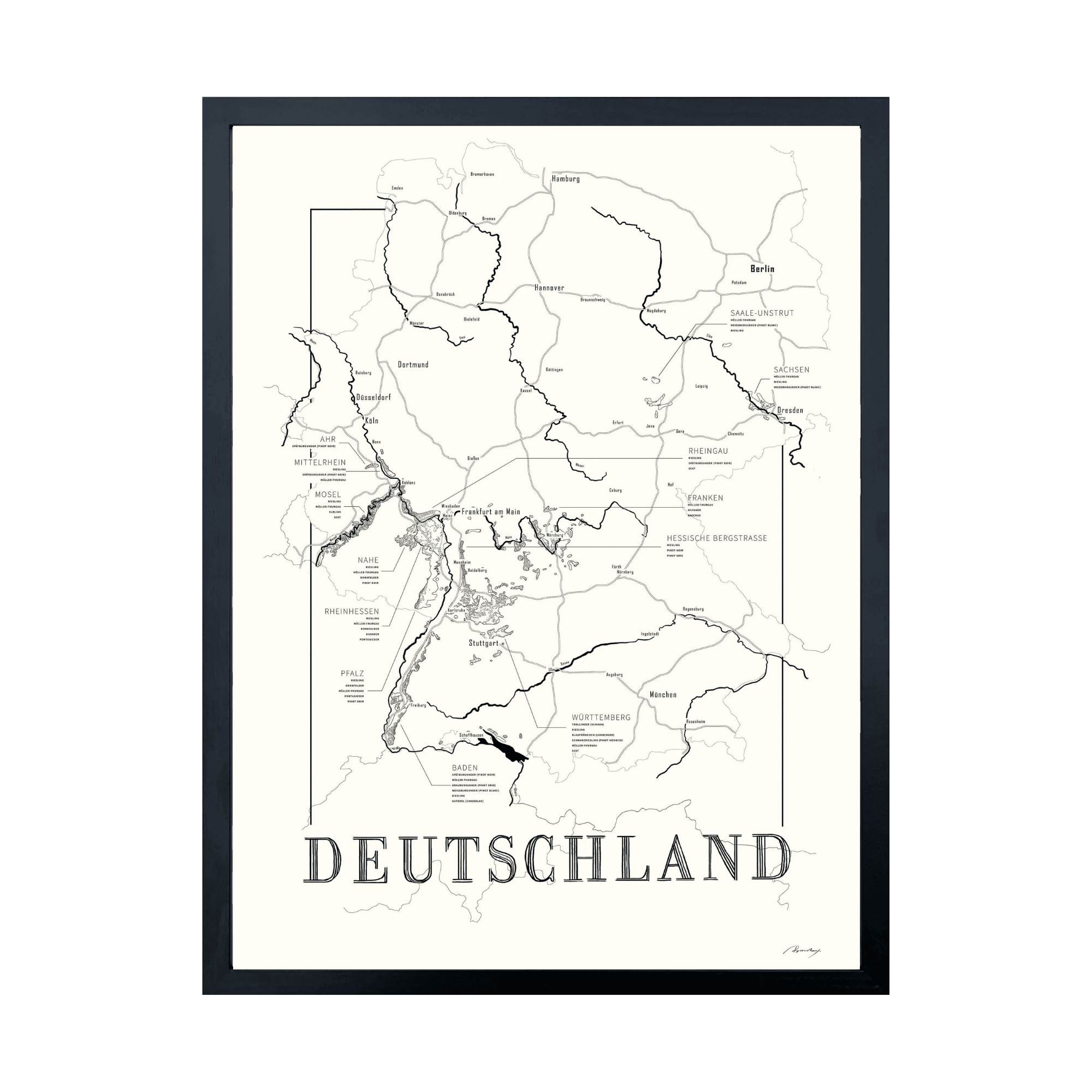
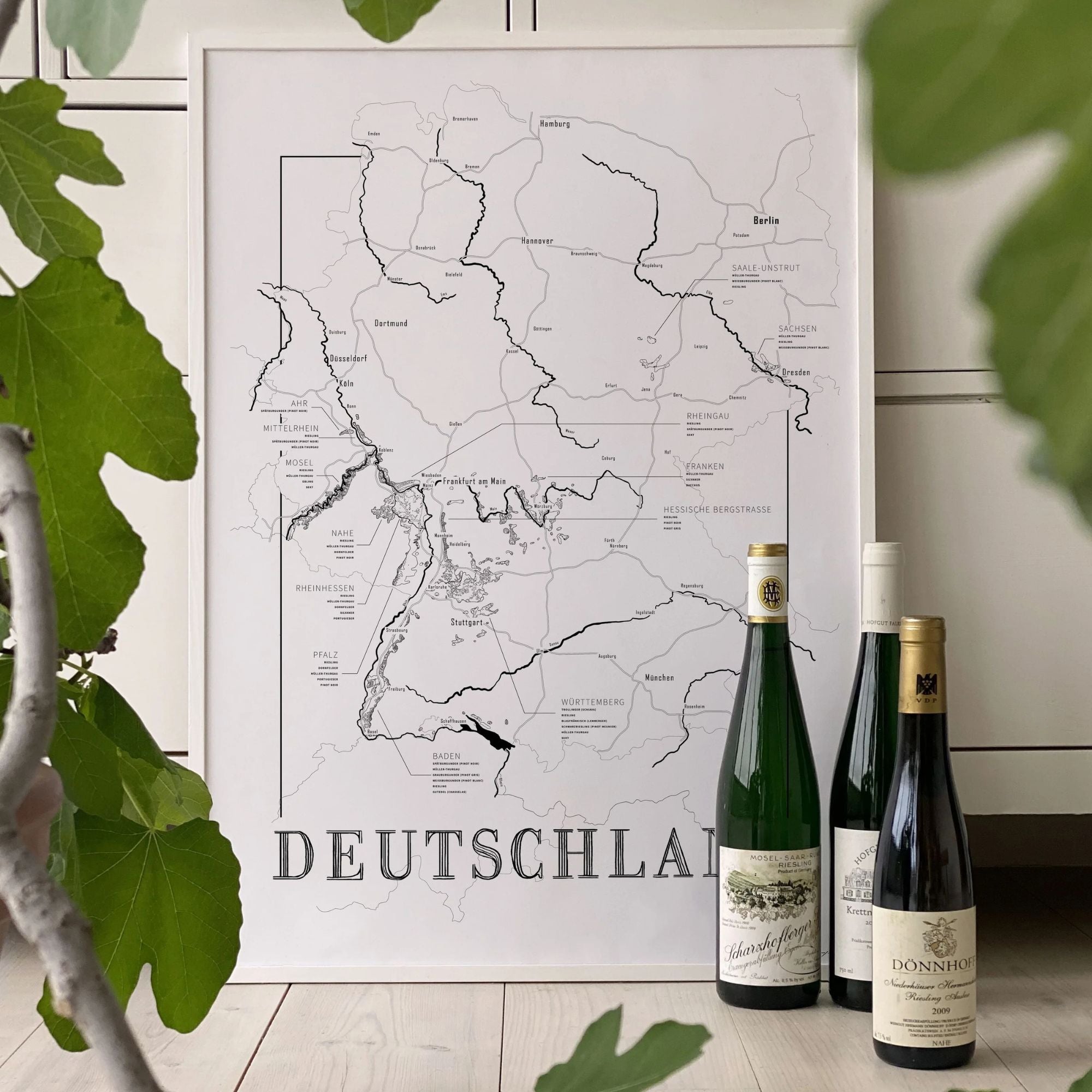
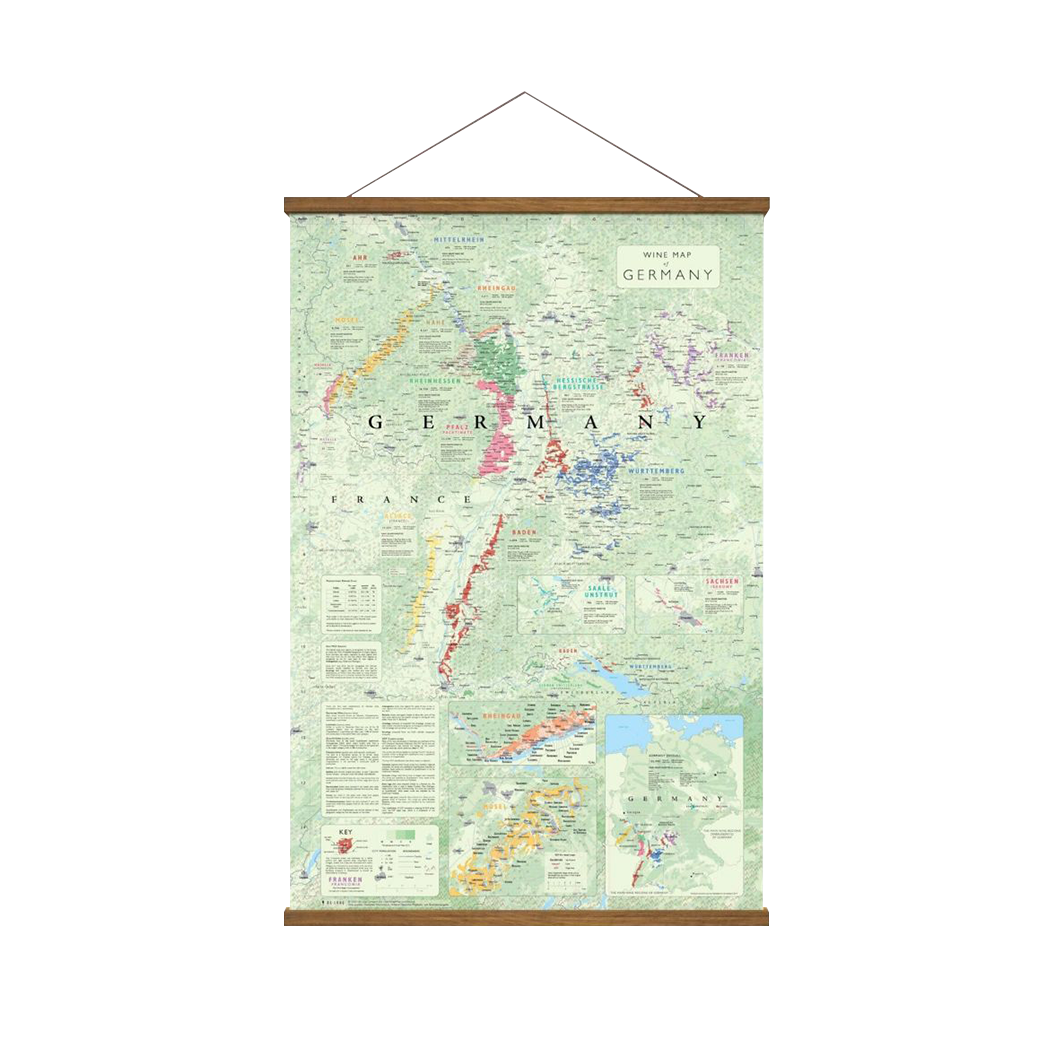
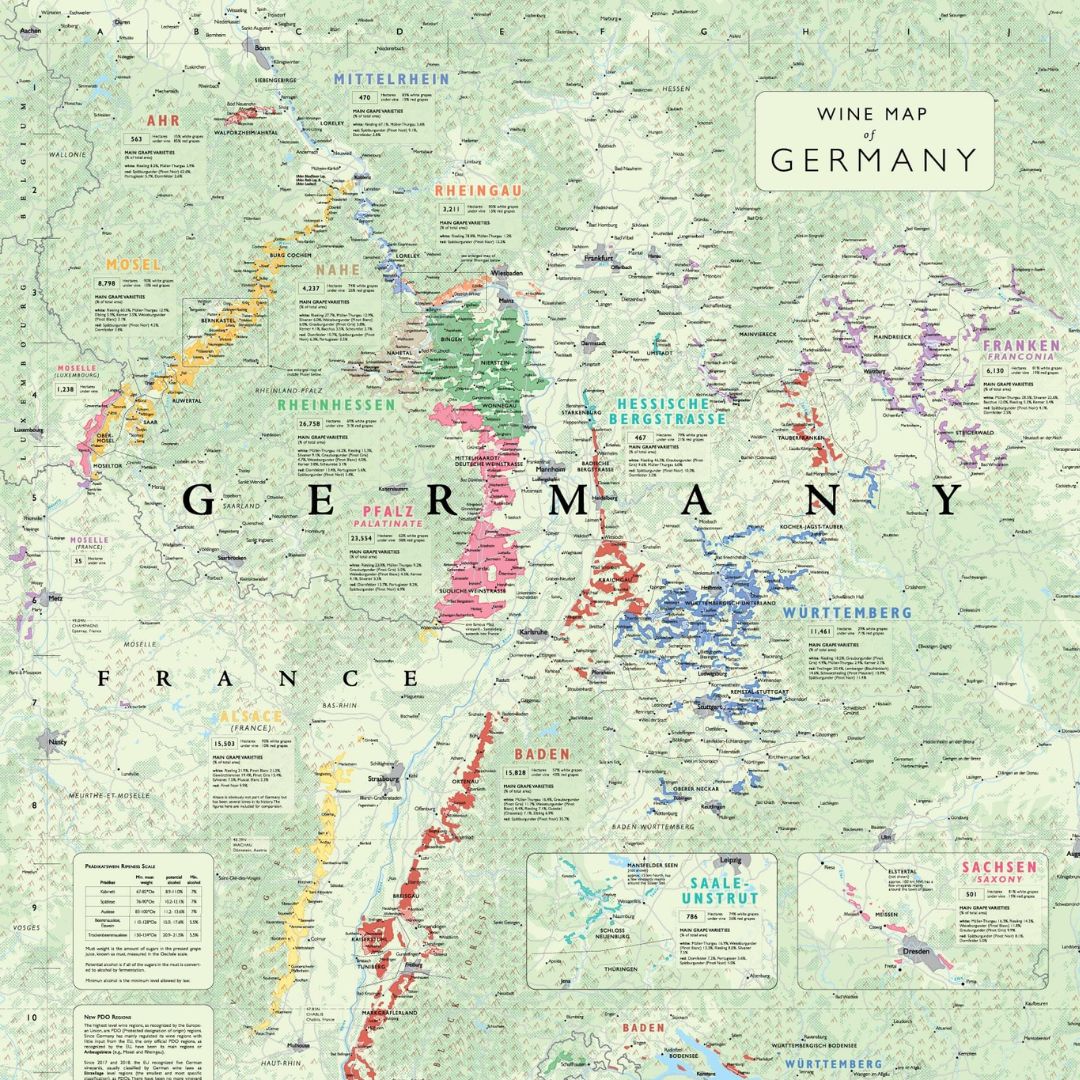
Here, it's not about the terroir, but about the sugar content of the must. Say what? Yes, the sugar content of the grapes at harvest determines the wine's category. There are two levels in Germany: Qualitätswein and Prädikatswein. These wines must come from one of 13 wine regions . The difference between the two is that, for example, Qualitätswein allows for the addition of extra sugar to achieve a higher alcohol content, while Prädikatswein does not.
Prädikatswein is all about the sugar in the grape itself. The category a wine falls into depends on the sugar content of the must. This is a matter of reflection, as this doesn't necessarily mean the wine contains that much sugar. The winemaker can choose to ferment his wine completely (i.e., convert sugar into alcohol).
Below you will find the six categories of Prädikatswein.
#1 Cabinet
These grapes are picked at normal harvest times. They produce fresh, light wines. Dry or semi-dry varieties are usually produced, but sweet Kabinett varieties are also available. They are meant to be drunk young.
Big tips:
- Willy Schaefer Riesling Kabinett via Rieslinghuis
- Clemens Busch Riesling Kabinett via Platenburg / Vindict

#2 Spätlese
The grapes ripen for two weeks longer. They are fully ripe and produce wine with a fuller body, a longer finish, and more fruity aromas than their sister, Kabinett. Spätlese can produce various wines: dry, off-dry, semi-sweet, and sweet.
It maintains a beautiful balance between sweet and sour. Spätlese, in its semi-dry form, pairs well with rich fish dishes like salmon, lobster, and crab, as well as with spicy dishes like Thai or Mexican cuisine. A Spätlese can age for 5 to 25 years.
Big tips:
- JJ Prum Graacher Himmelreich Spatlese via Utregs Wijnhuis
- Riesling Spätlese 'Fruchtsuss' Ürziger Würzgarten via Edwines

Note! These categories don't indicate the wine's sweetness. They only indicate the sugar content at the time of harvest. It's quite possible that the winemaker has allowed the wine to ferment completely (and all the sugar has been converted into alcohol). In that case, the bottle will say, for example, "spätlese trocken" (dry spätlese).
There can also be a huge difference between regions. A warmer area imparts more tropical, exotic aromas to the wine, while a cooler climate produces tighter wines with higher acidity.
#3 Auslese
Auslese is made from overripe grapes. The bunches are selected and hand-picked. Auslese loosely translates to "choice harvest." Wines made from these late-harvested grapes are intense and come in a variety of styles, from dry to sweet. They are usually sweet. Dry Auslese are rare, but beautiful and incredibly concentrated—comparable to an Alsatian Grand Cru Riesling.
Big tips:
- Schäfer-Fröhlich Bockenauer Felseneck Riesling Auslese via Riesling House
-
Koehler-Ruprecht Kallstadter Saumagen Riesling Auslese trocken via Riesling House

#4 Beerenauslese
Taking things a step further. Instead of picking bunches, the grapes are selected grape by grape. This is a costly process. Like the dessert wines from Sauternes, Beerenauslese grapes are often (but not always) affected by noble rot. Unlike Sauternes, the alcohol content is much lower and the acidity higher. This is partly due to the cooler climate and partly to the naturally higher acidity of the grapes. Beerenauslese is only produced in good (read: dry) years.
Big tips:
- Eva Fricke Lorcher Schlossberg Riesling Beerenauslese via Karakter / Wijnkoperij Europe
- Franz Künstler Hochheimer Kirchenstück Riesling Beerenauslese via Anfors

#5 Trockenbeerenauslese
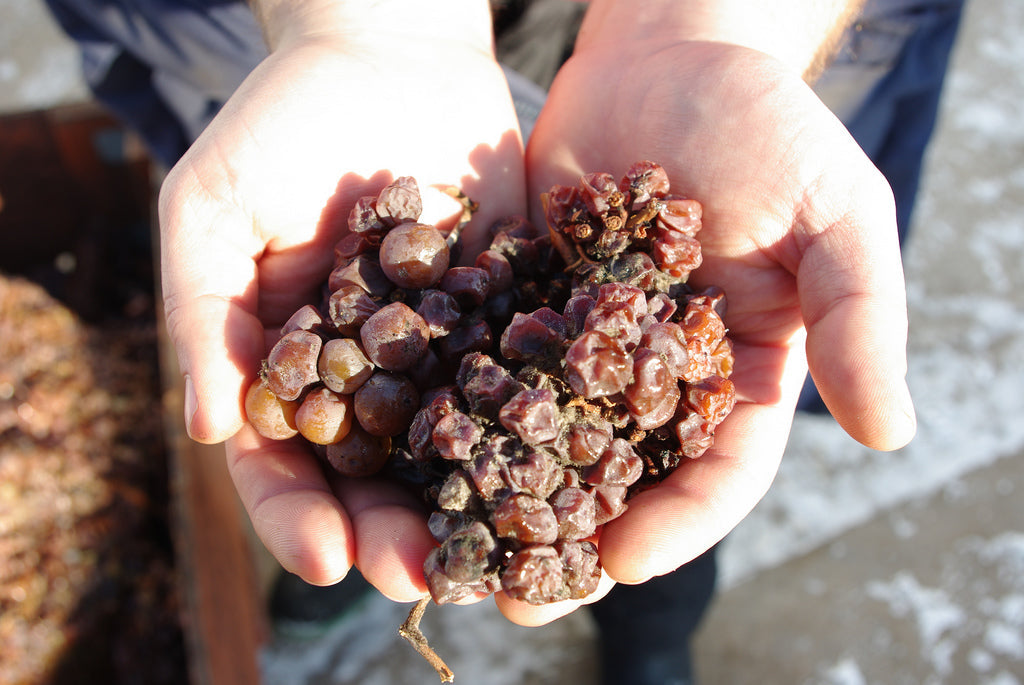
A step up from Beerenauslese is Trockenbeerenauslese. Loosely translated, this means "select harvest of dry grapes." Dry here means that the grapes have been completely affected by noble rot and dried out into small raisins. This is a special wine. It takes one person a whole day to gather enough grapes for a single bottle. In short, these wines are very valuable. The aromas and flavors are overwhelming and complex. They can age for up to 80 years and only get better. The king of German dessert wines.

#6 Ice Wine
The final category: Eiswein. These grapes are picked while frozen. This is becoming increasingly difficult due to climate change. The grapes must have the same sugar content as Beerenauslese, but must not be affected by noble rot. It requires knowledge from the winegrower, but also a good dose of luck. The winegrower must decide whether to leave (some of) their grapes hanging after the regular harvest. If it doesn't freeze, you're out of luck and can throw your grapes away. If it does freeze, the grapes must be picked while frozen—with gloves to prevent them from thawing. The grapes are also pressed while frozen. A completely different taste experience than BAs and TBAs, but oh so beautiful. German Eiswein is also called the queen of German dessert wines and can age for up to 100 years.
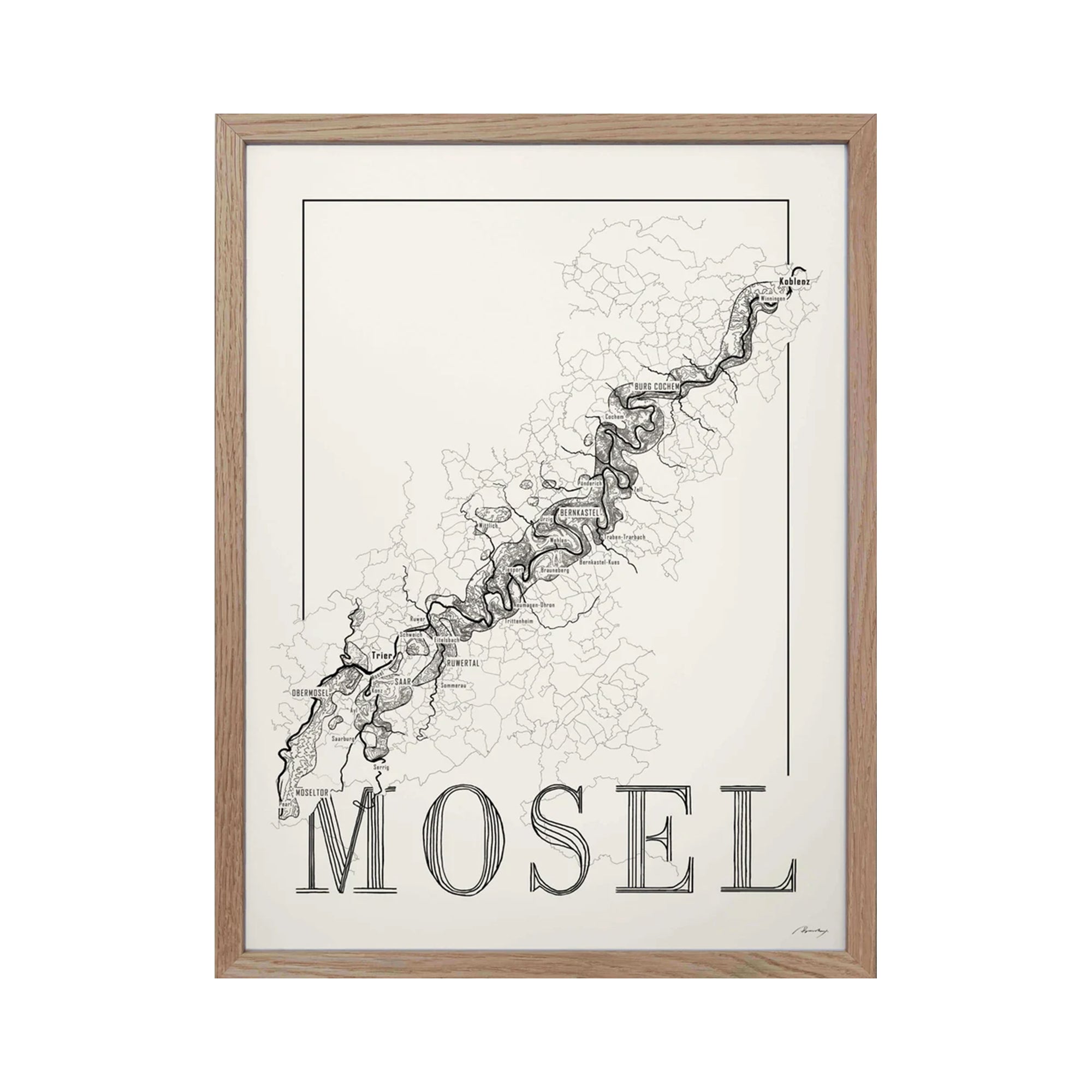
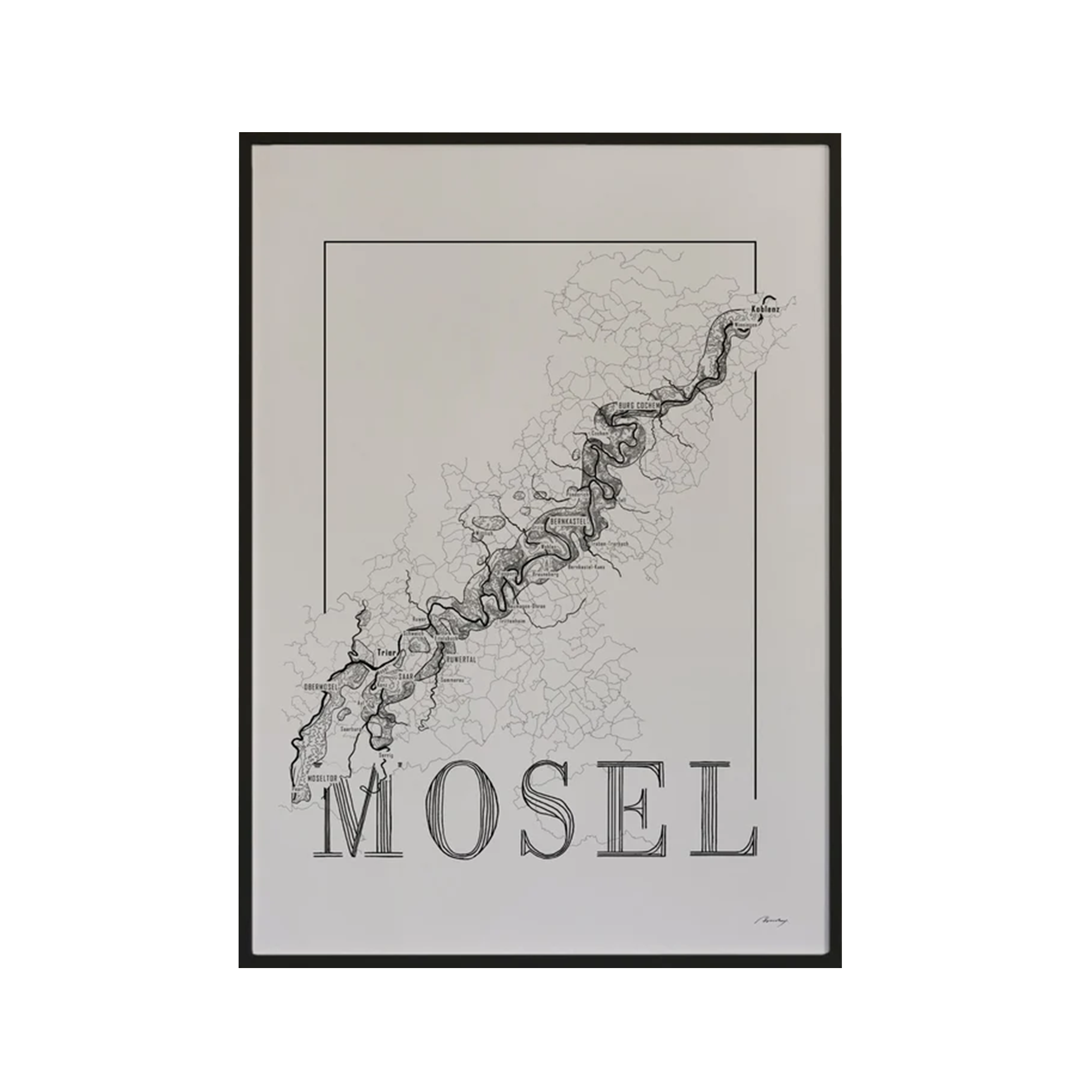
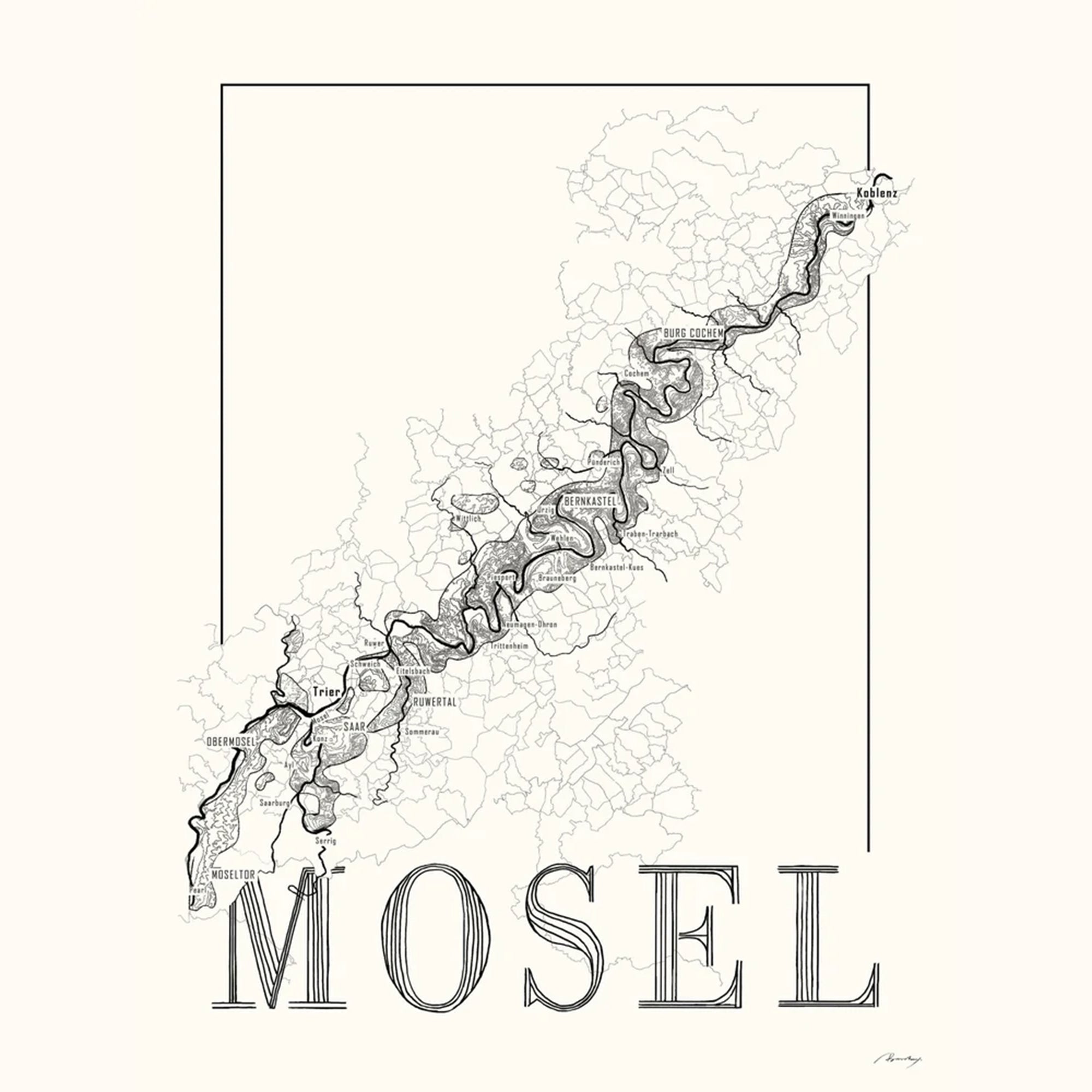
More information about these classifications can be found on the website of a top producer from the Mosel region: Dr. Loosen . A while ago, I attended a masterclass by Dr. Loosen himself – at Wijnhandel Peeters in Rotterdam: Dr. Loosen & the Riesling Show.
Sources
Top image: Winefolly ('Noble Rot' on some Oraniensteiner grapes (rare cross of Riesling x Sylvaner) in British Columbia at Stoneboat).

Share:
Update 2025: 6x Spanish favorites
Le Grappin makes wine in Burgundy, Beaujolais and the Rhône