Simplicity is rarely simple, they say at Restaurant Savage (pronounced Sèvèch in English). They've learned this firsthand, as the restaurant as it currently exists will close on July 23rd. It's too large for the level of cuisine they aim for.
Because the bar is set high. That's not just me, but also the ever-critical Mac van Dinther of de Volkskrant, who recently gave the restaurant a 9+.
Luckily for you, Savage will continue, albeit in a different, smaller location. The chefs are still looking for a new space. Xander Rodrigues, the owner, will stay on and turn it into a seafood restaurant.
The leader of the group
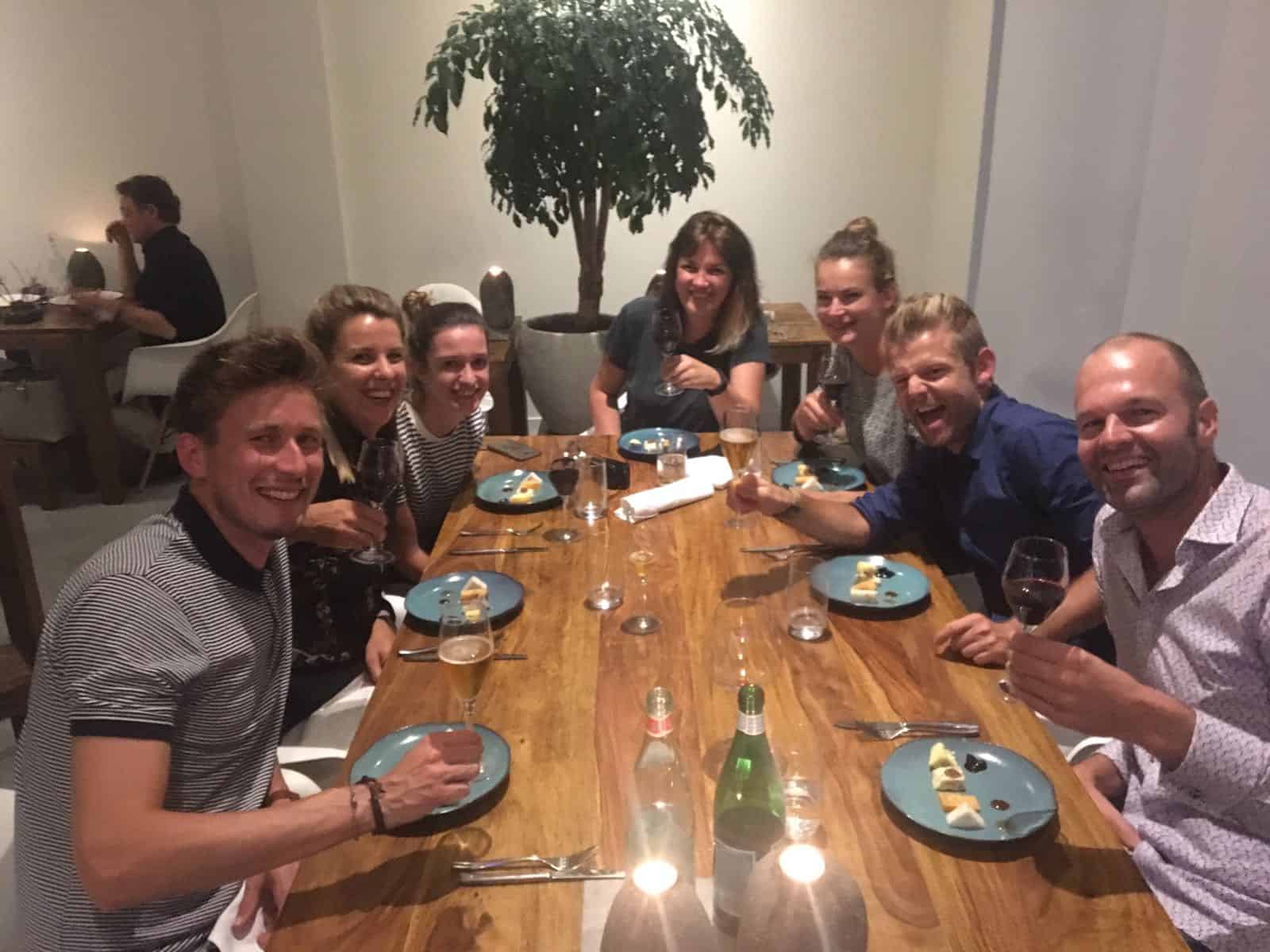
When the hostess asks who's the leader of the group, all fingers point to me. True, I'd made the whole thing up, after all. So I get to decide how many courses we'll have: 5, 6, or 7. I try to restrain myself and choose 6, the happy medium, but then realize the seventh might be a cheese board. After getting confirmation, I decide to go all in. We have something to celebrate, after all: one couple is getting married, the other is buying a stunning house. Could I see the wine list, too?

Let's get wild
When we get our first bite – the amuse-bouche – I understand where the name Savage ('wilderness') comes from. Well, actually, you already know it when you walk in: there's a tree in the middle of the building. Pretty wild. Just like the first bite: lightly grilled razor clam with citrus and cinnamon served in a mackerel mouth. The hint of cinnamon is fantastic with the southern French rosé.
The rosé remains on the table while we are served the next two amuse-bouches: a Rotterdam onion (slightly more tart than the Amsterdam one) and a ragout of North Sea crab head. A rather unusual sight for us Zeelanders, as you normally throw away the "schuute." Savage proves to be more frugal than the average Zeelander – here, everything is used, or as Mac from de Volkskrant calls it, " culinarily applied no waste " (and then he complains about hipsters in the same article).

We tasted the real crab meat in the starter, where it was hidden under slices of chicory and apple and served with a curd of (I think) goat's cheese. We're all a little speechless – which is surprising, because we've been chattering away quite a bit this evening.
Our glass still has the rosé from the Languedoc, which goes well with it, but I couldn't help but wonder how the The Bowline Sauvignon Blanc from Elim (Cederberg) would taste good with it.
The next course is a salad of green asparagus, king thistle mushroom, and pickled egg yolk right in front of us. A súúúút delicious combination of flavors.
Then there's the catfish. A fish that's usually not taken very seriously, but turns out to be absolutely delicious. The cabbage is stuffed with bay leaf mousseline, the bay leaf itself coming from the hostess's garden. A nice story, and it pairs perfectly with the Spatburgunder from Hetzel in the Nahe region.
The entrée is a salad of escargots with broad beans, gherkins, and various herbs. I don't remember the exact dish, because I was fascinated by the wine. A white wine from the Palatinate made from Schreurebe, short Scheu . Say what? It's a cross between Riesling and an unknown grape. In a hymn I read about Scheu that it's everything Riesling isn't. " If Riesling is noble and good, Scheu is nasty and fun. " This is my first time with Scheu. Not surprising, because it prefers to grow in the same soil as Riesling, and well, as a winemaker, you're more likely to choose good old Riesling, because it simply yields more.

Who's ever eaten pigeon? I haven't, and I was also imagining something resembling pheasant. Probably because it's a bird, too. Nothing could be further from the truth. The pigeon breast is more like tournedos than pheasant meat. The chef might think I'm crazy now, but you have to find something to compare it to, right? It was delicious. The pigeon breast was served with a sauce made from the liver and carcass, and we even got to gnaw on the leg. So, once again, the whole animal is used. Wonderful.
Then came the long-awaited cheese board. It'll remain a surprise to you which cheeses they were, because I didn't remember them. I did remember the port that was served with it: Tawny from Quinta do Noval. Whenever I see that port house, I feel a little pang in my heart again. I once opened a 2005 vintage, just like that, yolo, for fun, after dinner. We'd already had enough to drink. Wrong choice, because the experience was completely lost on us, and I had to throw the port away the next day (you can't drink vintage port... do not store ).
The observant observer will notice that not everyone has port in their glass. Savage's first choice was cider to accompany the cheese board, a summery and lighter alternative.

To finish, we're treated to a special dessert with pumpkin sorbet, crêpe, meringue, and sea buckthorn. We're pairing it with a Tokay Pinot Gris from Alsace. What? You're not allowed to use that name outside Hungary anymore, are you? True, but this dessert wine is from 1997, and back then it was still allowed. Since 2007, the name Tokay has been reserved for the region of the same name in Hungary. Epic moment.
You were awesome
It's such a shame that Restaurant Savage is closing, because it was so good. Feeling blissful (and a little tipsy), we hop back on our bikes and head into the wilds of Rotterdam.
Simplicity is rarely simple.
Until July 23, you can visit Restaurant Savage at Schiedamse Vest 14. Check the website for more information about future plans.
Share:
The bottled poetry of Marcel Deiss
The Judgment of Paris