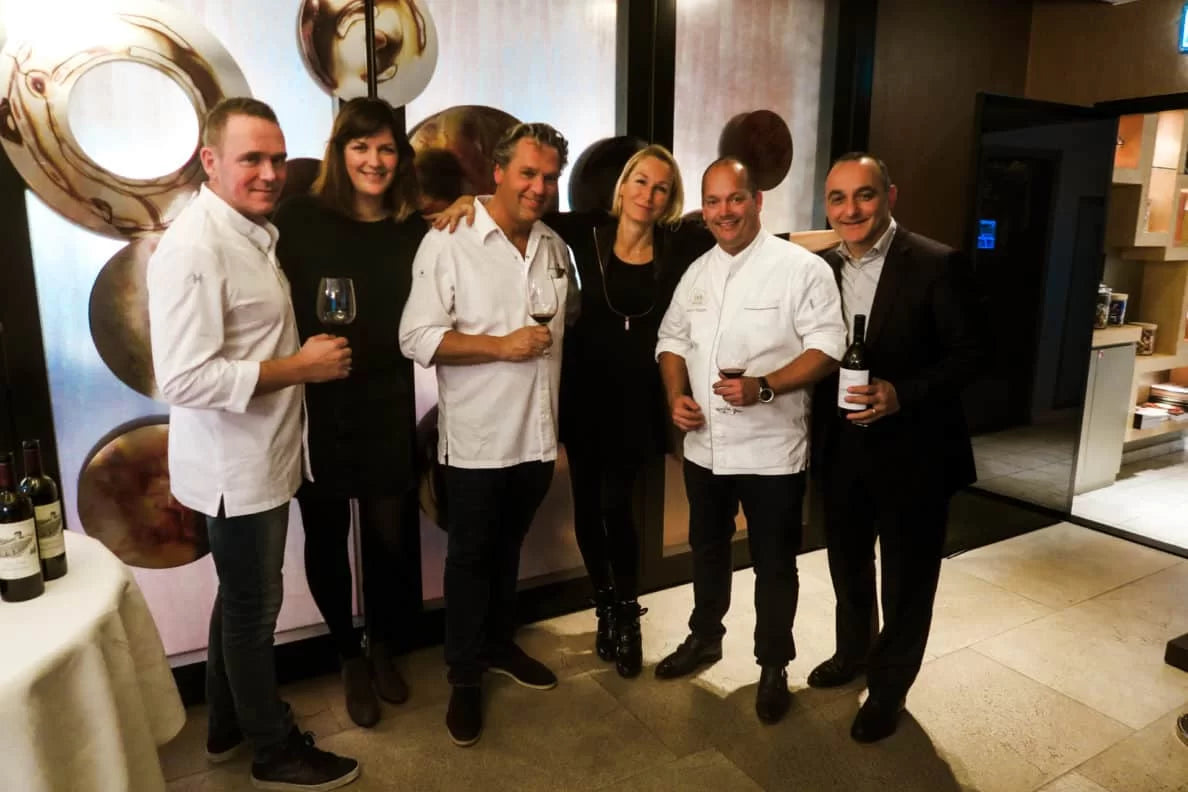
When I arrive, the other guests are already at the table. One moment I'm cycling like a madman along the Meuse River, the next I'm sitting at the table with the high society of the wine world (including Harold Hamersma, Karin Leeuwenhoek, and Jan van Lissum). Fortunately, Karin, whom I know from the Union des Grand Crus de Bordeaux , the ice cream: 'hey, another Rotterdammer at the table after all'!
Getting to know Podere Forte
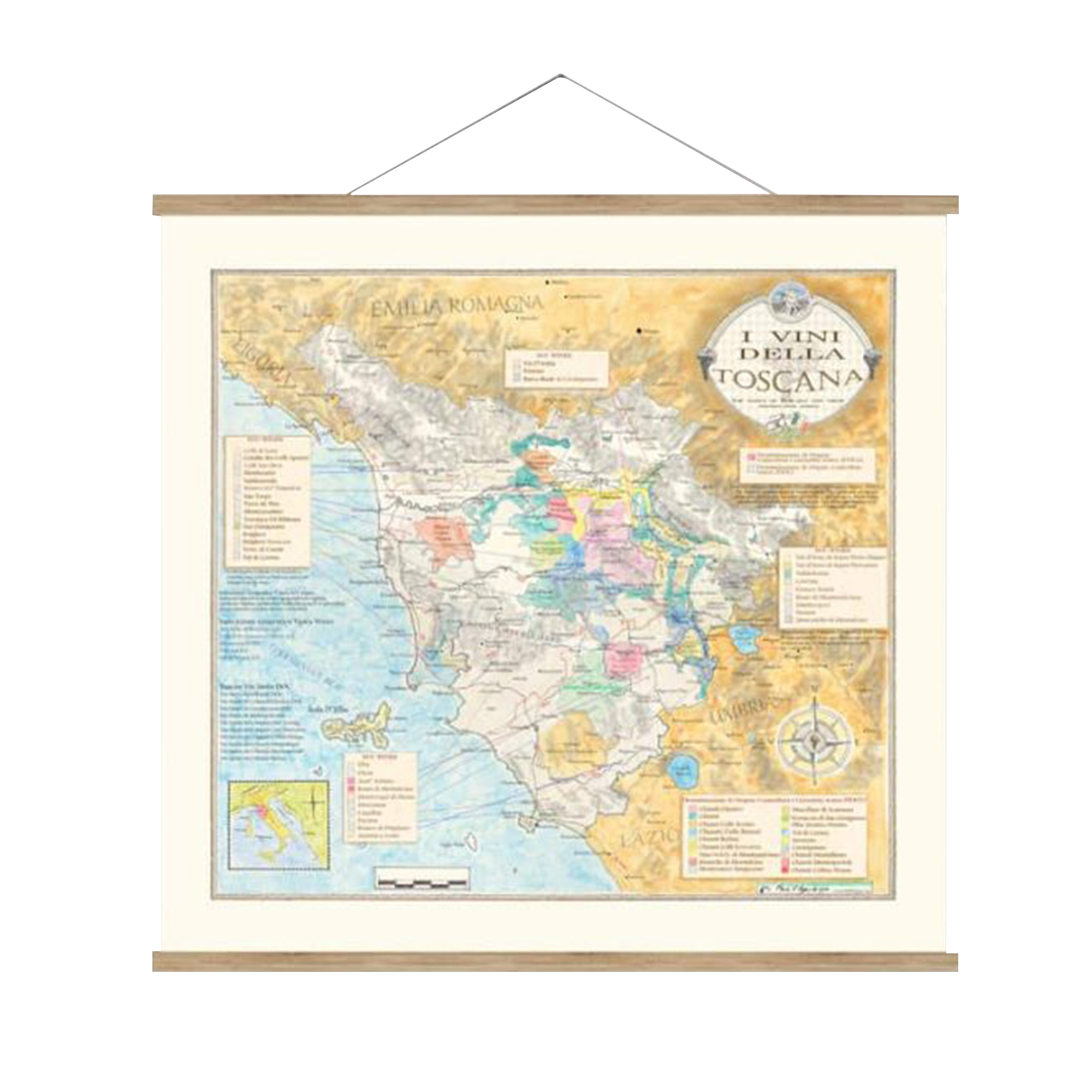
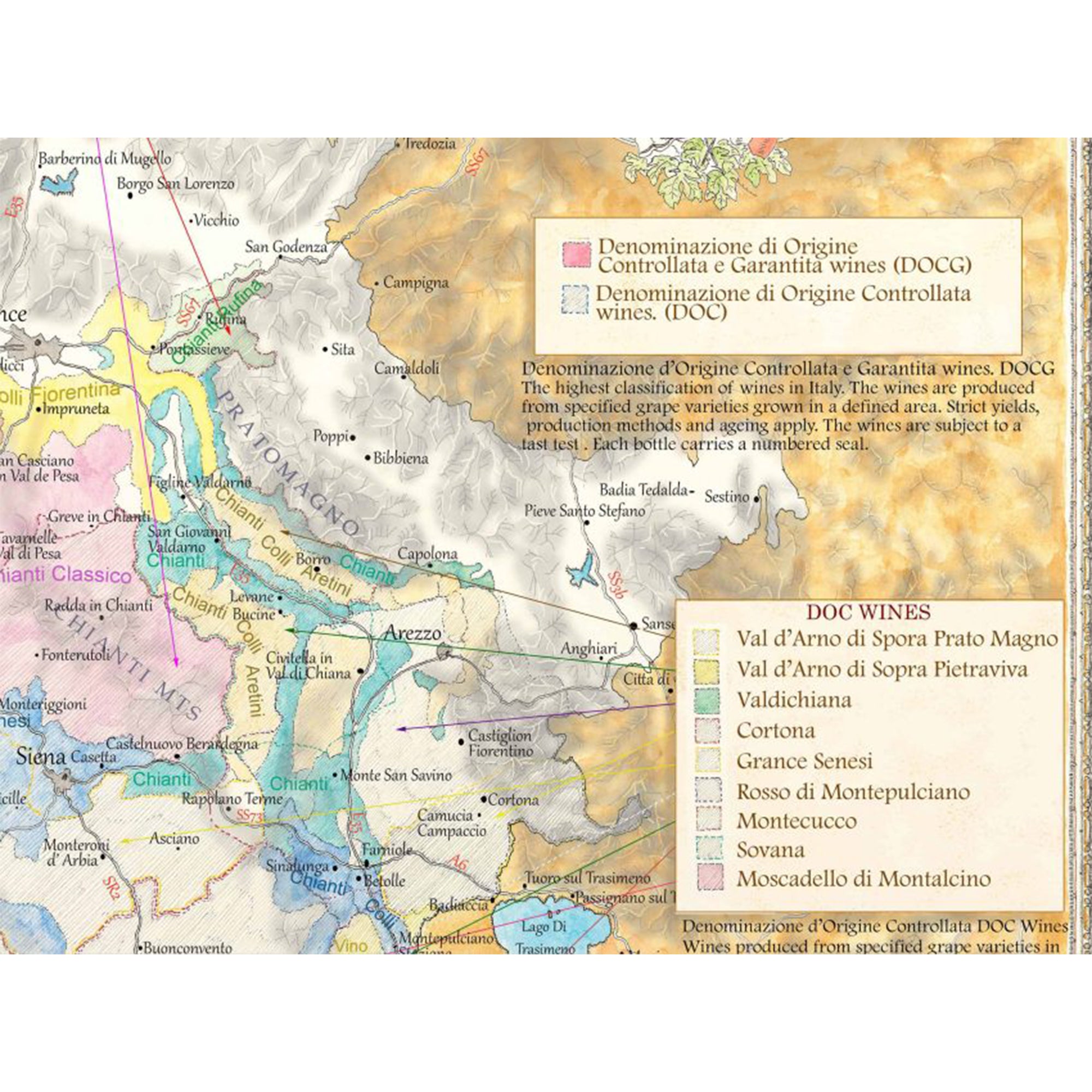
We, the Amsterdammers and I, are invited to Restaurant Parkheuvel by importer Vinites and Podere Forte. The winery is located in Castiglione d'Orcia, a village nestled between the two Tuscan superpowers of Montepulciano and Montalcino. Unfortunately, I drove right past it during my visit. five-day road trip in Tuscany last summer.
It's a shame, because it must have been a beautiful sight. The estate covers almost 300 hectares, of which 19 hectares are vineyards (12 hectares are in production), 23 hectares are olive groves, 70 hectares are woodland, and grain fields, meadows, lakes, and gardens are also included.
Podere Forte was founded a few years ago by Pasquale Forte, who certainly does things on a grand scale. His ambition? Making the best red wine in the world . Thank you for letting me taste it now. This happens during the six-course lunch, which Erik van Loo, head chef at Parkheuvel, is responsible for, as are Jarno Eggen of Restaurant De Groene Lantaarn (Zuidwolde) and Fred Mustert of Restaurant Fred (Rotterdam). They take turns conjuring up gems that pair sublimely with the Tuscan wines. How lucky .
We get an explanation about the wines from Giovanni Mazzoni, the marketing man, who previously worked at Ornellaia . Not the least either.

Petruccino, the youngest of the bunch, a blend of 85% sangiovese and 15% merlot.
Nothing is too crazy
Nothing is too much for Pasquale Forte. Quality is paramount – no matter the cost. I hear that often when a winemaker talks about his offspring, but This time it's serious . My mind races when I hear what they're doing. They farm completely biodynamically. That claim is also frequently made, but Pasquale puts his money where his mouth is. Since 2011, the Demeter quality mark on all bottles.
How do you let nature take its course while simultaneously leaving nothing to chance? It works like this: Sheep graze the vineyard clean after the harvest. A high fence has been erected to keep out deer, and if necessary, excess sunlight is controlled by covering the entire vineyard with sunshades. To minimize soil pollution, biodynamic treatments are sprayed over the vineyards using drones. - Source: Han Sjakes – Podere Forte leaves nothing to chance .
If you want to make the best red wine in the world, you have to have everything under control. For this, Pasquale enlisted the help of Lydia and Claude Bourguignon, a renowned duo in the biotech world. They are so-called "earth scientists"— I prefer to call them: terroir experts . This duo has thoroughly inspected the Podere Forte vineyards. Based on location, altitude, microclimate, and soil type, they selected the best plots for Sangiovese, Cabernet Franc, Merlot, and Petit Verdot. In short, the Bourguignons live up to their name.
The proof of the pudding
You might be wondering how the man does it all. Besides Podere Forte, Pasquale owns a successful electronics company. This allows him to pursue his dream: making the world's best red wine. Not only is the work carried out meticulously in the vineyard, but the work outside is also carried out with the same precision. The choice of wood is crucial, Taransaud and François Frères – top barrel makers. The world's finest oak is then given a special, somewhat mysterious toasting before being made into barrels. Once they are used up, after a few years, they are sold on to Brunello wineries.
And then we haven't even talked about the bottle, which It's absolutely iconic . It resembles a tall Burgundy bottle, or a somewhat laid-back Italian version of a Bordeaux. It's undeniably unique, just like the wines of Podere Forte. It's time to put it to the test.

This afternoon's impressive line-up.
Petruccino 2015
Petruccino is the youngest of the group, The younger brother of the great Petrucci . Sangiovese with 15% Merlot, the wine undergoes 12 months of oak aging in new and used oak, plus 9 months of bottle aging before release.

Oxtail | Calf's liver | Truffle | Madeira (Erik van Loo)
Petrucci 2013
Wow, this wine. When I smell my glass, it's like I'm briefly transported back to Tuscany. What else could you want with 100% Sangiovese? With its thin skin, it's not an easy grape. It's susceptible to disease and, if not ripe enough, can develop an artichoke aroma. Patience is a virtue here. " Great Sangiovese takes a long time." concludes Giovanni Mazzoni. It's working out fantastically here, even though the wine is still young.
And rightly so, because Petrucci is Podere Forte's flagship wine. Only the finest grapes are selected. The harvest takes place in several stages to ensure only the ripest grapes are harvested. To ensure that no damaged or even bruised grapes are included, the wine is sorted three times (!). The wine is aged for 16 months in the finest oak and then spends another two years in the bottle before being released.
The combination was a real eye-opener . The idea that you absolutely have to serve white wine with fish is, of course, an old-fashioned one. We've known that for a long time. But that you can also serve such a hearty fish like Petrucci with cod? Didn't see that coming. The bacon made for a harmonious whole. Astonishingly good.

Cod fillet | Attic bacon | Beetroot | Citrus | Soy (Jarno van Eggen)
Petrucci 2008
The same Petrucci, but five years older. Completely different. At the table, we hear that no two vintages are the same at Podere Forte. A winemaker could do a lot in the cellar to consistently bring the same style to market. They don't. Here, they let the vintage do the talking . With the 2013, I clearly had "Tuscany in my glass," which means a mix of oregano, cherries, tobacco, and balsamic vinegar. With the 2008, the aromas are all more intense, earthier, with more woody notes and sour cherries. It’s amazing how two vintages can be so different .

Sweetbreads | Silver Onion | Green Asparagus | Truffle (Fred Mustert)
Guardiavigna 2012, 2009 and 2007
The Guardiavigna is Podere Forte's Super Tuscan . We tasted three vintages. It's a blend of Cabernet Franc, Merlot, and Petit Verdot, the composition of which varies (considerably) each year. For example, Guardiavigna 2009 was a very warm year, so less of the robust Petit Verdot was likely needed. You can taste the sun in your glass .
The 2012 pasta was delicious, with what I thought was ravioli, but turned out to be 'plin'. What is plin? Plin means " a pinch ," because one pinches with one's thumb and forefinger between each mound of filling to close and seal the little pasta packets. Well, I wasn't far off. Cèpes, by the way, is porcini. Throw that in a sauce with Parmesan, and you'll understand how well it pairs with this Super Tuscan. Heart . Eyes closed .

Plin | Parmesan | Celery | Cèpes (Jarno van Eggen) – at Guardiavigna 2012

Venison loin | Almond | Vanilla | Jerusalem artichoke | Balkenbrij (Erik van Loo) – at Guardiavigna 2009
We conclude the list with Guardiavigna 2007 and a slice of Vacherin Mont d'Ore, potato sorbet, and shallot compote. The latter brings out the wine's fruitiness.
That leaves me with one question: if only the very best grapes are used for Petrucci and Guardiavigna, what happens to the grapes that aren't quite good enough? The answer is simple: they are used in Petruccino, or they are made into house wine, which they serve in their own restaurant. Wow.
What wines, what passion, what ambition. It's clear to me. This year I'm going to Tuscany again 🙂
Share:
2017 was a good year
Deep down everyone loves gourmet cooking