
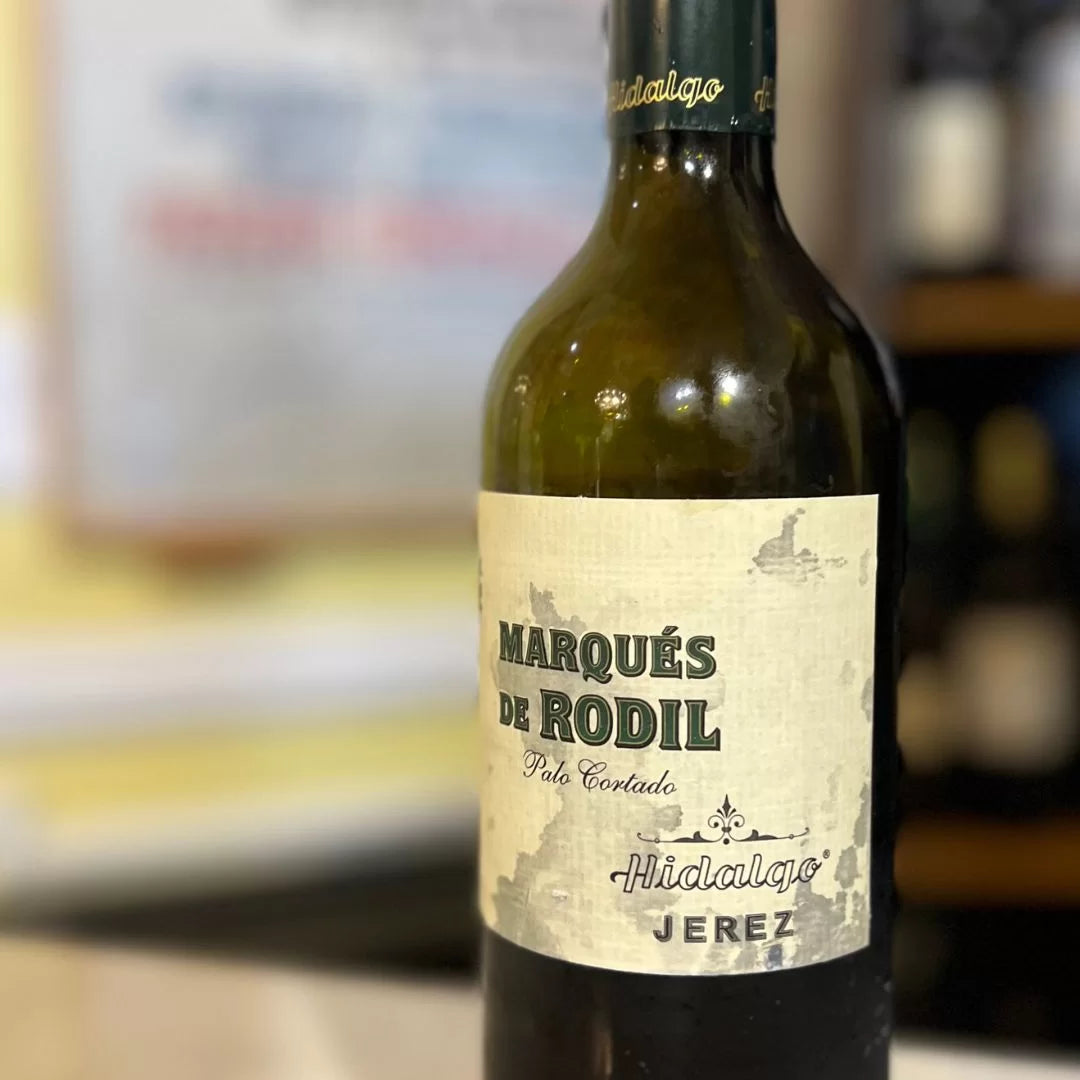
Palo cortado is perhaps the most enigmatic style in the sherry world. So mysterious, in fact, that a documentary was made about it: El Misterio del Palo Cortado .
How can a wine that starts out as a fino end up somewhere between an amontillado and an oloroso? In the past, no one could quite explain this, and that's why palo cortado has acquired a kind of mythical status. Is that still justified in this day and age?
Suddenly flor gone
Palo cortado was once a mysterious sherry that "spontaneously" formed when the flor layer developed unexpectedly. In the 19th century, when wine was still fermented in barrels instead of temperature-controlled stainless steel tanks, the winemaking process was much less predictable. Different grape varieties were mixed, and the ripeness of the grapes could vary, leading to fluctuations in the alcohol content, body, and structure of the wine. One barrel might have had 11% alcohol, another 14%. In short, there were many more variables in the process, and a second classification was required.
It is said – but I need to investigate this further – that palo cortado was often made from Perruno . Jerez was once 50% planted with this grape, but after phylloxera it was forgotten. Ramiro Ibañez of Cota 45 makes Agostado , an old school palo cortado from perruno, palomino and uva rey.
Let's start with the first classification , which is the classification of the musts (the base wine). Wines from the first pressing of Palomino grapes are labeled "palo" (a slash /), meaning they will likely become fino or manzanilla, fortified to 15% and aged further under flor.


Wines from the second pressing, which are fuller and more robust, are given a circle and are generally reserved for oloroso, where they are immediately fortified to 17% and continue to age oxidatively without flor.
The second classification takes place after a period of aging under flor in the sobretablas, the intermediate stage before the wines enter the final system of criaderas and solera. This stage is usually skipped for oloroso.
If the wine develops differently than expected—for example, when the flor layer begins to disappear—it is given a "cortado" (a horizontal line through the palo /), indicating that the wine is losing its biological maturation and will continue to age oxidatively. These wines are fortified to 17-18% and continue without flor. And voila, a palo cortado is born.

Suddenly flor gone
Today, the mystery has largely vanished. Most sherry is made from the same grape, palomino (specifically the uber-productive palomino california clone), and fermentation takes place in large stainless steel tanks.
The base wines are therefore much more uniform than before, and thanks to modern technology, all parameters – sugars, acids and later the alcohol content – can be measured accurately.
Today, a palo cortado is deliberately made by using the juice from the first pressing, fortifying it to 15%, as if it were a fino, briefly aging it under flor, and then fortifying it again to 17%, after which the wine continues to age oxidatively. According to the Consejo Regulador, a palo cortado combines the finesse of an amontillado with the power of an oloroso.
FAQ
This blog raised a few questions from readers, so I've answered them below. Any more questions? Feel free to send them to me. an email .
Isn't a palo cortado actually the same as an amontillado?
There's hardly any difference between a palo cortado and an amontillado with a short flor aging, although the amontillado does age a bit longer. A palo cortado only briefly encounters flor, only in the sobretabla, after which the wine is immediately fortified to 17% and the flor disappears.
But we can be a little more precise.
To make an amontillado, we start with a fino (or manzanilla), which is fortified to 15% after the initial classification. This wine then "rests" in the sobretabla, usually with flor for 6 to 12 months. The sobretabla serves to supplement the fino solera system at the time the wine is extracted.
Once the wine is removed from the fino solera system, it can be bottled as fino or further aged in the amontillado solera. A little flor sometimes remains in the youngest row of amontillado solera, which then disappears. This can happen in two ways:
- ">
- By fortifying the wine to 17%, the flor dies off.
- Or because the amontillado solera is kept in a warmer, drier location (sometimes in a different bodega, or in a warmer corner of the same bodega). Due to the climatic conditions, the water evaporates faster than the alcohol, which increases the alcohol content and causes the flor to die off naturally. This is how Valdespino Tio Diego is made, for example.
FAQ: What makes a palo cortado different from an oloroso?
Yes, a palo cortado is also similar to an oloroso because it's fortified almost immediately. The difference lies in the word "almost." A palo cortado goes into the sobretabla, where it undergoes a few months of flor aging. The other difference between a palo cortado and an oloroso is the pressing. Palo cortado typically uses the delicate juice from the first pressing, while oloroso is usually made from the second pressing (more robust juice).


Share:
Jette in Navarra: a journey to the north of the south
Christmas without a broken piggy bank