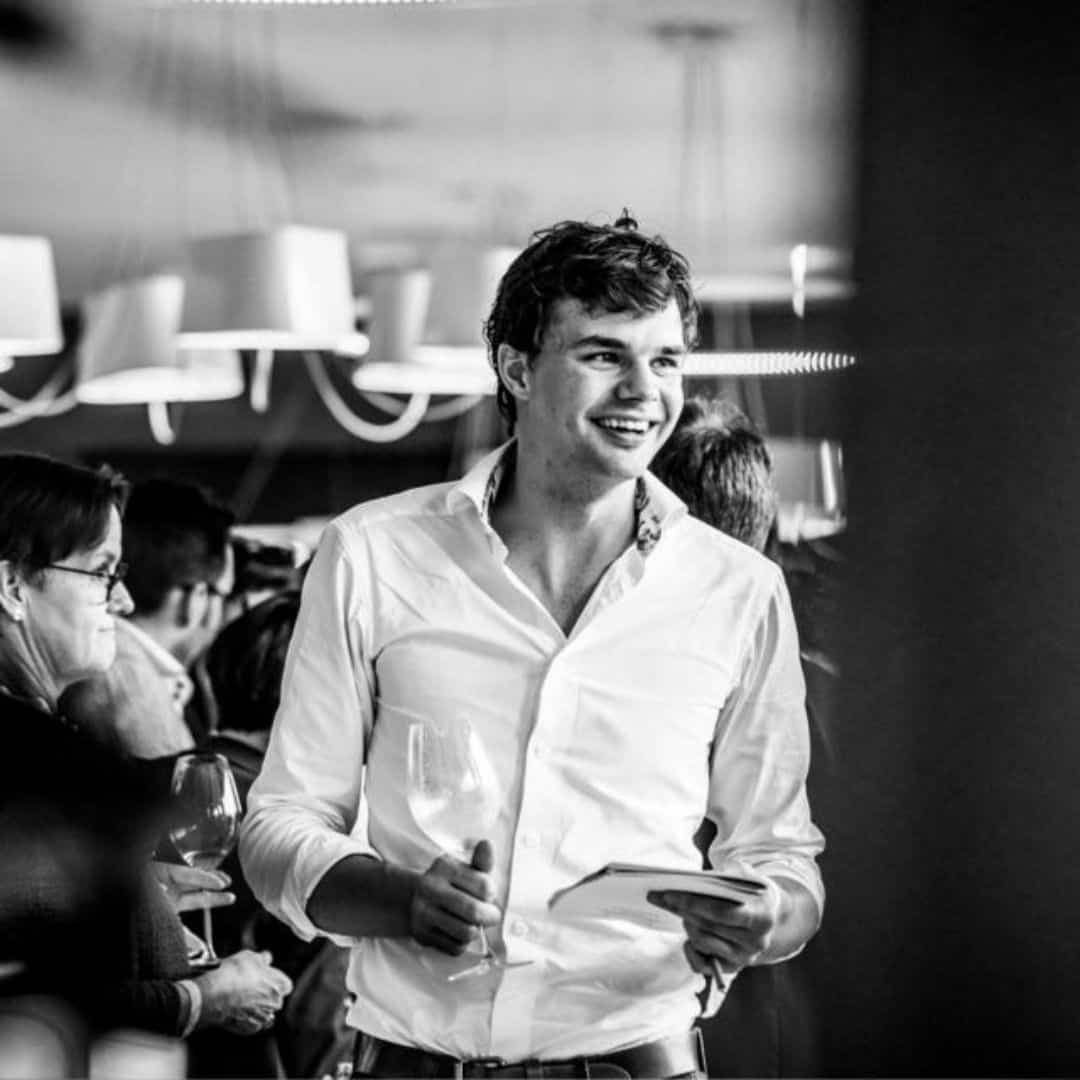
Mats wants to become a Master of Wine. I'm a sociologist, and after graduating in the Netherlands, I immediately moved to Switzerland to work successively at a winery, a Michelin-starred restaurant, and now a wine importer. Since September, I've embarked on the biggest challenge of my life: becoming a Master of Wine. In this series, I'll share my experiences. This time, I'll talk about how it's going and what it all actually costs (spoiler alert: a lot!).
I started the program in September. It's now been six months, and I feel like I've never known so little about wine as I do now. Any wine student will agree: the more you learn, the less you know. But also: the more I feel like there's still so much to learn. I'm right in the thick of it right now. But the feeling that I know nothing motivates me immensely to experiment and delve into the books every day. And so, things are actually going quite well.
You can read the previous editions of 'Mats wants to become a Master of Wine' here .
The current score
In four months, the exam is coming up. I think I'm on the right track now... As in part 2 As you can read, there are two parts: the theory (writing essays) and the practical part (blind tasting). I've clearly made leaps and bounds in both parts. I've made great progress, especially in the blind tasting. For the theory, I've crammed a lot of dry material into my head. But dry material alone isn't enough. For every argument, you have to real life To have an example. That's what I spend most of my time on now.
What else do I need to do?
Theory
For the theory, I'm currently primarily collecting real-life examples to support my book knowledge. Normally, this involves long conversations with winemakers in cellars late at night, accompanied by a bottle of wine made by the winemaker's grandfather. That's not possible now, so everything is happening via Zoom. All the examples then need to be organized again so I can study them again later.
I also write several essays (one hour each) every week and create essay plans. The next step is cramming. In total, I spend between 15 and 25 hours a week on theory.
Theory
Blind tasting takes less time each week, but it's more intensive. Judging a wine under extreme time pressure requires intense concentration. Not only do you have to analyze the wine thoroughly, but you also have to do it very quickly. I'm currently practicing this in so-called "drill tastings," where I force myself to be faster. I do this intensive tasting method daily with one or two wines. I'm also in three different tasting groups, the most intensive of which is with another Master of Wine student. No more social evening tasting group; every Thursday morning we meet at 7:00 AM and take a tasting exam with six wines. This blind tasting method continues until about two months before the exam. In the last two months, we have to increase the frequency and practice, practice, practice!
Wine market
Finally, you need to know what's currently happening in the wine market. I receive a daily dose of news in my inbox and always try to read it. In practice, this means I go through a long list of articles once a week. In a relaxed setting—with a glass of wine and Paul Kalkbrenner on the speakers—just like I'm writing this now.
How much does it cost?
It takes up a tremendous amount of free time and money. I'm incredibly lucky to have a girlfriend who truly supports me and who can occasionally say: Mats, that's enough for now . She's right, of course. There's more to life than wine, and sometimes I forget that. But yes: if you really want to know something, it takes time, and you have to be willing to give up something. I often make an exception for a day of snowboarding here in Switzerland.
The financial costs aren't cheap either. The program itself costs around €5,500 per year. You'll also have to pay for books, wines, tastings, boot camps, and study trips. The institute recommends budgeting around €10,000 per year. This is a significant amount, and without a solid financial background or support from your employer, it's not recommended to start the program.
Crazy?
Actually, yes. It takes a lot of motivation, a lot of time, a lot of money, and a lot of stability and planning. So why are there still people like me so crazy about taking this course? You can read about that in the next installment of: Mats wants to become a Master of Wine.
Update 2025: Mats is now in his second year and will be taking exams again in June 2025. We'll get another update from him after that!
Guest blogger: Mats van de Steenhoven
I am a sociologist, and after my studies in the Netherlands I immediately left for Switzerland to work successively at a winery, in Michelin-starred gastronomy and now at a wine importer.
Since September 2020, I have started the biggest challenge of my life: becoming a Master of Wine.
Share:
SSP & Tignanello
Internship in the Jura