At the end of April, the time had come: the Master of Wine introductory course in Germany. It had to happen sometime. Somewhere in the past ten years, the seed was planted. Master of Wine, the ultimate goal. It always remained abstract and far off, with a slight dip in 2024. Do I even want it? Do I stay in wine? What do I actually want? And what if no one drinks wine anymore? Yes, people, panic reigns. The life of a wine entrepreneur isn't always a bed of roses, even though it sometimes seems that way when you open Instagram.
A few weeks in Spain, from La Mancha to Jerez, brought me to my senses and insight. I love wine . And not just the tasting, but also (and especially) the stories of the winemakers, the history and traditions, the new generation and their vision for the future, and even the sometimes incomprehensible legislation, I find delightful.
So let's go!
Read more below or listen to the podcast in your favorite podcast app.
What is Master of Wine?
Master of Wine is the highest attainable wine program in the world. The Institute of Masters of Wine is located in London and was founded in 1953. There are 421 Master of Wines in thirty countries. In the Netherlands, we have three: Frank Smulders, Cees van Casteren, and Job de Swart. In addition, about five are currently in their first year. Mats van Steenoven is one of them and has written several blogs about his experiences as a Master of Wine student.
In Geisenheim, it became clear to me that Master of Wine truly means Master of Wine. In other words: you have to know everything . And also know exactly how to express that effectively under time pressure. It feels like both elements—wine knowledge and the ability to articulate that knowledge—are equally important.
The introductory course was very informative. I now have a better understanding of the program and what's expected of me. I already knew I wanted to spend another year preparing for the program, and these few days only confirmed that. The academic writing, in particular, feels like a blast from the past . The great thing is that all the previous exams are available online, so I'll be using the coming weeks to practice a lot.
What did the introductory course look like?
The first morning was mainly focused on the program itself: how to get in, what's expected of you, and how challenging is it? In short: it's incredibly challenging, and the pass rate is exceptionally low. All information can be found on the MW website .
The rest of the time was spent on experiments and theory. What does a MW experiment look like and how do you write an essay? What kinds of questions can you expect, and how do you prepare for them?
The days were led by Demetri Walters MW and Mike Best MW. What struck me most was their modesty, despite their impressive titles. It reminded me of the Dunning-Kruger effect : the more you learn, the less you know . A lot of people could learn from that.
Below this great graph (source: NRC ) I'll tell you more about tasting and share some essay examples.

Tasting
For example, we got these two bubbles:
- Nino Franco Prosecco di Valdobbiadene
- Champagne AR Lenoble "MAG 19" - Chouilly Grand Cru Blanc de Blancs
With these questions:
- Identify the origin as close as possible
- Describe method of production and how it has influenced the style of wine
- Comment on quality and market appeal
The nice thing is that I picked up on the wines pretty quickly. They were typical expressions of their style. But you're not there yet. Not even close. Demetri Walters said, spot on:
Taste like a detective, argue like a lawyer.
Writing a tasting note and a conclusion isn't enough. In fact, tasting notes are no longer required. You write them for yourself, because they help you form your answers to the questions. "Find evidence in the glass" was the mantra of the day.
We received a laundry list of tips on how to answer these questions, what to look for, how to write down your answers, and so on. I also think it would be helpful to have a few pointers on how wine is made or how certain wines are typically marketed, so you can easily apply them to the wines in question. That's also something I'll be working on in the coming year. Work to be done.
Theory
Then there is also the theory part, or: writing essays.
There are five topics:
- Viticulture – everything that happens in the vineyard up to and including the harvest and transport of grapes
- Vinification and pre-bottling procedures – production of still, sparkling and fortified wines
- Handling of wine – bottling, quality control, logistics, regulations
- The business of wine – commercial, financial and marketing aspects of the international wine industry
- Contemporary issues – persuasive writing on current themes in the wine world, including personal views
Here too, the easy way isn't the MW way. Memorizing all the books on all the above topics isn't enough. There's rarely just one right answer, just as there's no single way to make wine. That's why they ask for examples. Why does one winemaker choose whole bunches and another destemmed grapes for alcoholic fermentation? What are the considerations? A bulk producer uses very different pre-bottling procedures than a top estate in Burgundy. Who does what, and for what purpose?
These are examples of questions you may be asked:
Be warned: mental breakdown incoming .
Viticulture
- Which are the most suitable grape varieties for the production of high quality traditional method sparkling wine (use examples worldwide)? Give reasons for your answers.
- To what extent is excessive precipitation during the growing season a threat in the vineyard? How can it be managed?
Vinification
- Why do winemakers use different fermentation temperatures? Refer to white and red table wines.
- What should a winemaker's main considerations be when preparing a finishing wine for bottling?
Handling of wine
- There has been a great deal of innovation in packaging design and formats in other alcoholic beverage categories. Why has the wine industry been slow to follow suit? Should it follow?
- As a quality control (QC) manager for a large EU-based supermarket chain, you are auditing the QC and bottling procedures for one of your own-label suppliers for red and white wines. What would be your key areas of focus, and why?
-
Compare and contrast how stability is achieved in the following white wines:
- entry-level New Zealand Sauvignon Blanc
- Domaine-bottled Meursault
- Alsace Sélection de Grains Nobles Riesling
The business of wine
- Which sectors of the wine industry are currently delivering the best return on investment?
- You are the global brand director for an internationally established, prestige Champagne house. You have an annual marketing budget of five million euros (approximately five million US dollars), not including price promotions, and have been asked to present a three-year brand plan. What are your key areas of focus and expenditure?
Contemporary issues
- Can social media drive brand loyalty in the wine category?
- Is alcohol an essential component of high-quality wine?
- 'Minerality is one of the most overused yet misunderstood words in the wine industry.' Discuss.
Some questions are energizing, others can lead to a spontaneous nervous breakdown. We've received a lot of tips, and I'll be working on them in the coming period. I'll share some here from time to time.
And now?
It was three fantastic days that we concluded with a VdP Weinbörse. Not entirely coincidentally, as the introductory course was organized in collaboration with the VdP.
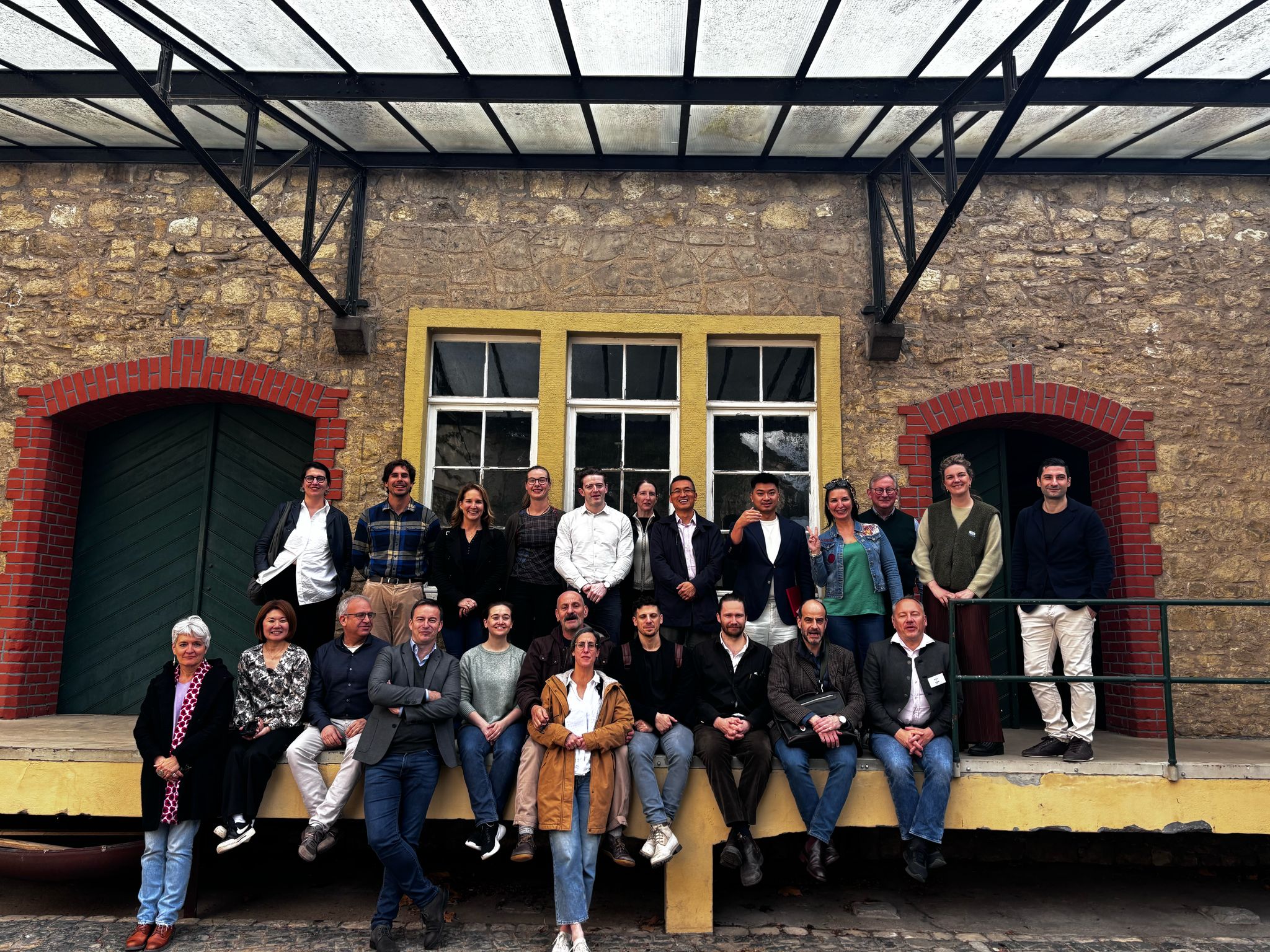
The introductory course not only gave me more insight into the program but also immediately established a valuable network of aspiring MW students. Our group consisted of 23 people from all over the world, from an export manager at a champagne house to a bulk bottler from Manchester and a sommelier from New Zealand. Everyone was in the same boat, and that immediately created a bond. About a quarter are applying this year, a quarter next year, and the rest are still undecided. Meanwhile, we share tips and experiences in an active WhatsApp group. It's fantastic!
For anyone considering the MW program, I highly recommend the introductory course. It's offered regularly, including in Mainz, Rioja, and Colmar.
Want to know more?
All information about the MW programme can be found on The Institute's website.
Also fun is the podcast by Susie & Peter, both MW and who tell more about their experiences in two episodes.
Share:
BBQ recipe: bavette with asparagus and baked potatoes
A wine fan in Piedmont and Barolo