
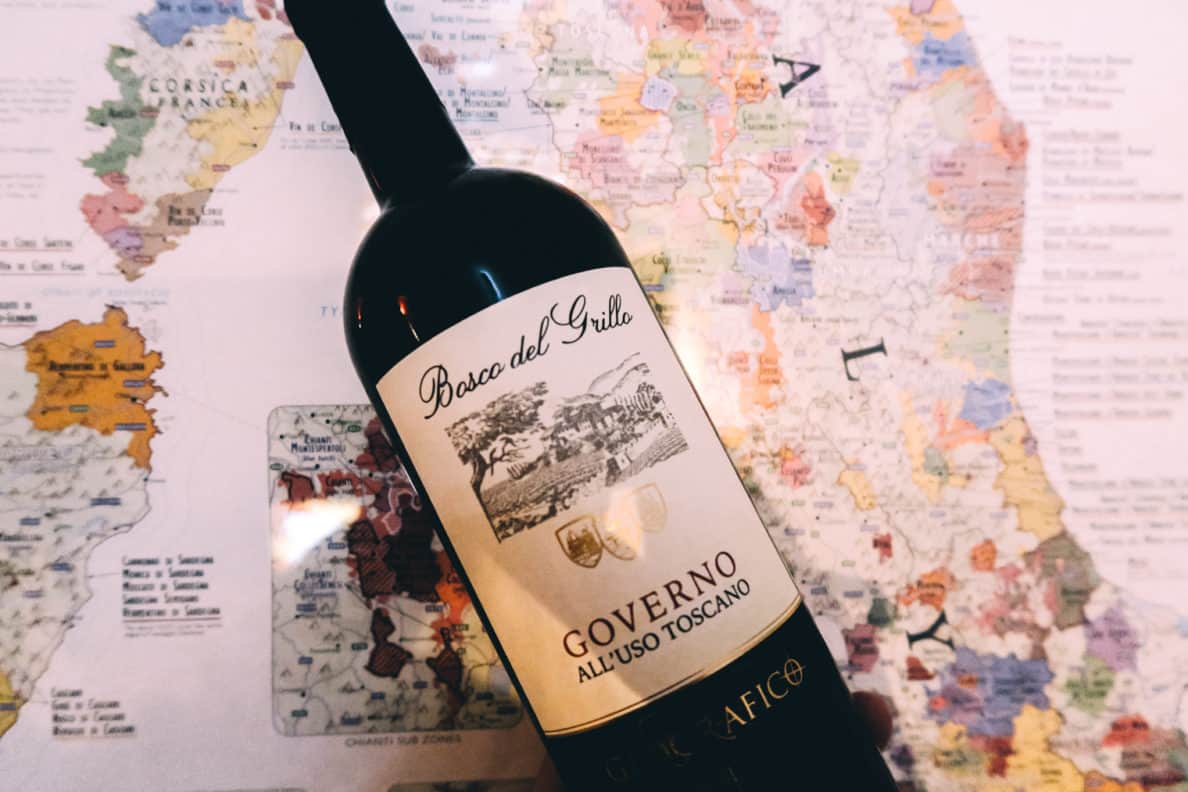
If you're a regular reader of this wine blog, you know I officially became a fan of Sangiovese last summer. So you might understand why I'm completely unstoppable when this grape is particularly concentrated. That's what the Governo method does. I'm going to explain how.
In a nutshell: Governo is the Ripasso of Tuscany. And when we talk about Ripasso, we are actually talking about Amarone, the great wine of Valpolicella in Veneto. According to VinePair , one of my fave blogs, feels like Inception . To uncover the truth, you have to delve deeper and deeper. From Ripasso to Amarone to Recioto to Valpolicella, and then back south again, because we're actually looking for Governo's story. Wow, the world of wine never ceases to amaze.
Inception in Valpolicella
It all starts in Valpolicella, the base wine, made from Corvina, Rondinella, and Molinara. I have to admit, when I was just getting into the wine world, I often chose Valpolicella whenever I saw it on the wine list. Cool name, I thought. In reality, it's not much more than that. No offense. Base wine sounds irreverent, but the wines are lightweight, a bit of a summer red, perfectly enjoyable.
Looking for something special? Then grab a Recioto from the shelf. To make this wine special, the grapes are dried for a few months after harvest. This causes the grapes to lose 25 to 40 percent of their moisture, increasing the concentration of sugars and flavors. Slow fermentation then takes place (the yeast cells have to work hard in such a sugar-rich environment). After about forty days, fermentation is stopped, leaving a sweet, highly concentrated red wine: Recioto della Valpolicella.

Dried grapes
Like all great wines born from a mistake (hello, Dom Pérignon), Amarone also came about by chance. The fermentation of the recioto wasn't stopped in time, but continued until all the sugars had fermented. This resulted in a dry red wine: Amarone. Totally unintentional, but now a huge hit.
Amarone stands for the 'Great Bitter' to distinguish it from its sweet counterpart Recioto.
That leaves us with Ripasso. It sits somewhere between the basic Valpolicella and the great Amarone. It's actually a very clever move by those Italians. Valpolicella could use a bit more energy, and Amarone, well, you can't drink a wine like that every day. In comes Ripasso. First, a Valpolicella wine is made, but then... the Amarone skins get a second life. The Valpolicella undergoes a second fermentation with these skins, because they're still packed with flavor. In short, Ripasso is a win-win wine.
Governo is Ripasso but better
Back to Governo. It's almost the same as Ripasso, but from Tuscany. This means, among other things, that Sangiovese plays the leading role in this wine. That's a big plus in itself, but there's more. In Ripasso, the Amarone grapes get a second life, but in Governo, there are no rebound grapes involved. After the harvest, a portion of the grapes are deliberately dried.
'One of the old Italian meanings of governare is “to feed.” Feeding livestock is to “govern” them. With respect to wine production, governo refers to an addition of fresh or dried grapes, their sweet juice, or a mash of the two.' - Excerpted from: Bill Nesto. 'Chianti Classico'
This method dates back to the 14th century and was intended to initiate or maintain the fermentation of Chianti wines. Due to the lack of sugar in Sangiovese, fermentation often stopped midway. As soon as fermentation began to slow, the dried grapes were added to provide the yeast cells with a new source of sugar. So, governo is essentially chaptalization for the more experienced 😉 In a nutshell, adding dried grapes does more than just add sugar (it also adds color, aroma, and flavor).
With the advent of (temperature-controlled) stainless steel tanks, this trick is no longer necessary. Winemakers now have much more control over fermentation. However, there are always winemakers who cling to old traditions. Isn't that wonderful?
Taste: Bosco del Grillo
I've been recommended several times to try Bosco del Grillo. Okay, then. Ripe, ripe, ripe fruit. Slightly sweet, not unpleasant, but pleasant – what do you expect when you're pressing raisins? Soft tannins, a hint of sour cherries, typical Italian spice. Bosco del Grillo is a winner.
I've also heard that this wine pairs well with spaghetti bolognese. It reminds me of that delicious Spaghetti al Ragù I was served in Chianti. What a treat! I'm going to try making it myself soon...
Big thanks to Pallas Wines for the bottle 🙂
For sale at Wijnhandel Peeters in Rotterdam, among others.
**
Would you also like to collaborate with Le Club des Vins? here more info.
Like what you read?
Then follow me on Instagram or Facebook and stay up-to-date on my adventures and new articles. Le Club des Vins sends out a monthly newsletter called "Wine Fun in Your Inbox." Want to join ?
Share:
What is sulfite and what does it do in wine?
Trimbach my bottle to me!