
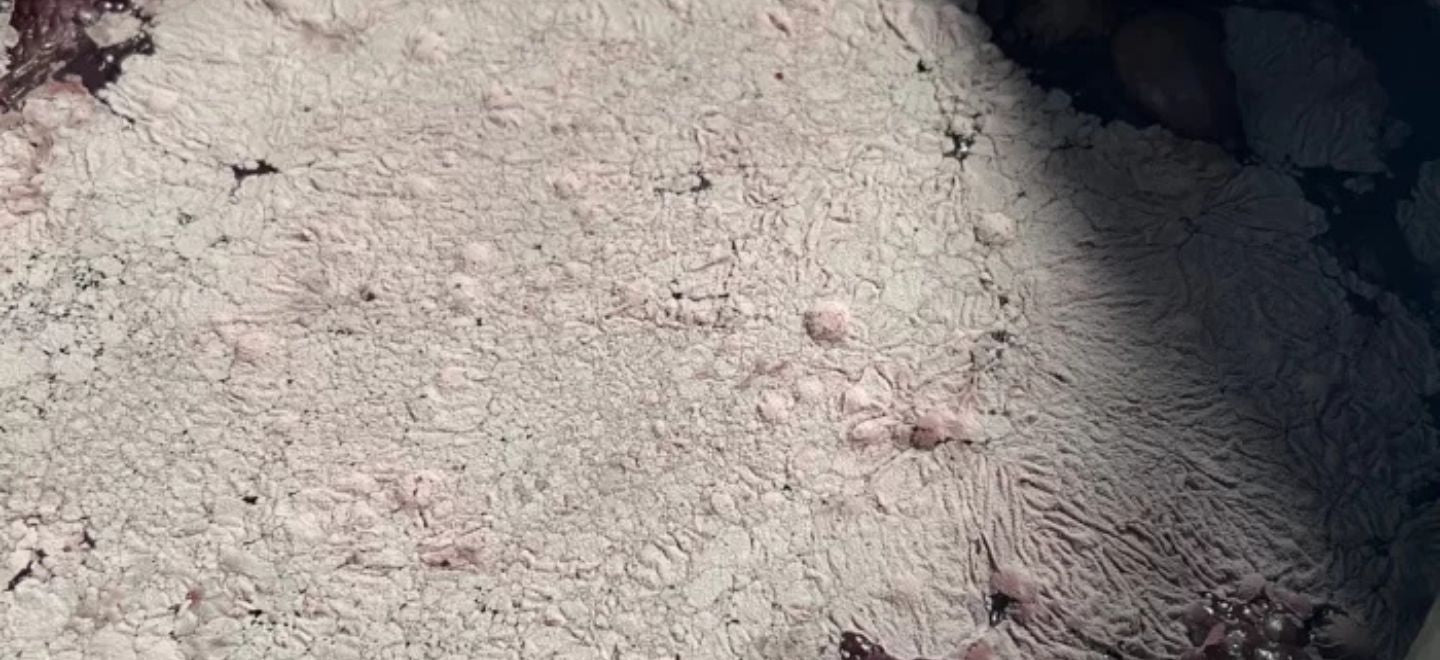
Anyone who's ever indulged in a copa de fino or a copa de manzanilla has probably heard of flor. The secret behind these sherries. But what exactly is it, and what does it do to sherry?
Flor forms on the surface of the wine, acting as a natural protective layer that prevents oxidation and preserves the wine's freshness. But how? And why does it work for sherry and not for other wines? We'll explain in this article.
What is flor?
Flor is a thin layer of yeast that develops on sherry and can reach a thickness of up to 2 cm. It is essential for making fino and manzanilla. Flor protects the wine from oxidation and ensures that it retains its light color and freshness, a contrast to more oxidized styles like oloroso.
All this happens thanks to Andalusia's unique microclimate, where the humidity and temperatures are just right for this yeast layer to flourish.
Oops, thanks
Until the late 18th century, flor was considered a wine fault – sherry was primarily a robust, brown, oxidative wine, requiring considerable fortification to preserve its aging potential. The idea that wine would deliberately age under flor was absurd. It wasn't until the early 19th century that bodegas realized that this layer of yeast not only protected the wine but also created a completely new style of wine: lighter, drier, and fresher.
Around 1820, the first manzanillas and finos began to appear, although the bodegas had no idea how or why flor developed. It was often called "the mystery of the bodega." It wasn't until the 1930s that scientists discovered that flor is part of the Saccharomyces cerevisiae family—the same yeast responsible for alcoholic fermentation.
How is sherry made?
Sherry production begins with the fermentation of the grape must. For fino and manzanilla, the finest juice is used. Nowadays, this is usually done in stainless steel tanks, although some producers still use traditional wooden barrels (such as Valdespino Inocente Fino). The result is a young wine of approximately 13.5% alcohol—known in Jerez as "mosto."
The next step is fortifying the wine with neutral grape distillate to approximately 15-15.5% alcohol. This percentage is high enough to kill harmful bacteria, but low enough for flor to survive. Without flor, there would be no fino or manzanilla. The wine, now called sobretabla , then enters the famous solera system.
How does flor stay alive?
Flor needs two things to survive: air and nutrients. That's why sherry casks are never completely filled—they remain about four-fifths full, ensuring there's enough oxygen at the top of the cask for the flor.
The second requirement for flor is the availability of sufficient nutrients. In a solera system, this is achieved by regularly adding young wine to the barrels. This ensures a constant supply of nutrients for the flor.
Flor feeds on alcohol and glycerol from the wine and draws oxygen from the air at the top of the barrel. This process also results in the production of acetaldehyde, which is responsible for the characteristic aromas of fino and manzanilla, such as green apple, almond, and a chalky note.
The terroir of the bodega
Flor thrives in the right climatic conditions, and bodegas in the Jerez region are carefully designed to accommodate this. They have high ceilings, thick walls, and good ventilation, and are situated above ground to maintain high humidity—ideally 70% or more.


But it's not just about the bodega's design; the position of the barrels within the building also plays a crucial role. Montse Molina, head winemaker at Bodegas Barbadillo, explained that the barrels on the left side of the bodega are more exposed to the warm Levante wind, which imparts bitter notes to the wine, while the right side of the building is more exposed to the cooler, salty Poniente. The barrels in the center enjoy the best balance between these influences, resulting in a well-balanced wine.
This demonstrates the refinement and complexity of the bodega's terroir, and how even the smallest details influence the wine's flavor. Take Emilio Hidalgo, for example, where the flor sometimes remains active for up to 15 years, a unique feat, as most wines would have already been transformed into amontillado by then. At Hidalgo, they manage to keep the flor alive for so long by placing the barrels in the most humid areas of the bodega.
The Flor family
Flor isn't just any yeast. There are four main yeast strains responsible for flor's magic:
- Saccharomyces cerevisiae beticus : Active in younger criaderas, especially in Sanlúcar.
- Saccharomyces cerevisiae cheresiensis : Common in older criaderas in Jerez.
- Saccharomyces cerevisiae montuliensis : Tolerates higher levels of acetaldehyde and is more common in warmer years.
- Saccharomyces cerevisiae rouxii : A lesser known, but nevertheless important player in the flor system.
These different yeasts help explain the style differences between fino and manzanilla.
The effects of Flor
Flor works magic on wine. It lowers sugar and glycerol levels, leaving the wine feeling dry and tight. It also protects the wine from oxidation, resulting in a pale color and characteristic reductive aromas. It also increases acetaldehyde levels, giving it those characteristic yeasty, chalky aromas, along with notes of nuts and (over)ripe apple.
Make sherry great again
In short, not all sherries are the same. There are so many different players in this game. The poniente wind, the type of flor, the position of the barrel in the cellar – everything plays a role. It's all in the game, and it ensures you never stop learning (and tasting).
So, if we haven't said it clearly enough yet, it's high time to revalue sherry – make sherry great again!


Share:
What type of wine drinker are you?
Overnight stay in the Champagne region