
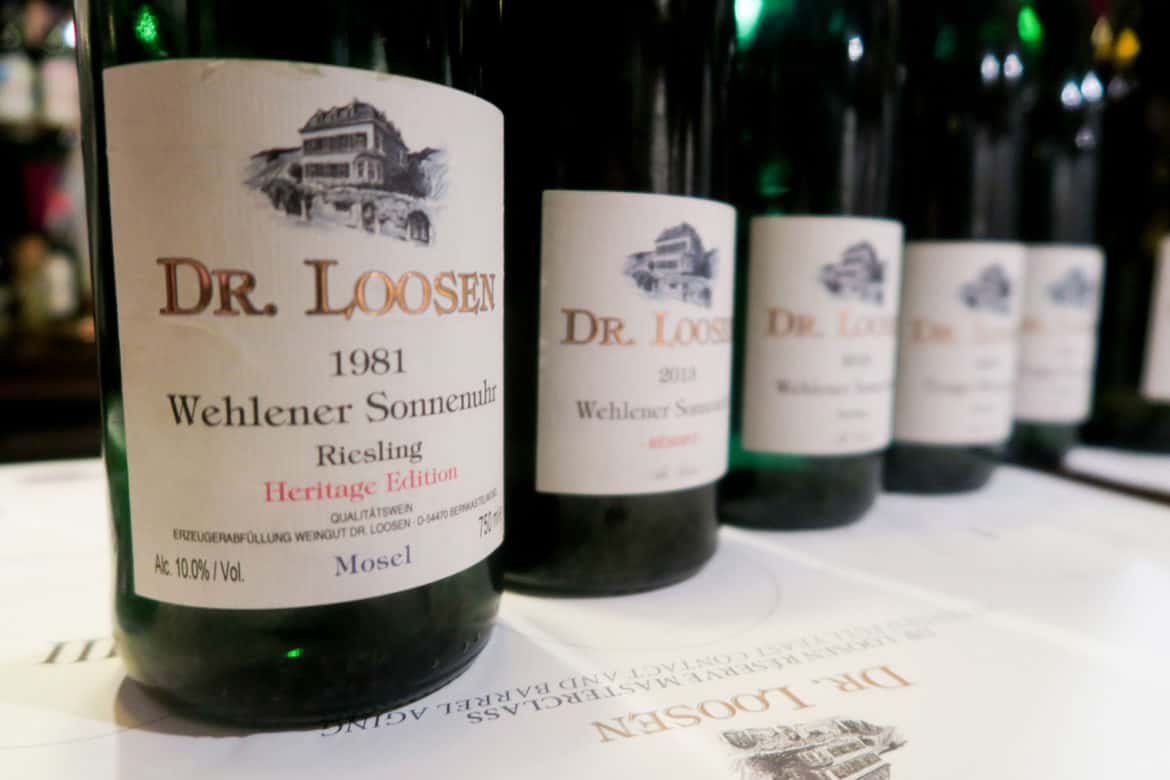
It's Friday evening and I'm ready for a Riesling masterclass from none other than Ernst Loosen – Erni to insiders – at Wijnhandel Peeters.
Surprisingly, we start with Dr. Loosen, a Riesling specialist, with a Pinot Noir sparkling wine. It's clear he's not quite used to it himself yet. It's undoubtedly good. Dr. Loosen doesn't make half-baked sparkling wine. It even ages it on its lees for five years (!), while entry-level champagnes don't age for more than 15 months. I wrote down "Biscuits, nectarine, and raspberries." Still beautiful.
Okay, the taste buds are awakened. Let the Riesling show begin.
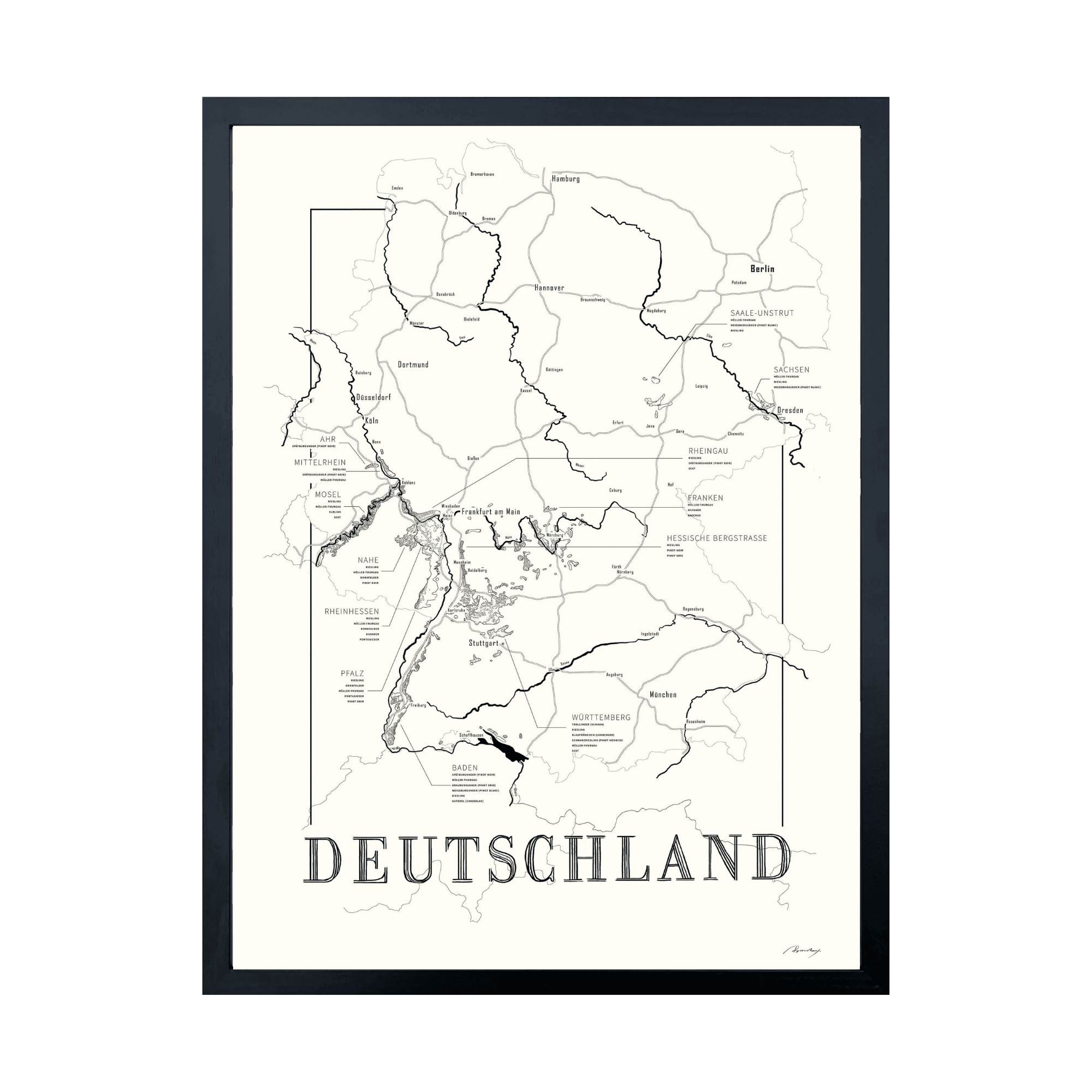
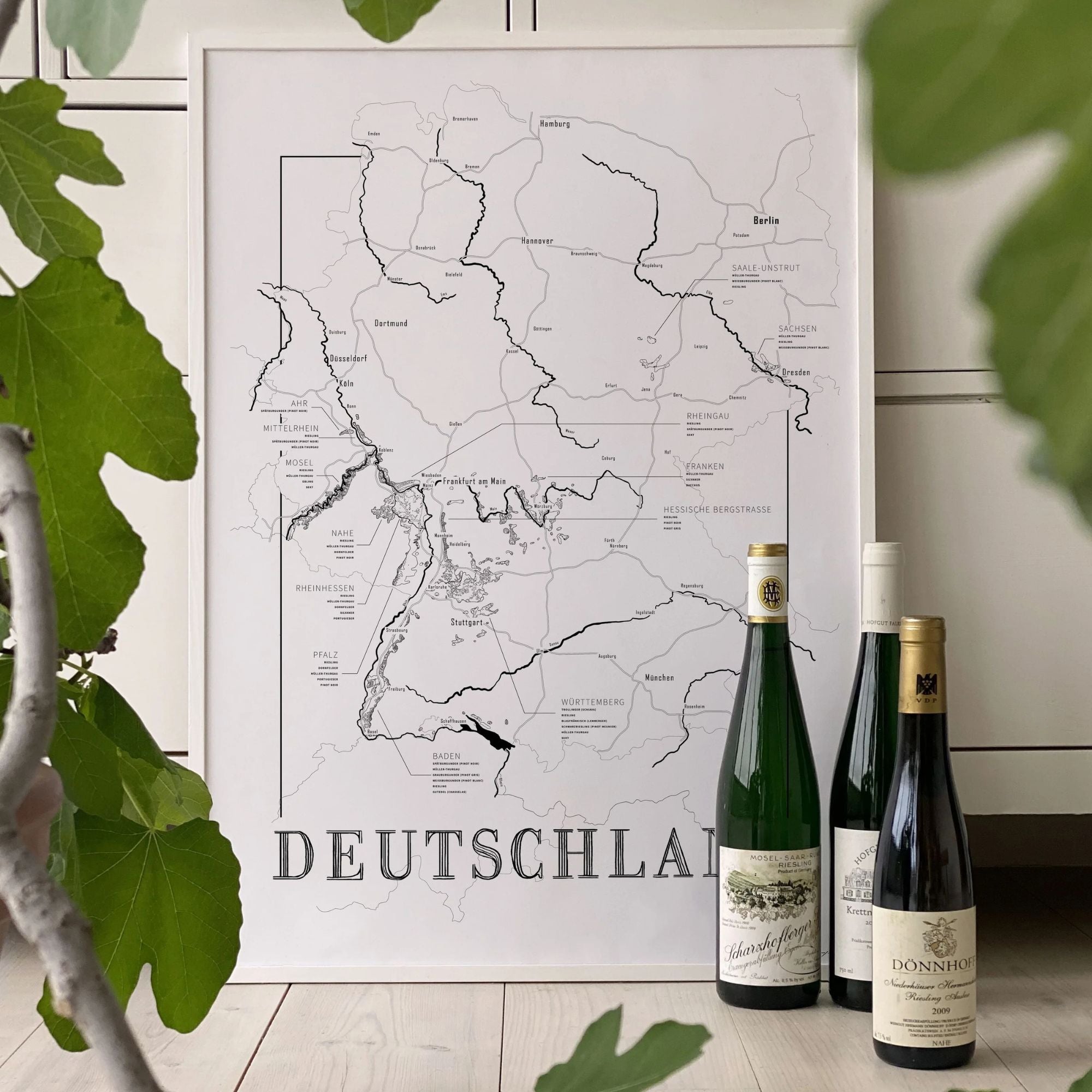
Ernst Loosen begins with a slide about the "Riesling regions of the world," where, besides Germany, we naturally see France (Alsace) and the United States (Washington and California). Now, I've been to many a tasting, and a Frenchman would never, ever do this. A winemaker from Burgundy won't even mention Bordeaux, let alone say anything positive about another country. A plus for Germany.
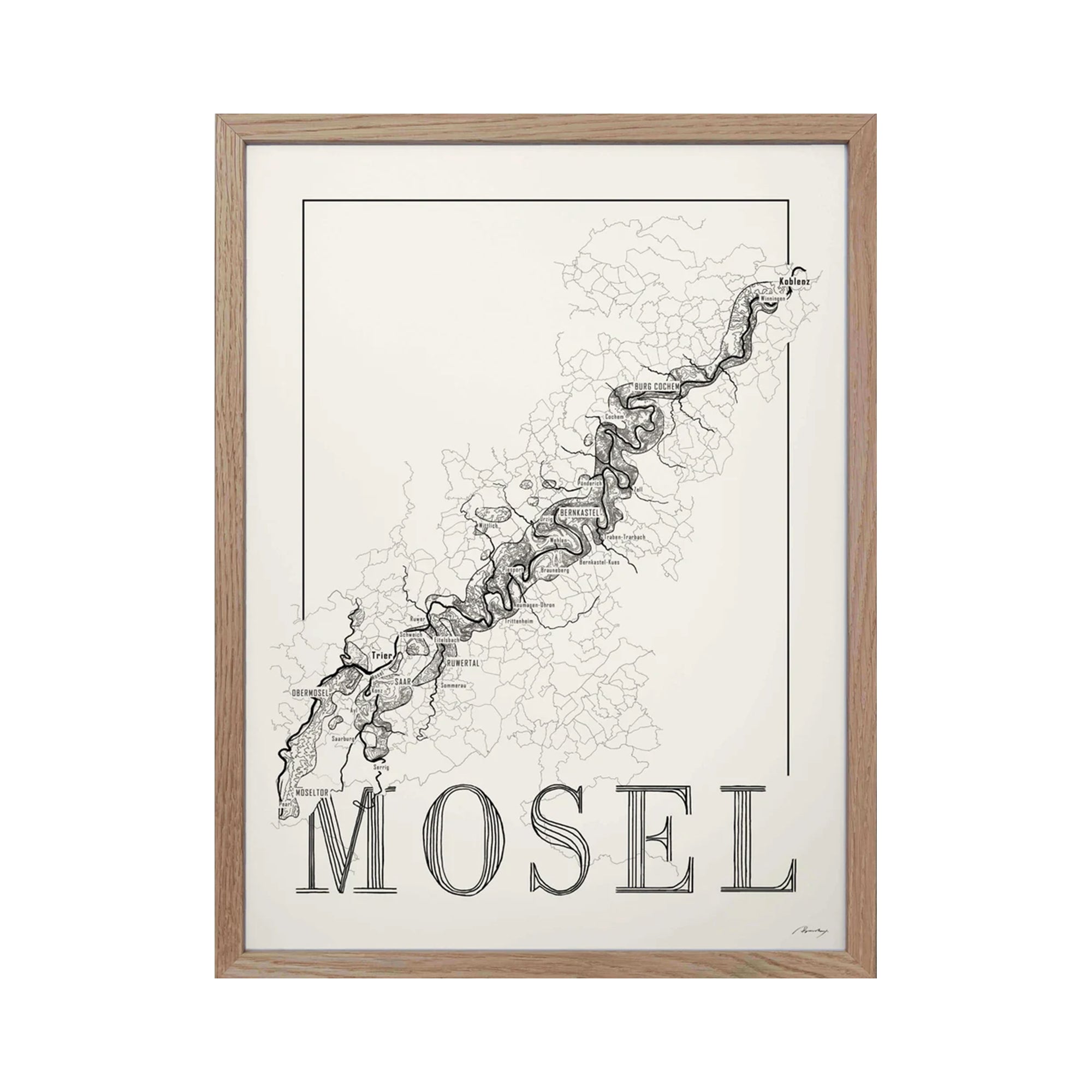
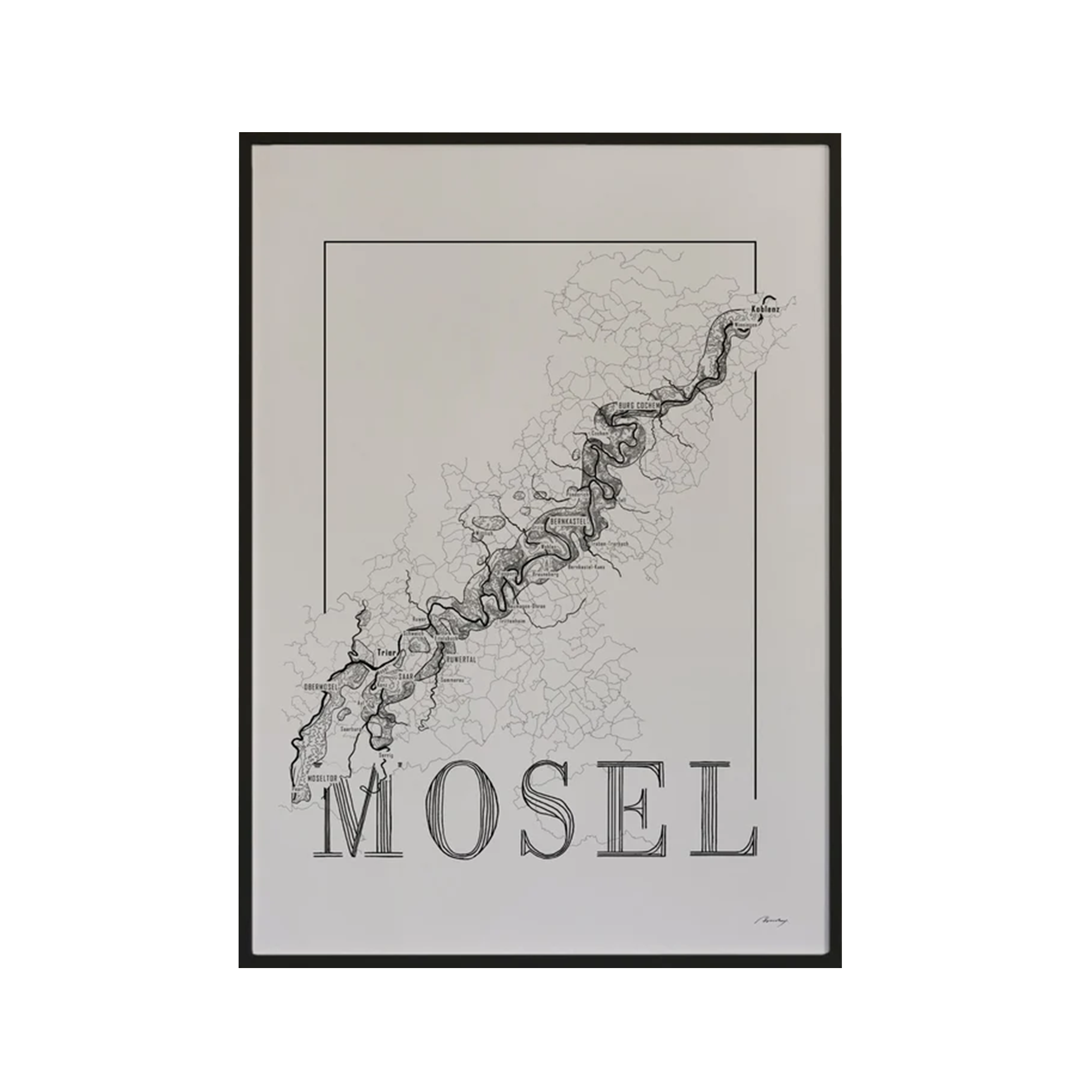
The unique microclimate of the Moselle
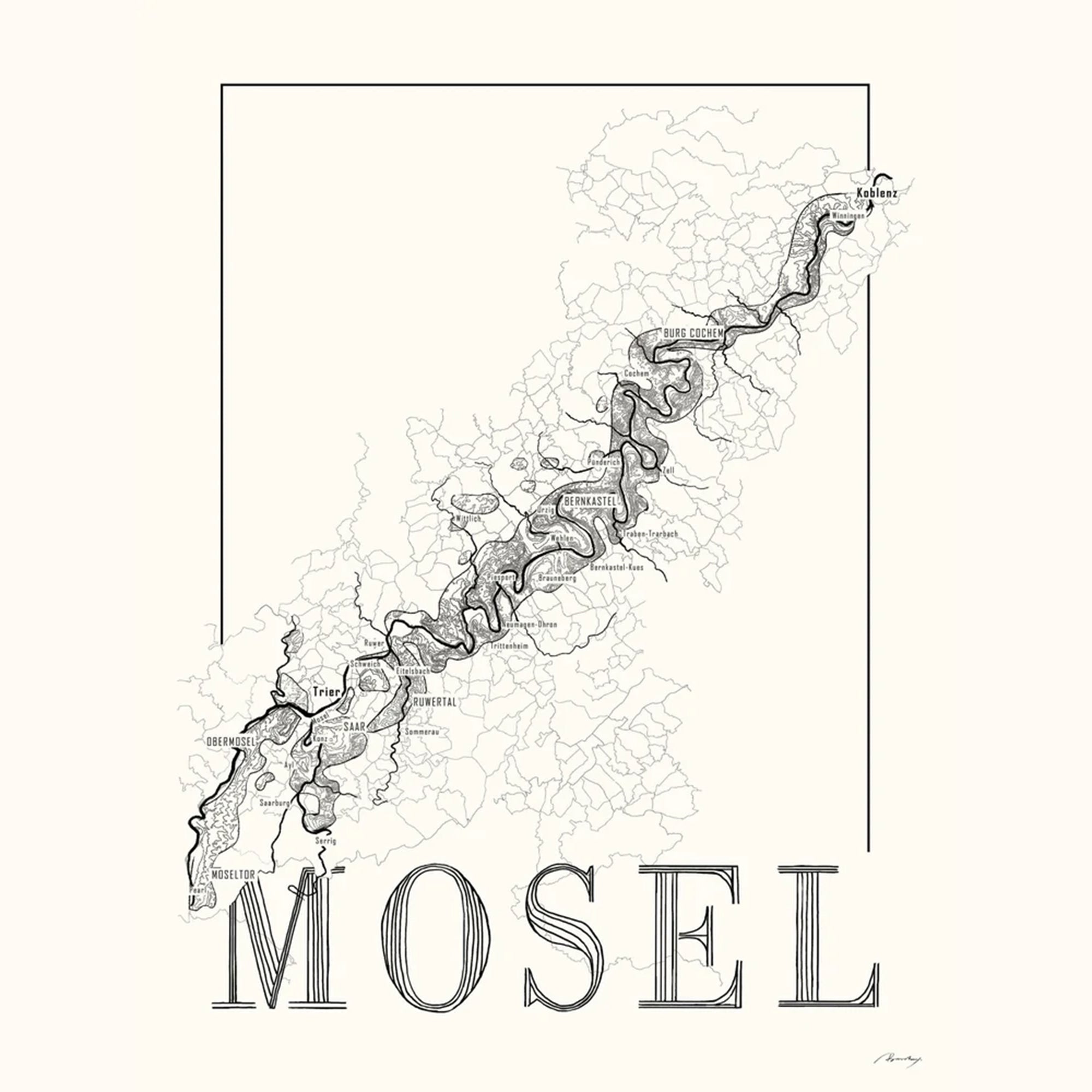
The Mosel was always the northernmost wine region in Europe. It still is, but that's without counting the vineyards of the Netherlands, or even those of Sweden. Thanks to global warming, winemaking in northern regions is also becoming possible. Not much has changed for the Mosel, except that they now have ripe fruit year after year. Something that used to be a bit of a letdown. So far, so good, but what really makes the Mosel special is, of course, the microclimate.

Without the microclimate, you wouldn't have any wine here. On good days, the sun shines from 8 a.m. to 6 p.m. Is your vineyard south-facing? Then you'll benefit most: full sun. The steeper your vineyard, the more intense the sun's rays. Ernst says you can double the intensity of the sun's rays on a 100% steep vineyard. The best vineyards are also located on waterfronts. There, the water temperature ensures mild winters, and the sun's reflection off the Mosel River, in turn, creates higher temperatures on the slopes. All these factors contribute to the success of Riesling.
Below is a photo of the Bremer Calmont, the steepest vineyard in Europe.

But there's more. Of course, the soil. As far as I know, it's slate in the Mosel. Today I learned that there are different types of slate: brown, blue, red, and black slate. Each produces its own style of Riesling. The common denominator is that slate is extremely permeable and extremely poor. So poor that phylloxera, the vineyard's greatest enemy, had no chance to thrive here. Dr. Loosen uses the term "Alte Reben"—German for "old vines"—for vines over a hundred years old.
A 1981 Riesling
We start the tasting with a 1981 Riesling. An experiment by Ernst. He discovered that about two hundred years ago, the Germans had a different winemaking method. The white wine, der edele Rheinwein, had to be aged for about 20 to 30 years in (used) oak casks. Ernst couldn't imagine that ("that'll be sherry!"), but he wanted to give it a try anyway.
No sooner said than done – in 1981. Twenty-seven years later, he bottled the wine and thought the experiment had failed: it tasted like cider at the time. He forgot about it and went back to business as usual. Until one day – by chance – he picked up a bottle from the cellar. Damn, it was the 1981 from back then. Like a Benjamin Button revitalized! Very smooth, beautiful acidity, a truly special tasting experience!

How long should Riesling mature?
After 1981, we tasted several vintages of Riesling from different vineyards, each aged for 12, 24, or even 36 months. Ernst has begun experimenting again: what is the optimal aging period for Riesling?
Ürziger Würzgarten
The first flight consists of three Rieslings from the Ürziger Würzgarten vineyard. The volcanic soil is the hallmark of this vineyard, which gives the wine a spicy character. All three Rieslings are from the 2012 vintage, but the aging period varies. The GG is aged for 12 months on the lees in large wooden vats, the GG Réserve for 24 months, and the Hommage for 36 months. Tasting these wines side by side, you'll notice the acidity softening. The sharp edges fade without the wine losing its freshness.
Wehlener Sonnesuhr
I'm not yet familiar with the specific vineyards of the Mosel, but Wehlener Sonnesuhr is proving to be one to remember. World-famous for its blue slate soil. Minerality, purity; a clean Riesling.
Erdener Prälat
The Prälat is a A bit like the Clos de Vougeot of the Mosel, but much smaller. The vineyard covers a total of 1.6 hectares and is divided among 19 owners! Ernst himself calls it a "small slice of perfection." The red slate soil, steep south-facing slopes, and proximity to the water create a fantastic microclimate here, ensuring ripe grapes year after year.
Nice video to see how harvesting works on such a steep slope.
You remember pythagoras?
After the ninth Riesling, it's time for a lesson in Pythagoras when someone asks how big a vineyard is. Remember Pythagoras? Yeah, right? That was a squared x b squared = c squared. It basically means that such a vineyard is incredibly steep (sloping), so it's actually larger than if you were to calculate it flat. Or something like that. Oh well, it was a good story.
Would you also like to attend such an epic tasting? Peeters Wine Merchant in the holes.

Share:
6 podcast episodes you can't miss
Yes, I am a Certified Sherry Educator