Think big. I want to become a Weinakademiker. On September 3, 2018, I started the WSET Diploma Course, which ultimately—if you add a thesis afterward—results in the title of Weinakademiker. In part 2, I'll talk about the courses at Geisenheim University of Applied Sciences.
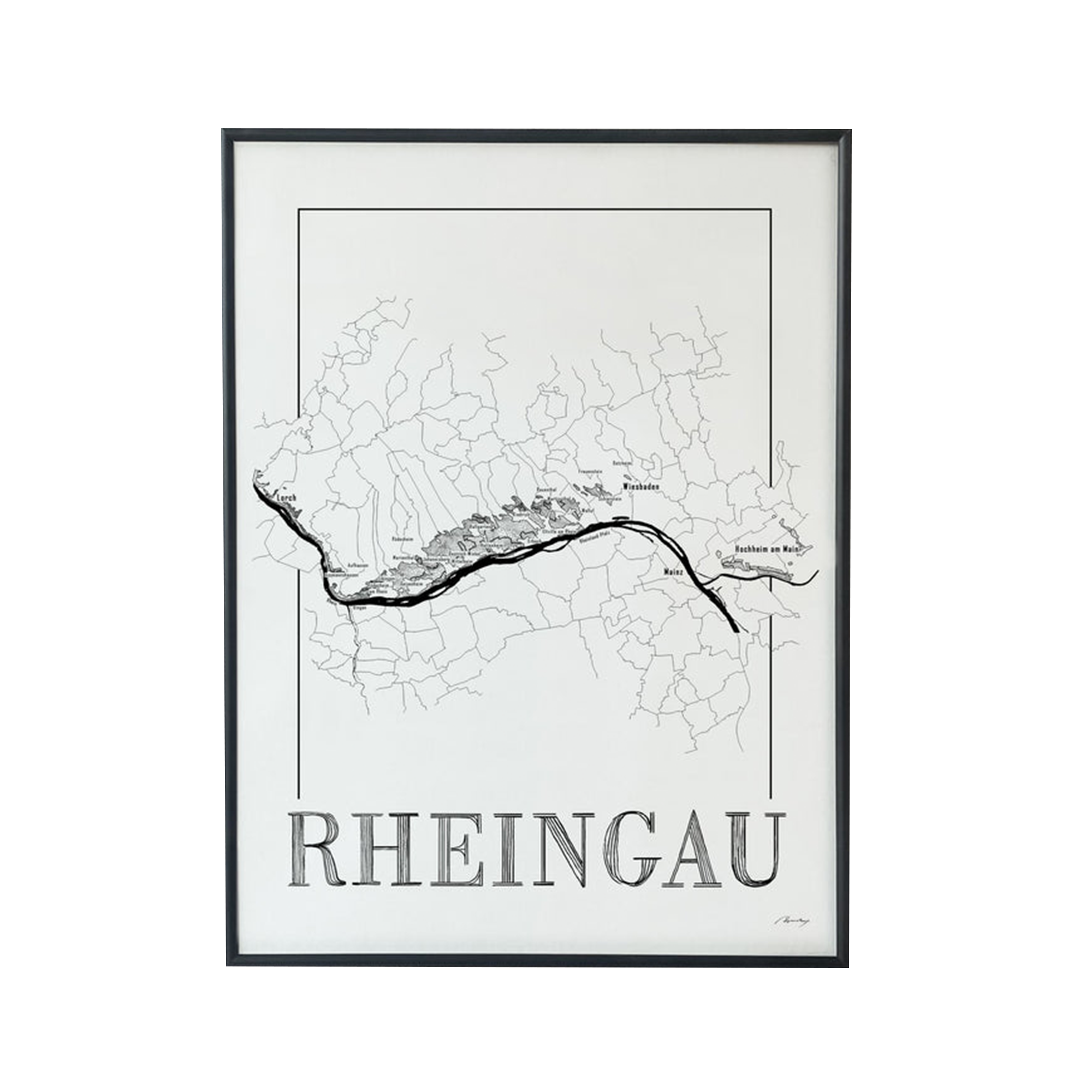
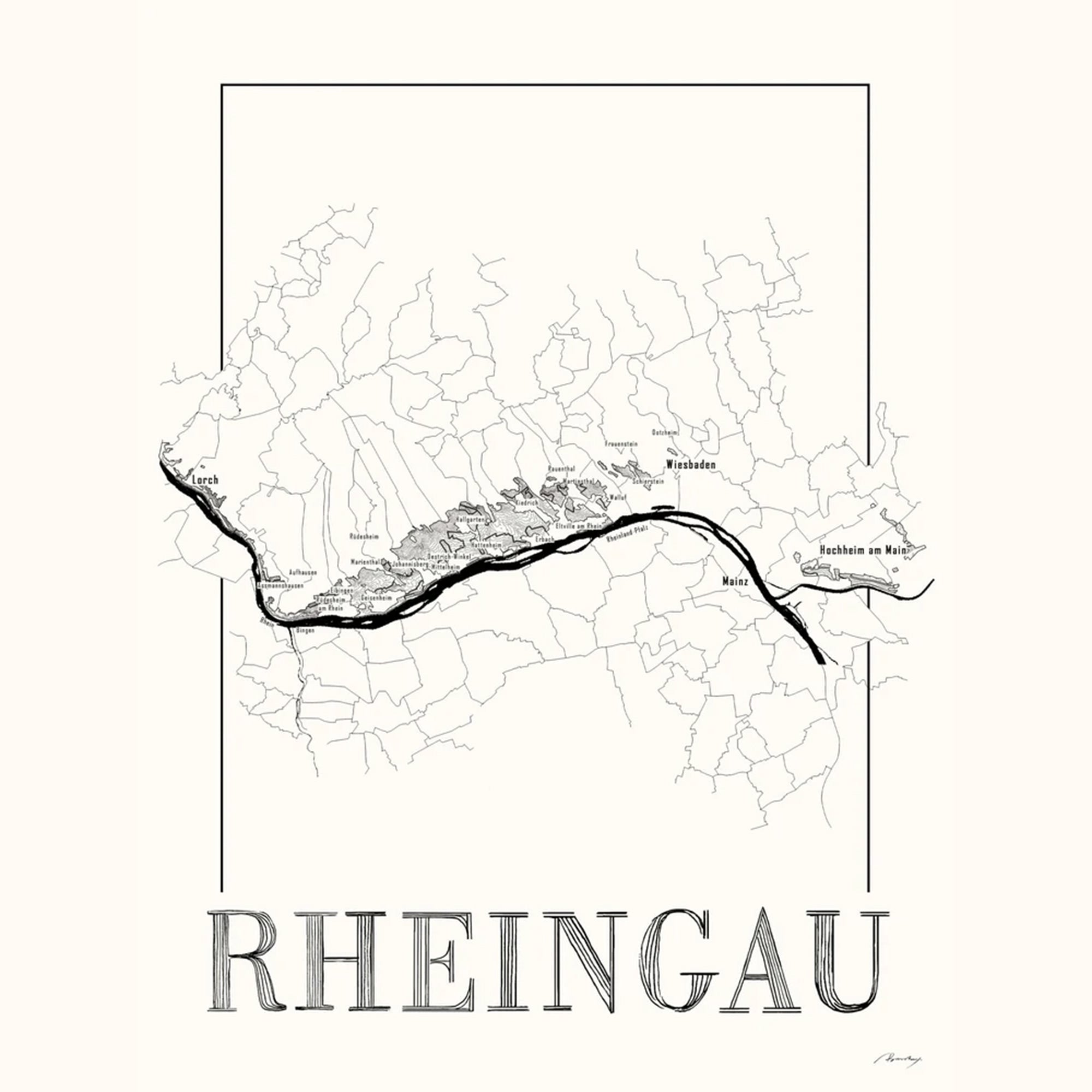
On to Geisenheim! For those who don't know, Geisenheim is a small town of almost 12,000 inhabitants nestled in the heart of the Rheingau wine region. The town boasts a wine university, which, in addition to offering a wide range of bachelor's and master's degrees in oenology (and other wine education), also conducts extensive research into new grape varieties and the future of viticulture. I'll be taking two classes there as part of the WSET Diploma Course.
My bag is packed, and just after noon, I leave for Germany. Five hours later, I arrive at my guesthouse , Cornel S , highly recommended if you're planning to explore the Rheingau.
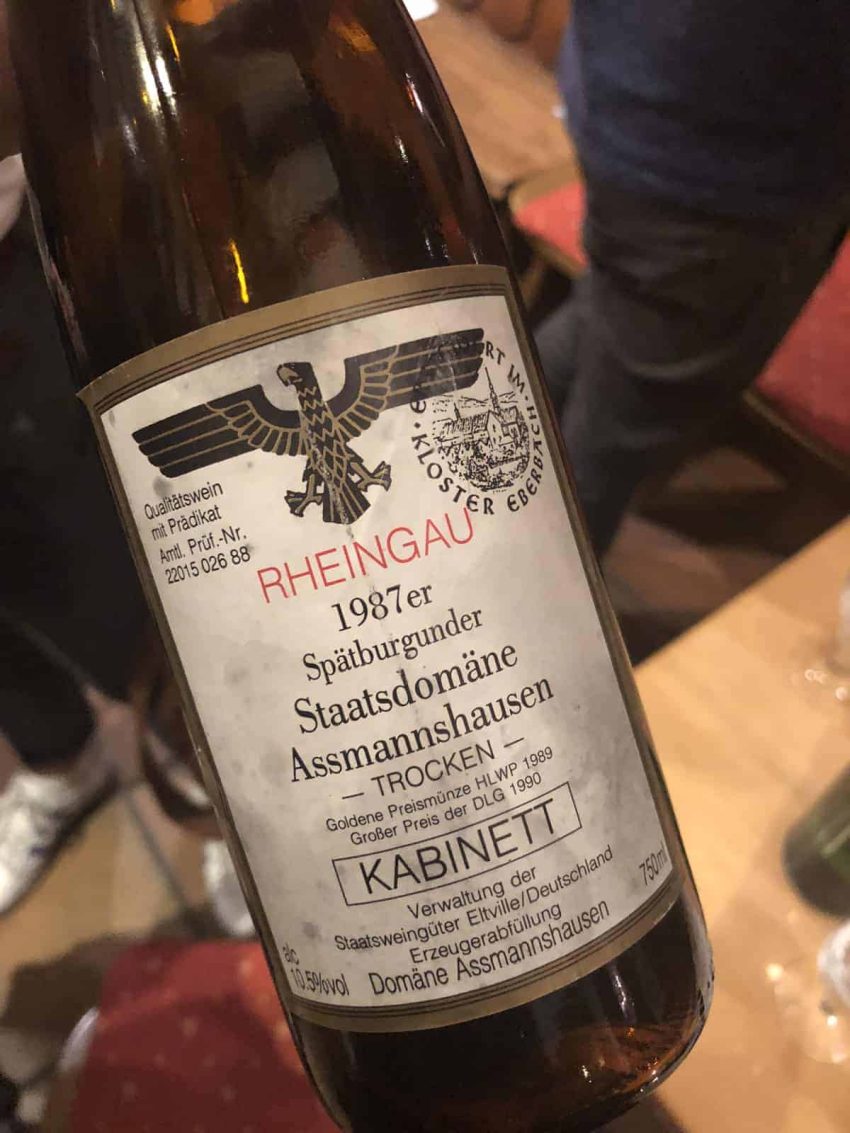
We're expected at 8:00 PM at Breuer's Rüdesheim Winery, where the atmosphere is already lively upon arrival. I can't believe my luck when, out of the corner of my eye, I see magnums and old vintages being waved around. It turns out Breuer's Rüdesheim Winery has a curiosities menu, which we're eager to play around. I'm a bit dizzy with such beautiful wines available for grabs. Luckily, a choice is made, and suddenly a 1987 Spatburgunder appears on the table. Score.
Unfortunately, I'm in the car and have to limit myself to sips. In hindsight, that was a wise decision, seeing the condition of some of the little heads the next day.

Day 1: Winegrowing
Because the next day it's time for the first lesson! And it starts, according to German Pünktlichkeit, Of course, at 9:00 a.m. sharp. Dr. Matthias Schmitt will be telling us more about viticulture and vinification over the next two days. We're reminded again that this isn't exam material, but a practical example. What we need to know for the exam is in the big book (and seven others), and that's scheduled—once again—for November 12th. AAAAAGH.
Okay, let's start with viticulture, or to use a nicer term: viticulture . At times, Schmitt delves so deeply into the subject that I wonder if I shouldn't have taken a Bachelor's degree in Biology first. It's a shame, anyway, that in high school, I preferred to look outside during this course. But I pull myself together and diligently write along. I found the story about vines—their age, planting density, clone selection, the height of the vines—extremely fascinating.
Speaking of vine height, did you know that the height of the Bordeaux vineyards is stipulated in the appellation? In the past, oxen were used to plow there. An ox would panic if it couldn't see what was happening on the sides. Therefore, the vines had to be kept relatively low so an ox could walk through them undisturbed. Isn't that beautiful?
In the afternoon, we went outside to the university vineyards. All sorts of research is being conducted here with different grape varieties and different soil types. I think there are about twenty or thirty grape varieties planted there. It was fun to taste the different grapes (I must admit, I couldn't detect much difference in flavor). It was good to see how they differ in appearance—one is darker than the other, one variety has very large leaves, another very thick ones. Everything has a purpose; a thick leaf protects against the sun, for example, while a larger leaf helps capture sunlight. This was so cool. With each new row of vines, I also got a new inspiration for an article… So, stay tuned!


Then we see a large installation next to and above the vineyards. This sprays CO2 into the air, simulating the future. What is the effect of (an increase in) CO2 on the vines and the wine?

A lesson in minerality
The day can't end without addressing the hottest topic in the wine world: minerality. What the hell is it? Well, it's a complicated story. This is evident from the numerous (scientific) studies conducted, which still fail to fully define the subject.
Ballester et al. (2013) investigated the sensory meaning of minerality. Is it a scent? Is it a flavor? How do we describe it then? Usually, it has to do with pronounced acidity and aromas like wet stone, flint, and pebbles. Is there a definition that everyone understands? Long story short: no. A panel of experts was assembled and presented with a questionnaire. This resulted in a common definition of minerality. So far, so good. They then tasted 16 Chardonnays to "test" their definition. Big fail. No consensus, everyone described the wine differently. Check here more information about this research.
Day 2: Vinification
The next day, we're back in the classroom at 9:00 AM. Today's program focuses on the vinification process. What does wine consist of? At least 70% water, but adding water during vinification is prohibited. It also contains alcohol, residual sugars, acids, yeast, phenols, aromas, and minerals. A study once revealed a staggering 1,200 aromas in a single wine. Gosh, I sometimes struggle to even name the mandatory five.
The whole process – from harvest to bottle – that you think you know by now, but each step brings new insights, with decisions the winemaker has to make, which you had never thought of yourself.
Stinking wine? Rotten egg smell? Don't panic! Just throw in a dime. Chemistry nerds among us will undoubtedly know this, but for me, it was completely new information.
After the theory section, we'll delve into the cellar. Here, Schmitt briefly discusses the different methods for making sparkling wine: methode traditionelle , methode charmat, methode ancestrale and the methode rural.
And then it's over again...
Learned a whole lot, got even more ideas for new articles, and am still a bit panicked about the exam, but at the same time really looking forward to it!
👉 View all blogs from ' The Road to Weinakademiker '

Share:
Een wijnfan in Boekarest
The Road to Weinakademiker - Part 1