Let me briefly outline the situation of this – undoubtedly epic – tasting, although the word 'tasting' is not enough, it is a Fine Wine Experience . A big yes, that's definitely what it was. It was raining that evening. Really hard. I saw no other option than to put on my bright blue raincoat. While hipsters buy a Raincoat especially for this occasion, I once found a so-called sporty one at Bever. So, in that capacity, I popped into Wijnhandel Peeters. Hi!
The marketing manager of Moet & Chandon, the champagne house of which Veuve Clicquot is part, understood it better: he arrived in a yellow Veuve Jaguar . It also fits better with tonight's lineup. There are only vintages on the menu. My heart is a little jump upon seeing the tasting list. We'll kick things off with a 2004.
But first, a bit of background information about Veuve Clicquot.

Who is Veuve?
If there's a Champagne house with a good story, it's Veuve Clicquot. It all began in 1772, when Philippe Clicquot-Muiron founded what would later become the Veuve Clicquot of today. Can you imagine? That's Almost 250 years ago . There were no cars, cell phones, or feminists, but there was Champagne. Although it wasn't quite the Champagne of today...
The bubbles arose completely by accident back then. It was so cold in the cellars that it stopped fermentation (prematurely). No one noticed, and the bottles were simply bottled. In the spring, when it got warmer, fermentation continued happily in the bottle...
Just to refresh your memory: alcoholic fermentation converts the sugars in the grapes into alcohol and a little carbon dioxide. Where does that carbon dioxide go once the wine is already in the bottle? With a bit of bad luck, the bottle exploded. The remaining bottles, therefore, had bubbles in the wine. The French found this absolutely appalling and did everything they could to get rid of the bubbles. No, Champagne wasn't Champagne yet. It was the British who made the Champagne growers think twice. They thought those bubbles were fantastic.
La Grande Dame de la Champagne
Back to Veuve. Veuve means "widow" in French. It's like this. The company, which besides wine also dealt in wool and banking, had been taken over by Philippe's son, Francois Clicquot. The good man married Barbe-Nicole Ponsardin in 1798 and died six years later. Barbe took over, making her the first woman to head a Champagne house. From then on, she focused 100% on Champagne and was the founder of the Méthode Traditionelle. It seems that 1811 comet vintage Veuve Clicquot, the first true Champagne, was made thanks to Mrs. Clicquot's knowledge and expertise. The "pupitre," a wooden rack for storing the wine, is also likely her creation.
Now you understand why they La Grande Dame of Champagne It's mentioned, right? Who runs the world? Veuve! Clicquot!
TASTING NOTES
Veuve Clicquot 2004
Regular brut is fine, sure, but this is fantastic. It leaves you speechless. It's the vintages that make Champagne Champagne. The aged character, toast, hazelnuts, brioche, flowers, and apple. Those aromas make me so happy. This is Champagne.
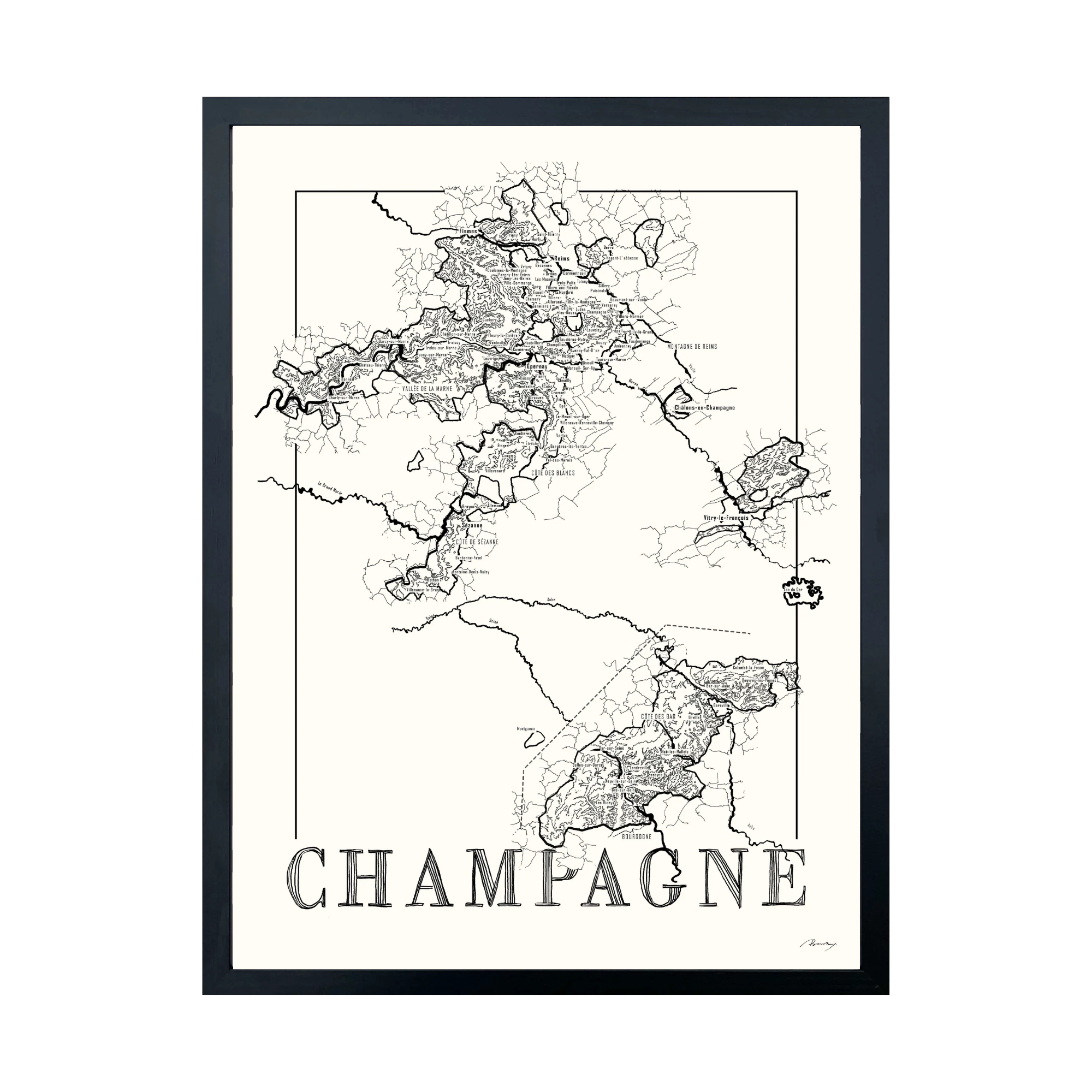
It's made from the three Champagne grape varieties: Pinot Noir, Chardonnay, and Pinot Meunier. Veuve Clicquot is a so-called "Pinot Noir" house, so there's almost always a little more Pinot Noir than Chardonnay in the blend. Some houses do the opposite and use more Chardonnay. The grapes for the 2004 Veuve Clicquot come from Premier and Grand Cru vineyards.
Veuve Clicquot La Grande Dame 2006
Let's take it a step further. La Grande Dame is Veuve Clicquot's prestige cuvée. It's a blend of eight Grand Cru vineyards, consisting of Chardonnay and Pinot Noir (there are no Grand Crus with Pinot Meunier). It's only made in good vintages. My tasting notes reveal notes of roses, toasted toast, candied fruit, ginger, and nougat.

Veuve Clicquot Rosé Vintage 2004
With these vintages, I always gravitate towards pastries. Where you normally smell the strawberry, like one you've just harvested, with vintages, you gravitate towards pastries. Not that strawberry tart from the Appie, but one of those fancy little tarts from the patisserie. Peach, orange, and rose also pop up.
Champagne is made up of 60% Pinot Noir, 8% Pinot Meunier, and 30% Chardonnay. The grapes are sourced from Grand Cru and Premier Cru vineyards.
Veuve Clicquot La Grande Dame Rosé 2006
Very different from the 2004 rosé. Understandably, since the only common denominator is that they are both rosés. Furthermore, the vintage, composition, and provenance are different. Just like the white La Grande Dame, the grapes come exclusively from the Grand Cru vineyard. The Champagne is made up of 53% Pinot Noir and 47% Chardonnay.

Different, then. The nose reveals yeasty aromas. Hazelnuts, a touch of salt, flowers, but later, fruit also emerges. The wine develops increasingly red fruit notes the longer it sits in the glass. Strawberries, orange and grapefruit, and redcurrants. Copper color. We both conclude that this must be fantastic with autumn mushrooms.
Veuve Clicquot Cave Private 1990
This was a banner year in Champagne, but one that was also very stressful due to the devastating frost. We count ourselves lucky to be able to taste it again. The Champagne is 27 years old. It has spent much of its life in the Veuve Clicquot cellars. The year on the bottle refers to the harvest year of the grapes, but we know that it will, of course, take a while before the Champagne is bottled and ready (if not, read on). this article (Just a quick recap). In this case, it was March 2011. This is indicated by the "dégorgement date" and is printed on the bottle.
The fresh fruit gives way to candied fruit and chutney-like aromas. I hear orange chutney wafting past. Dried apricot, brioche, and toast. Nutty. Because of these complex aromas, this champagne is best served in a Pinot Noir glass. I'm surprised the mousse is still so vibrant. Wow.
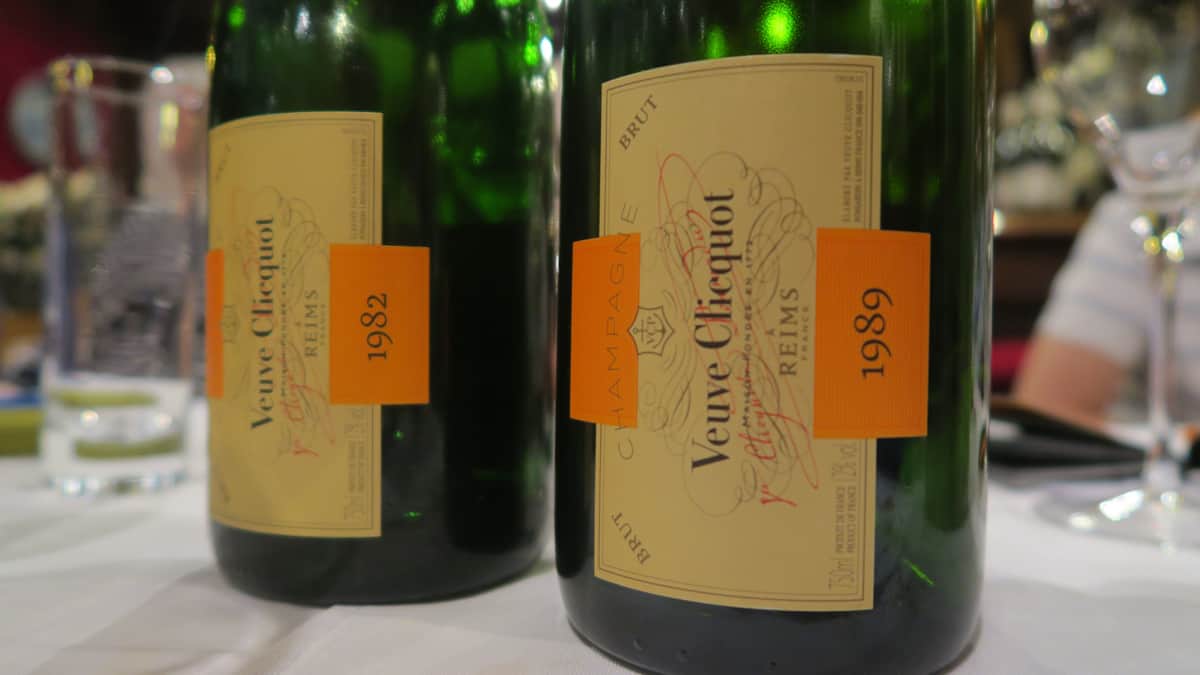
Veuve Clicquot Cave Private 1989
The Cave Privée is also served in a Pinot Noir glass to allow the aromas to develop. The champagne is made of 66% Pinot Noir and 34% Chardonnay. It begins with a powerful aroma of toast and progresses to brioche, baked cookies, cedar, cinnamon, speculoos, and ginger. It also reminds me a bit of the box of cigars I received for dessert at In Floris' Kitchen .

Veuve Clicquot Cave Private 1982
We conclude with the oldest of the bunch: 35-Year-Old Champagne, bottled in June 2010. The blend is the same as that of 1989. The aroma of eau de vie stands out, complemented by candied orange peel, dried apricot, apple, and peach. Another lovely discovery: the aroma of cookie dough and salted caramel. Close your eyes and savor!
Only 3,500 bottles were made, and we're popping bottle number 223. You'll find the number on the neck of the bottle. Cheers!

Peeters Wine Merchant
I've previously written about the Fine Wine Experiences featuring Bollinger and Marsala . Want to experience an epic tasting? Check the schedule. Peeters Wine Merchant for more information.
You will find Wijnhandel Peeters at Vasteland 56.
Share:
The Judgment of Paris
Wine and food: I cook, therefore I am.