
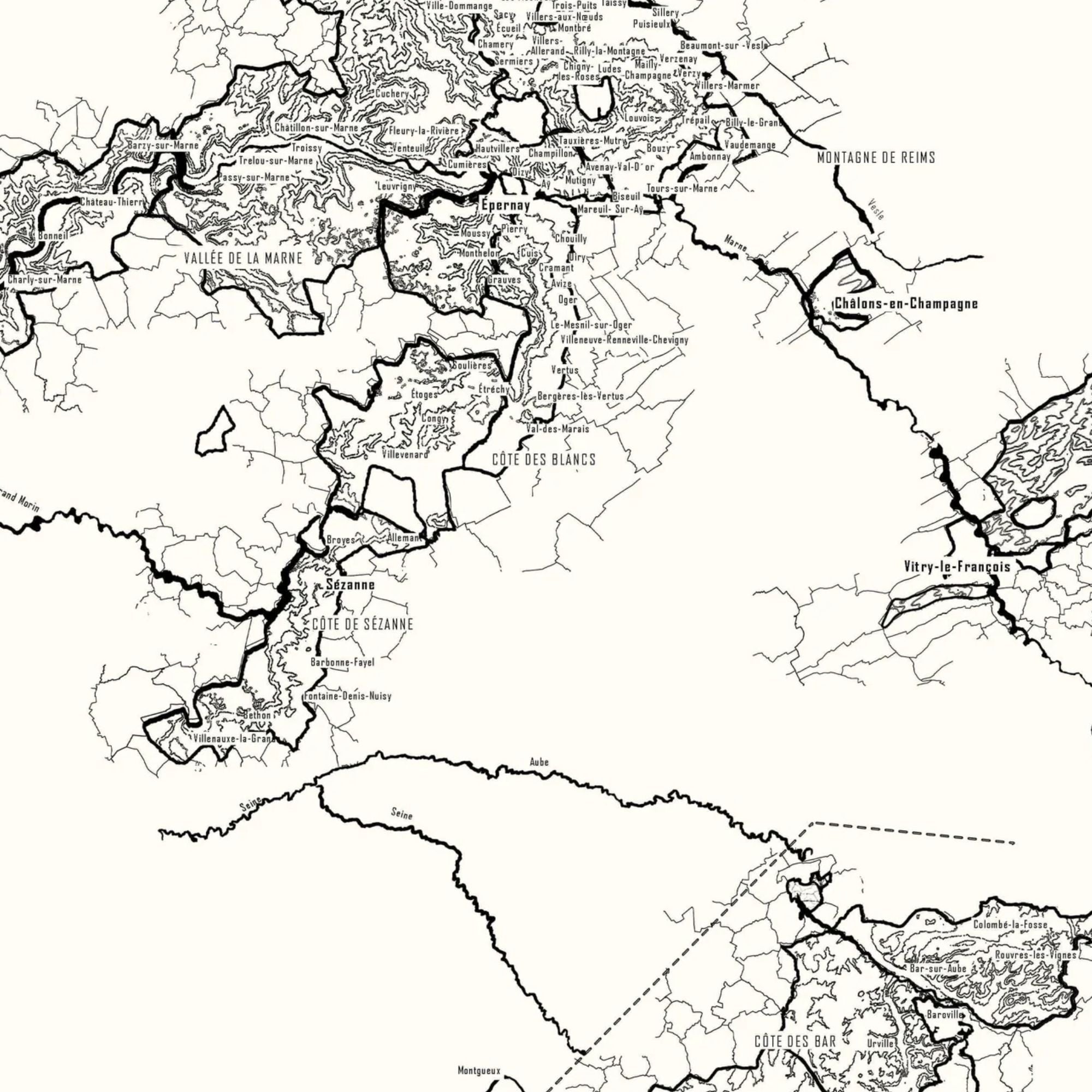
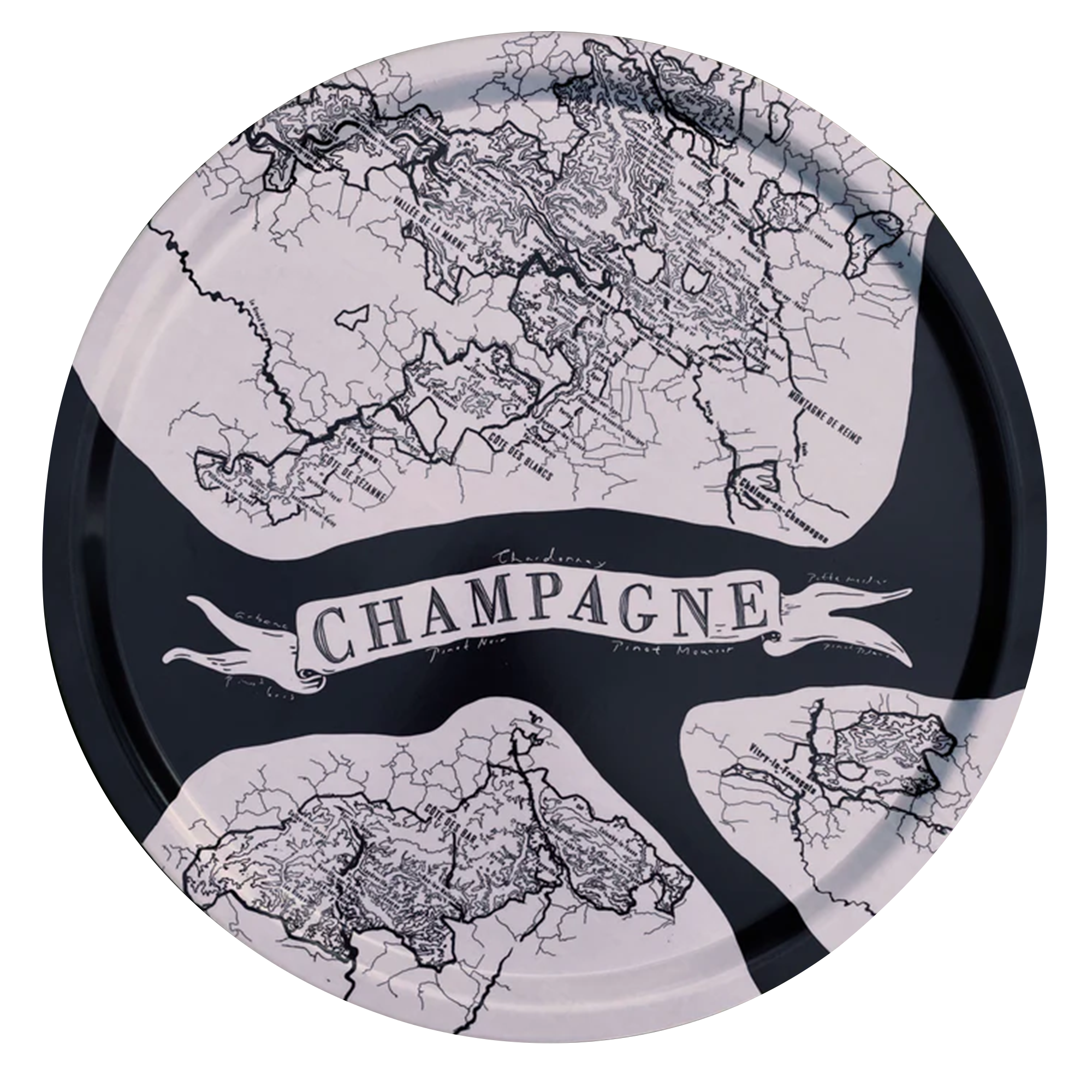
What is crémant ? Champagne, the queen of bubbles, we all know it. But we also all know you can't drink champagne all the time. Unless you live in a Bitcoin bubble. In that case, I'd crack open a nice vintage every day.
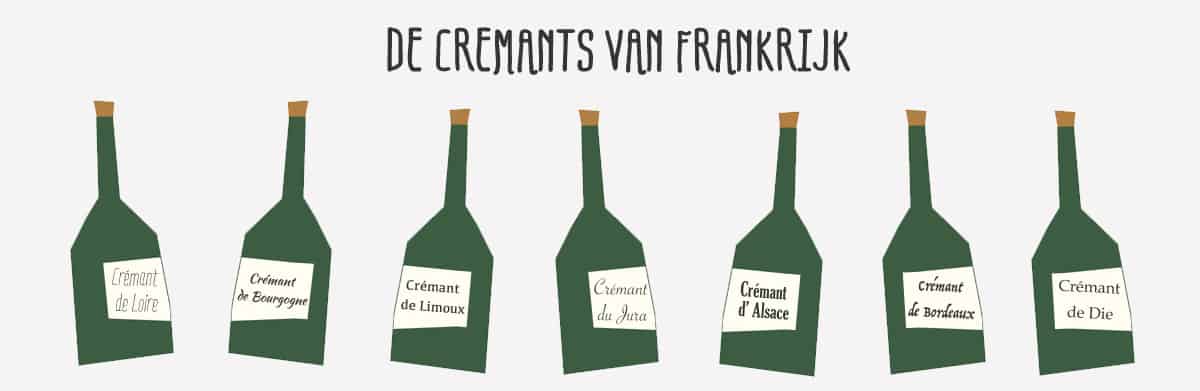
If that's not the case, you might want to look beyond Champagne. Plenty of sparkling wine is produced in France outside this region as well. Of course, it can't be labeled "Champagne" on the bottle. The French coined the term "crémant" for this. France now has eight crémants, each originating from a specific region and made from local grape varieties. the same way as Champagne is made!
What is crémant and where can you find it?
When making crémant or champagne, a cool climate is essential. Warm temperatures cause the grapes to ripen far too quickly and therefore contain higher sugar levels. A cool climate, on the other hand, creates the perfect balance between ripeness and crisp acidity. This is precisely what we find so appealing about sparkling wine.
These regions each produce crémants in their own style:
- Crémant de Bourgogne
- Crémant de Loire
- Crémant d'Alsace
- Crémant de Limoux
- Crémant de Savoie
- Crémant du Jura
- Crémant de Die
- Crémant de Bordeaux

The observant viewer will notice that Crémant de Savoie is (still) missing. Read below to find out why.
Own style?
Although Crémant is made using the same method as Champagne, the grape varieties used aren't always the same. Instead, each region uses its own local grapes. In the case of Burgundy, these happen to be the same as Champagne's—Chardonnay and Pinot Noir. But in Alsace, they're usually Auxerrois and Pinot Blanc.
Crémant de Bourgogne
Crémant de Bourgogne comes primarily from the Côte Chalonnaise region. It's usually made from Chardonnay and Pinot Noir, as these are also the grapes that make Burgundy so great. It's located further south than Champagne, so it's a bit warmer. You'll taste that in your sparkling wine: slightly riper fruit notes than Champagne. Look for a vintage, and the fun can begin.
Don't expect any fireworks, folks . Burgundy is known for its great Chardonnays and Pinot Noirs. The best fruit is always used for these wines.
Crémant de Loire
Plenty of it around Vouvray. Here, Chenin Blanc takes center stage, with Chardonnay occasionally playing a supporting role. Beautiful, indeed. Chenin Blanc is one of the most underrated grapes, and completely unfairly so. Its wines are often simultaneously fresh and full-bodied, and they also age wonderfully. The bubbles reveal aromas of flowers, peach, and apple. Perfectly enjoyable.
Crémant d'Alsace
Most Crémant d'Alsace is made from Pinot Blanc, although Pinot Gris, Auxerrois, Riesling, and even Chardonnay are also permitted. Rosé is only permitted using Pinot Noir and is therefore never a blend.
The law has even more rules here. To guarantee quality, the plots intended for crémant must be identified as early as March, so that the vines can be maintained for that purpose. So, the idea is not to just "make a crémant" when the weather is unfavorable. Interesting.
Crémant de Limoux
Limoux is found in the Languedoc-Roussillon region of southern France. Crémant de Limoux must be made from at least 50% Chardonnay or Chenin Blanc. It is known for its ability to rival champagne. This may be due to the soil, which consists of a combination of calcareous loam and a gravel layer, but the relatively cool climate thanks to the Atlantic Ocean also plays a role.
Limoux actually predates Champagne in the production of sparkling wine. In 1531, the first Blanquette de Limoux was made using the so-called Méthode ancestrale . Today, Blanquette de Limoux is also made using the traditional method. The method is always indicated on the bottle.
Crémant du Jura
The Jura is a bit of a neglected child in France. Nobody really knows it, yet it produces some superb wines. One in four is sparkling. Made from at least 70% Chardonnay and can be supplemented with the local Savagnin. The rosé must be at least 50% a blend of the three red grapes: Pinot Noir, Poulsard, and Trousseau. The crémants must age for at least 12 months after the second fermentation, but many producers extend this to 18 months or longer. This creates top-notch sparkling wines with notes of brioche and toast, beautifully balanced with the fresh fruity notes.
Crémant de Die
The town of Die is, in my opinion, better known for its "Clairette de Die," a sweet sparkling wine made from the Muscat grape (and a drop of clairette). Crémant de Die, on the other hand, is the southern French answer to Champagne. The wine must be at least 55% clairette and may be supplemented with aligoté and muscat. Generally, these are sparkling wines with aromatic ( muscat ), fresh ( aligoté ), and spicy ( clairette ) notes. Often softer than Champagne, because it's made further south.
Crémant de Bordeaux
Yes, even Bordeaux makes bubbles. They can be made from the same grape varieties that are designated for AOC Bordeaux, which means three white and six blue. White grape varieties are usually used: Sauvignon Blanc, Sémillion, and Muscadelle. Combine these three and you almost guarantee aromatic and vibrant wines. Cabernet Franc is often used for rosé.
I'm very curious about the crémant from bad boy Thunevin .
Crémant de Savoie
The newest member of the family: Crémant de Savoie. It's only been legal to produce Crémant de Savoie since 2015. Sparkling wines aren't new to Savoie; on the contrary, they've been producing bubbly wines for years, sold under the name Vin de Savoie. Well, now they're also allowed to be sold under the name Crémant de Savoie, which will undoubtedly boost sales figures.
Unfortunately I have never tasted a crémant from Savoie, but I am happy to share the wine that received 5 stars in Perswijn : Domaine Jean-François Quénard, Crémant de Savoie Brut Zéro 'Entre Amis'. Unfortunately, you have to drive to Savoie to get it…
Available in the Netherlands
Not all crémants are readily available in the Netherlands. This is partly because we still have a rather peculiar tax system here. Sparkling wine is taxed more heavily. The idea is that if you can afford Champagne, you can probably afford to pay extra taxes. OMG. A relatively cheap cava or crémant is simply made expensive by the state. And that ruins your party. It's not a win-win situation, Netherlands, it's a lose-lose situation!
As of January 1, 2017, this special tax on sparkling wines was abolished. Hooray! More information can be found here .
What you can do is simply drive to France, fill up your car, and plan your party! You're allowed a total of 90 liters of wine per person, including 60 liters of sparkling wine. We do recommend traveling with a larger car.
Like what you read? Then follow me on Instagram or Facebook and stay up-to-date on my adventures and new articles. Le Club des Vins sends out a monthly newsletter called "Wine Fun in Your Inbox." Want to join ?




Share:
A look inside Henri Giraud Champagne
Marsala: more than a cooking wine