
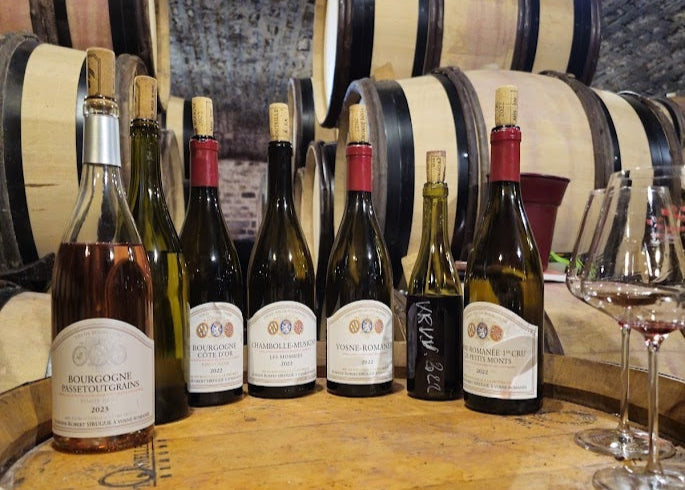
Last summer, Albert and I visited the family estate Domaine Robert Sirugue in Vosne-Romanée, Burgundy. This otherwise rather dull village produces some of the most sought-after and expensive red wines in the world. But why are these wines so incredibly expensive? And are they really worth the money? Time for a deeper look!
Vosne-Romanée
Vosne-Romanée is a village in the Côte de Nuits region of Burgundy. This is the northernmost part of the Côte d'Or and the prime location for Pinot Noir. It's home to most of Burgundy's Grand Crus, all but one of which produces only red wine. Although small, Vosne-Romanée's municipal boundaries contain numerous renowned Premier and Grand Cru vineyards, planted exclusively with Pinot Noir, cultivated by some of the world's finest and most renowned wine estates.
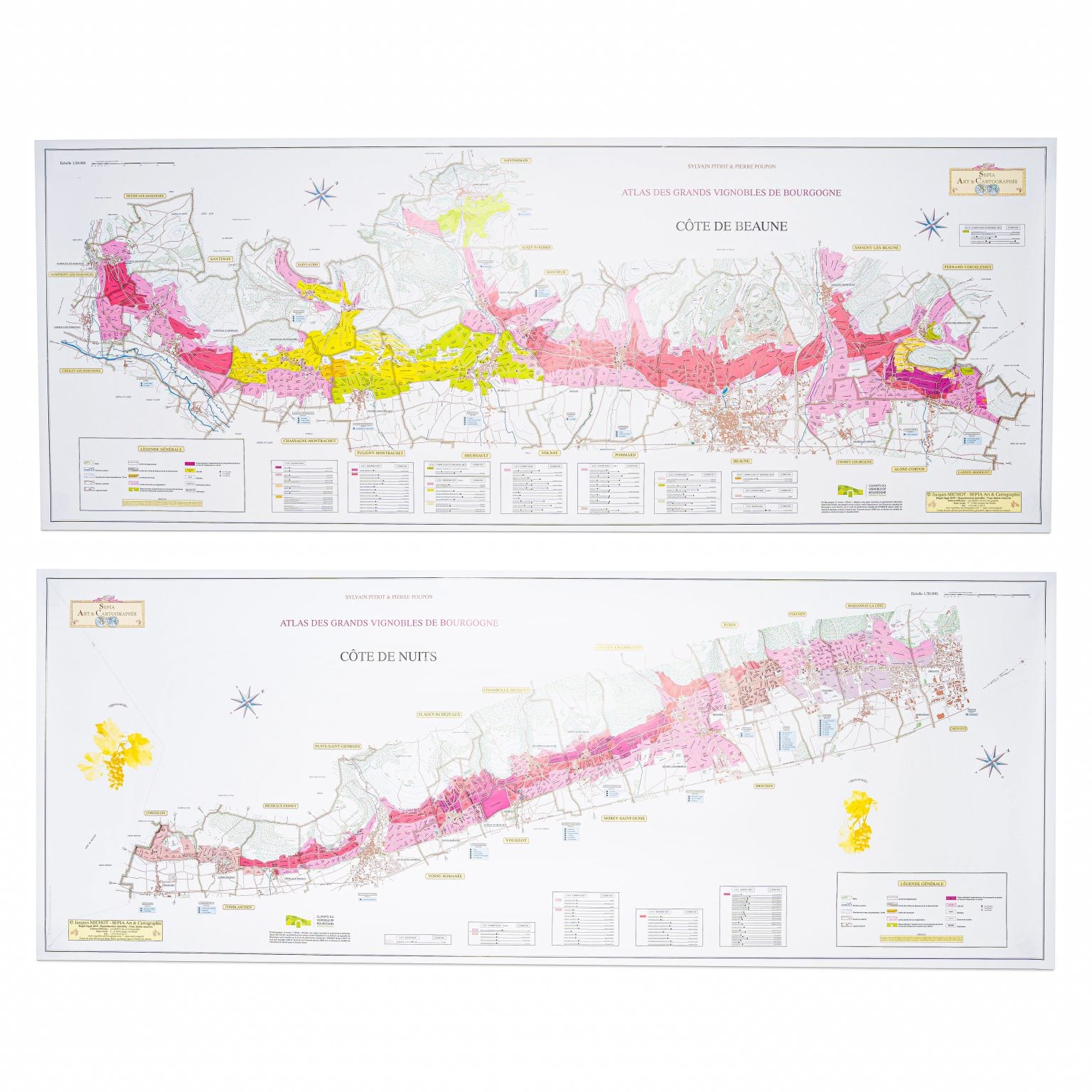
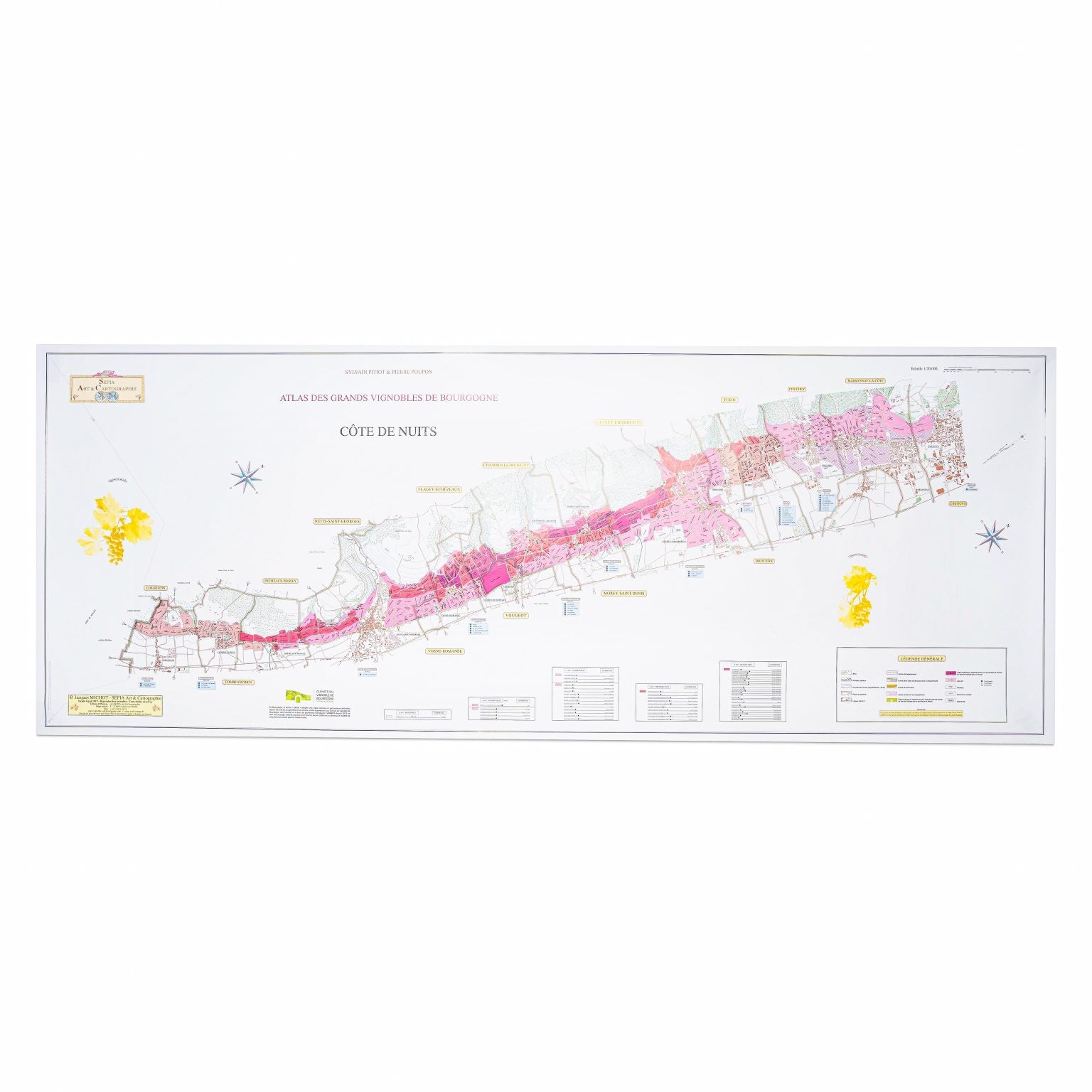
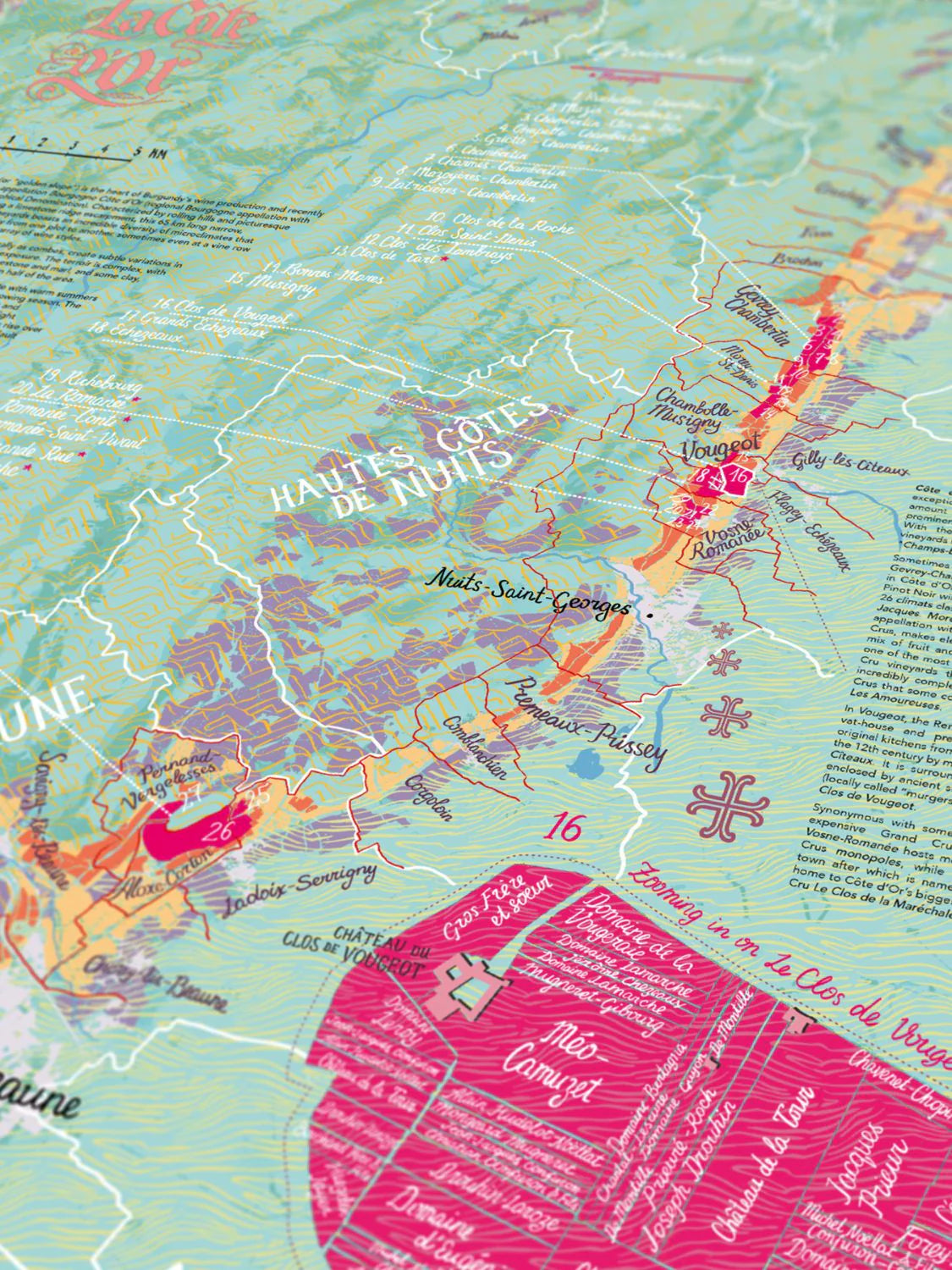
Map of the Côte de Nuits.
Photo: Vin de Bourgogne.

Until 1866 the village was only called Vosne, but like many other villages in Burgundy (Puligny and Chassagne + Montrachet for example) at some point the decision was made to add the name of the most famous vineyard “La Romanée” to the village name in order to create more recognition.
The monks of Saint-Vivant Abbey already recognised 1,000 years ago that this particular piece of land produced exceptional wines, and today the wines are made almost entirely from Pinot Grigio (although it is permitted to use up to 15% local white varieties, mostly from the same vineyard and fermented together).
The wines are renowned for their often perfect balance between elegance and richness, and their ability to age for decades once bottled. In the best years, the wines offer seductive aromas of red berries and cherries, a touch of floral notes, but also a certain earthiness and a distinct hint of Asian spices (known among wine snobs like myself as "Vosne spice" ). The wines have an excellent balance between typical Pinot acidity, present yet soft tannins, and an intense mouthfeel that is rarely matched.
In the vineyards
While the hills themselves may not be particularly impressive, you're still captivated by the magic of such a special piece of land. That afternoon, as I was chatting with Daniel from Domaine Sirugue at the intersection of La Tâche and Romanée Saint-Vivant, and he was explaining the true differences between the Grand Crus, the sun began to shine (for the first time that rainy week!). It immediately became clear how hot it can get and the influence the sun has on the grapes' ripening.
The best vineyards are located in the middle of the hill west of the village. Here, the grapes are best exposed to the sun, the temperature during the growing season is optimal, and the soil is just poor enough for the very best results. At the bottom of the hill, the soil is too fertile due to erosion, and the exposure is not optimal; at the top, the soil is too poor, and it is often just a little too cold to perfectly ripen the grapes. The soil consists of Pinot Grigio's favorite mix of clay and limestone. The depth of the topsoil and the amount of limestone in each section of the vineyard play a significant role.
Of course, Vosne-Romanée also produces Village AOC and regional wines (Bourgogne Pinot Noir AOC). The difference between a Grand Cru, Premier Cru, Village wines, or regional AOC vineyard is sometimes only a few meters...
Les Grands Crus Vosne-Romanée
Vosne-Romanée has a total of 299 hectares of vineyards, of which 99 are classified as Village, 57 as Premier Cru and 73(!) as Grand Cru vineyards.
Photo: Pearl of Burgundy.

The Grand Street
This "climat" only received Grand Cru status in 1992, 56 years after the rest. This vineyard is a monopoly, meaning it's owned by a single farmer, Domaine Lamarche, and covers only 1.65 hectares.

Domaine Lamarche La Grande Rue Monopole Grand Cru 2020.
Photo: WINESTABRAM
The Tâche
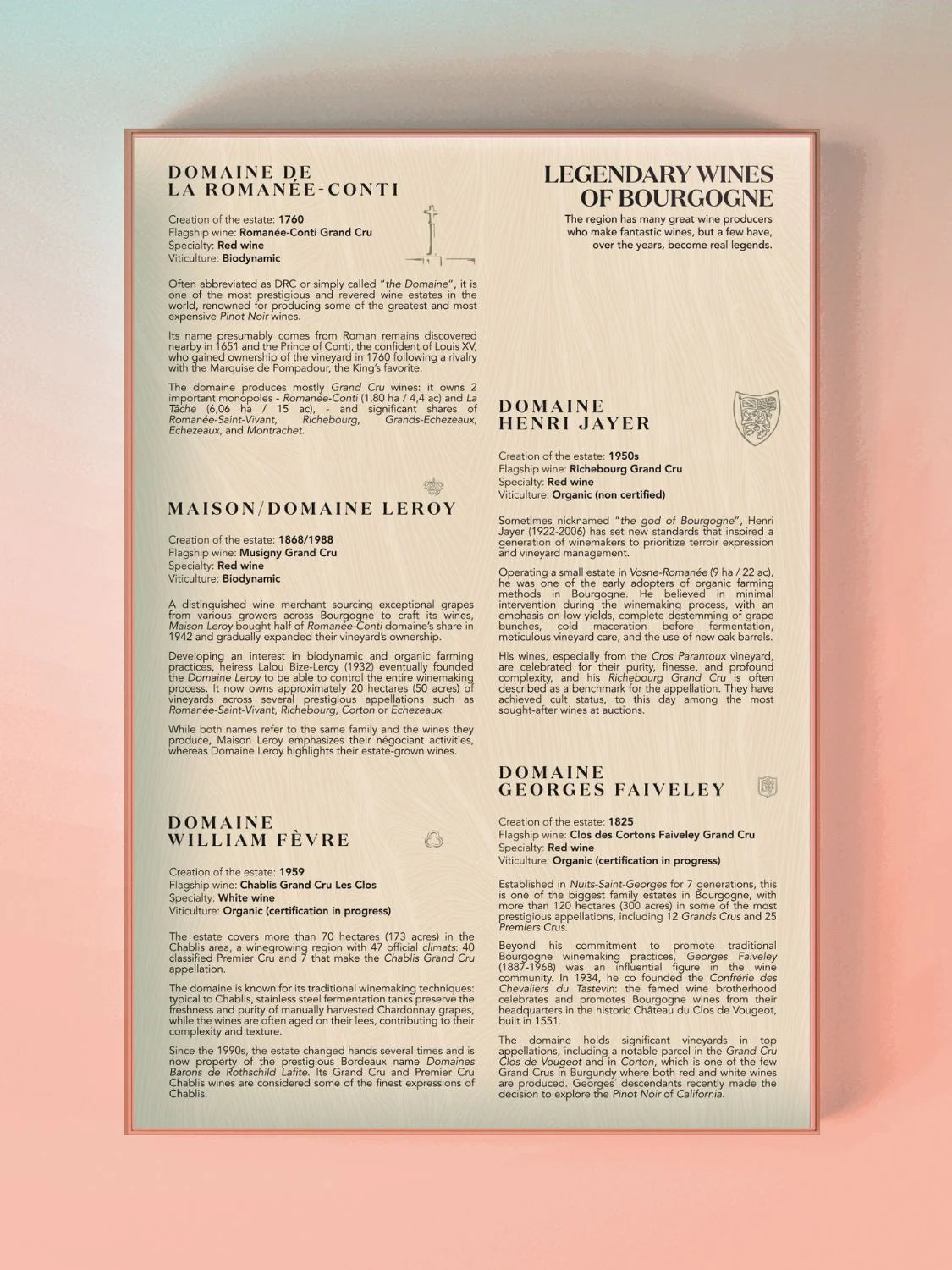
One of the most famous vineyards in the world, spanning 6 hectares (making it one of the largest in Vosne-Romanée), this vineyard is also a monopoly (since 1933) belonging to the renowned Domaine de la Romanée-Conti.

Albert in the La Tâche Grand Cru vineyard in Vosne-Romanée.
Photo: WINESTABRAM
Richebourg
At 8 hectares, the second-largest Grand Cru and a vineyard with renowned neighbors like Romanée Saint-Vivant and the Premier Cru Cros Parantoux, Richebourg produces the strongest, heartiest wines of Vosne-Romanée.
The Roman
The smallest appellation in all of France, at just 0.8 hectares. The vineyard is located directly above the famous Romanée-Conti vineyard and is, once again, a monopoly.
Romanée Saint-Vivant
At over 9 hectares, this is the largest Grand Cru vineyard in Vosne-Romanée. It's located right next to the village and produces the most elegant wines.
Romanée-Conti
The most famous and sought-after Grand Cru in all of Vosne-Romanée, and perhaps even the world. This vineyard is located right in the middle of the Grand Crus. Visit this vineyard and you'll find yourself lining up for a photo with the famous cross at the entrance. The 1.81-hectare vineyard is entirely owned by Domaine de la Romanée-Conti.
 Domaine Romanée-Conti Romanée Saint-Vivant 2017.
Photo: WINESTABRAM
The price…
The small harvests of 2013, 2016, 2019, and 2021, among others, due to spring frost, hail, and rain, have driven up already high prices. According to wine-searcher, Domaine de la Romanée-Conti Grand Cru is currently selling for a mere $22,000 per bottle, making it one of the most expensive wines in the world. Take it from me, no other wine is worth that much.
Fortunately, the 2022 and 2023 harvests were not only very good but also large, which has somewhat calmed the frenzy. However, there are still plenty of people with deep pockets and cellars that can't be overflowing. Incidentally, 2024 doesn't bode well for prices, as the enormous rainfall and the resulting mold pressure have meant that most farmers were able to produce significantly less than in previous years.
If you look carefully you can still find Vosne-Romanée Village wines at a reasonable price (read: up to around €100 per bottle) and these are usually fantastic wines.

The list of the ten most expensive wines in the world, which, with one exception, consists entirely of Burgundy wines. Musigny and Echezeaux are roughly adjacent to Vosne-Romanée.
Photo: wine-searcher.com
What to buy:
The Grand Crus from Domaine Romanée-Conti, among others, are unfortunately only for the privileged few, but there are plenty of other beautiful wines to be found!
Romanée-Conti is available . If you're planning to open one, please call Brammetje!
One of my favorites is and remains Domaine Sirugue . A small family estate that I visited last summer. After the vineyards were redistributed between son and daughter, it will unfortunately cease to exist. At Wijnkoperij Platenburg, we still have stock, including older vintages and various cuvées.
At Cave de l'Est in Amsterdam, you'll find a wonderful selection of wines from Vosne-Romanée, including some truly top wines from, among others, Domaine Méo-Camuzet.
Conclusion: if you are willing to spend some of your hard-earned cash on a Vosne-Romanée Village or even a Premier Cru wine, you will definitely get your money's worth.
The exorbitant prices for, among others, Domaine Romanée-Conti certainly don't represent the majority of wines from Vosne-Romanée, but whoever knows, knows.

Domaine Méo-Camuzet Vosne-Romanée Les Chaumes Premier Cru 2017.
This vineyard contains more clay and therefore produces powerful, rich Pinot Noirs.
Photo: WINESTABRAM
Sources:
- Wine Searcher - Vosne Romanée
- Wine Searcher - The Most Expensive Wines
- Bourgogne Wines
- Pearl of Burgundy
Guest blogger: Bram Faber
After more than fifteen years as a (master) sommelier at the finest (Michelin-star) restaurants, Bram decided three years ago to leave the hospitality industry behind. Since then, Bram has worked as a wine instructor, leads wine tastings, and recently settled in Rotterdam at Wijnkoperij Platenburg as a wine consultant and account manager for the hospitality industry.





Share:
Le Grappin makes wine in Burgundy, Beaujolais and the Rhône
A wine fan in Stockholm