
Let's get straight to the point: “ Everything below $40 is shit! ”
That was one of Katie Blakely, International Sales Director of RIDGE Vineyards,'s most important and, above all, very honest explanations when asked why wines from the United States are often so f*cking expensive. Of course, wines under $40 aren't bad, absolutely not, but for many Americans, the more expensive, the better.
Of course, California's high salaries (a good, experienced vineyard worker can easily cost $50 an hour), the often very low yields, competition for American oak barrels from the Bourbon industry, excise taxes, and import duties play an even more important role, but hey, I've got your attention!
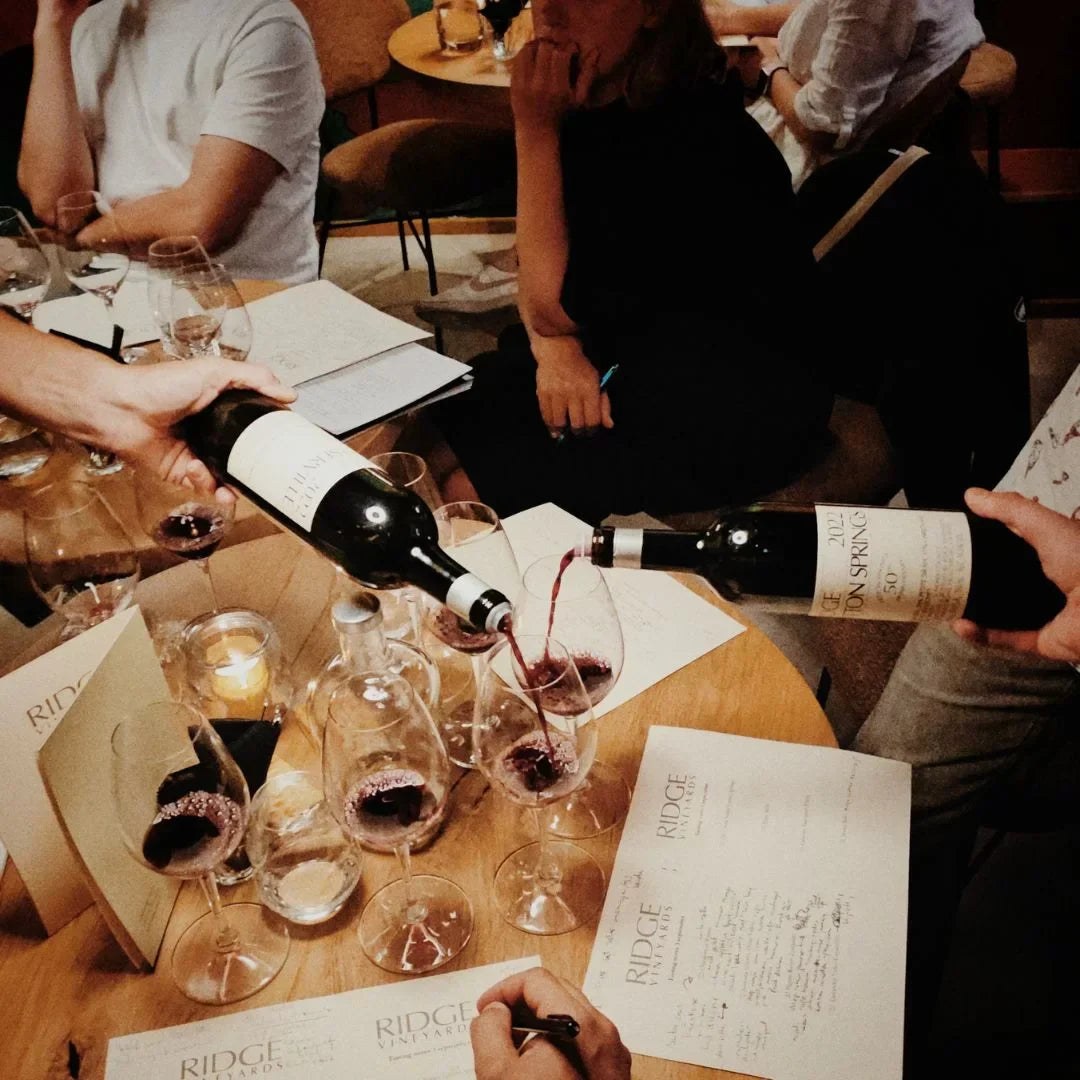
Katie recently came to Rotterdam to explain the wines of RIDGE Vineyards to the Dutch public. And that was actually quite necessary…
California is a blind spot for many wine lovers, often associated with wines that are over-extracted, have too much American oak, and—not to mention—high prices. However, RIDGE Vineyards proves that things can be different when it comes to extraction and oak use. As for the price, well, it's still California, of course. But RIDGE wines are distinguished by their refined acidity, and even the alcohol levels remain relatively modest.
In total, RIDGE produces around thirty different wines each year from its three estates and some purchased fruit, eight of which Katie exports to Europe. With this portfolio, RIDGE showcases the diversity of climates, soil types, and grape varieties. And it all started with…
Monte Bello
At the end of the nineteenth century, Dr. Osea Perrone purchased a plot of land just below the summit of Monte Bello. He created terraces on the chalky soil for planting grapes and built a winery, where the famous Monte Bello wines are still produced today. He released his first vintage in 1892, and remarkably, some of the vines Dr. Perrone planted are still standing!
After a succession of owners, Prohibition in the United States, and two world wars, three engineer friends, looking for a vacation home, stumbled upon the estate in 1959. They purchased the property and began making wine from the existing vines in a garage. In 1962, the first Monte Bello saw the light of day, and Ridge Vineyards was born. When Paul Draper, already a renowned winemaker and friend of the engineers, tasted this wine, he was so impressed that he decided to join them in 1969. While tasting Monte Bello, Draper realized that if one could make such beautiful wines from this exceptional terroir without much experience, he could elevate the estate to even greater heights. And so it happened…
The Judgment of Paris
When Steven Spurrier became the now legendary Judgment of Paris organized, the '71 Monte Bello finished in fifth place. At the time, the French claimed that while the American wines had surprised them, they didn't have the same aging potential as their French counterparts. Thirty years later, however, during a reassessment with the same wines, the '71 Monte Bello emerged victorious, taking first place. Eat that Frenchies!
The RIDGE philosophy
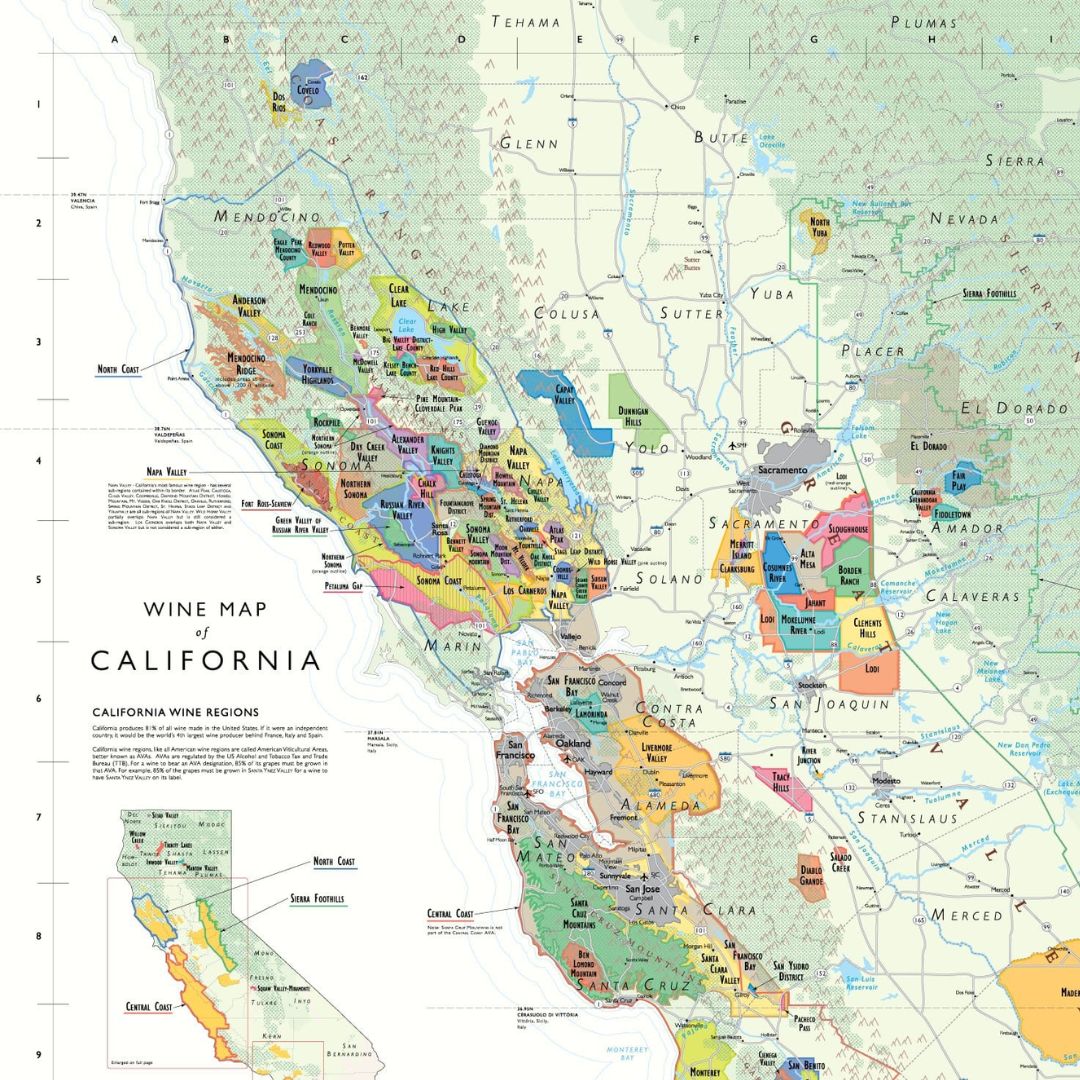
At RIDGE, they believe in so-called "pre-industrial winemaking." Current head winemaker John Olney (he joined as an assistant in 1996, only to be ready for the real work more than 20 years later) and his team make wine without fuss. No additives, just a light filtering just before bottling and "a touch of sulfur." That may sound simple , but in a world full of challenges, it's tempting to use enzymes, acids, tannins, yeast cultures, and other additives. Yet, RIDGE adheres to this pure approach and is even the largest biologically active estate in the Santa Cruz and Sonoma County AVAs.
With the exception of one wine, all RIDGE wines are sourced from single vineyards. This has been a key element of the RIDGE philosophy from the very beginning. Being able to taste that sense of place in your glass is something I'm a huge fan of.
RIDGE wines are always made based on taste, without fixed recipes for grape blends, aging times, or other details. The quality and expression of the vintage and terroir are always paramount. Because of this, some barrels sometimes fail to meet RIDGE's high standards. This is how the Three Valleys Zinfandel , made from barrels that did not meet the strict requirements but still yielded excellent wine.
The Three Valleys Zinfandel is the estate's entry-level wine and a perfect introduction to the higher end. Made with grapes from all three estates, it's RIDGE's only non-single vineyard wine. It's also the only wine intended for immediate consumption, although it can still easily age in the bottle for a few years.
But what am I the biggest fan of? Transparency:

Since 2011, all RIDGE Vineyards wines have featured all the ingredients and information about each wine on their labels.
Small disclaimer: With the severe drought of recent years, it's common for grapes to arrive at the winery already dried out. To create a drinkable, non-viscous wine, RIDGE occasionally adds a tiny amount of water to the grapes (always within 48 hours of arrival). But, as you might expect, this is clearly indicated on the label!
Zinfandel
Besides Monte Bello (a Bordeaux blend), Zinfandel is RIDGE's flagship wine. And while it's common knowledge that I'm not a Zinfandel fan, one of the attendees managed to sneak it into Katie's ear. I won't name names (Marc van E.), but thank you! This led to a lively discussion.
Katie and I quickly agreed that there's a lot of bad Zinfandel on the market. It's a red grape that quickly accumulates sugar in the final stages of ripening, often leading to low acidity. Moreover, the grape is often harvested too ripe, resulting in wines with little tension, too much alcohol, and often aged too long in American oak.
At RIDGE, they take a different approach. They blend Zinfandel with grape varieties like Petite Sirah, Alicante Bouschet, and Carignan to add the tension that many other Zinfandels lack. They also harvest certain grape varieties or parts of the vineyard earlier or later to bring more complexity and freshness to the wines.
All red wines are fermented in American oak, but only a small portion of the barrels are new. The aging period is also tailored to the vintage, ensuring the wines always retain their optimal character and balance.
Tasted
Let me start by saying that we have murdered a child eight times this evening, because all of these wines are made to age in the bottle for a minimum of eight to ten years before reaching their peak.
RIDGE Estate Chardonnay '22
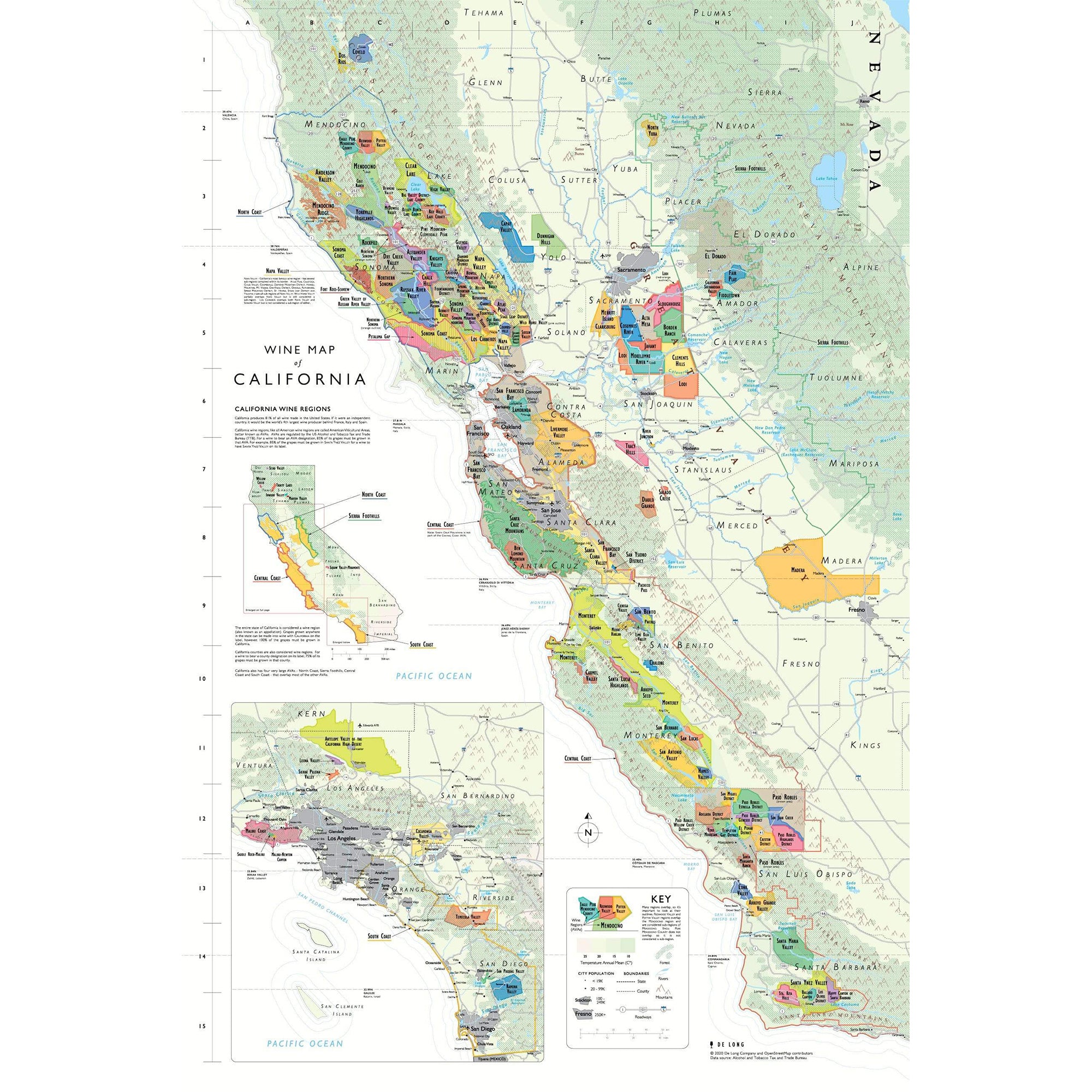
Monte Bello, Santa Cruz Mountains AVA
100% Chardonnay
A warm and dry season produced ripe and healthy grapes, which were pressed and spontaneously fermented in oak (15% new, with some French oak for the first time). Malo also occurred spontaneously, and after 15 months of aging, the wine was bottled.
Medium golden color and a medium-intense aroma. Notes of ripe pineapple and banana, lemon tart, sweet yellow apples, toast, roasted hazelnuts, vanilla, and custard. Full and creamy, yet with plenty of finesse. Comparing it to Burgundy wouldn't do its French counterpart justice, but this wine is definitely more elegant than many other Californian Chardonnays.
RIDGE Sonoma County Three Valley '22
Sonoma County AVA
65% Zinfandel, 16% Carignan, 14% Petite Sirah, 5% Mataro (aka Mourvèdre)
This is the only RIDGE wine not sourced from a single vineyard. It's a blend of grapes from all three estates. If a plot, such as Pagani Ranch, doesn't meet the high quality standards, the grapes are used for the Three Valleys. The wine is spontaneously fermented in American oak (10% new) and then aged for 12 months.
The wine has a deep ruby red color and offers aromas of ripe berries, blackberries, violets, cedar, vanilla, and cloves. The tannins are soft, the wine is fruit-driven and surprisingly fresh. It's already wonderful to drink, but a little patience will certainly be rewarded.
RIDGE Pagani Ranch Zinfandel '22
Sonoma Valley AVA
82% Zinfandel, 9% Alicante Bouschet, 5% Petite Sirah, 4% Mataro
The perfect conditions during the ripening season resulted in beautiful fruit of exceptional quality.
Some plots date back to 1896 and 1922, giving the wine enormous depth and complexity. With minimal intervention, spontaneous fermentation, and malo maturation in American oak (15% of which was new), the wine matured for 14 months in the same barrels before bottling.
Deep ruby in color, with a purple rim. Med+ on the nose with aromas of ripe blackberries, smoke, cedar, Pim's (you know, the one Grandma used to have on the table), roasted coffee beans, and sweet spices. The structure is ripe and jammy, with fine tannins and a long finish.
RIDGE Alexander Valley Geyserville '22
Geyserville, Alexander Valley AVA
67% Zinfandel, 20% Carignane, 10% Petite Sirah, 3% Mataro
The very low rainfall combined with the old vines resulted in extremely low yields. Just before harvest, the challenge was further exacerbated by a record-breaking heat wave, which required harvesting all the grapes from all 46 plots within 24 hours. The wine was aged for 16 months in American oak (28% new), which ensured the perfect balance of fruit and structure.
Deep ruby red in color with a medium-intense nose. Aromas of overripe blackberries, currants, marmalade, graphite, vanilla, cedarwood, thyme, and a hint of fried bacon and smokiness. A truly smooth criminal with a jammy mouthfeel, soft tannins, and surprisingly good acidity!
RIDGE Dry Creek Lytton Springs '22 50th anniversary bottling
Lytton Springs, Dry Creek Valley AVA
67% Zinfandel, 19% Petite Sirah, 11% Carignane, 3% Alicante Bouschet
After a promising start to the growing season, a night of frost caused yields in some plots of the Lytton Springs vineyard to be slightly lower.
The wine matured for 16 months in American oak, 10% of which was new.
With a deep purple color and intense aromas of black cherry, violet, cassis, jammy berry fruit, clove, mint, and thyme, this wine impressed. While Geyserville is known for its smoothness, Lytton Springs is the complete opposite. Coarser tannins, higher acidity, and a more robust character. Totally my style!
Geyserville vs. Lytton Springs
Although the two vineyards are not far apart as the crow flies, they clearly produce two very different wines. Katie explained that when the wines are young, she and her colleagues can distinguish them blindly 80 to 90% of the time. As the wines mature, however, they grow closer, like lovers becoming increasingly similar. This makes it increasingly difficult to tell them apart.
Geyserville is the vineyard with the oldest vines on the entire estate, some dating back as far as 130 years. These old vines require sufficient nutrients, which are obtained by planting specific plants and herbs in the vineyard. These cover crops, along with the loamy soil, also help retain water during dry periods.

The soils in Lytton Springs contain more clay and sand, which allows the grapes to stay cooler longer and absorb more water. This slows ripening and creates a more rustic style, which I love. Here too, many vines are 100 years old or older, which gives the wine depth.
Comparing the grape varieties used in both wines, you'll see that one vineyard uses more Carignan, while the other has more Petite Sirah. This helps achieve the right balance alongside the intense old Zinfandel vines. Both vineyards are unique in their own way, and therefore the vinification process is kept as similar as possible to allow the expressions of both terroirs to be fully expressed in the glass.
Guest blogger: Bram Faber
After more than fifteen years as a (master) sommelier at the finest (Michelin-star) restaurants, Bram decided three years ago to leave the hospitality industry behind. Since then, Bram has worked as a wine instructor, leads wine tastings, and recently settled in Rotterdam at Wijnkoperij Platenburg as a wine consultant and account manager for the hospitality industry.

Share:
Pasta wine you shouldn't miss
Three days of Burgundy in seven wines