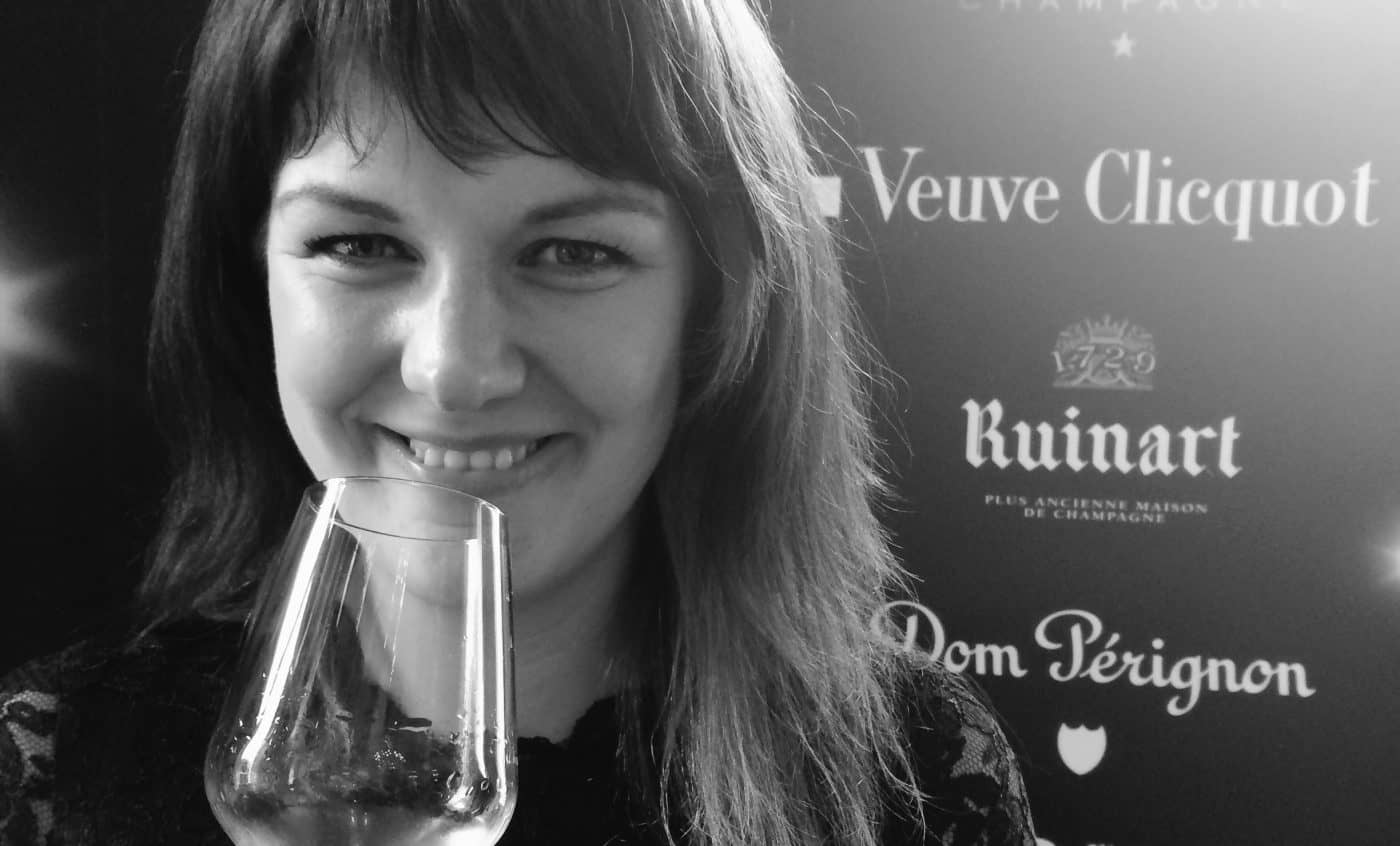
For two years running, I've been attending Le Tour de Champagne. I still remember the first time vividly. Dressed in our finest dresses—my fan Hanneke came along—we walked the red carpet at the Amstel Hotel.
We immersed ourselves in the world of champagne and thankfully received the necessary pointers from co-organizer Huub Snijders. Last year, the spotlight was on the small houses, the hipsters of Champagne. Again, I went in with an open mind, but this year I decided to take a different approach by doing the necessary research beforehand.
Below, I'll briefly explain the various Champagne houses. If I've missed any important information, please don't hesitate to send me an email or leave a comment. I'm planning another trip to Champagne next year, so I'll be able to see more houses firsthand.
Would you also like to taste champagne? Then register at Perswijn's website . Professionals can use it for free (Chamber of Commerce check), consumers pay €50 (but it's definitely worth it).
Want to know more about Champagne? Check out my previous articles:
- How do I choose the right champagne?
- The forgotten grapes of Champagne
- Billecart Salmon – The traditional method from close by
Apollonis
Never heard of it, but my heart leaps when I read that Apollonis makes a Blanc des Noirs from Pinot Meunier. Awesome! They also have a small vineyard with seventy-year-old Meunier vines. This is used to make the Monodie de Meunier Vieilles Vignes 2008 made. Now I see that the champagnes at Michel Loriot Hear. I know him; this guy plays music in the cellar. Helps with the aging of the wines...
Barons de Rothschild
It's almost becoming a bit envious. You're already making top wines in Bordeaux, and you want to make a splash with Champagne too? Admittedly, it's quite a nice group. The three Rothschilds, Baron Benjamin (Chateau Clarke), Baron Eric (Chateau Lafite), and Baroness Philippine (Chateau Mouton), wanted to add a champagne to their portfolio. For this, they have former winemaker of Ruinart managed to snag one. That makes me really curious about this wine again.
Barrat Masson
In 2010, Loïc Barrat and his wife Aurélie Masson decided to change course. They moved from working in the local cooperative to owning their own vineyard and producing their own wines in l'Aube. Loïc tends the vineyard, which is fully organically certified, and Aurélie manages the cellar.
Bauchet (RM)
Bauchet is one of the largest independent producers, so-called Growers Manipulants of champagne. They use only their own grapes and do not buy any grapes. It is still a family business, founded in 1920 by Juliette Bauchet. Just like Veuve Clicquot Do we also see a woman at the helm here? Beautiful. I'm going for the blanc des blancs 2009 when I meet Bauchet at Le Tour de Champagne.
Benoît Lahaye
Benoît Lahaye works fully biodynamic and is one of the few Champagne growers who plows the vineyard with a horse. Most of the vineyards are located in Bouzy (Montagne des Reims), where Pinot Noir thrives. white of the blacks is one I'd like to try.
Berêche
Bérèche also operates entirely organically and prefers to intervene as little as possible. In the cellar, the wine is given free rein. Malolactic fermentation is permitted, but not encouraged. Of course, that can only work if you have beautiful, ripe grapes. They take that very seriously here. Two more details I can't withhold from you. Some of the top cuvées fermented on Wood ; wood in Champagne always makes me curious. After primary fermentation, the wines are bottled and undergo secondary fermentation in the bottle; this is sealed with a cork instead of the traditional crown cap. Want to know more? Check this column or my adventure at Bollinger .
Bernard Remy
Bernard Remy's bubbles are for everyday use, especially now Weinig This top-of-the-line champagne is on sale for just €17.95 (usually around the holidays). The champagne house has 11 hectares of vineyards and produces approximately 100,000 bottles annually.
Besserat de Bellefon
Besserat de Bellafon champagnes are strong players in the world of food and wine pairings. This is due to their creamy, nutty character, thanks to the iconic restaurant – Samaritaine de Luxe – in Paris. In 1930, they challenged Vincent Besserat to create a sparkling wine that could be enjoyed throughout the meal. Voila, and thus the... Cuvée des Moines . Good story, though.
Billecart-Salmon
Billecart-Salmon is sometimes called "the smallest of the great brands." The estate owns 100 hectares, buys in grapes here and there, and sells a total of 600,000 bottles annually. A special champagne is made from the vineyard. Clos Saint-Hilaire , a one-hectare estate in Mareuil-sur-Aÿ, exclusively made with Pinot Noir. Produced only in the best years. I visited the winery in 2018 and that was awesome .
Bauget-Jouette
Has been around since 1822 and is now in the hands of the 5th generation. At first glance, they make champagnes with a pleasant price tag. Just by looking at the label of their Champagne Rosé Brut Coquelicots Worth it, in my opinion. Now for the taste—I'll get to that after Le Tour de Champagne.
Chartogne-Taillet
One of the oldest Champagne houses in existence, the Chartogne family has owned vineyards in Champagne since 1643. As we also saw with Billecart-Salmon, and also with Bollinger happens, the separate vinification of special plots. In the case of Chartogne-Taillet, a small plot with 60-year-old , ungrafted Pinot Meurnier vines vinified separately in Les Barres. Goals.
Delot
Delot's website opens with A proprietary producer . That would mean he's a champagne house, one that harvests its own grapes but doesn't make its own champagne. Yet, I see bottles that do indeed bear the Delot name. I'll have to investigate that further. on site . The champagnes, by the way, have a reasonable price tag of around 17 euros. Stay tuned.
Dhondt-Grellet
The same story as Bassat Manson, but now the second generation is at the helm of the Dhondt-Grellet champagne house. Their flagship, The Prestige du Moulin is a 100% Chardonnay from the Grand Cru villages of Cramant and Chouilly. Made with 70% blended wine from the new harvest and supplemented with 30% reserve wine—which is quite a lot, as the reserve wine percentage is usually 15%. Unusual, but I was already sold at the looks from the bottle…
Dom Perignon
When do you experience that you Dom Pérignon vintage 2004 Can you taste it? Not very often, right? Even if it's in your cellar, it's not a wine you open every day. Three years ago, I had the chance to taste the vintage, and it was an absolutely epic experience. Brioche, hazelnuts, creamy notes, and citrus. A must-try!
Doyard (RM)
A small player, but considered by many to be a gem in the Côte des Blancs, Doyard is also a Récoltant-Manipulant, an independent champagne producer, like Bauchet. To ensure income, Doyard sells 50% of his harvest to Moët for Dom Pérignon and to Louis Roederer for Cristal. Not the least. His own Cuvée Vendemiaire NV It's also quite something. It's 100% Chardonnay, 40% of which is oak-fermented. The wine is aged on lie for at least four years, but can also be aged for five. For the Champagne, 50% new wine is used and 25% from the previous two years. If that's his entry-level wine, what must his vintage taste like? All vintages are blanc des blancs, 100% oak-fermented, and aged on lie for at least eight years.
What is sur lie? After the primary fermentation, the base wine undergoes a secondary fermentation in the bottle. This is where the bubbles develop because the carbon dioxide cannot escape (the bottle is sealed with a crown cap). Besides bubbles, this is also the stage that creates the complex aromas. Maturation on the dead yeast cells—it doesn't sound very appealing, but Trust me , you want this – it delivers notes of brioche, nuts, and creaminess. The longer, the more complex. A non-vintage must mature on the lees for at least 15 months, while a vintage needs three years. Want to know more? Read on. this article about champagne.
Éliane Delalot
The tale of the beard, the horse, and the champagne. This is supposed to be a young winery, but no, it's the ninth generation working the vineyard here. They farm organically, doing much by hand and with horses. This is possible because they keep things small. Éliane Delalot's champagnes are micro-cuvées , of which only 400 to 2000 bottles are made, with pinot meunier as the main player.
Eric Rodez
Eric Rodez learned his trade at the renowned Krug winery, where he worked as a winemaker. Just like at Krug, he vinifies each plot separately and ultimately blends 60 different wines into his own cuvées. He has been working organically for decades and even switched to biodynamic viticulture in 2009. He received this tip from Marcel Deiss from Alsace. Eric Rodez : ' He does not make wines – he makes cathedrals. It was he who helped me to realize that the soil is everything.' We would say 'a hell of a wine', but a cathedral sounds good too. I'm a fan of Marcel Deiss Of course I have to try these champagnes.
Frerejean Frères
Imagine being born in Champagne and also having the opportunity to establish your own champagne house. The Frerejean-Taittinger brothers succeeded. They only make Premier Cru Champagnes, which are aged for at least five years in the cellar (even non-vintage). Hats off to them.
Gardet
Never heard of it, but Gardet has been around since 1895 and produces around 1.2 million bottles annually. No small feat, then. They are known for their long bottle aging time. Prestige Charles Milisimé 2004 matures for no less than 8 years sur lie.
Geoffroy
Geoffrey is a small champagne house in Aÿ, which according to the Champagnist has been making champagne since the 17th century. That seems a bit early to me, since the bubbly as we know it didn't exist yet. Their roots do go back to that time, and they owe their vineyards to their ancestors. With this, they've only been making true champagne since 1950.
Gosset- Brabant
I know Gosset; it's the oldest Champagne house in the world. Gosset-Brabant is relatively young, dating back to 1930. The house is Pinot Noir-dominated, with vineyards in Aÿ and some in Chouilly for Chardonnay. Fermentation takes place in stainless steel.
Ground net (RM)
Since 1885, the Grongnet Champagne house has been located in Étoges, a village in the southwestern Côte des Blancs. The house is now run by the fifth generation, who combine new and old techniques. The wines are fermented partly in stainless steel and partly in oak. The cuvées undergo partial or no malolactic fermentation. Grongnet is a member of the exclusive Club Trésors de Champagne, along with 27 other Récoltant-Manupulants. In the best years, a special cuvée is jointly created, subject to strict requirements. Special Club Cuvée 2008 (no malo, matured in oak) is still for sale for a soft price . Curious!
Henriot
Another oldie, Henriot has been around since 1808. A family business, it's part of the LVMH group, which also includes Moet & Chandon and Krug. Henriot has since reacquired the brand but still leases the vineyards from LVMH. Although the house is based in Reims (home of Pinot Noir), Chardonnay plays a leading role. Its most distinctive champagne is the Cuvée 38 , a superb Blanc de Blancs from several vintages between 1990 and 2008 – made exclusively from Grand Cru grapes. Isn't it beautiful? Bottled only in magnums! Check it out this article by Perswijn for more info.
Hugues Godmé
With his seven hectares, Hugues Godmé might be considered a small estate, but he's taking a big approach. Since 2006, he's been working organically and now also biodynamically. This extends to the cellar. The wines are aged partly in stainless steel and partly in oak, neither fined nor filtered, no malolactic fermentation, and low dosages. This sounds like what you'd call... An pure champagne .
Janisson-Baradon
Janisson-Baradon operates primarily on the rich clay soils west of Epernay. This results in full-bodied, rounded champagnes. Fermentation takes place primarily in stainless steel tanks, but also in concrete, egg-shaped vats. The reserve wine is aged in oak barrels, giving the wines a creamy touch.
Jean Velut (RM)
Jean Velut is located in Montgueux, a village – unknown to me – between the Côte des Bars and the Côte de Sézanne. Chardonnay is widely cultivated here and is also known as the Montrachet of Champagne mentioned. That is due to the calcareous, fossil chalk soils, I read on Geluksdruif.nl . Most winegrowers sell their grapes to large wineries, but Velut is taking the initiative. They operate entirely organically and are even experimenting with biodynamics. The wines are aged in stainless steel and, given the soil, the grapes, and the passion in the vineyard, must undoubtedly be incredibly fresh.
Krug
Krug, of course, remains a joy to taste. It's now part of the LVMH group, but the Krug family still plays a major role in important decisions. When I think of Krug, I think of notes of toasted bread with butter and brioche. Incredible champagne. Why? Precision, patience, craftsmanship—you name it. Only the finest fruit. Alcoholic fermentation in oak. A blend of 120 different base wines in the Krug Grande Cuvée. Six years of sur lie aging at least. Definitely a must-try.
L&S Cheurlin
Never heard of it, but it's Lucie & Sébastian Cheurlin who are at the helm here – in the Aube. They work organically and are even on their way to biodynamic viticulture. Although it young guests are, they have of the interwebs Haven't eaten much cheese yet. Which makes sense, since they do everything themselves in the vineyard. So you don't have time for a website.
Laherte Frères
A new name for me, but a star player in Champagne, as it turns out. Laherte Frères is located south of Epernay. With their 75 plots in the Vallée de la Marne and the Côte des Blancs, they have a wealth of micro-terroirs at their disposal. Their love of diversity is evident with the Les 7 Extra Brut , a rare Champagne made from all the recognised (slightly (Forgotten ) Champagne grape varieties: 8% Arbanne, 10% Fromenteau, 14% Pinot Noir, 15% Petit Meslier, 17% Pinot Blanc, 18% Chardonnay, and 18% Pinot Meunier. The special thing—again, I'm thinking of Marcel Deiss—is that these grapes are grown together biodynamically.
Legras & Haas
Legras & Haas owns 30 hectares of vineyards, produces its own Champagne from its finest grapes, and sells the rest to major brands. While the big names strive for a consistent style—a house style, so to speak—with their Bruts, Legras & Haas lets loose. The blend is unique and varies from year to year.
Lelarge Pugeot
Lelarge Pugeot is also moving towards biodynamics. The first horse has already been spotted in the vineyard. The champagne house is located in Vrigny, a Premier Cru village in the Montagne de Reims. Pinot Meunier is the dominant grape, supplemented with 20% Chardonnay and 20% Pinot Noir. I'd love to see 100% Meunier grapes during the 2017 Tour de Champagne. Hopefully, Lelarge will also take its The Meuniers of Clemence along
Laurent Bénard
Once again, an organic winemaker is at the helm; even the website opens with a plowing horse. Admittedly, Laurant Bénard has an eye for detail. The wines are aged in oak barrels and contain minimal, if any, sulfites. The winemaker is also careful with dosage. Here, we're once again focusing on the pure flavor of champagne.
Lilbert Fils
With an annual production of 30,000 bottles, Libert Fils also falls into the "small" category. "But nice," I'd like to add, because this 100% Chardonnay Champagne house has "only" 4 hectares of vineyards, but those are beautiful Grand Cru vineyards. The plots are vinified separately. The beauty of being small is that the remuage and disgorgement are still done by hand (maybe that's not fun anymore after those 30,000 bottles, but still).
Louis Casters
Louis Casters, a merchant of Belgian origin, married Marguerite Filaine in 1944, thus becoming the head of a champagne house. What strikes me is that Louis Caster releases three single-varietal wines—not something you see very often. He makes a champagne from 100% Chardonnay, 100% Pinot Noir, and 100% Pinot Meunier. The house's flagship product is the Cuvée Eugene , a blend of the three grape varieties.
Louis Roederer
Louis Roederer also belongs to the list of 'oldest champagne houses' and is of course known to the general (hip-hop) public for their Cristal Champagne . I've tried it once. Big goals.
The special thing about Louis Roederer is that the waistline (Second pressing) of the Chardonnay is used because it's slightly sweeter and less tannic than the first pressing. Interesting choice. Malolactic fermentation is avoided as much as possible, so would using the vin de taille soften the acidity a bit? I'll come back to this later.
Marie-Courtin
At 2.5 hectares, it might be the smallest estate in Le Tour de Champagne. Is it too early to spot a trend? Small farms are working biodynamically, right? And so is Marie-Courtin. A full tank of Pinot Noir. Her Efflorescence is a 100% Pinot Noir fermented in oak, the Concordance, Also a 100% Pinot Noir, made without added sulfites. Good job!
Moët & Chandon
Moët & Chandon is the largest champagne house in the world. Marie-Courtin and its 2.5 hectares pale in comparison to Moët's 600 hectares of vineyards. Not that they have enough to meet demand; most of the grapes are purchased from winegrowers. Their annual production amounts to 28 million bottles. They also have some stock. In the kilometers-long cellar beneath Épernay, 100 million bottles are maturing.
Moutardier
This Champagne house comes from Le Brueil and focuses primarily on Pinot Meunier. Straight-up Champagne.
Palmer
Société Coopérative de Producteurs des Grands Terroirs de la Champagne – quite a mouthful – is, in short, a group of champagne growers who market their champagne under one umbrella, called Champagne Palmer & Co. The flagship product is the Amazone de Palmer , a blend of the best wines and vintages (100% reserve wine), which has also matured for 10 years sur lie.
Philippe Gonet
This champagne house is now in its seventh generation and is run by the Gonet brother and sister. Their Grand Cru vineyards are located in Le Mesnil-sur-Oger, near Krug's Clos de Mesnil. The selection is impressive. I see ten different champagnes, but the Blanc des Blancs seems to be their specialty. Blanc de Blancs Grand Cru Belemnita 2004 as a highlight.
Philipponnat
Philipponnat was, I think, the first Champagne I drank after Moët & Chandon and has been ever since A special place in my heart . Their roots also go way back – to 1522. And they've remained so ordinary, because here too they still (or again?) work on horseback. Philipponnat was one of the first to break the secrecy and put information on the bottle about the year of disgorgement, the dosage, and the vintage in non-vintage blends. Also fun to look up: they use a solera system for reserve wines.
Pierre Moncuit
Pierre Moncuit is a family business with a total of 20 hectares, 15 of which are in Mesnil-sur-Oger, the heart of the Côte des Blancs. Daughter Nicole makes the wine, and son Yves manages sales. Pierre Moncuit's champagnes are single-vineyard and therefore Very terroir-specific . No reserve wines are used.
Pol Roger
I only know about Pol Roger that it is the house champagne of Queen Elizabeth II. Another fun fact is that the house has 7 kilometers of cellars , some of the coolest (9 degrees Celsius) in the Champagne region. The vineyards, approximately 80 hectares, are located around Epernay.
Pommery
Pommery was founded in 1836 by Louis Alexandre Pommery, who was forced to raise extra income (his wife became pregnant). Twenty years later, Louis died, and his wife took over, expanding the company to 2 million bottles per year. Hatsie-kie-dee. It has since been acquired by Vranken Monopole, which owns several champagne brands and... second largest champagne group became after LVMH.
R. Pouillon
A winegrower who decided to start selling champagne himself in 1947. Since 2003, Pouillon has been working organically in the vineyard and applying biodynamic principles. The flagship is Chemin du Bois 2008 , a 100% pinot noir, which receives 19/20 points from Gault & Millau.
RH Coutier
A small champagne house, owning approximately 7 hectares around Ambonnay. A third of the grapes are sold to Veuve Clicquot, but the best are kept for 30,000 bottles of Champagne Coutier.
Robert Moncuit
Champagne house Robert Moncuit owns 8 hectares, all located in Mesnil-sur-Oger. The founder's grandson is now at the helm and tries to use as few chemicals as possible. Each of the 30 plots is vinified separately, 30% of which is in oak. A special champagne is the one from the vineyard Les Chetillons , where vines dating back to 1956 were planted.
Ruinart
Oh, I remember it well… This was the champagne that surprised me two years ago at Le Tour de Champagne. I think this is also the turning point was. €200 for a Champagne? Well, if it's really good, okay... I wouldn't have thought that five years ago either, but there, I said it. The Dom de Ruinart 2004 was amazing.
Savart
At only 4 hectares, Savart is a small estate. The vineyards are predominantly Pinot Noir, with a few patches of Chardonnay scattered here and there. Extra-Brut L'Expression This is a 100% Pinot Noir from old vines in Eceuil. Even without dosage, the champagne is rich and generous.
Taittinger
It's always cozy at Taittinger's table. For the long evenings they offer the Nocturne Sec , which has a slightly higher dosage than the brut, is a drinkable one. Sweet, but the sugars are simultaneously tamed by the acidity. Also, don't forget Countes de Champagne to grab. This one belongs in the list of classics together with Cristal (Roederer) and Dom Pérignon (Moet).
Veuve Clicquot
Veuve Clicquot, la Grande Dame of Champagne, took over her husband's house at the age of 26 and turned it into a global company. Earlier this year, I was invited to a special tasting From this winery at Wijnhandel Peeters in Rotterdam. I hope they bring vintages.
Veuve Fourny
I hadn't heard of this Veuve before, but it's been with us for a while. The champagne house was founded in 1856 in Vertus. Their flagship champagne is made as a mono-cru: champagne from a single vineyard. That's the Clos Faubourg de Notre-Dam in Cote des Blancs. There will be minimal intervention and as much as possible listened to the terroir . After the harvest, part of the wine matures in oak barrels and undergoes a Second fermentation of no less than 10 years . Often the dosage is so low that the bottle is labeled Extra Brut.
Vincent Couche
Third-generation winemaker Vincent Couche wastes no time. Organic, biodynamic, and as much peace and quiet as possible for the vineyard. I came across a hymn about Couche NV Rose Désir Extra Brut Disgorged 2012 – " A tart-edged raspberry and strawberry shrub mingled with black tea and wreathed in primary yeastiness ." I definitely want to try that.
Vouette & Sorbee
Vouette & Sorbée concludes this list with something truly special. It's a string of gems. Let's take the R14 Textures as an example: a champagne made from 100% Pinot Blanc, which matured in Georgian amphorae . I have never seen that before in Champagne. This champagne house is also known by the press (and (acclaimed by me ). Last year, the Fidèle, a 100% Pinot Noir, stood out for me. Super refined, with a beautiful, soft mousse. Truly fantastic.
Gap in the market
For those still searching for a purpose in life, set up an internet agency specifically for Champagne houses. Or perhaps for all websites in France*. It's truly repulsive how the websites of (major) Champagne houses look. Flash seems to be a favorite among the French anyway. That doesn't work anymore, gentlemen! Intro music too. Stop. For. A. Moment.
*Only for mini-campsites do I consider a bad website (think Flash, intro music, comics sans) a good sign. Seriously: the worse the website, the better the campsite.
Thanks to the interwebz
All the information can be found on the internet. To compile this comprehensive list, I've frequently used the resources below.
- Lucky grape
- Bubble blog
- Champagnist
- Chambers Street Wines (article about Laherte Freres )
- Notre Comptoir de Champagne ( Le 7 Extra Brut )
- Wine Canal (article about Krug )
- Decanter (article about Marie-Courton )
Share:
Wine tasting at the Milkmaid
A Wine Fan in Tuscany: Five-Day Road Trip