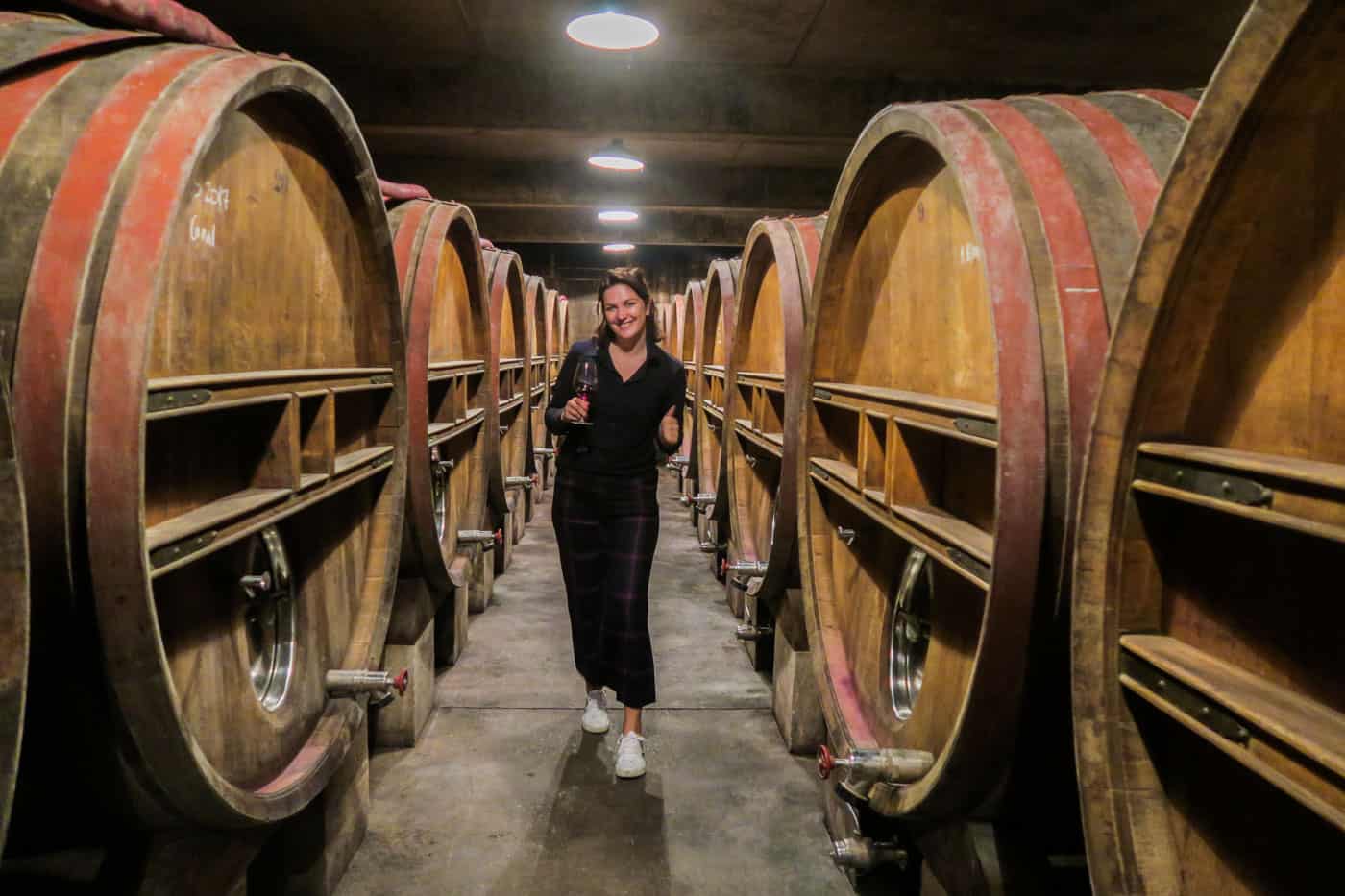
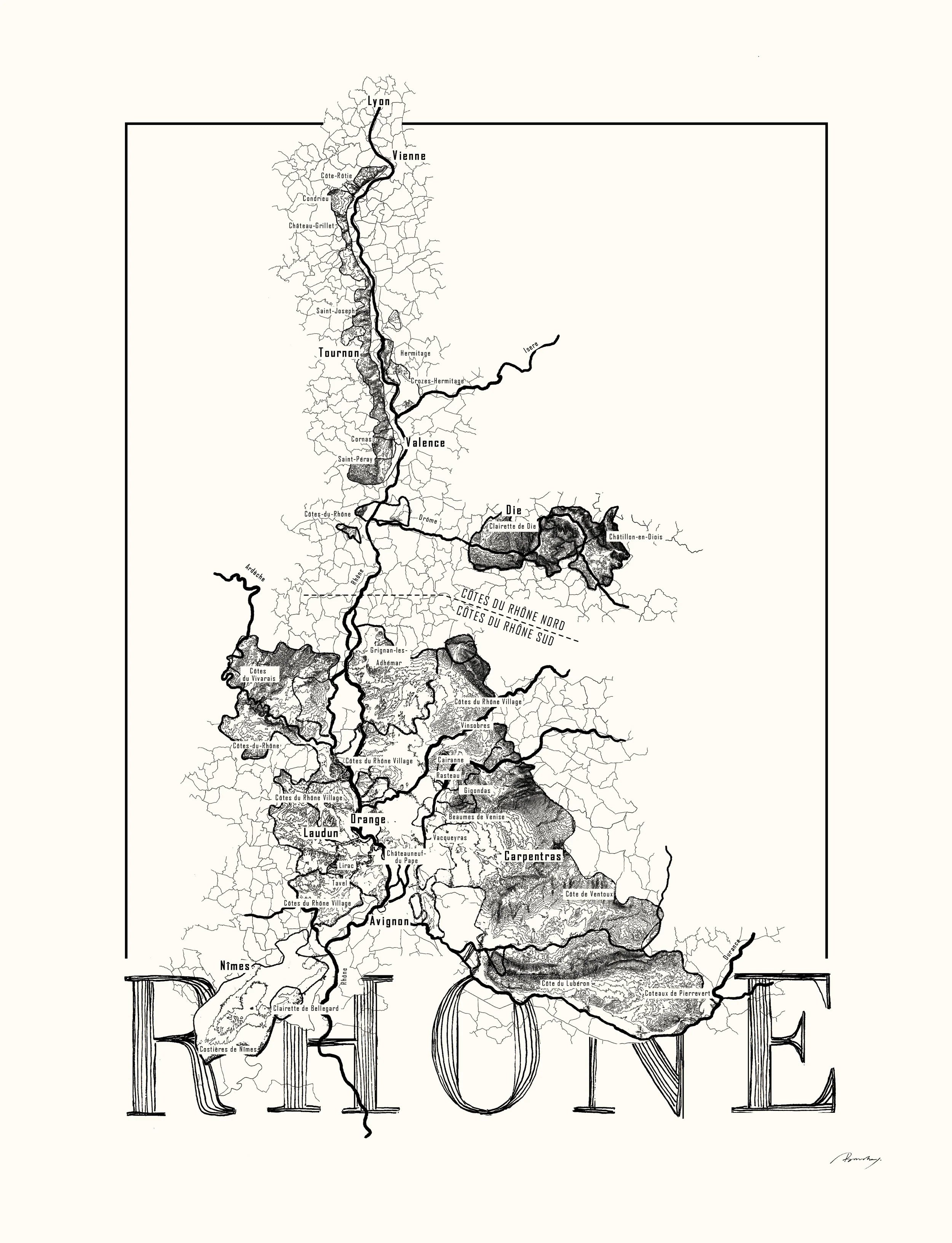
In October, I went on a wine tour to the South of France. Over four days, we visited seven wineries in the Rhône and Languedoc regions, including La Pèira, Château de Beaucastel, Domaine de Trevallon, and Domaine d'Aupilhac. Below, I'll tell you more about these epic visits.

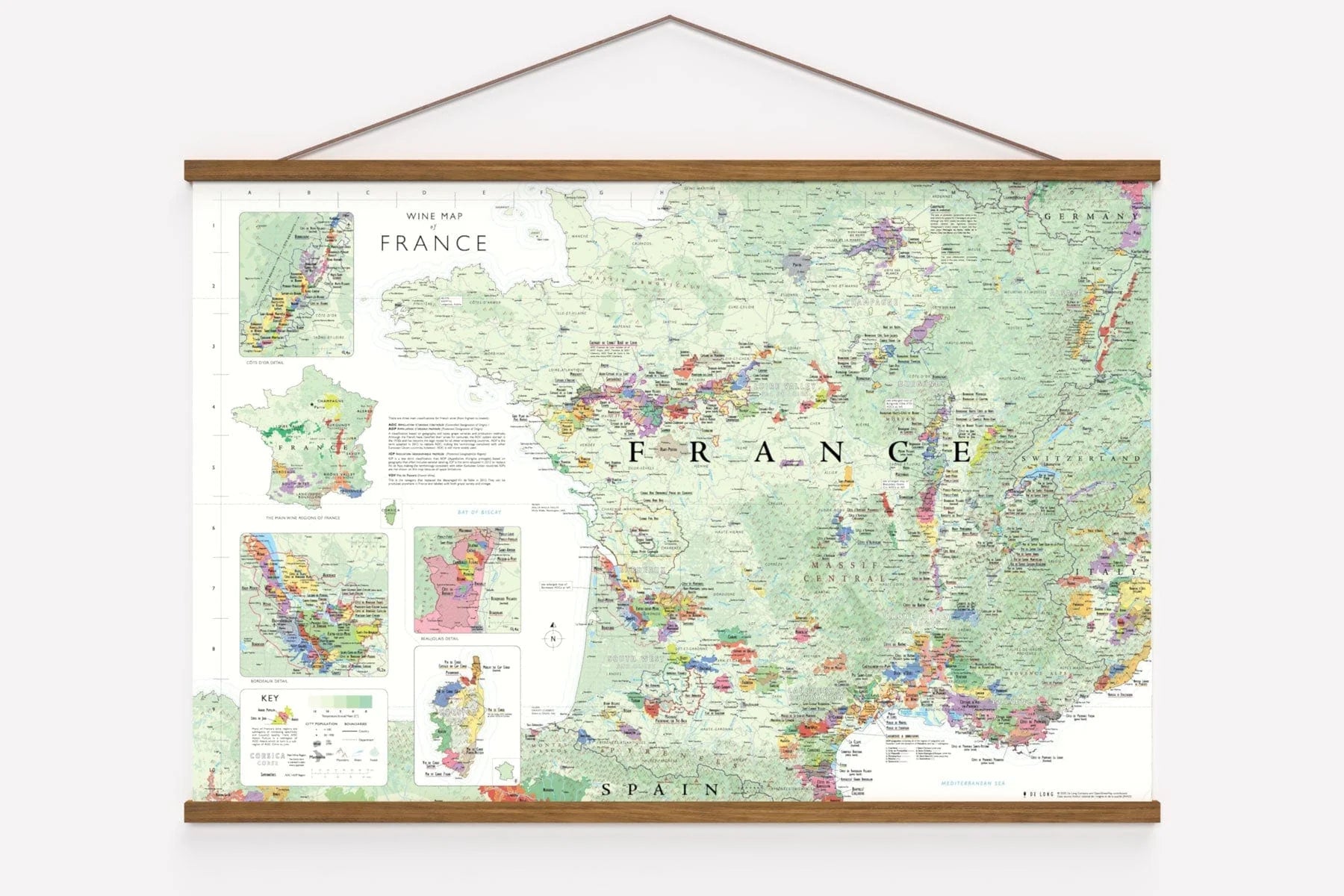
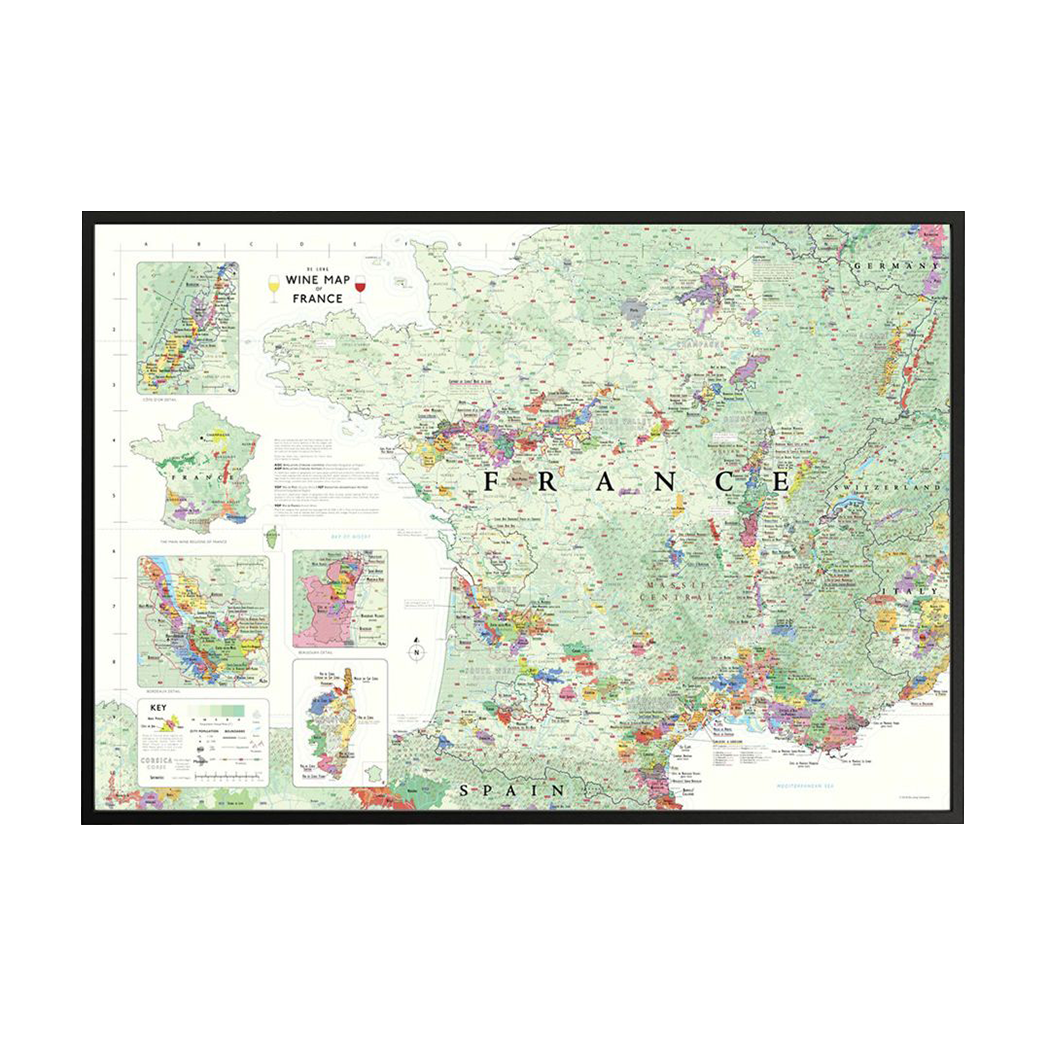
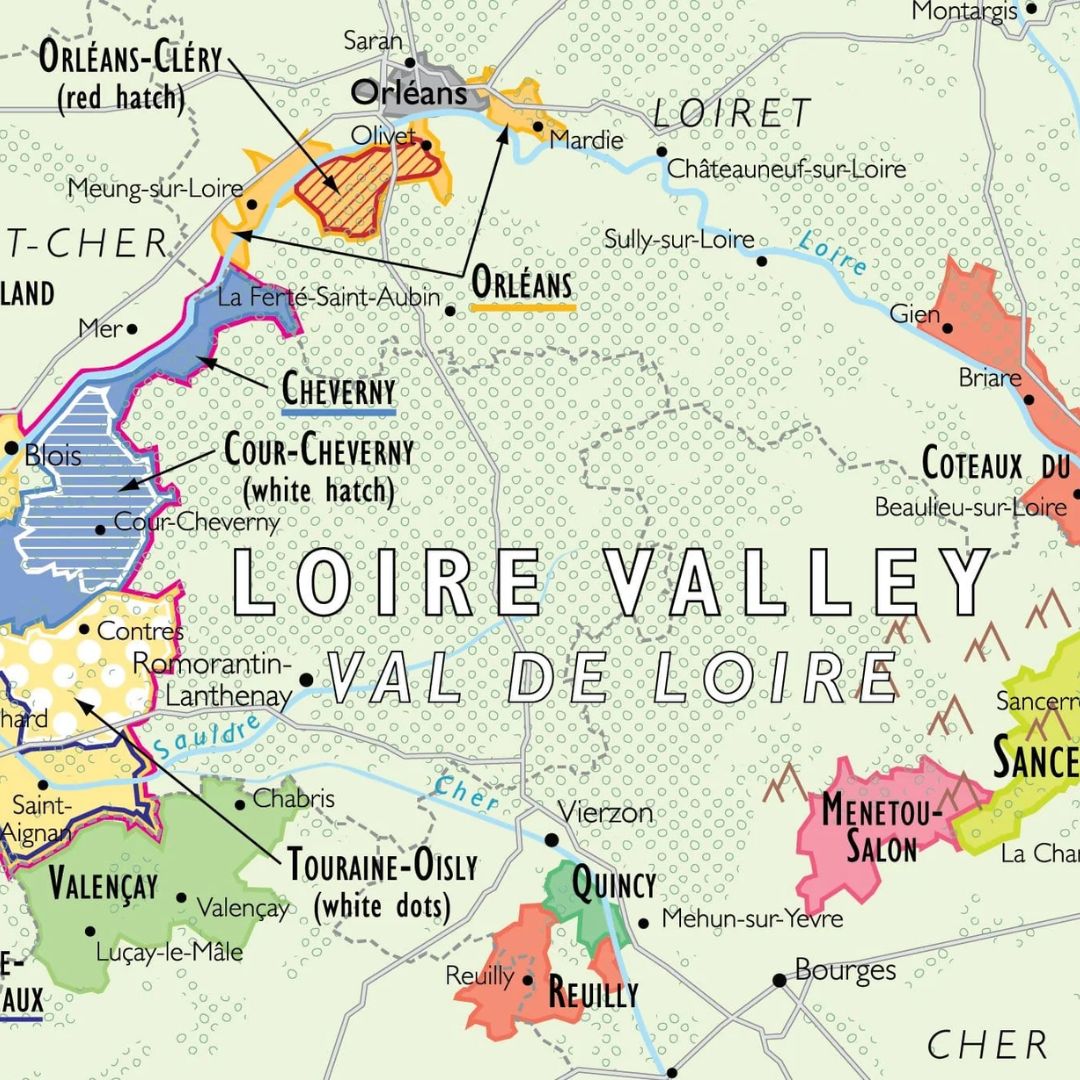
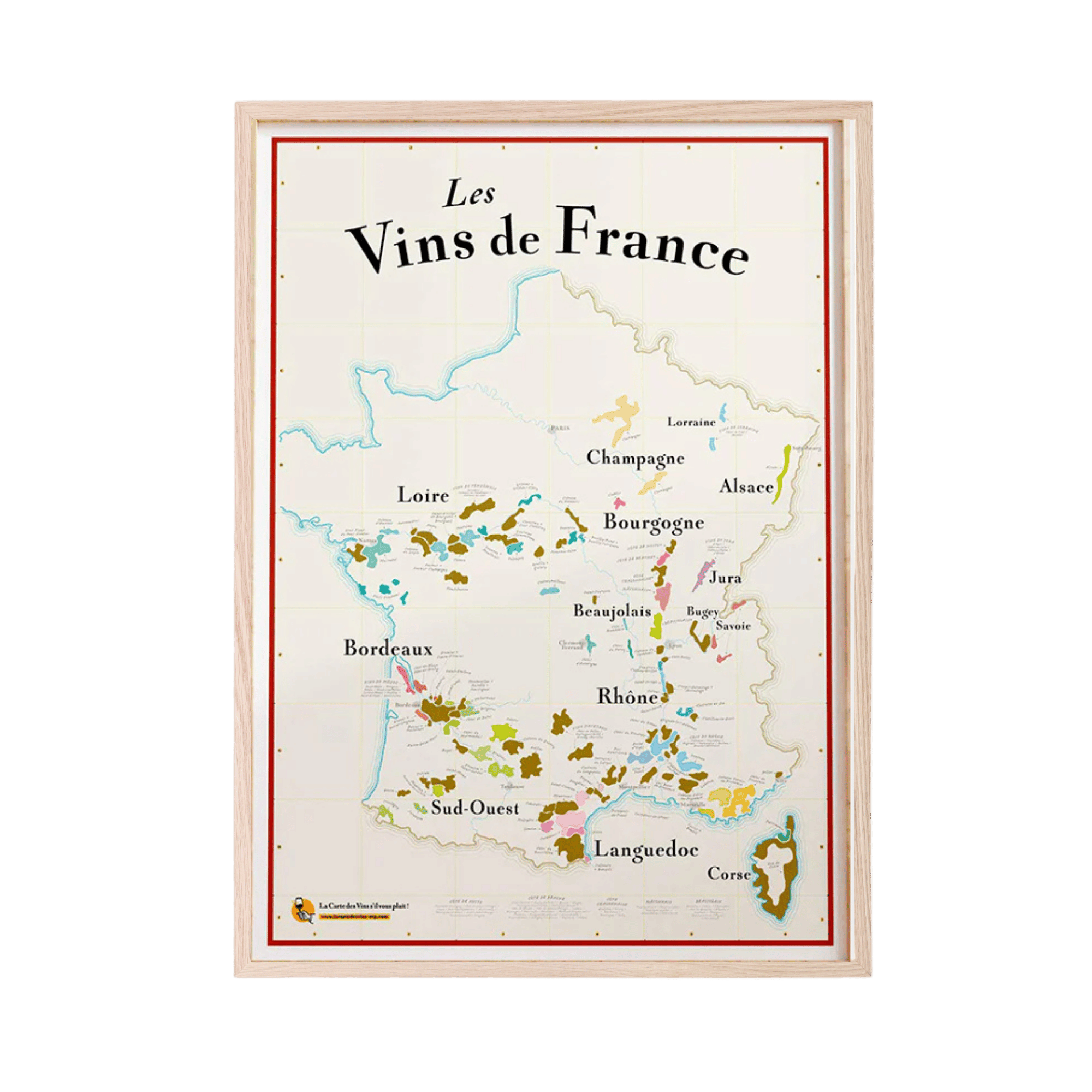
The map of our trip. Domaine d'Aupilhac is also located near Mas de Daumas Gassac and La Pèira.
Day 1
Chateau de Beaucastel, Chateauneuf-du-Pape
Yes, we're going to Chateau de Beaucastel! Every wine fanatic wants to go here look inside and about the galets to walk.
The history of Château de Beaucastel dates back to the 16th century, but the Perrin family only came into the picture at the beginning of the last century. In 1909, Pierre Perrin took over from his father-in-law and was immediately hit hard by phylloxera. During that time, he was primarily occupied with replanting the vineyard. Then came Jacques Perrin, a visionary, a man doing things no one had ever heard of. By the 1950s, he was already farming organically.

#goals
It's not that strange, because the Châteauneuf-du-Pape terroir has something magical. Where else in the world do you see those large rolled stones – the galets roulés? These stones used to be especially necessary because they retained daytime heat for the night. With global warming, heat is no longer really an issue. What is handy, however, is that the stones retain some moisture (vapor) after a rain shower. In times of drought, that can make all the difference.
You can read more about Beaucastel in ' A look inside Chateau de Beaucastel '.
Domaine des Escaravailles, Rasteau
Between the villages of Roaix and Rasteau lies the Domaine des Escaravailles, a family estate where we're met by the owner's daughter: a hipster in her late twenties. "Didn't see this coming," she says, wearing platform shoes and stylish glasses. She studied wine and is now learning the tricks of the trade from her father.

Those hipster tendencies are also reflected in the wines. Here, they don't just follow the AOC regulations; they also do what they please. Take the Scarabée, a Vin de France made with Riesling, Muscat, Gewürztraminer, Marsanne, Roussanne, and Grenache Blanc. A blend of northern and southern grapes. Perfect. Of course, classics are also made—and from very old vines, no less. The average age of the Grenache vines is between 40 and 50 years, with the top cuvée Rasteau Heritage 1924 comes from 94-year-old vines. Luckily, we got to taste them too: amazeballs. High alcohol (15.5%), but I didn't find that bothersome.
Day 2
Domaine de Trévallon, Saint-Étienne-du-Grès
In the north of the Alpilles, near the town of Saint-Rémy de Provence, lies Domaine de Trévallon. One of the region's finest wineries, it also produces some of the finest (if not the finest) wines. The beauty of it is that they do so without any fuss or pretense. Eloi Durrbach founded the estate in 1973 with the goal of producing wine as naturally as possible.

Architectural masterpiece in the cellar of Trévallon.
He planted fifteen hectares of Cabernet Sauvignon and Syrah. The former isn't permitted under Provence regulations, but—as Eloi's daughter Ostriane explains: " Cabernet Sauvignon actually arrived here before Bordeaux ." This makes sense, as it's a late-ripening grape. Before the phylloxera epidemic, Cabernet Sauvignon was plentiful here. " Here it always ripens; in Bordeaux, you just have to wait and see. " The wines of Domaine de Trévallon are therefore 'just' Vins de France. But top-notch Vins de France, of course. Man, oh man, what extraordinary wines.
Fun Fact #1: Domaine de Trévallon has been organic since its founding. They have the certification, but don't feel the need to mention it on the bottle.
Château d'Aqueria, Tavel
A visit to the South of France is, of course, incomplete without a visit to Tavel. I know Tavel from its dark rosés, but who knew that in 1936, along with Saint-Émilion and Châteauneuf-du-Pape, it was awarded the first AOC designation? The winery has been owned by the Olivier family since 1919. Rafael, the fourth generation, gives us a tour. He recounts the château's history as we gaze out over the Tavel vineyards. Château d'Aqueria owns a total of one hundred hectares, about seventy of which are planted with vines. Big business.
The majority of the vineyards are planted with Grenache, the region's grape. The other grapes used are the well-known southern French varieties: Clairette, Bourboulenc, Picpoul, Mourvèdre, Syrah, Carignan, and Cinsault. These are almost all the grapes permitted in AC Tavel. There is one other grape variety that is also permitted according to the regulations: Calitor. Ever heard of it? I haven't. This grape has all but disappeared here.

It's wonderful to see how the vines age. There are still Grenache vines here from 1955!
In the cellar, we receive a detailed explanation of the winemaking process. How does the rosé get its dark color? It's due to maceration, or the maceration of the skins. This isn't done in Provence (hence the light color of the rosés there), but it is in Tavel. Tavel applies only to rosé. They also produce white and red wines under the names AC Lirac and AC Cotes du Rhône.

My new pose
Day 3
Domaine d'Aupilhac, Montpeyroux
A little further on, towards Montpellier, lies Domaine d'Aupilhac. Romana Erschensperger (MW) recommended we stop by. At Domaine d'Aupilhac, we had a mini-lesson on biodynamics. At that time, I hadn't yet taken my WSET4 wine and spirits exam, so it was incredibly informative.
Biodynamics is essentially comparable to homeopathy. It's all about prevention rather than cure. The land is cultivated not to produce (more), but rather to strengthen the land. "It's a friendship with nature," says Désiree Fadat, who runs the winery with her husband, Silvain.
Seeing is believing, so they decided to test a chemically treated vineyard. The plot was split in two, with one half farmed organically and the other biodynamically. The soil was diseased. It took three years to remove the chemicals that had been used over the years. By the fourth year, it was cleansed. The difference was in the soil life. More flowers appeared on the biodynamic plot, and worms were introduced. Worms aerate the soil. In biodynamic viticulture, manure-filled cow horns Worked – that revitalizes the place. It revitalizes the soil, and they saw it happen before their very eyes. Beautiful, isn't it?

There she is again.
She can't answer the question of which wine is better, organic or biodynamic. Both are perfectly fine. They've been working without pesticides since 2006, and the difference with those wines is clearer. She describes it as "yes, delicious" versus "wow, this is amazing." " And ," she adds, " a wine that truly moves me is one that's imperfect ." There are wines made by winemakers and wines made by winegrowers. Desiree and her husband go into the vineyards every day, taste the grapes, and make the wine.
La Pèira, Saint-André-de-Sangonis
It's a series of impressions. Now we're driving into the La Peira area. It was here that I finally realized how much there is to discover in the Languedoc. To be honest, I always thought it was a bit of a bulk wine region—fine bulk wine, but bulk wine nonetheless. But there's more.
Take La Pèira. Or rather, take the cru Terrasses du Larzac. Guaranteed success with names like La Pèira, La Grange des Pères, and Mas Julien (and actually also Mas de Daumas Gassac, but they use grapes that aren't permitted). La Pèira was founded by Rob Dougan, a well-known Australian musician. He doesn't work in the vineyards or behind the barrels himself, but lives in London. Audrey Bonnet-Koenig keeps things running smoothly. She makes the wine, but also manages the vineyard and shows us around. She works long days, but you can tell she loves the wines and her work.

We tasted all the wines, including the top cuvée – La Pèira. Insanely good. It's a wine that takes your breath away. I almost don't dare write about it, because that almost always does a wine like this a disservice. It's a mix of spiciness (mint, licorice, and dark – very dark – chocolate) with an abundance of dark fruit. Wow.
Day 4
Mas de Daumas Gassac, Aniane
Just when you think you're starting to understand the south, we pop into Mas de Daumas Gassac. The parents of the current owners (three brothers) founded this unique winery in the Languedoc. It might seem like a complicated name, but it's not that bad: Mas means house, Daumas is the name of the family from whom they bought the house and Gassac is the name of the river and the valley where they are located.
Daumas Gassac makes beautiful wines, but they do so in a unique way. They don't pay attention to regulations or AOC legislation. Everything is different, and I'm constantly amazed. For example, they talk about Neherleschol, a grape from Israel that produces enormous clusters. How do all these grape varieties come together like this? The common denominator is the founder. He actually wanted to plant all his favorites together. He loved Bordeaux (Cabernet Sauvignon), Burgundy (Chardonnay), and Vouvray (Chenin Blanc). He came across the aforementioned super grape in Israel and brought Albarino back from Spain.
It's not like they just let things happen. Everything is thoroughly analyzed and studied. Cabernet Sauvignon remains the dominant varietal for red wine, but the further blending can vary from year to year. Both the white and red wines receive high ratings annually and are practically reaching cult wine status. The white wine is known for aging well (I bought a few bottles, so I'll keep you updated).
Halfway through our tasting session, Samuel Guibert, one of the founder's sons, co-owner, and winemaker of Mas de Daumas Gassac, appears. He chats briefly and tells us about the family history.

Of course, we're not going home empty-handed!
Enjoy the afterglow for a long time…
I've been to Champagne before. These trips are a dream. Beautiful wineries with excellent tours where you really learn something. We're usually guided by the owner or winemaker himself, so you can ask anything you want to know. Highly recommended! Now that I see the photos again, I'm still savoring the memories of the trip. Of course, there will be more " inside peeks " blogs in the coming year, where I'll go into more detail about the wineries.


Share:
The most beautiful wines of 2018
2018: the year my wish came true!