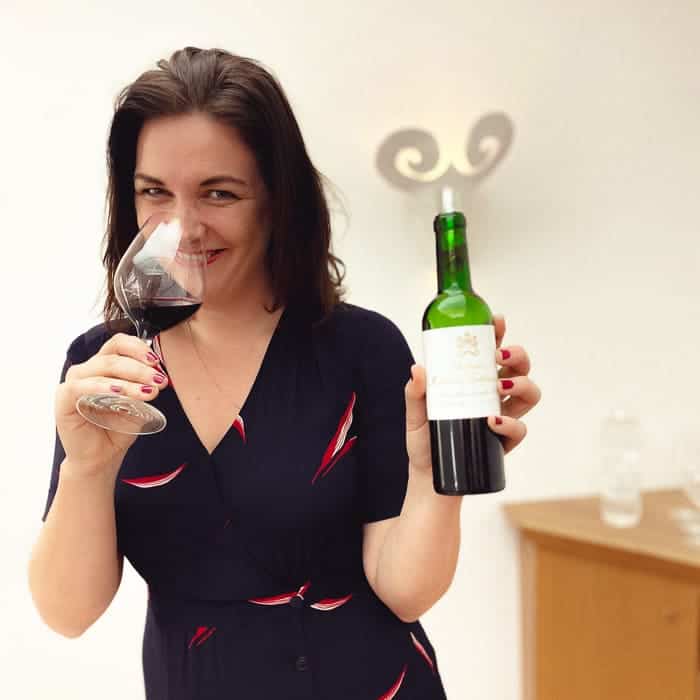
Sometimes you have moments when you're completely overstimulated. Admittedly, it happens to me regularly – put one epic wine in front of me and I'm completely lost. Last year in Bordeaux, it was a real jackpot.
On Tuesday we were at Le Pin's door, and on Wednesday at Château Mouton-Rothschild. There couldn't be a greater contrast between the two. First, there's the location. Anyone familiar with these two houses probably knows what Bordeaux looks like.
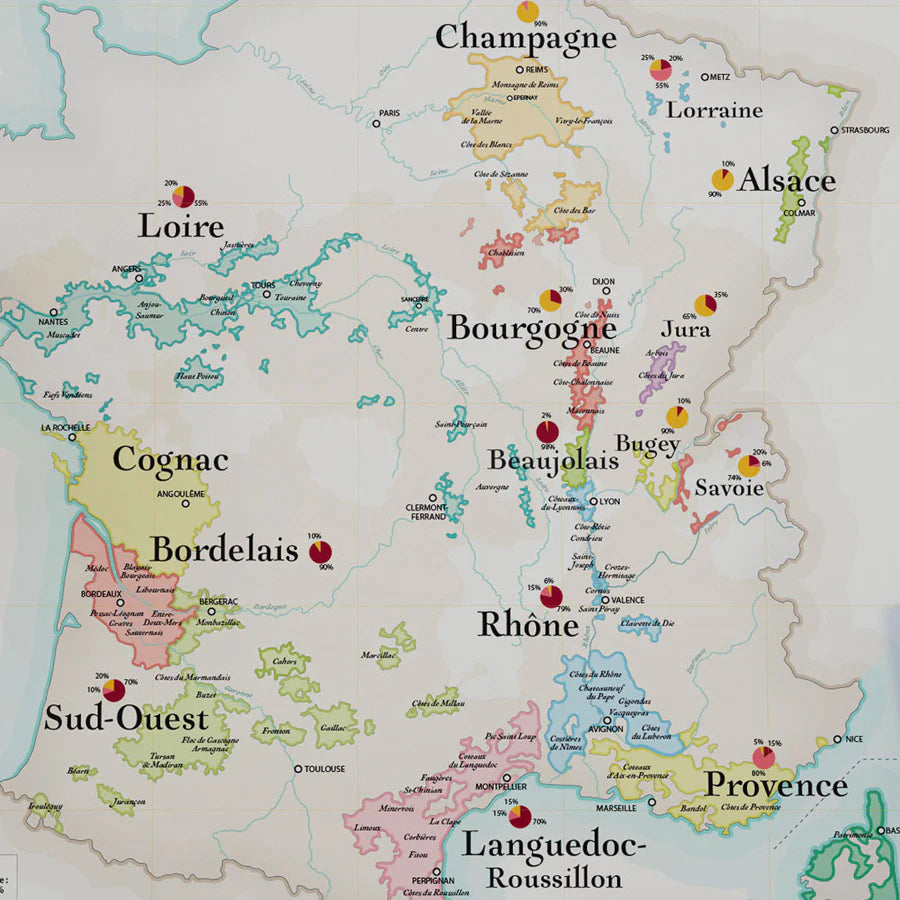
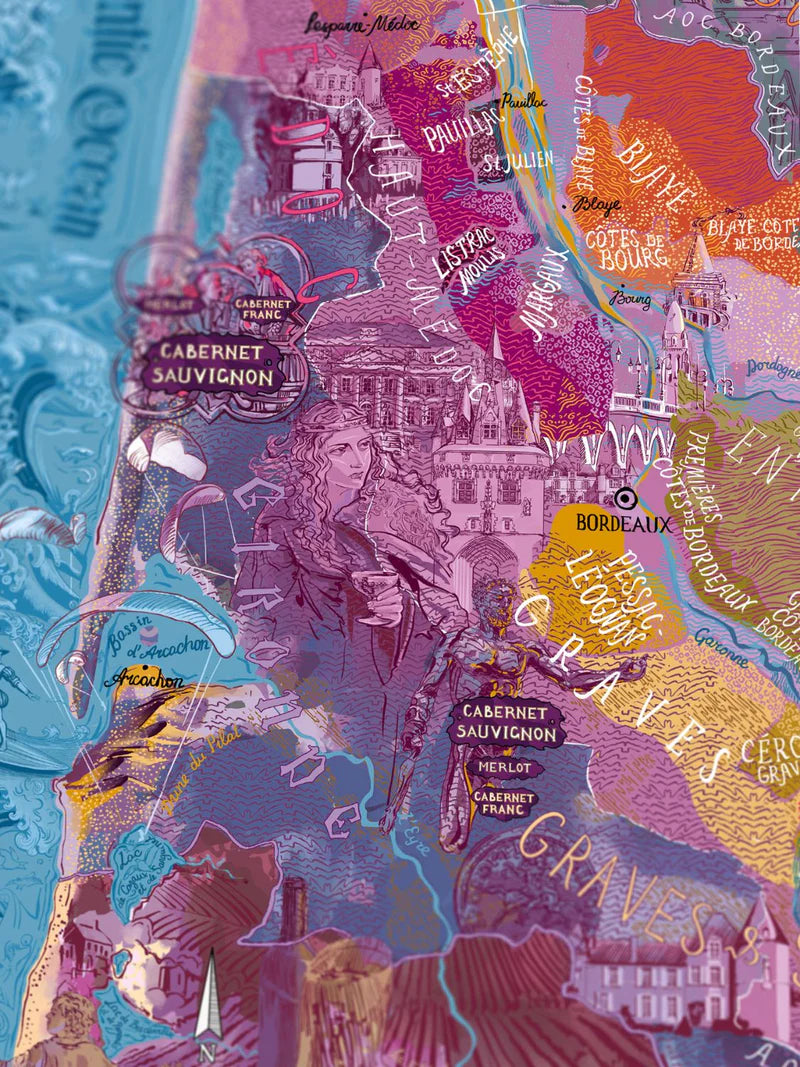
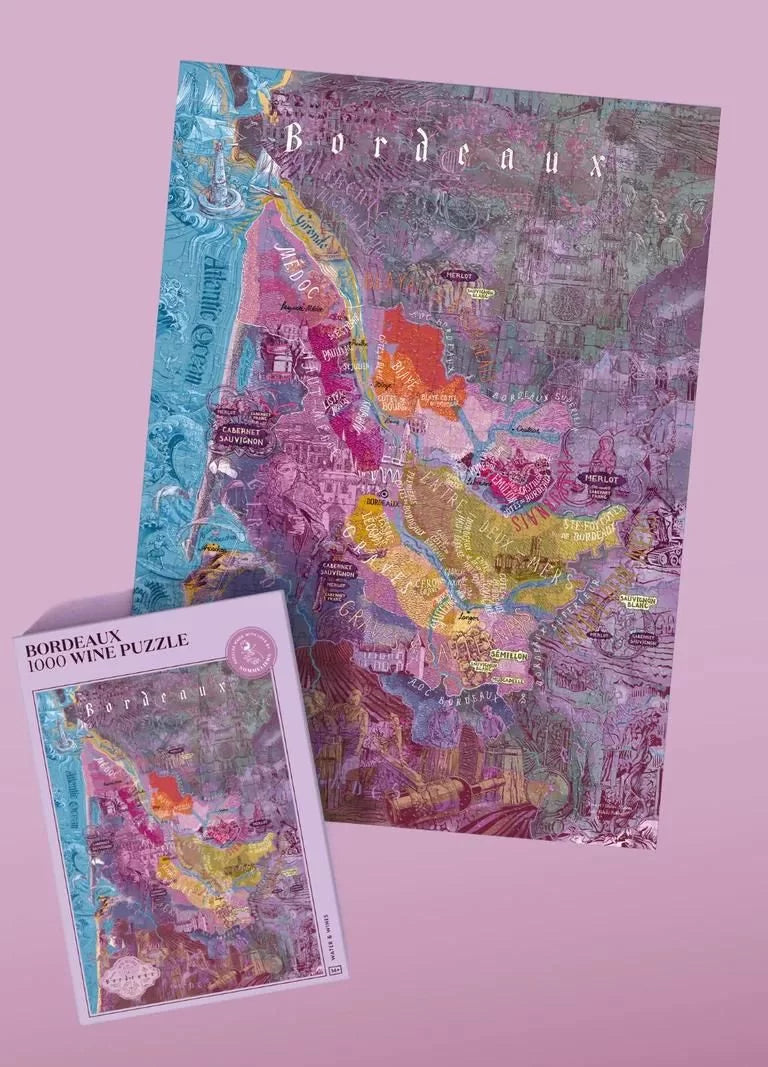
The rivers shape the region. The Dordogne and Garonne rivers flow into the Gironde, which then ends (or begins?) at the Atlantic Ocean. Le Pin is located in Pomerol on the right bank (of the Dordogne), and Mouton-Rothschild is in Pauillac, one of the most famous wine villages on the left bank of the Gironde. Both houses and villages are immensely famous. There's no arguing about that, but the contrast lies in their classification.

Mouton-Rothschild in Pauillac (4) and Le Pin in Pomerol (23)
Pauillac is located in the Médoc, and the chateaux of the Médoc were classified in 1855 at Napoleon's request. Mouton-Rothschild emerged as the winner, but more on that later. Pomerol is unclassified. No classification, but it has winners. One of them is Le Pin , another one is Petrus.
Winner
Mouton-Rothschild was classified as a Deuxième Grand Cru Classé in 1855, placing it in the second division of the Grands Crus Classés. The family disagreed but accepted it. This only changed in 1922, when Baron Philippe de Rothschild took over from his father. After the war, he launched a vigorous lobbying campaign to promote Mouton-Rothschild. And with success: Mouton-Rothschild acquired the title of Premier Grand Cru Classé in 1973. This marked the first real change*. The Baron was also the first in the region to have the wines bottled at the chateau, something that had previously been done by négociants. He designed the label himself. Since 1932, it has been designed by a different designer each year.
*There was another change in 1855, but that was because they forgot to name a house, so that doesn't count.
Baroness Philippine
In the 1980s, Philippe's only child, Baroness Philippine, emerged as the next generation's successor. She further developed Mouton Cadet—affordable Bordeaux for a wider audience—and pioneered innovation by collaborating with partners in California (Opus One) and Chile (Almaviva). She died in 2014. Her three children—Philippe, Julien, and Camille—have since taken over the reins.
I didn't see any of them during the tour. We were given a tour by one of the chateau's hostesses. That was very different from Le Pin , where we were shown around by the owner himself.

From harvest to wine
The harvest & the vineyards
As you might expect with a Grand Cru Classé, the grapes are harvested by hand. This usually happens in September, but that naturally depends on the weather. The Mouton-Rothschild vineyards, 83 hectares in size, are situated on a hillside 27 meters above sea level.
The vineyards are planted with the classic blend of Cabernet Sauvignon (81%), Merlot (15%), Cabernet Franc (3%), and Petit Verdot (1%). We learn that Cabernet Sauvignon dominates on the Left Bank, but Merlot is the most widely planted grape in Bordeaux. Cabernet Sauvignon needs warmth and is found almost exclusively on gravelly soils, where it can achieve that little bit of extra warmth because the gravel retains heat. These gravelly soils are common in Pauillac, Margaux, and Saint-Julien. So there, the share cab sauv higher. Elsewhere in Bordeaux, Merlot usually wins.
The Grand Plateau de Mouton, the 27-meter hill, is 98% pebbled. It's the ideal spot for Cabernet Sauvignon. The "La Baronne Philippine" plot boasts 120-year-old Cabernet Sauvignon vines, among the oldest in the region.
What isn't on the website, but which I did hear in the vineyard, is that Carmenère has recently become a popular wine. Carmenère originates from Bordeaux, but after a long journey, phylloxera condition Not replanted. It's a grape variety that—even more so than Cab Sauv—has a vegetal character that diminishes in really hot weather. Not ideal in such an unpredictable climate as Bordeaux. Anyway, 150 years have passed, climate change is happening, and there might be a place for Carmenère in Bordeaux again. Mouton-Rothschild has planted it, but isn't yet using it in their Grand Vin.
Of the 83 hectares, approximately 40% is used for Grand Vin. The blending varies annually. Some plots always appear in Grand Vin, others never, and a small portion depends on the vintage.
Making wine
When the grapes arrive, they are passed through a laser. Only the best grapes advance to the next round. About 5% remains. The approved grapes are crushed and placed in barrels. Fermentation can begin. There are 64 barrels ready, 44 wooden and 20 stainless steel, in various sizes. Each plot and grape variety can be vinified separately. The cap is pumped over three or four times a day for 7 to 10 days. This takes about an hour each time. Mind you, this is hard work.

After malolactic fermentation, the blending process takes place and the wine is transferred to barriques. Mouton Rothschild uses 100% new oak with a medium toasting from the Alliers forests. The wine matures its first year in the Grand Chai, or Great Barrel Room. It feels a bit like a bowling alley. It's immense – 100 meters long and 70 meters wide. When Baron Philippe decided to bottle all the wines at the château, he needed more space. He wanted a place where he could look over his barrels. This led to the spectacular construction of the Grand Chai, with room for 1,000 barrels without pillars or other obstructions.

In the Grand Chai three actions take place:
- Refill the barrel (due to evaporation), approximately three times a week.
- Racking, approximately every three months. This eliminates the need for filtration.
- Fining with egg white. Besides clarifying the wine, egg white fining also softens the tannins slightly.
The cellars of Mouton Rothschild
After a year in the Grand Chai, the barrels are moved to Mouton Rothschild's second-year cellars. The wine is then aged there for about a year before bottling.

No coincidence
What's striking is the incredible technical precision with which they work. The winery is incredibly large, but everything is spotlessly clean and looks immaculately tidy. It's clear to me that nothing is left to chance here. Next to the estate, they've had a large research center and laboratory built. Various tests are conducted here, for example, on the corks. It would be a real shame if half the production were contaminated with TCA.
What I learned during our guided tour What I discovered was that Mouton doesn't refer to sheep; no, it's an Old French word for hill. Just like Lafitte. And Cos. Learned something new. To throw you off, there are some unusual lamps in the shape of sheep's heads hanging in the entrance hall. Turns out they're not sheep, but rams. Baron Philip was a ram.

The Rothschild family's love of unusual objects is evident from the many art objects we encounter during our tour. Our tour wouldn't be complete without a visit to the museum. They call it the Museum of Wine in Art. It sounds more appealing than it is. There's a wealth of art on display. Statues, porcelain, tiaras—you name it.
The highlight was the room with all the labels and corresponding mood boards from the designers. It was fun to see how they were created.
Supreme moment
We're getting a tasting! We get to taste the Rothschilds' three wines: Château Mouton-Rothschild, Château Clerc-Milon, and Château d'Armailhac. All three are from the 2018 vintage that was still in the barrel at the time, but they've bottled them for the occasion. Very chic!

You can't say much about such a young wine. What was striking was the tannin structure, which gradually became riper. Not so much softer – all three scored medium to high. D'Armailhac's tannins were drier, a bit stalky, while Mouton-Rothschild's tannins felt riper and therefore less drying. I expect the latter will integrate much better as the wine ages. And it makes sense, since they use the best, ripest fruit for the Grand Vin.
Hopefully, I'll taste it again in 20 years. And I'll still be overstimulated.
Share:
Now in the glass: Domaine de la Romanée-Conti La Tâche 1999
The Road to Weinakademiker - Part 9 (Exam Tips)