
For many wine drinkers, prosecco is a brand. The average consumer will therefore know little about its background, perhaps not even where the wine comes from or how it's made.
So says Ronald de Groot, editor-in-chief of Perswijn, in his foreword to the first issue of Perswijn in 2019. Of course, he's right, but I'm still a little shocked. This needs to be told. What is prosecco? Le Club des Vins explains it to you.
I'll be honest: while writing this article, a whole new world opened up for me too. A world of Cartizze, prosecco without the bubbles, and rives.
Is prosecco the same as champagne?
Definitely not. In fact, there are many differences. The only common denominator is that both wines are sparkling. Hold on to that thought.
No, because of a different origin.
Champagne can only be called Champagne if it comes from Champagne. Prosecco comes from northwestern Italy. Specifically, the DOC Prosecco covers the entire Friuli-Venezia Giulia and almost the entire Veneto region.
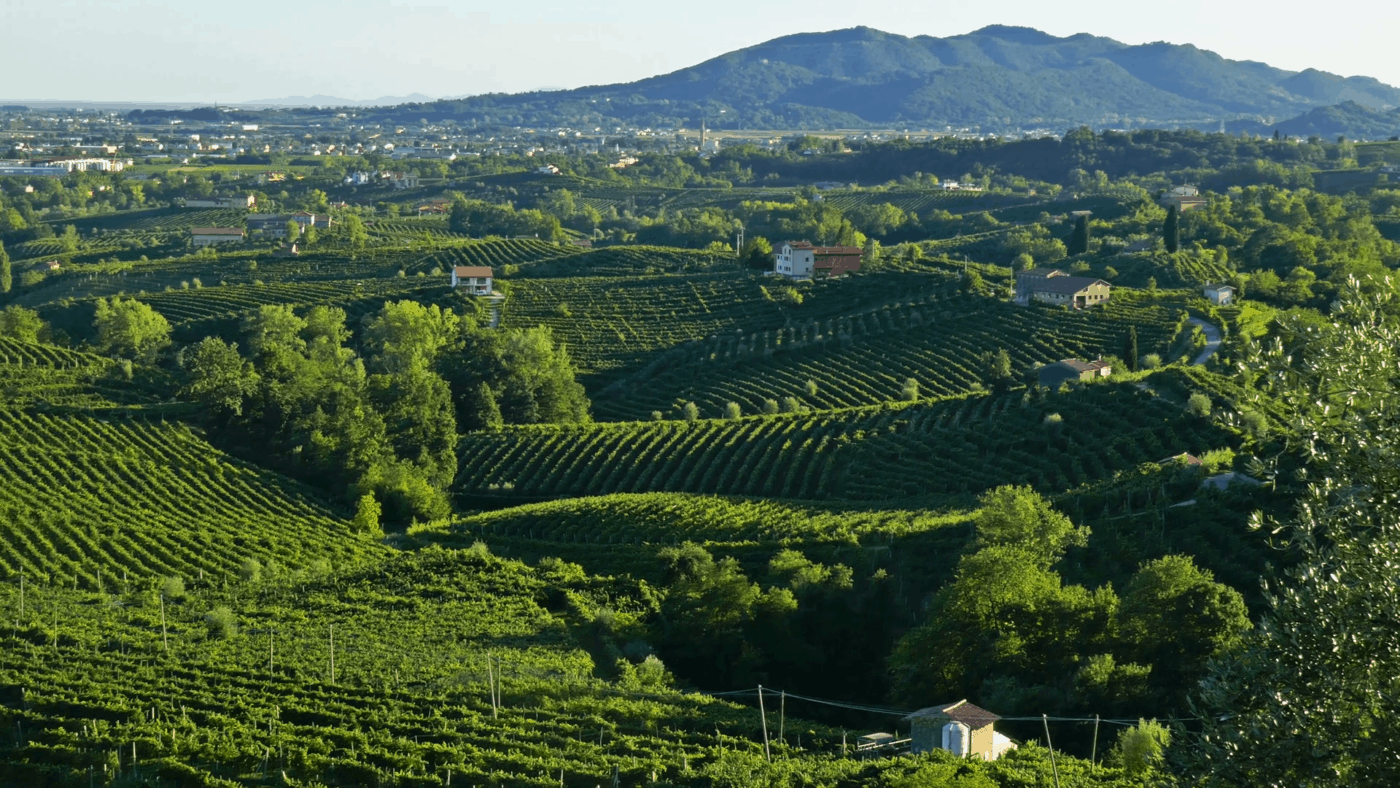
Not all Proseccos are created equal. And that has everything to do with the terroir. The grapes thrive in the hilly subregions of Conegliano-Valdobbiadene and Colli Asolani. That's why the sparkling wines from these regions are labeled DOCG Prosecco Superiore.
Source: Guild sum – An introduction to prosecco
No, because of other grape varieties.
The grape varieties used for Prosecco are also different from those used in Champagne. Prosecco is made from the Glera grape. Before 2009, the grape was called "Prosecco," but that wasn't very practical, as that would have allowed the whole world to produce Prosecco. Just like Chardonnay is available worldwide. So they changed it to Glera. Clever, those Italians. Prosecco must contain at least 85% Glera and can be supplemented with a range of other grape varieties, including Chardonnay and Pinot Bianco.
No, because of a different production method.
Champagne, crémant and cava are made according to the The traditional method , which involves a second fermentation in the bottle. After fermentation, the (dead) yeast cells remain in the bottle for at least a year, but longer is better. This creates "autolytic" notes, or yeasty notes (e.g., bread, toast, brioche). The Oxford Companion to Wine—my rock—states that aging must last at least fifteen months to release these aromas.
Prosecco is made using the Charmat method. The second fermentation takes place in a tank instead of in the bottle. It's easier and less time-consuming, and you'll notice the difference in your wallet. Therefore, you generally won't find autolytic aromas in Prosecco. The goal is to create a fruity, sparkling wine.
Is champagne always better than prosecco? No, I don't think so. A champagne from the bottom shelf of a French supermarket versus a well-made prosecco from Valdobbiadene? Think again.
Hey, there's also prosecco without bubbles.
The world of wine never ceases to amaze. There are always exceptions, wherever you are. This is also true in Proseccoland. Who knew Prosecco even existed? without bubbles ? It's called prosecco tranquillo .
There are three styles of prosecco, namely:
- Prosecco spumante This is the most common style and accounts for 95% of production. It has a minimum pressure of 3 bar (for Champagne, the minimum is 5 bar). If the spumante is a prosecco superiore, it must have a minimum pressure of 3.5 bar.
- Prosecco frizzante with a pressure of 1 to 2.5, a bit like your spa green or your trendy pét-nat.
- Prosecco tranquillo is a prosecco without bubbles.
And prosecco made according to the traditional method?
It is rare, but it does exist. The best chance to encounter them is in Conegliano-Valdobbiadene. Then there is rifermentazione in bottiglia on the bottle.
Then there is also Col Fondo and is similar to the Ancestral method . A little yeast remains in the bottle, so that it ferments again in the bottle and creates a light bubble, frizzante , takes care.
Rive, a new way to distinguish different terroirs
Let's forget about DOC Prosecco. The chances of finding a gem there aren't great. For the real sparkling wine, you'll have to go back to Conegliano Valdobbiadene. But even there, there are differences. Since 2009, this can be indicated by the term "Rive di" (literally: hilltop...). There are 43 villages in total, but not all of them are in use yet. These are usually the top-notch Proseccos.
“A tentative shot at characterization the most widely exploited and most interesting rive could pick out San Pietro di Barbozza for freshness and refined elegance; Ogliano for its ripe, yellow fruit; Guia for a certain tangy, mineral quality; and Santo Stefano for its firm, fresh zip.”
Source: Decanter – Top-tier Prosecco: wines pushing the boundaries
< 
Hills of Cartizze ( source )

Why this blog?
Because I want to know what's going on. You shouldn't expect much from a five-euro prosecco. But don't expect fireworks if you bring a ten-euro champagne either. A good prosecco is better than a bad champagne.
Sources:
- Decanter – Top-tier Prosecco: wines pushing the boundaries
- Guildsomm – An Introduction to Prosecco
- Forbes – Prosecco that sparkles less or not at all
Share:
Which wine with carpaccio
What I Didn't Know About Sherry (Part 2)