In "Wine Simple," the book by top sommelier Aldo Sohm, published last year, there's a list of wines with a bad reputation. At number five: Beaujolais. The accompanying caption reads: " Great makers are rewriting the reputation ." Hit the nail on the head, if you ask me. Beaujolais is recovering from a bad reputation. Not entirely without reason, as the region's wines were long synonymous with cheap primeur wines and standardized, uniform junk. But a growing number of winemakers are demonstrating today—or in some cases, for much longer—that the Gamay grape has a place. That, provided you focus on quality, you can make very fine wines with it. The secret? The winemaker and their terroir . We delve into the Bojo, based on ten of the best winemakers and their wines.
Curious about Wine Simple? Check here >
Jean-Paul Brun – Beaujolais Blanc 'Vinification Bourguignonne'
Cliché number one: Beaujolais is a primeur red wine and should be drunk as young as possible. Mostly untrue. Moreover, not all Beaujolais is red. A very small portion of the plantings consists of Chardonnay. However, these wines are not allowed to be marketed under the names of the ten crus. So you won't find a Fleurie Blanc. A Beaujolais Blanc, however, you will. Generally not particularly worthwhile, with a few exceptions. Including this one, from maestro Jean-Paul Brun. A Chardonnay made à la bourguignonne, meaning aged for a year in wooden barrels. It also tastes like a serious white Burgundy. And costs considerably less. Although the price does go up by an average of one euro every year.
For sale at Wijnkoperij Platenburg >

Jules Desjourneys – Moulin-à-Vent
Okay, another cliché: Beaujolais tastes like foam bananas. Again: largely untrue. It depends primarily on how the wine is made. Several winemaking methods are used in Beaujolais, including the infamous carbonic maceration. In this process, no traditional fermentation actually takes place, but an enzymatic transformation within the grapes by forcing the bunches into a sealed vat under carbon dioxide pressure. This winemaking method (and the use of certain yeasts) can sometimes produce candy-like wines, like many primeur wines.
I'm going to briefly explain carbonic maceration, as it's a rather technical story. If you're interested, Jamie Goode has a whole article about it. illuminating piece written about.
Fabien Duperay of Domaine Jules Desjourneys is a staunch opponent of carbonic maceration. He makes his wines the old-school way. In every respect. All his vines in Fleurie and Moulin-à-Vent are at least 65 years old. The vineyards are farmed biodynamically, with very low yields per hectare. The wines are fermented conventionally and sometimes aged for up to three years in used barrels. This produces highly concentrated wines, like this Moulin-à-Vent. I recently tasted this wine from 2008, 2009, and 2010 and was amazed at how it looked. Still very youthful, full of fruit, with enormous depth. Depending on the vintage, you could easily confuse this with a wine from the Northern Rhône in a blind tasting. A fantastic estate, unfortunately rare, and—you guessed it—not exactly cheap. Moreover, this wine also dispels the misconception that Beaujolais should always be drunk young.
For sale at Wijngenoten Maarssen >

Clos de la Roilette – Fleurie 'La Griffe du Marquis'
The story of Clos de la Roilette (the name of both the vineyard and the estate) is quite remarkable. Until the 1920s, this vineyard belonged to Moulin-à-Vent, when the crus were officially classified by the Bojo committee: then it suddenly became part of Fleurie. The soil type, however, is much more similar to Moulin-à-Vent's vineyards. Moulin-à-Vent is generally known as the cru that produces the most robust wines, thanks in part to its granite soils rich in manganese. Fleurie's wines, however, tend to be somewhat lighter in structure. The winemaker at the time wasn't happy. A horse's head was placed on the label. Now, Alain Coudert is at the helm. He makes Fleuries (and some other wines) of various levels. His best horse in the stable is this La Griffe du Marquis. A Fleurie from very old vines, aged in large oak barrels. A completely unique wine that should really be aged for a few years. Try it blind: there's a good chance the tasters will taste a better Burgundy in this one.
For sale at Wine Merchant De Gouden Ton >

Jean Foillard – Morgon 'Côte du Py'
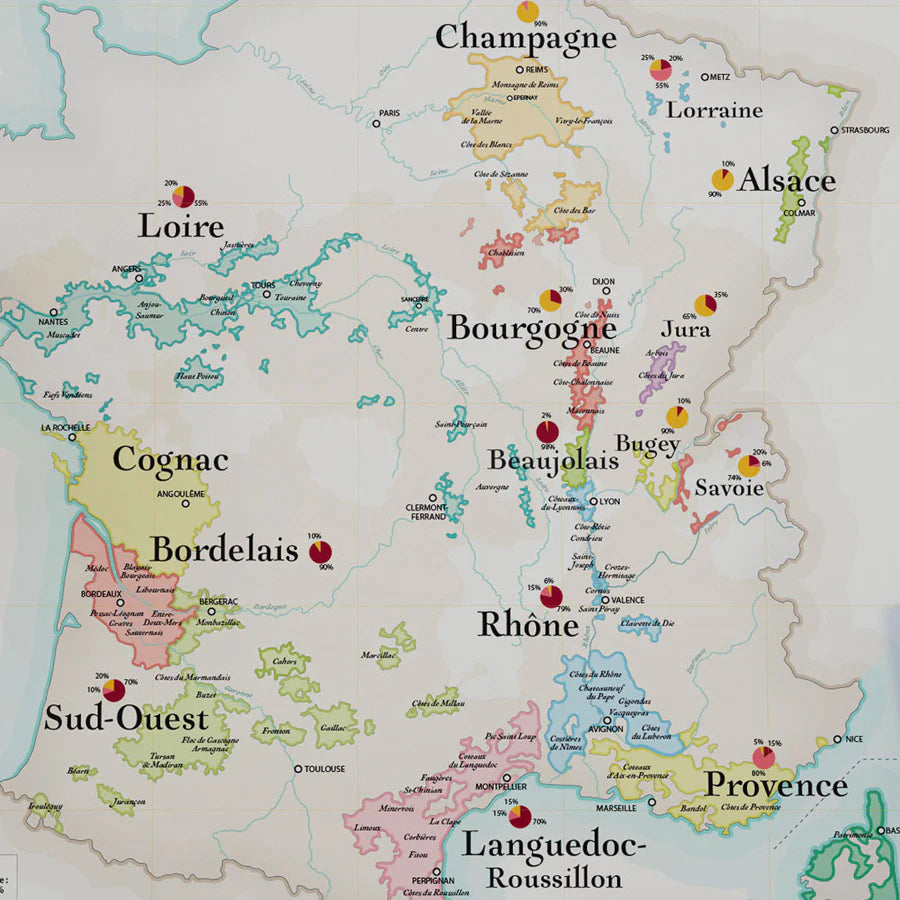
Beaujolais is officially considered part of Burgundy. Yet, there are more differences than similarities. In terms of population, landscape, grapes, and ultimately, the wines. In fact, the Gamay grape was once even banned from Burgundy. There, Pinot Noir reigns supreme, though the best wines are named after their origin: the village, or, in the case of the very best examples, after the vineyard. The best Beaujolais generally comes from one of the ten crus, including this Morgon from Jean Foillard. However, even in Beaujolais, we're increasingly seeing top wines coming from a single vineyard. Côte du Py in Morgon is the best example. Jean Foillard, one of the members of the sulfur-free gang (more on that later), produces perhaps the finest Côte du Py: a robust, structured Morgon, bursting with fruit. But also a wine with tannin and bite. A wine that also thrives in a cellar. From one of the most beautiful vineyards in the entire Beaujolais region. Who knows, maybe someday those premier crus will appear.
Available at De Wijnvriend (scroll down for discount code) >

Clotaire Michal – Beaujolais-Villages 'La Napoleon'
Shall we throw in one more cliché? Okay, one for the wine nerds then. " Only Beaujolais from one of the crus is worth it ." Generally speaking, yes, I'd say. But there are definitely exceptions. This Beaujolais-Villages from Clotaire Michal is a must-try. The vineyards are located south of the ten crus (below Brouilly, to be precise), so this wine can "only" be bottled as a Beaujolais-Villages. But this bojo ordinaire is certainly no less than the average cru. That's not surprising, because Clotaire learned his trade, among others, from Thierry Allemand in Cornas, perhaps one of the best winemakers in the world. Just like his mentor, he works completely organically and with minimal intervention in the cellar. His "La Napoleon" reflects that perfectly: a very pure, rustic Beaujolais without frills. Earthy and juicy. Incredibly good.
Not easy to find in the Netherlands, but you can find it with our Belgian friends at In Terra Veritas >

Pierre Cotton – Côte de Brouilly
Aldo Sohm put it so beautifully in his book, which I referred to earlier: " Great makers are rewriting the reputation ." The great thing about Beaujolais is that there are essentially two types of "great makers." On the one hand, there are the renowned houses where succession within the family ensures continuity. On the other hand, you also see newcomers. For example, winemakers who originally made wine in a different region. Land is relatively affordable in Beaujolais, so it's a popular place for young winemakers to establish themselves. Pierre Cotton is one of them, admittedly the son of a Beaujolais winemaker. He learned his trade in the Loire Valley, eventually returning to Odenas in Beaujolais. For several years now, he has been making wine under his own name, including his spectacular Côte de Brouilly, the cru of Mont Brouilly. One of the most underrated crus of Beaujolais, in my opinion, because the steep vineyards receive plenty of sun, which generally allows for a more robust wine. Cotton works entirely naturally, which you can taste in his wines. His Côte de Brouilly is very lively, with a spicy character, fine acidity, and plenty of energy.
For sale at Vleck >

Lapierre – Morgon
Marcel Lapierre. God rest his soul. The godfather of modern natural wine. Fortunately, Matthieu and Camille—his descendant—are just as adept at making Beaujolais wine from which nothing has been taken or added. You can't get any purer. Marcel Lapierre began producing this style in the early 1980s, with the assistance of oenologist Jules Chauvet. His goal was to create distinctive wines. He succeeded. His ideas were soon adopted by several winemaker friends, who were therefore nicknamed "the sulfur-free gang" (including the aforementioned Jean Foillard). These are wines made from grapes of organic or biodynamic origin, with minimal alterations in the cellars. No industrial yeasts, no filtration, and little or no added sulfites. In the case of Lapierre's Morgon, this results in a wine with a near-impossible concentration of fruit. Strawberries, raspberries, cherries, blueberries, you name it. Incredibly juicy. Fresh. But also earthy. If I had to force one wine from this list, it would be this one. If only because Lapierre is actually the founder of the modern natural wine hype and has inspired many wine growers in the Beaujolais.
Available at De Wijnvriend (scroll down for discount code) >

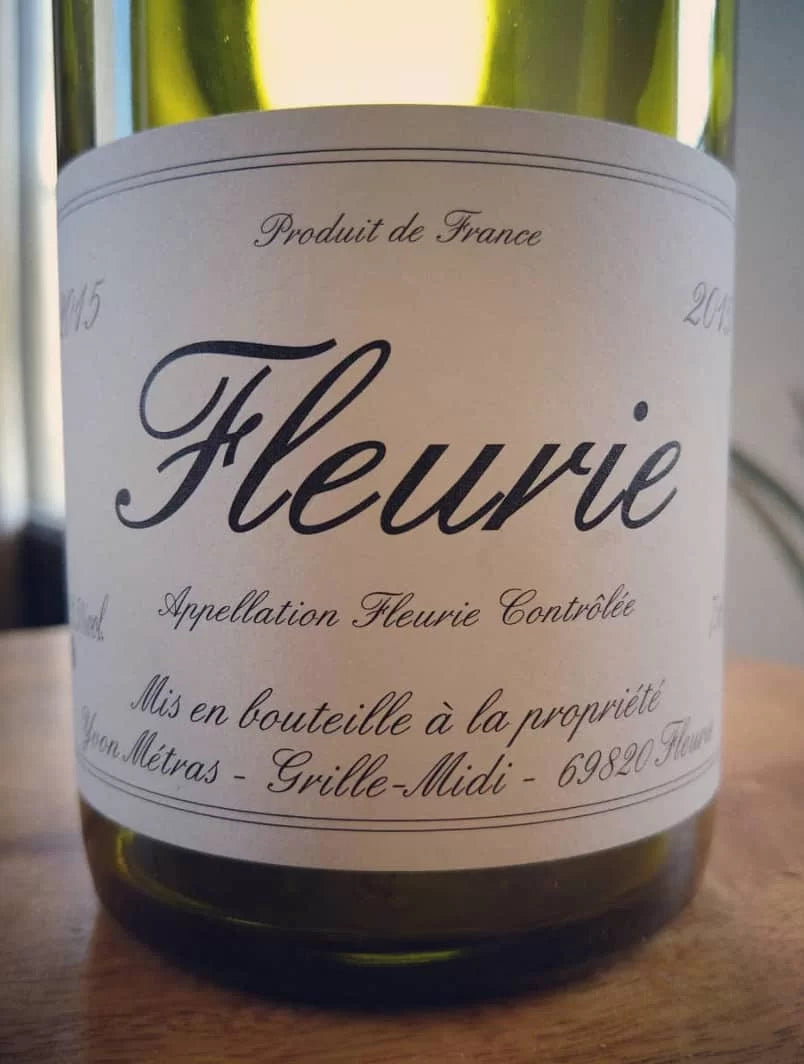
Yvon Métras – Fleurie
Besides being a revolutionary winemaker, Lapierre was also a significant source of inspiration. Not only for the quality of his wines, but also for his ability to persuade others to make truly good wine instead of supplying grapes to dull cooperatives. Yvon Métras was one such person. Inspired by Lapierre in the early 1990s, he is now perhaps the greatest cult winemaker in the entire Beaujolais region. Unfortunately, he produces small quantities of wine. With a bit of luck, you can find his Fleurie. Not cheap, but absolutely worth the effort. A pitch-black Fleurie. Bursting with fruit. A drinkable, velvety wine. In his best years, he also makes Fleurie L'Ultime, from his oldest vines. A rare and, above all, very expensive wine. At auction, it sells for well over €100, an unprecedented sum for this modest region.
Available at De Wijnvriend (scroll down for discount code) >

Château Thivin – Côte de Brouilly 'Le Sept Vignes'
Besides many hip, young winemakers, Beaujolais also boasts several institutions: classic wineries that have been active for generations. Mont Brouilly is home to one of the few true Beaujolais châteaux: Château Thivin. The Geoffray family—currently the 6th generation—has been producing white and red Beaujolais here since 1877. They have seven plots on the Mont , from which they each make a unique wine. You guessed it: high on my bucket list is tasting all these wines side by side. Ultimate geekery. Luckily, they also have a blend, called 'Le Sept Vignes', whose name, of course, refers to the seven plots. Classic Beaujolais style. Many contemporary Beaujolais wines tend to go all out for the purple fruit organ. Here, you taste real red fruit. Crushed strawberries. With a smoky edge. And very affordable, too. They also make some very nice white Beaujolais, by the way.
For sale at Wijnhandel Peeters >

Marc Delienne – 'Abbaye Road' Fleurie
Another winemaker who learned his trade from no small savvy: Marc Delienne learned his trade at Domaine de Trevallon in Provence and from Crozes-Hermitages legend Antoinne Graillot. The latter advised him to explore Beaujolais and establish his own estate there. No sooner said than done. In 2015, he purchased Château de l'Abbaye in Fleurie and began producing wine there. His goal: to deliver ultimate quality. Key words: biodynamic methods, old vines, low yields, own yeast, no additions, no filtering, low sulfites. His "Abbaye Road"—Fleurie—is the perfect summary of this article. A pleasant wine. Sometimes a bit more serious than you might expect. Can be a bit rustic. But it doesn't deny its origins, provided it's well-made. Beaujolais is more.
For sale at Zekvinos >

Disclaimer: By choosing ten random wines, I'm doing a disservice to many winemakers and overlooked crus. I'm thinking of the beautiful wines from crus like Chiroubles or Juliénas (which really shouldn't have been left out of this piece, given yours truly). And the wines from winemakers like Lapalu, Dutraive, Mee Godard, Desvignes, or Château des Jacques. Beaujolais simply has too much to offer to be covered in just ten wines. Check out Julian's second article on Beaujolais here .

Share:
The bubble according to the primal method: method ancestrale
The best books on wine tasting